
Advert: Ravensburger gifted a copy of this game in exchange for an honest review. All opinions are ours.
Crossovers are common in TV & film, with some more popular than others. Will Carcassonne Labyrinth be the board game equivalent of Avengers Infinity War, or the next Alien vs Predator? Let’s see.
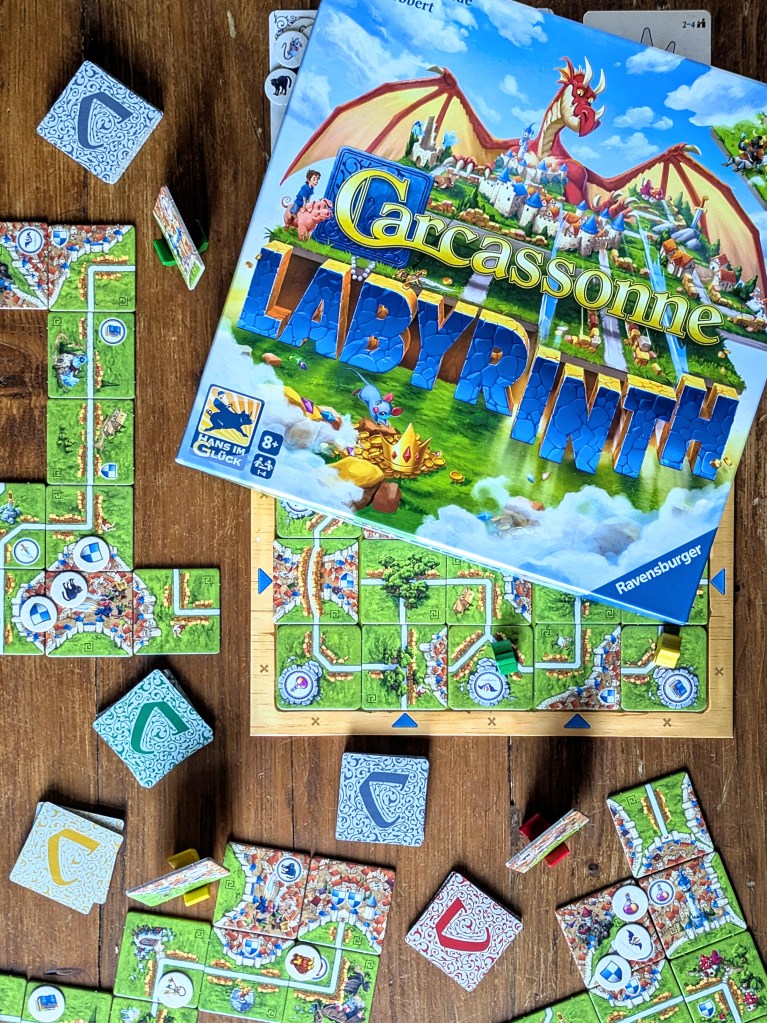
Key stats
1 to 4 players | 30 mins
Publisher: Ravensburger
Designer: Max J. Kobbert, Klaus-Jürgen Wrede
Artist: Marcel Gröber
Categories: Maze, Medieval
Key mechanics: Tile placement, Modular board, Sliding/Pushing, Route building
Game overview
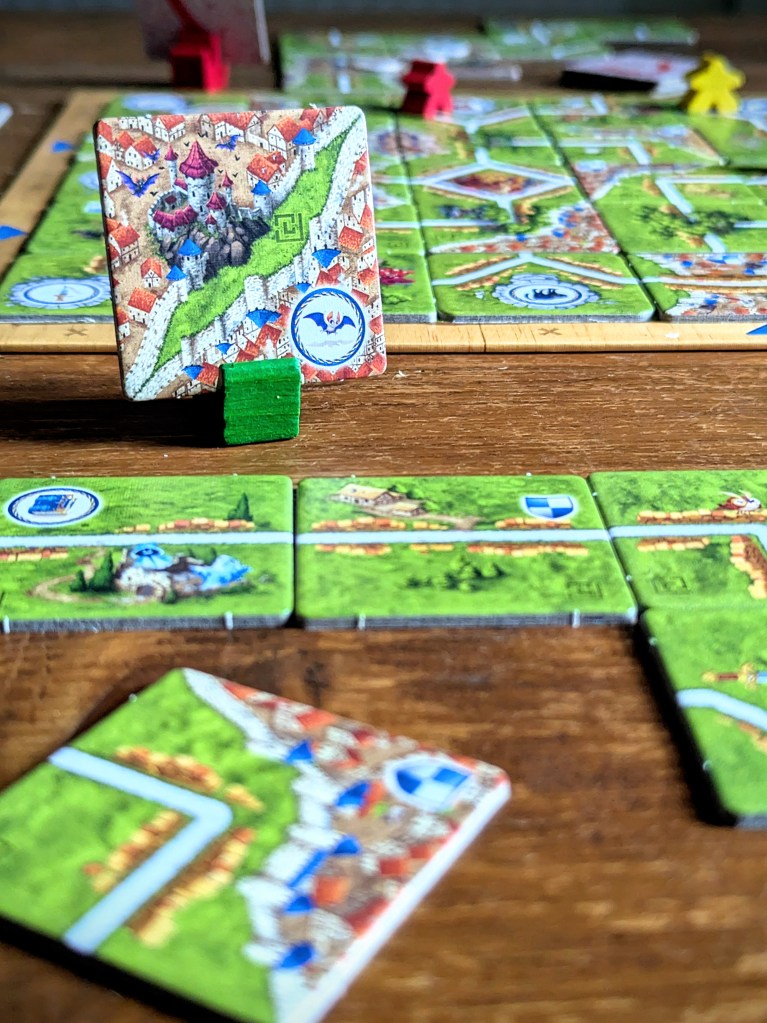
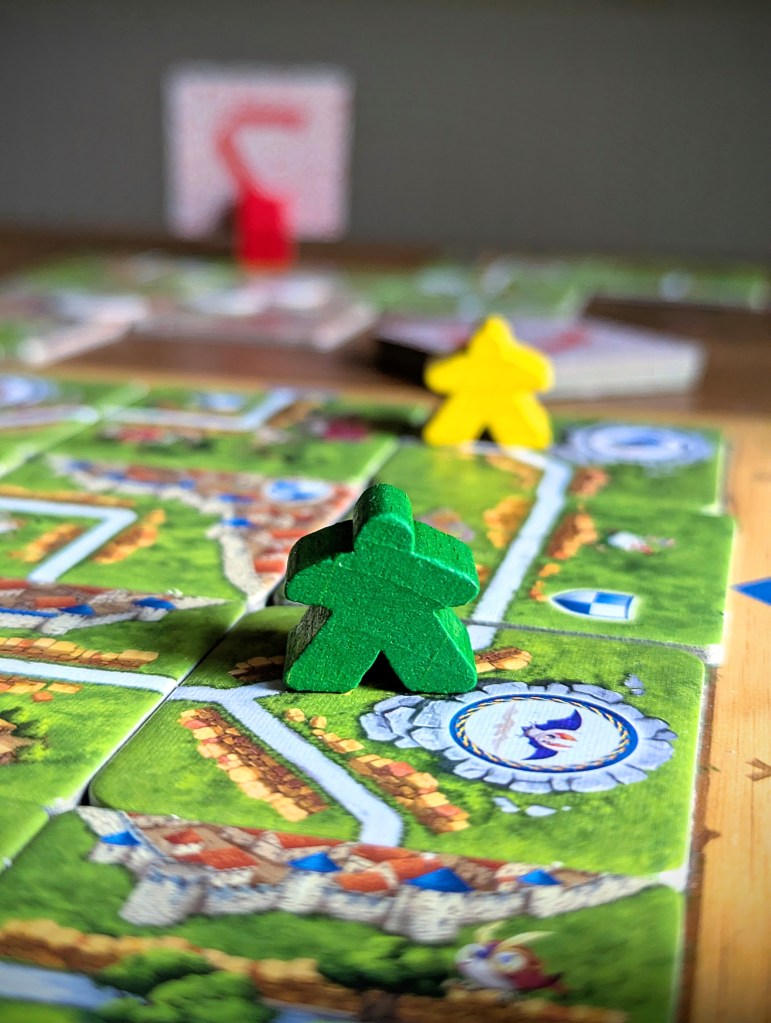
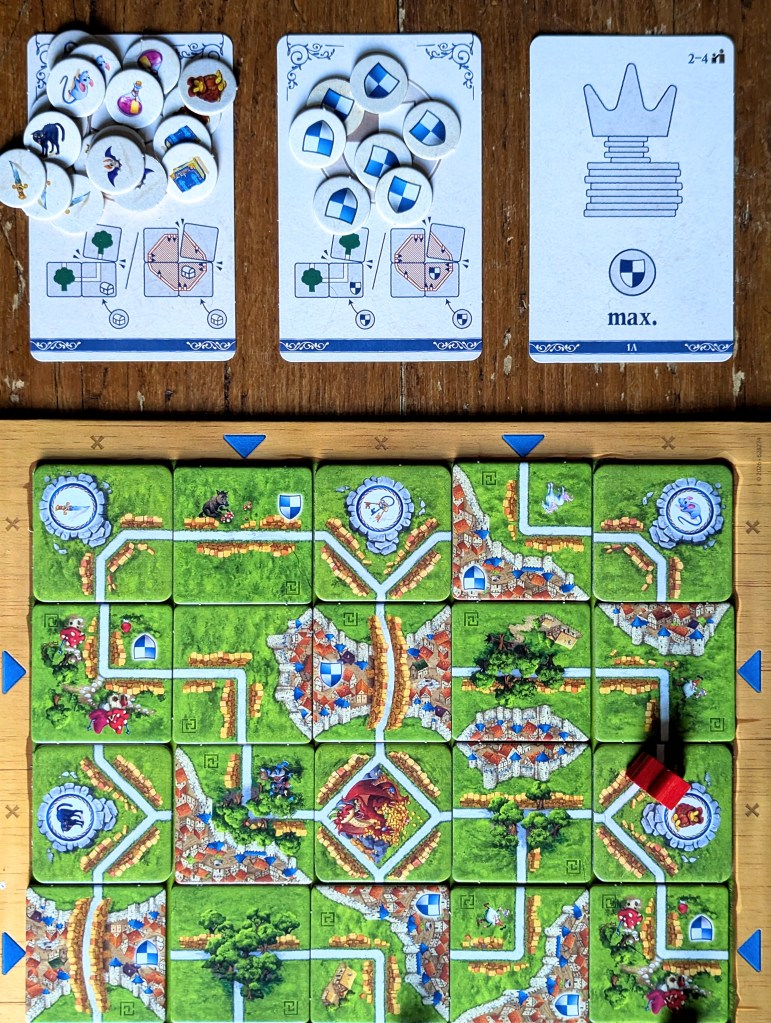
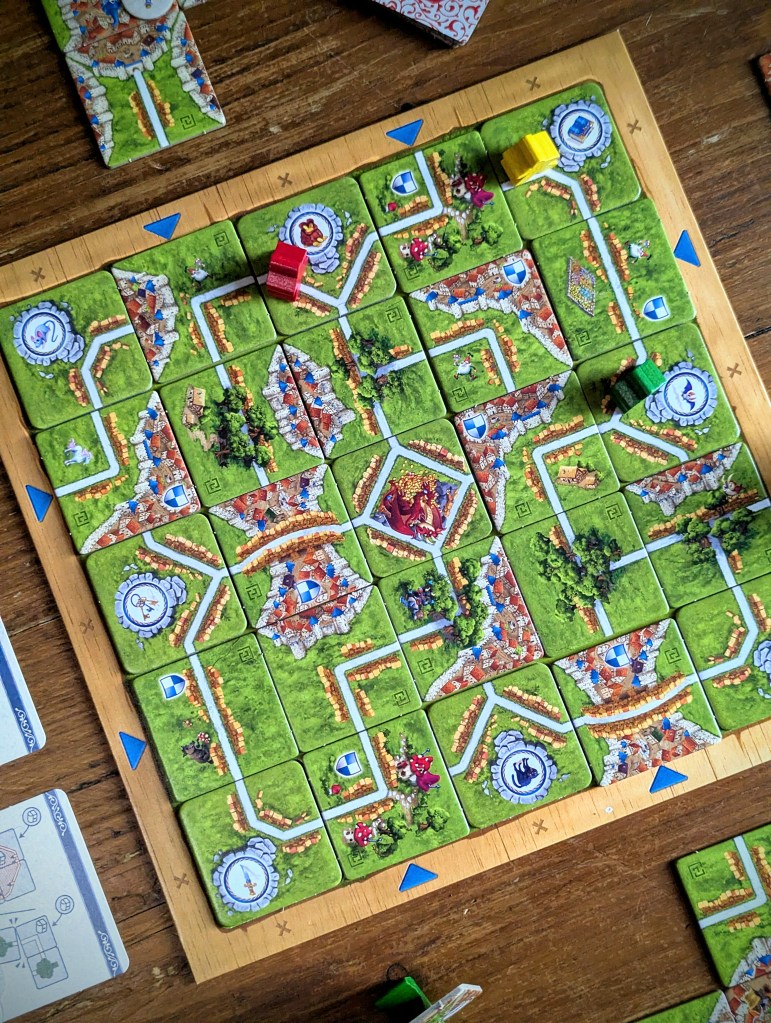
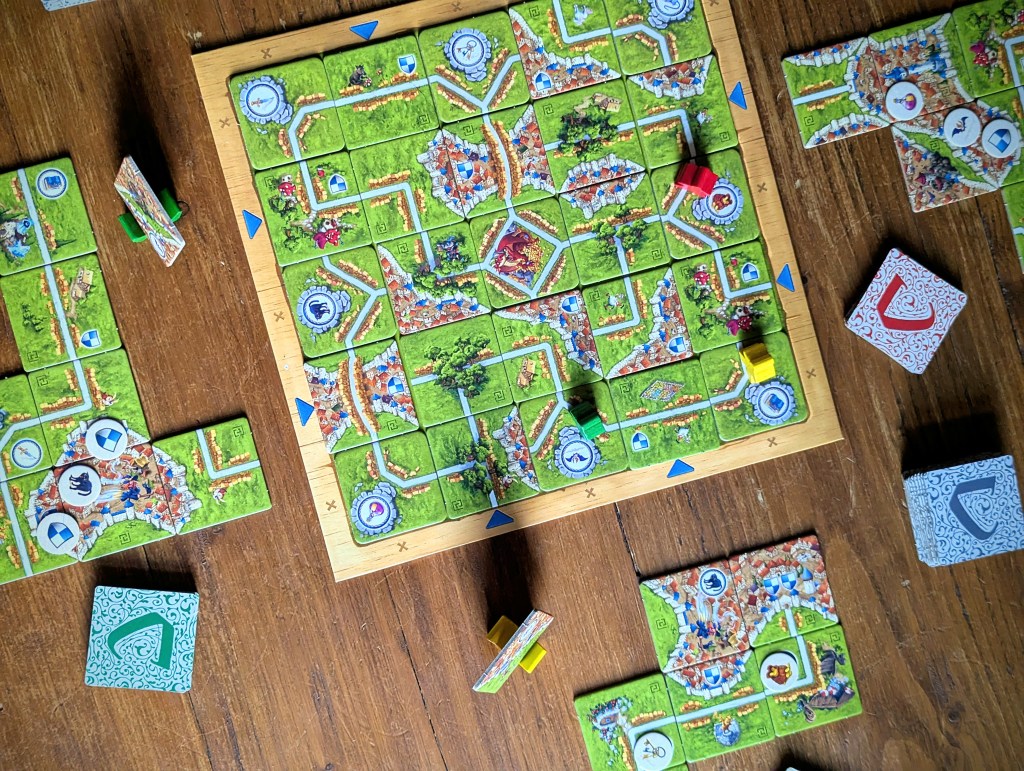
In Carcassonne Labyrinth, players alternate pushing tiles into a labyrinth so their meeple can travel through open paths to reach a treasure that matches their secret treasure tile. Any tiles they collect from the labyrinth or from finding treasures are added to their own personal Carcassonne area. They then draw a new treasure tile, telling them where they need to go next.
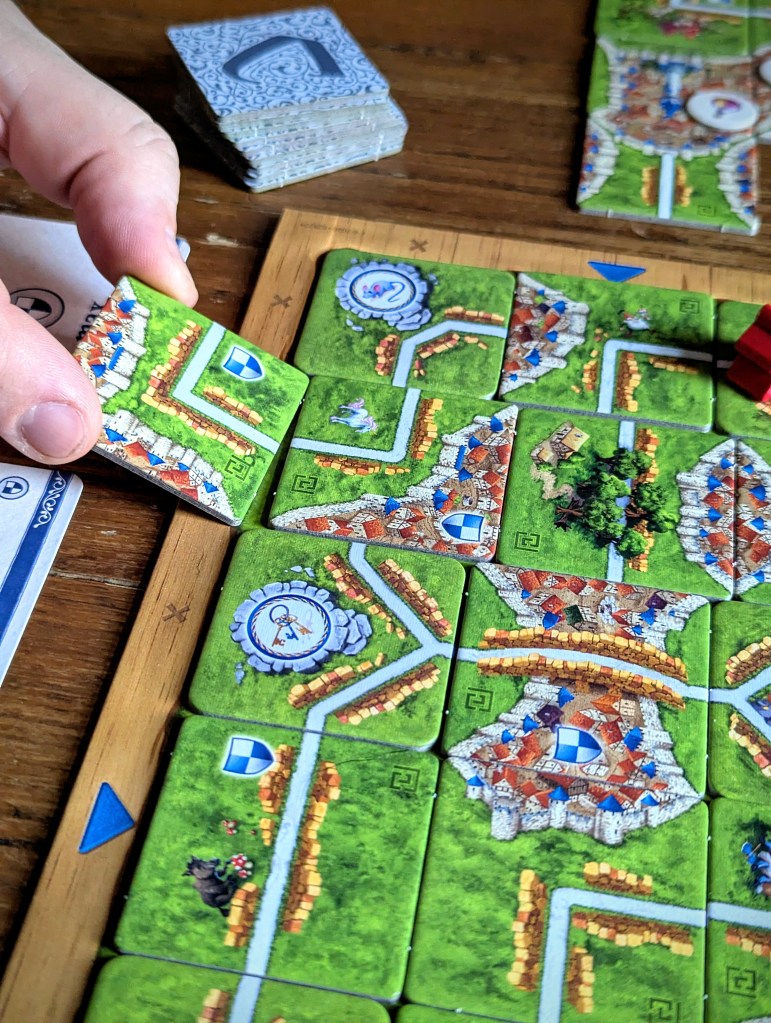
If a player adds tiles to their area that ‘complete’ a city or road, they can claim tokens for any shield or treasure icons on that completed area. After 10 rounds players stack together all the tiles and tokens they earned during the game. The player who wins the ‘Crown quest’ gets to top off their stack with their crown. In the standard game this is the person with the most shield tokens, but there’s variations where they need the most roads or the most cities. The remaining players add their plebeian meeples on their own stacks, and then it’s the player with the tallest stack who wins the game!
There are additional ‘Quests’ (different to the Crown Quest) that you can add in for a more advanced game. If you fulfil any quests on your turn, like completing a city exactly 3 tiles in size, you can take shields from the quest cards as a reward.
Solo mode
Solo mode is pretty similar to the multiplayer version. For Crown Quests, instead of being the player with the most of something, you have a value to beat instead (e.g. get 7+ shields or 5+ cities). At the end of the game, you measure your stack with the special solo measuring strip to see how well you did (1-5 stars). We haven’t tried solo yet so won’t be reviewing it today.
Our thoughts
Crossovers often feel like two separate IPs forced together in disjointed matrimony, but that’s not the case here. Carcassonne and Labyrinth are two of the most well known titles in ‘modern board gaming’, and while you can certainly feel the essence of both games in Carcassonne Labyrinth, they’ve been successfully blended into one cohesive, enjoyable game.
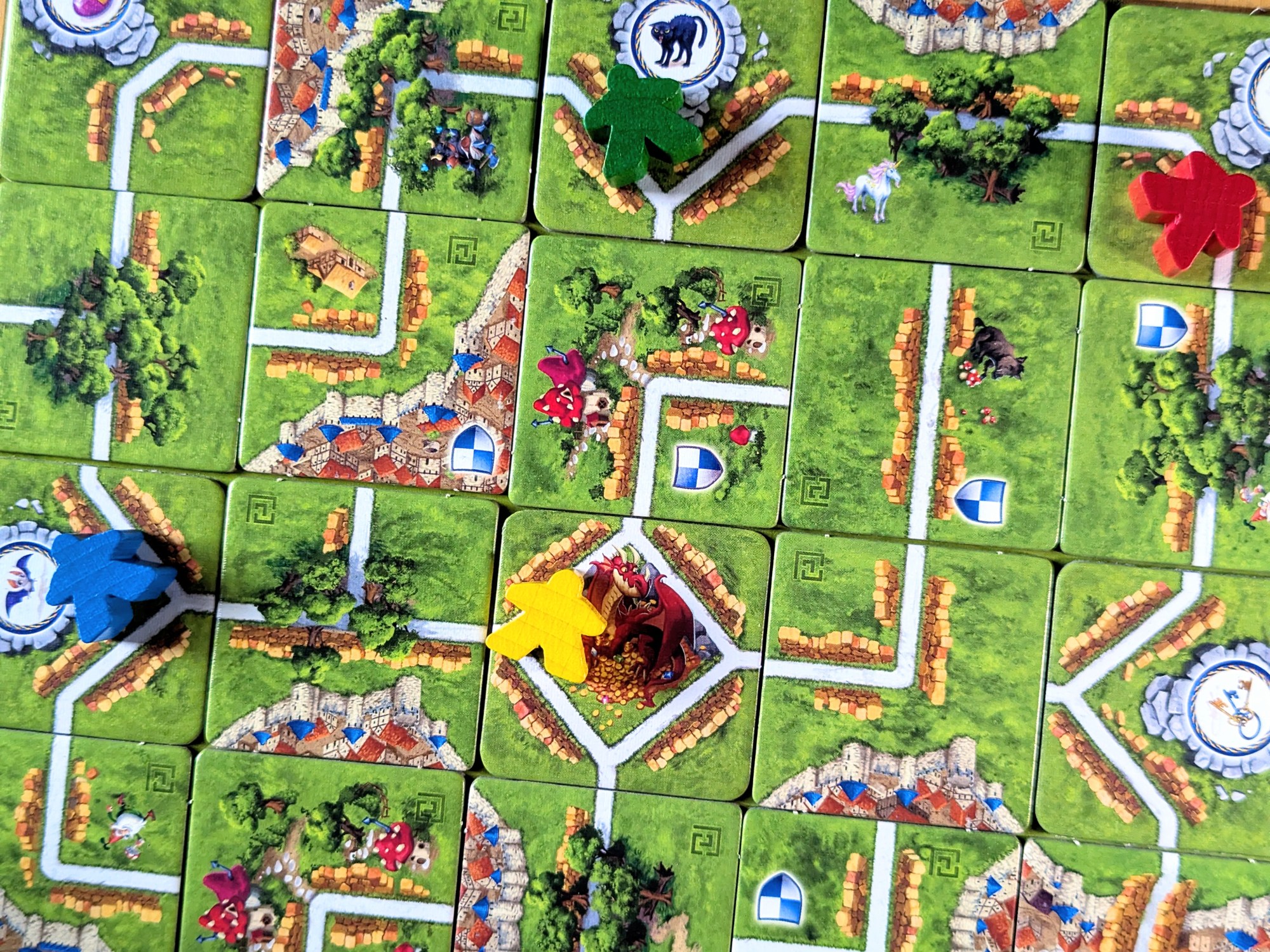
Carcassonne in particular has a special place in our hearts – it was one of the first games in our collection, it started my love for tile-laying games and it’s still a firm favourite to this day. So of course I’m a big fan of the aesthetic carried across into Carcassonne Labyrinth, and they’ve added extra details to the tiles that give it some magical whimsy. I also like that you use the player Crown tokens as mini tile stands to hold your current treasure tile – simple but handy!
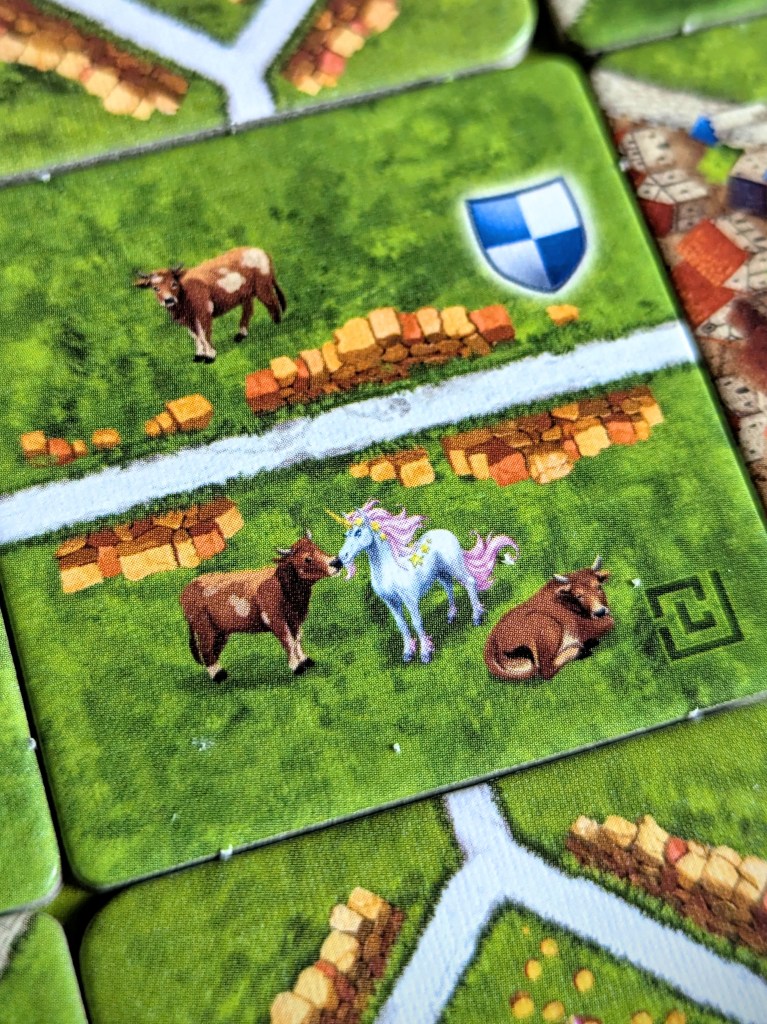
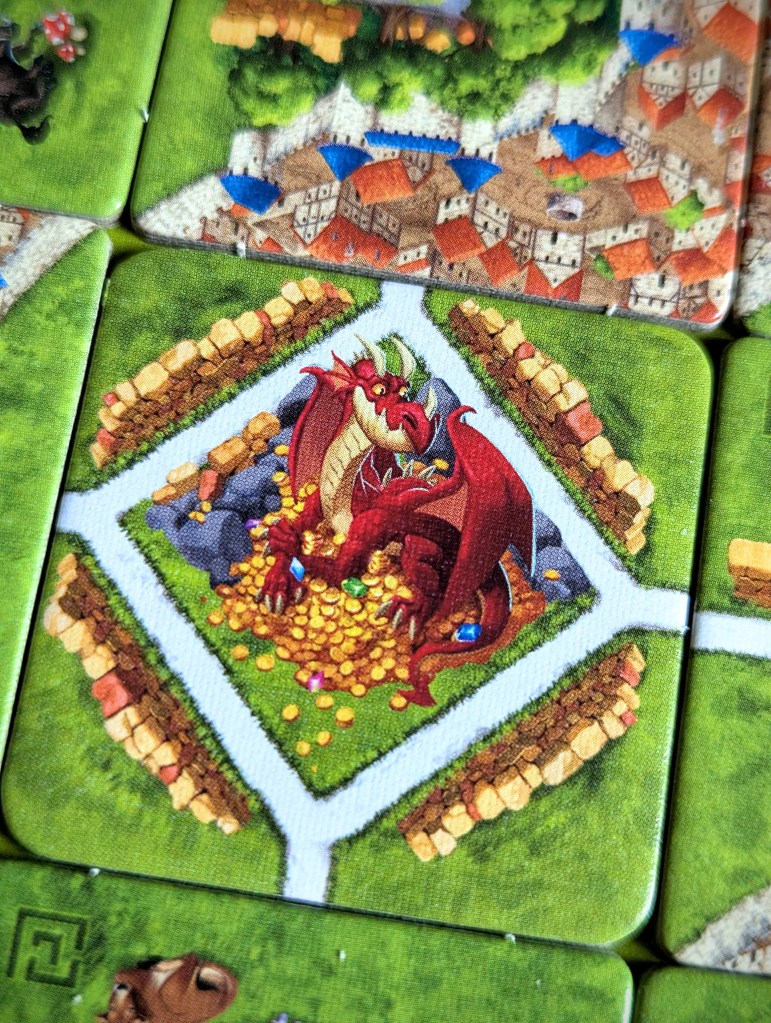
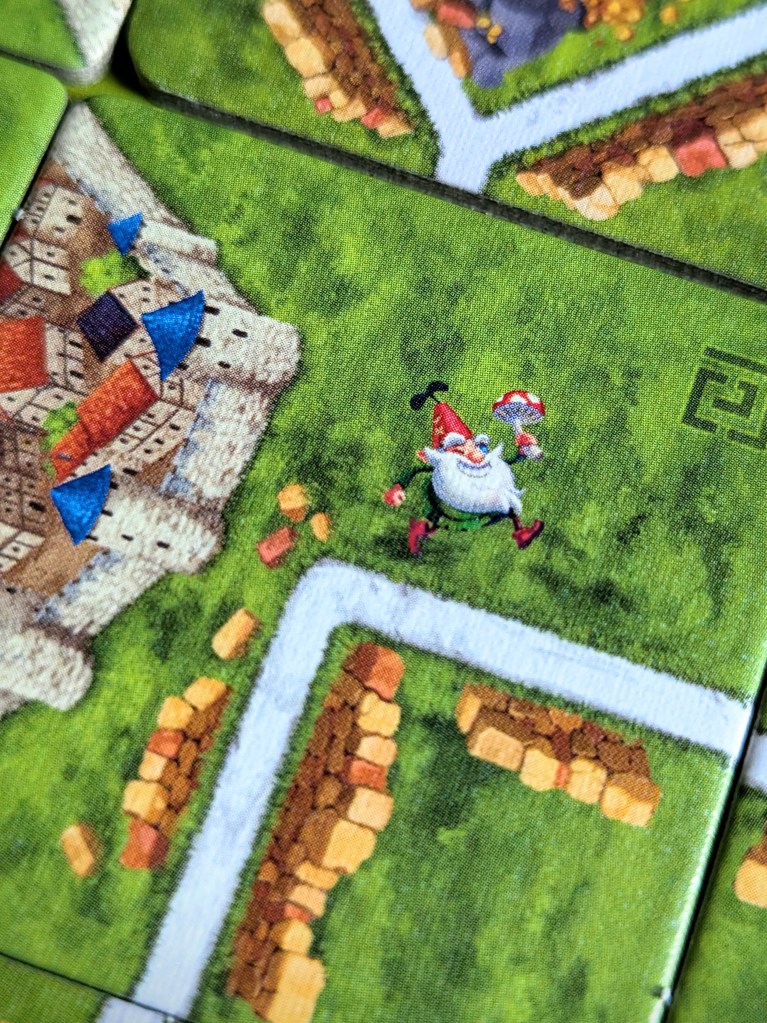
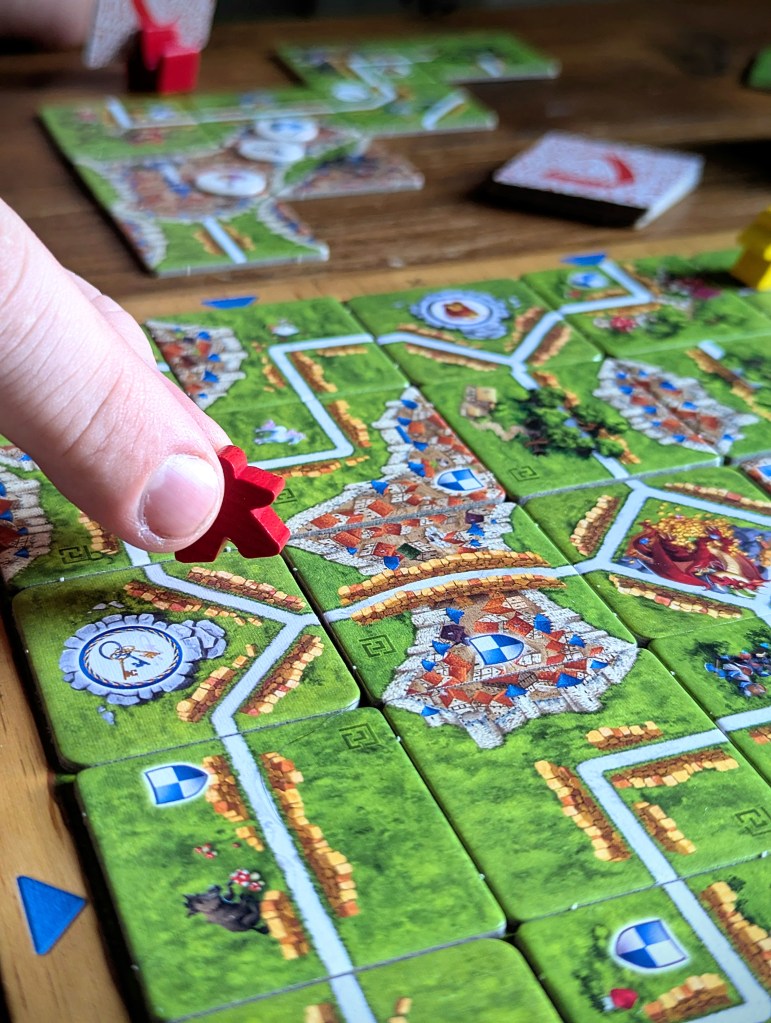
This is definitely a family-weight game that’s so easy to pull off the shelf and play. It’s rules light which makes it perfect to introduce to family and friends who aren’t gamers. It’s also very fun thanks to the tactile tile actions, especially when you’re messing with the labyrinth.
That’s not to say there’s nothing to the gameplay – finding your path through the maze is often a puzzle (that you can’t always solve!), and there is some strategy in how you build your Carcassonne and complete your roads/cities. The quest cards add some more interesting options too, if you need them.
There are 10 rounds in the game. This means you always get 10 tiles from the labyrinth, plus any treasure tiles you complete, of which there’s 8. It’s not always possible to reach every treasure in a game, depending on the luck which tiles you draw and the layout of the labyrinth (which will change between your turns thanks to the other players). Some turns you can just be completely trapped by dead ends, which may frustrate some players.
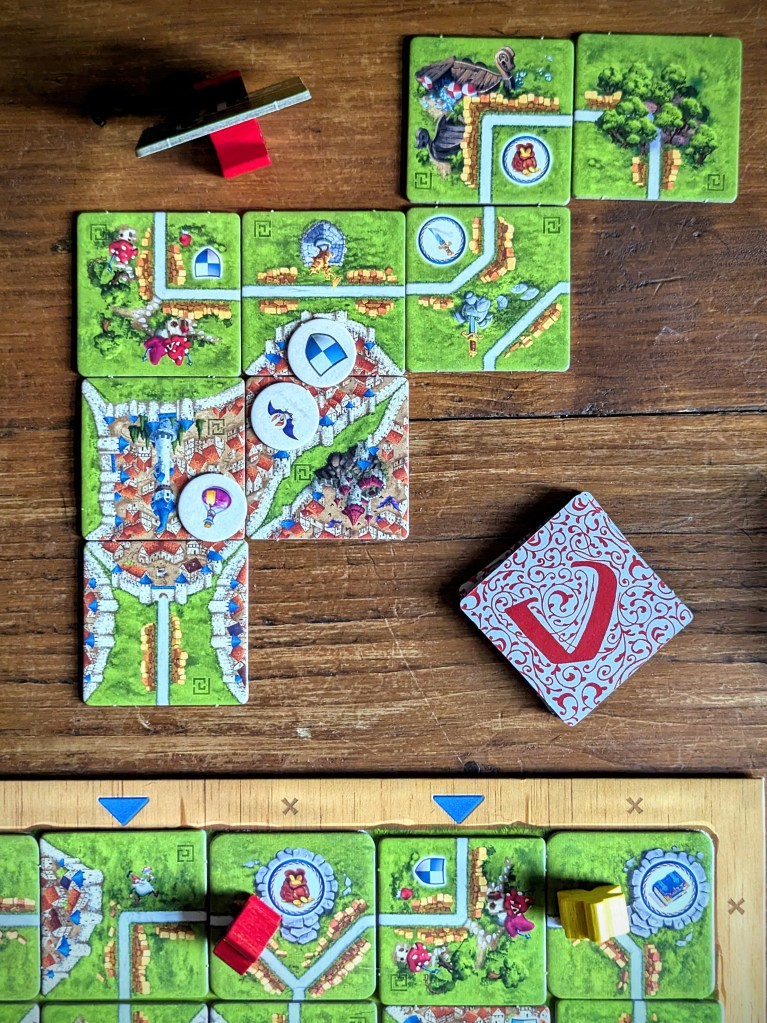
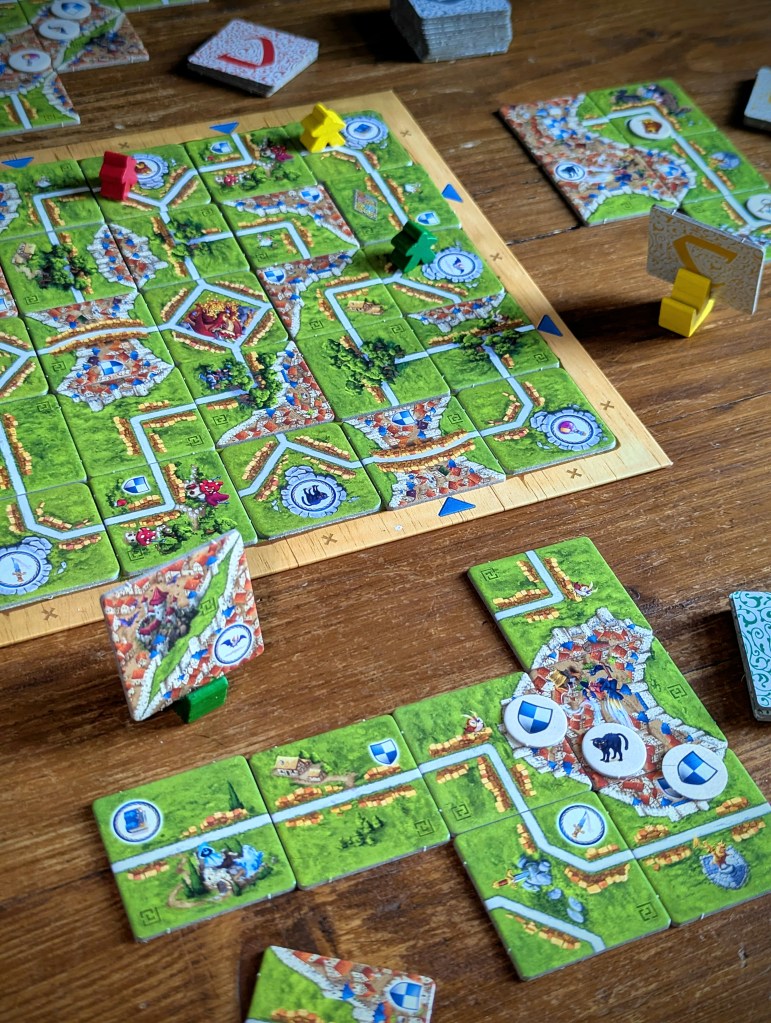
One important and fun rule to remember is: if you push out a tile that has a meeple on it, that meeple gets put back in the labyrinth on the opposite side of the board (i.e. they get put on the tile you just pushed in). You can use this to get yourself out of sticky situations, or to mess with other players (although you might end up unintentionally helping them out!).
Piling up your winnings to see who has the biggest stack – like a dragon admiring its hoard – is another novelty that goes hand in hand with the whimsical vibes of the game. We personally think it’s a fun alternative to the classic method of just counting up your score, and the people we’ve played with enjoyed competitively comparing stacks. I think it’s a great option for end-game scoring with kids. But I can see it bemusing some people who are used to (or prefer) more traditional scoring.
Our only mild issue was with the shield Crown Quest. You already get the benefit of more shields adding height to your stack, so then getting a crown for having the most shields feels a little like you’re double counting. But we don’t think the other Crown quests (most roads or cities) have the same issue, because they aren’t inherently linked to any tokens.
Verdict
It sounds like a gimmick, but Carcassonne Labyrinth is a crossover that works. It’s a fun, quick, family-weight tile-layer that’s perfect if you’re looking for something lighter that’s suitable for families and casual gamers with enough puzzliness to keep it interesting.


