
Advert: Hachette Board Games UK loaned a copy of this game (via the UK BG Review Circle) for the purposes of review. All thoughts and opinions are our own.
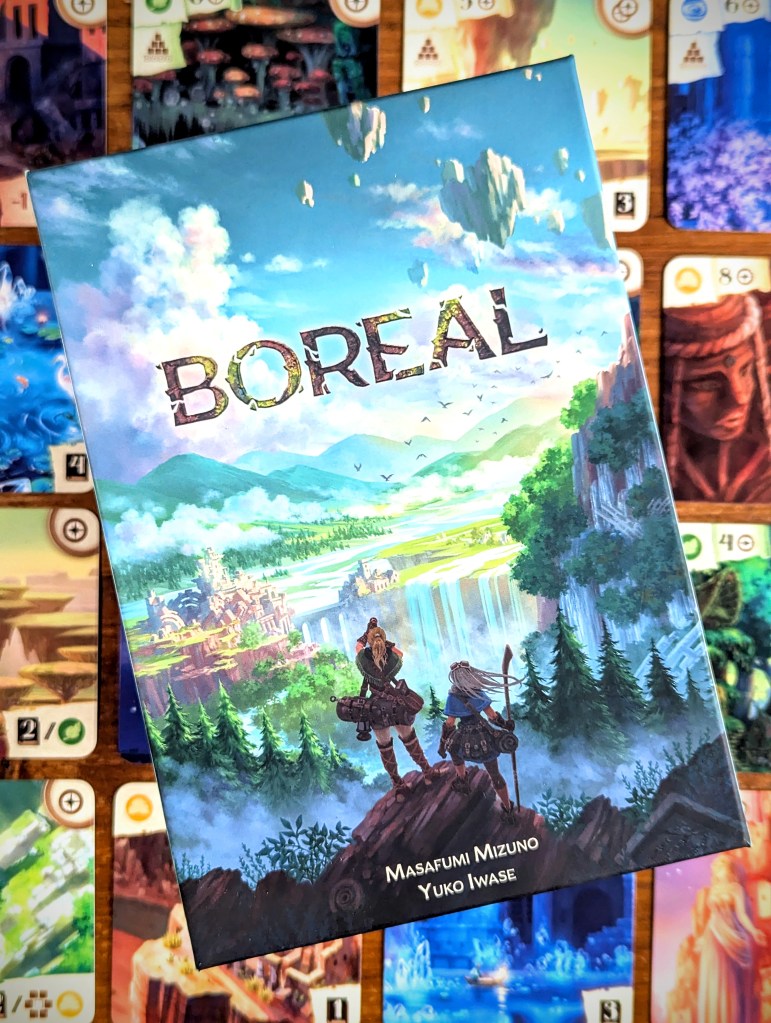
Key stats
1 to 5 players | 15-20 mins | Age 8+
Publisher: Spiral Editions / Hachette Board Games UK
Designer: Masafumi Mizuno
Artist: Yuko Iwase, Masafumi Mizuno
Categories: Exploration, Card Game, Environmental
Key mechanics: Open drafting, Set collection, Tableau building
Game overview
In Boreal, both players are exploring ancient ruins in a world reclaimed by nature, trying to gain the most knowledge. Each round, players take turns to either place or reserve a card from the central river.
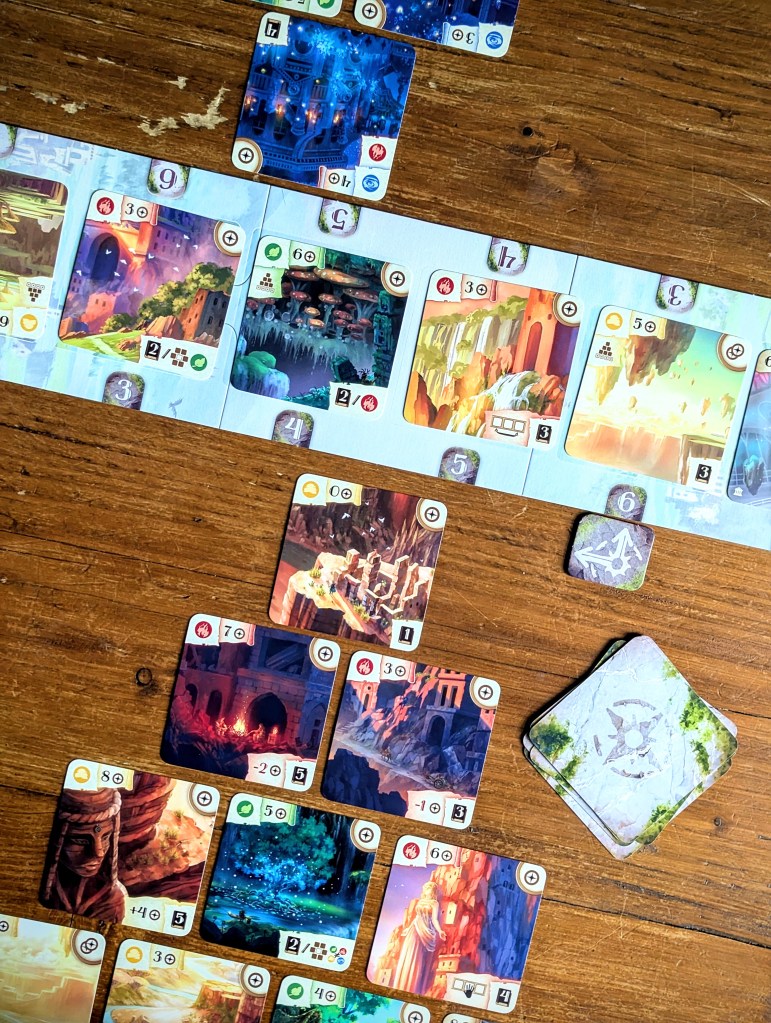
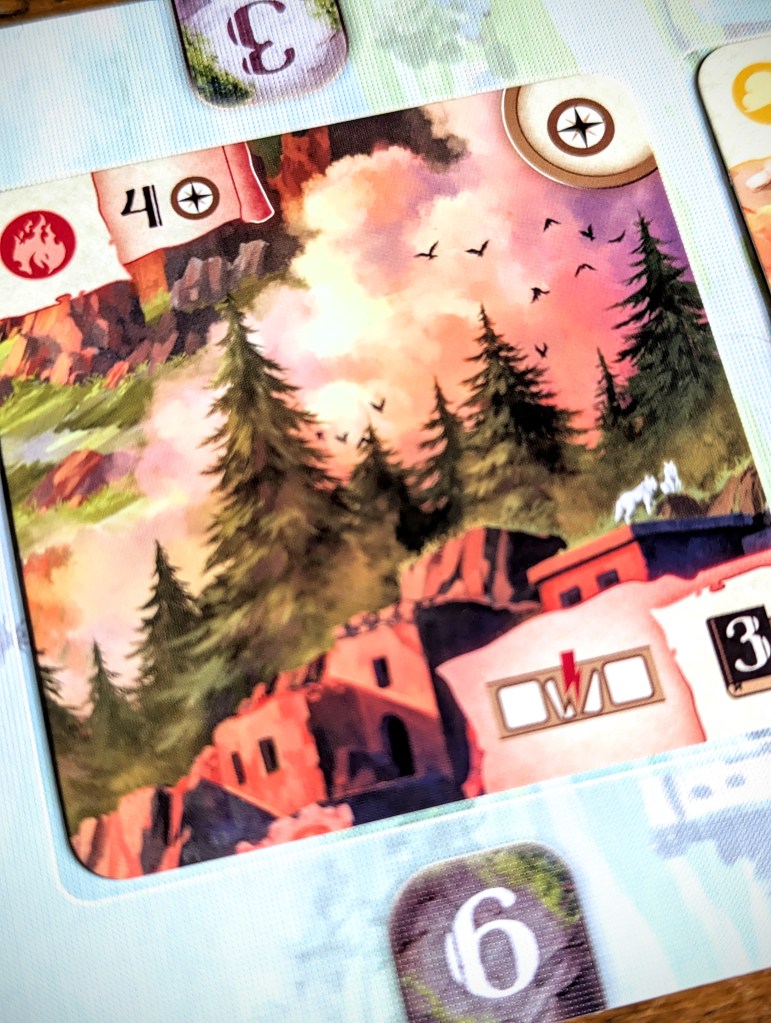
If you’re taking a card to place in your pyramid, you can only draft a card that is to the left of your player exploration marker, which is positioned based on the number of compasses (currency) you currently have. The more compasses you have, the more river cards will be available to you. When you take the card you pay its compass cost, which you pay by moving your exploration marker down accordingly. Then you add the card to your pyramid, activating a placement effect if it has one.
If instead you want to reserve a card, you take a card from anywhere in the river (your exploration marker doesn’t matter here) and reserve it next to your pyramid. When reserving a card you don’t have to pay any compasses. In a later turn you can choose to place a reserve card into your pyramid instead of taking a card from the river – and this is when you need to pay for it.
When adding cards to your pyramid, you have to build from the bottom up and you can only put a card on the next level up if there are two cards to go underneath. And once a card is placed it can’t be moved (unless you place a card that has a swapping effect).
At the end of your turn, regardless of what action you chose, you’ll earn compasses based on the available compasses in your pyramid – by available, I mean you only count the cards that don’t have another card placed above them.
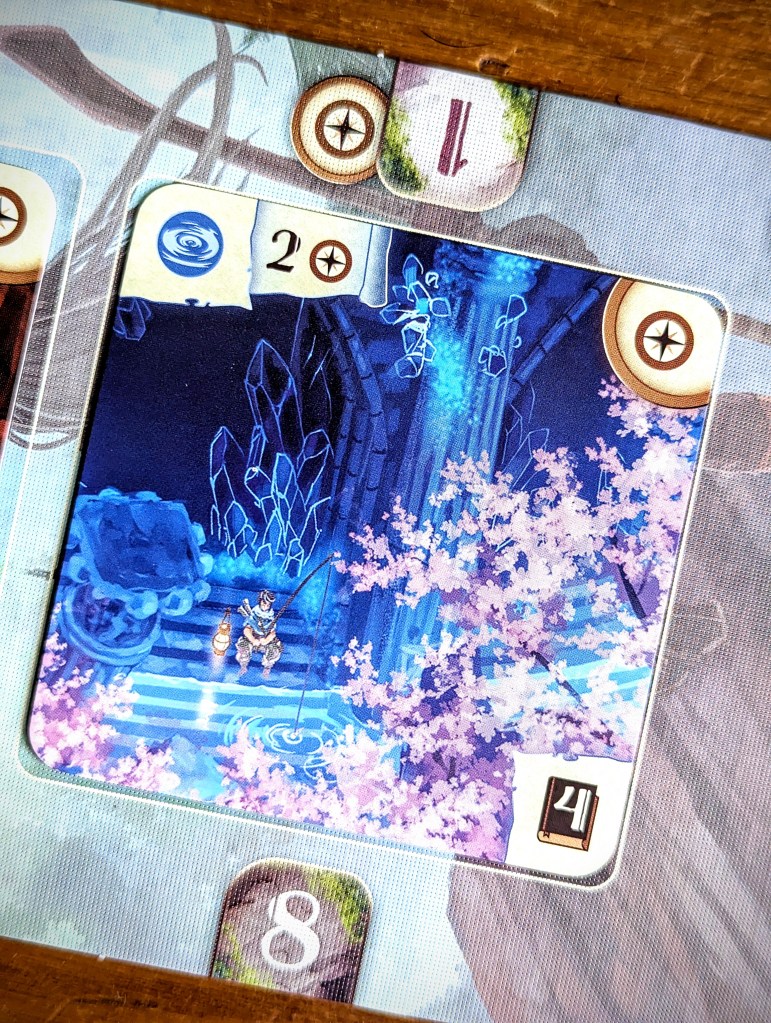
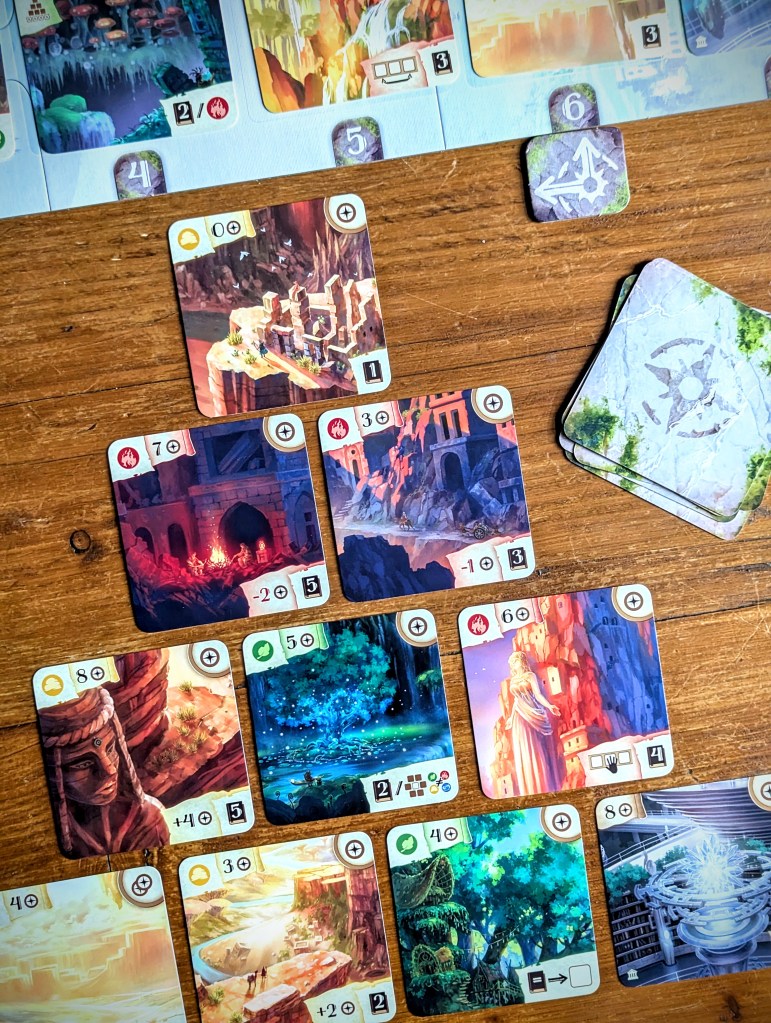
The final round is triggered when someone places their 10th card, topping off their pyramid. Then you score the knowledge (points) earned from each card in your pyramid. Some cards give you points outright, some give points based on what colours you have in your pyramid (e.g. 2 points per blue card), and so on. The player with the most points wins!
Our thoughts
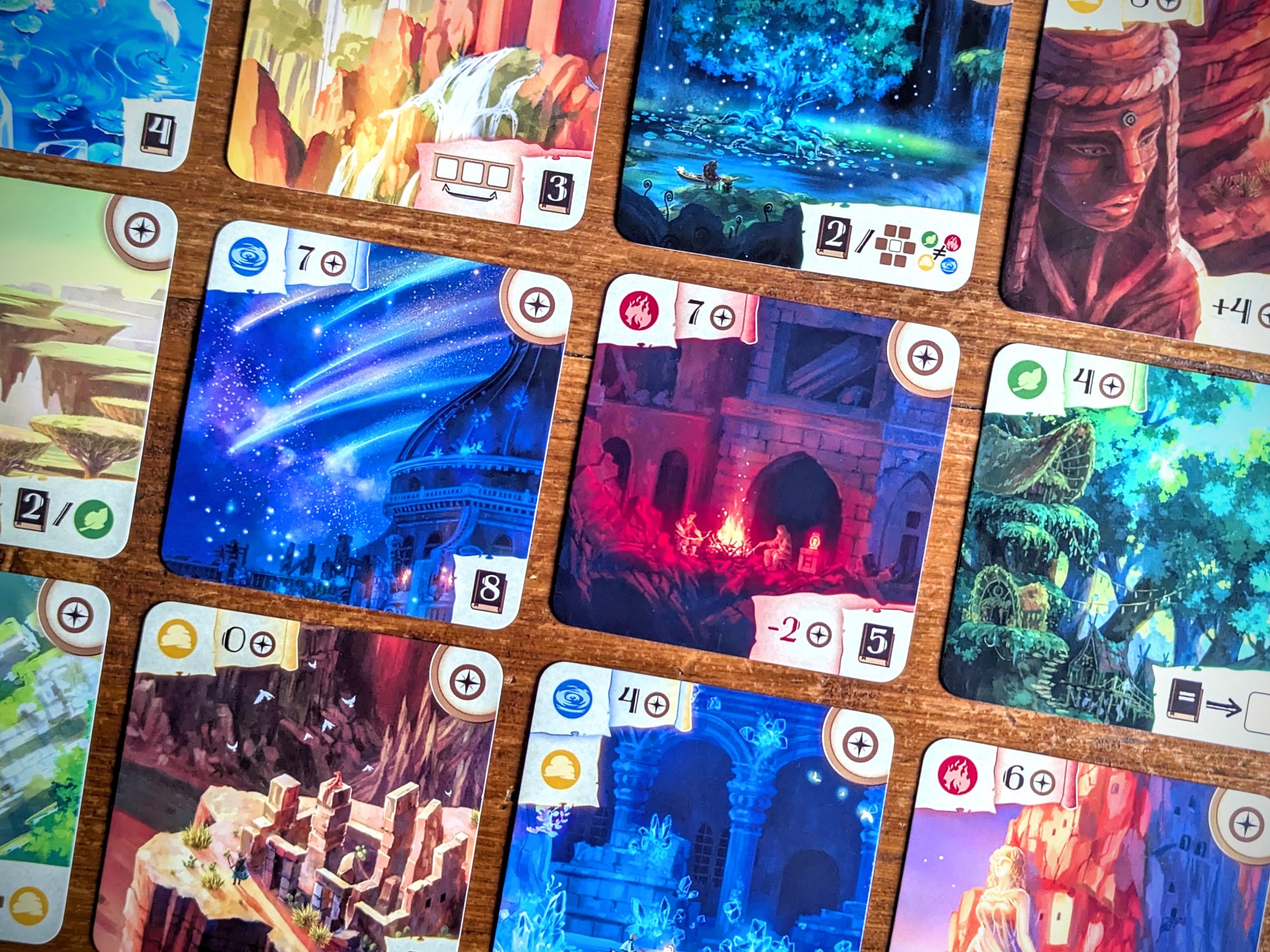
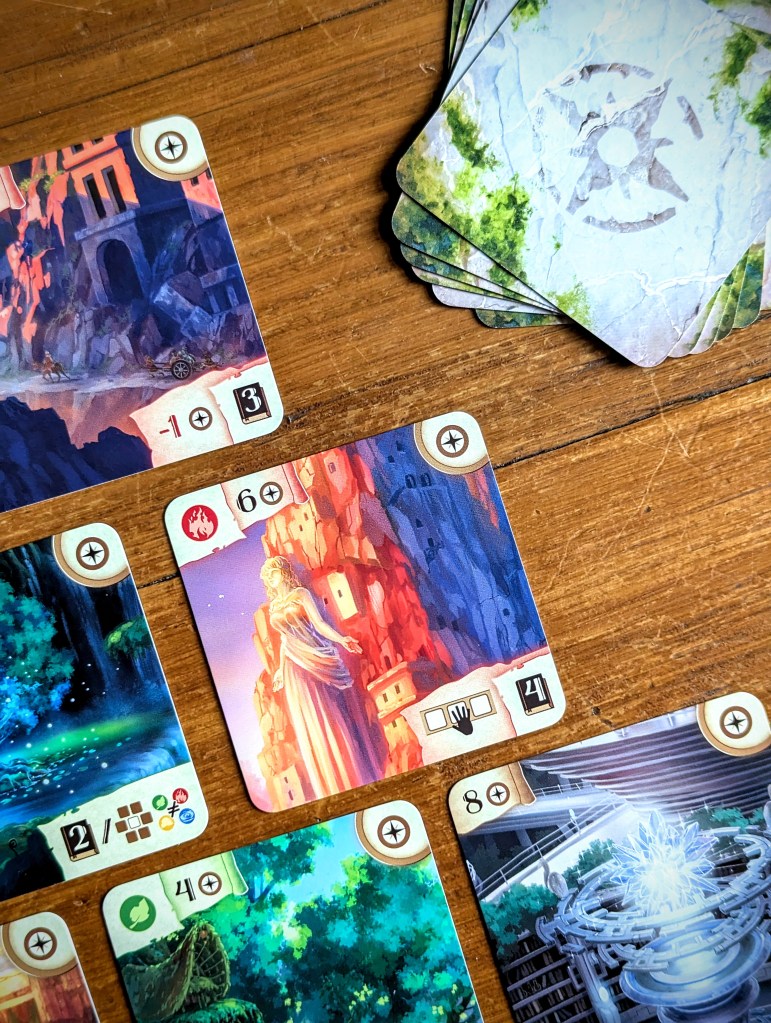
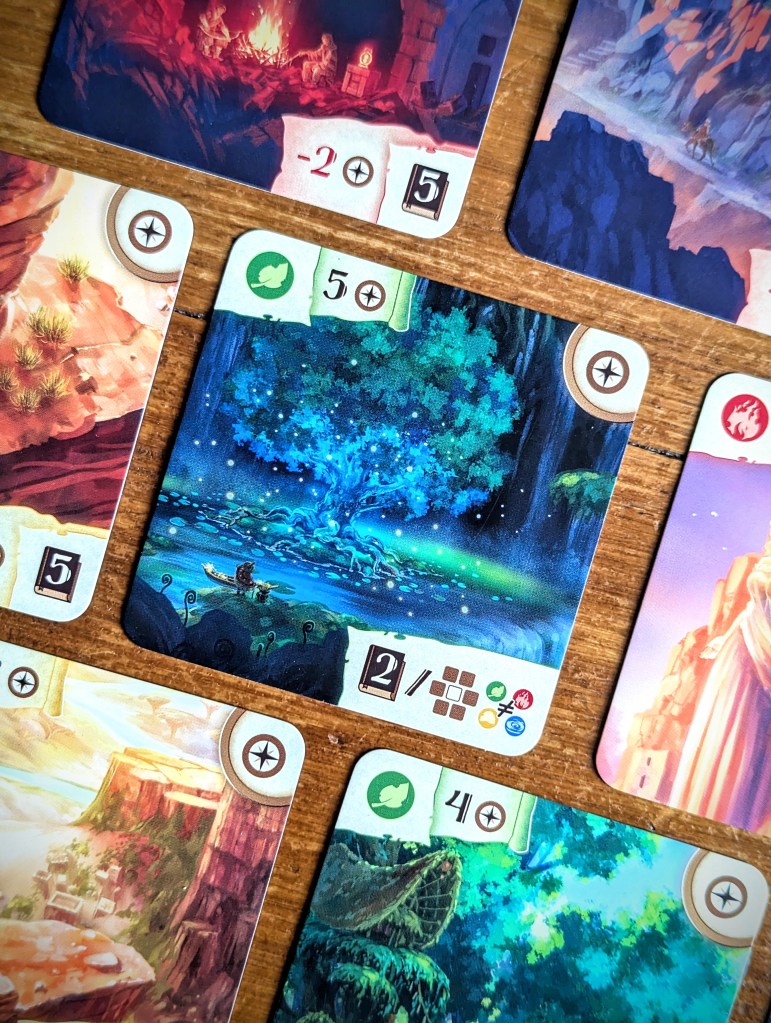
The illustrations in this game are absolutely gorgeous – I’m not sure I can do them justice in photos but by golly I’ve tried. There’s just so much tiny detail on each card! The box also includes full art postcards, which is a nice touch.
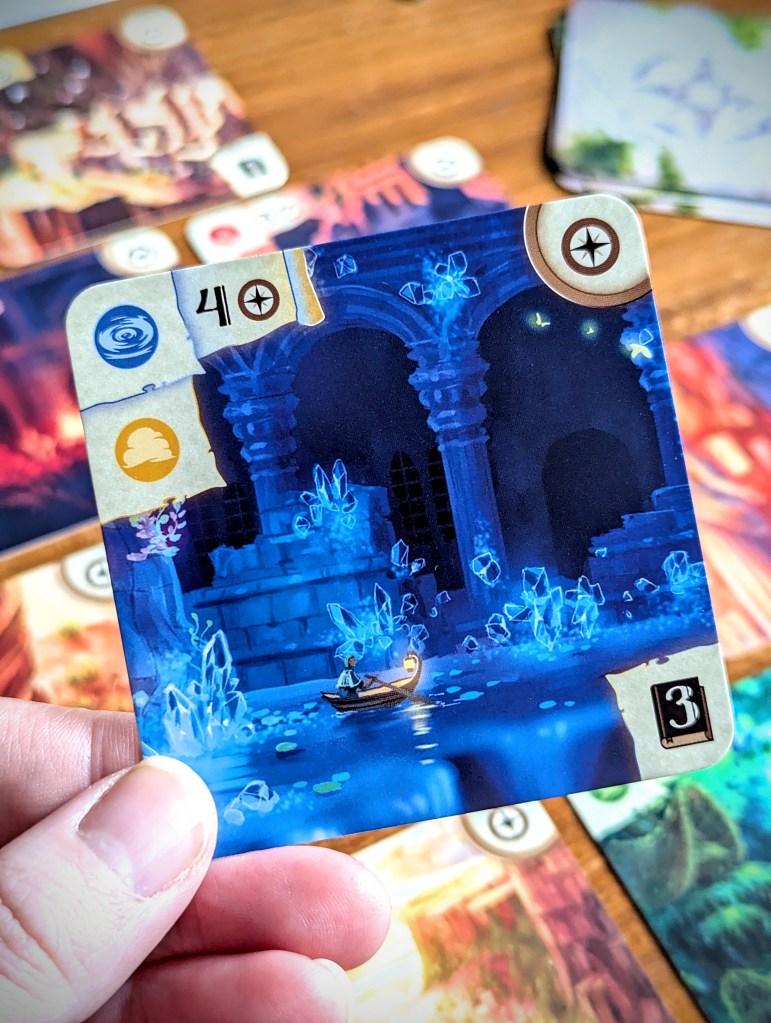
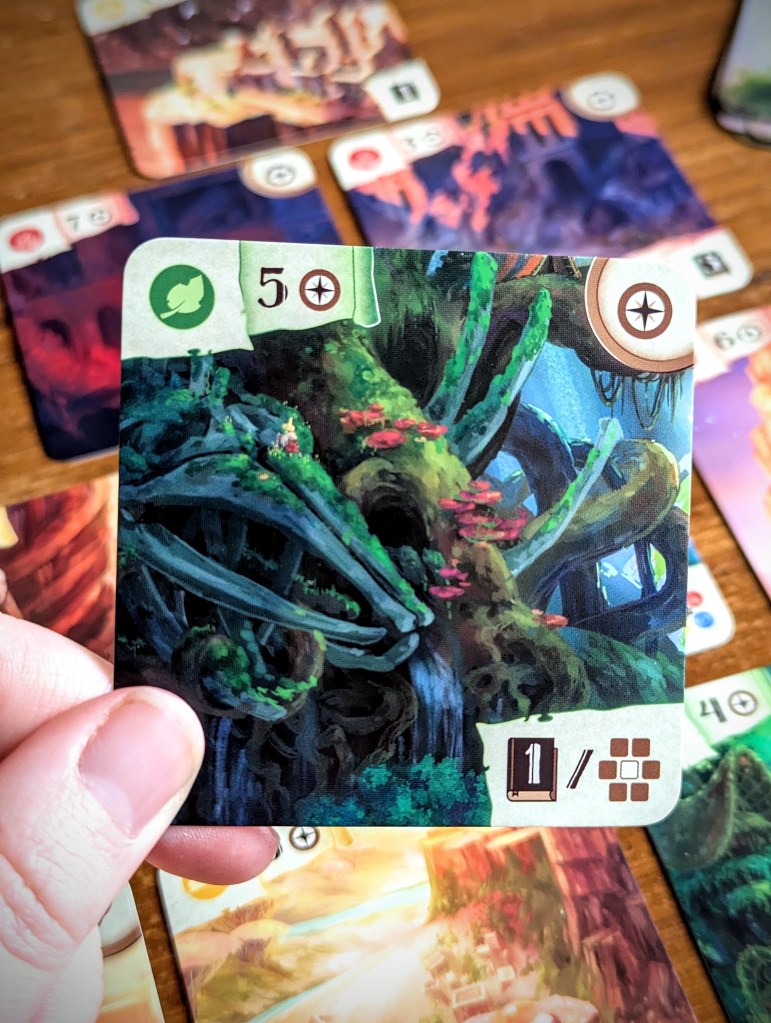
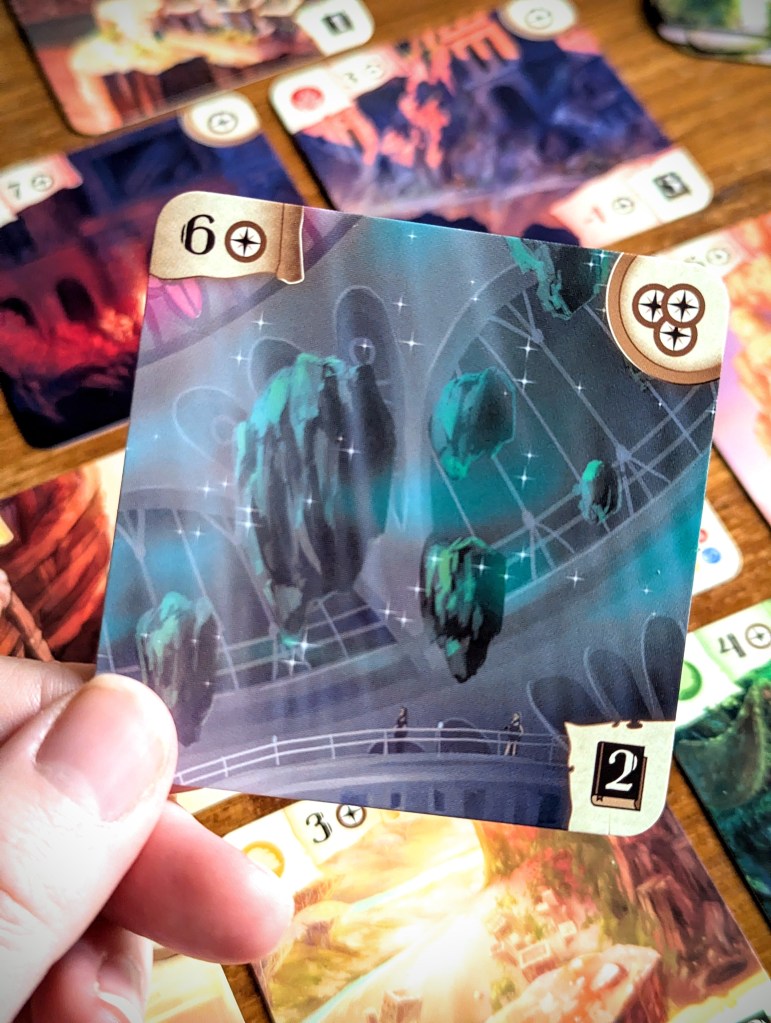
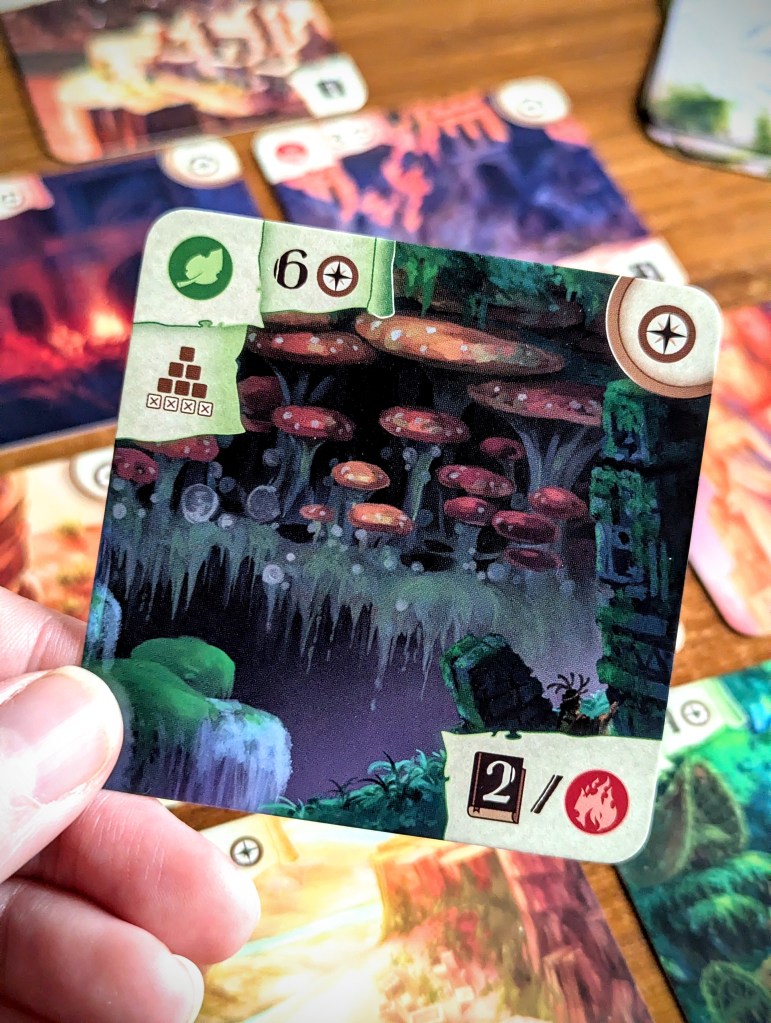
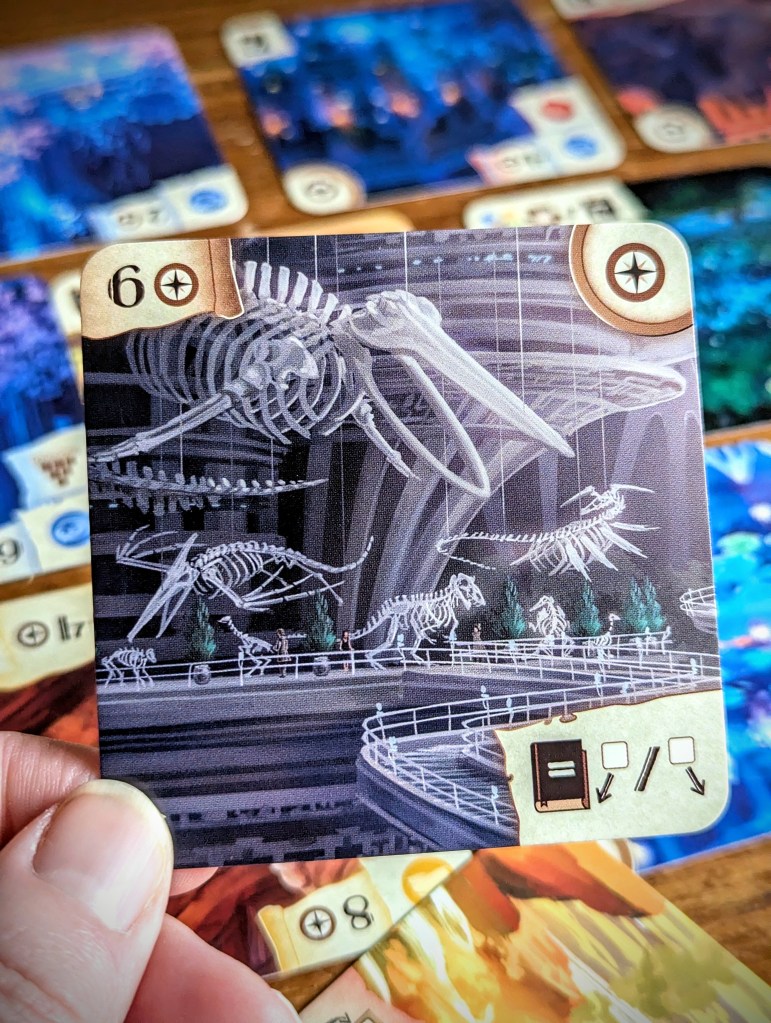
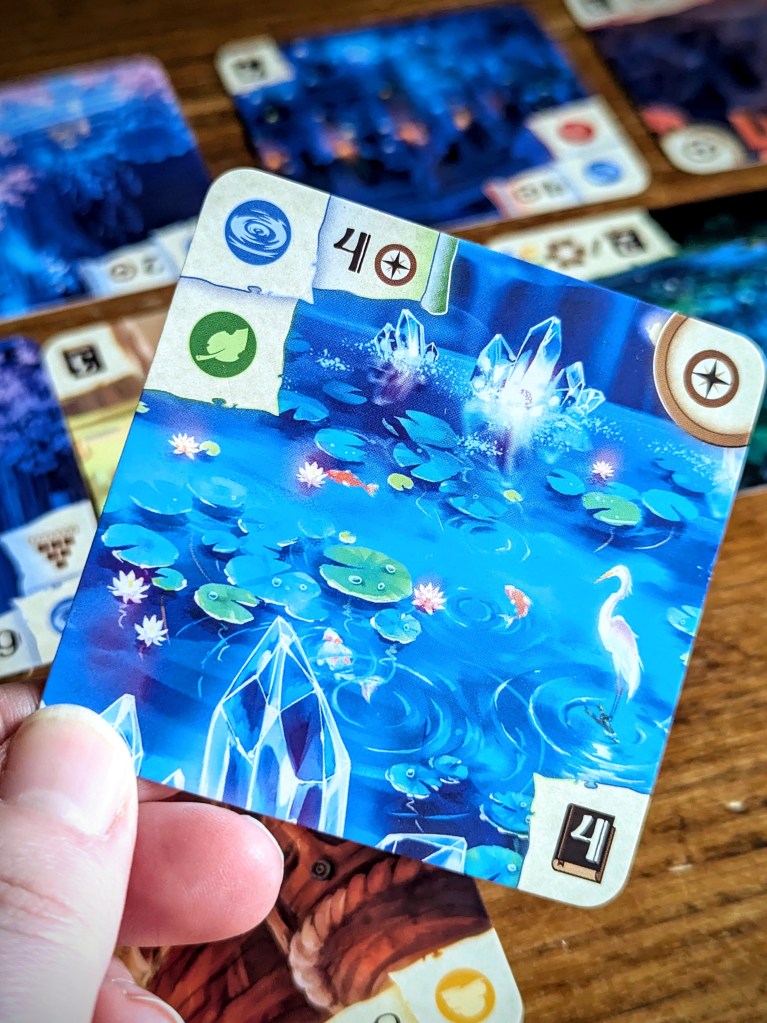
The crux of the gameplay is how the market availability and compass currency interplay. You need to balance spending compasses to get the card you want (and usually the better the card, the more it costs) against making sure you earn enough back – not only because you need to to buy cards next round, but because it determines what cards will be available to you. And you have to balance building up your pyramid with having enough available compasses. Sometimes you REALLY want the card so you’ll take the hit knowing your next turn will be limited. Sometimes you’ll not buy a card at all to save more compasses and buy something BIG next turn.
Not only that but you’re playing opposite each other, so your opponent’s access to the river is inverted. What’s expensive for you is cheap for them, often they’ll have access to cards you don’t, and vice versa. It’s all about the timing and tricky card swiping decisions.
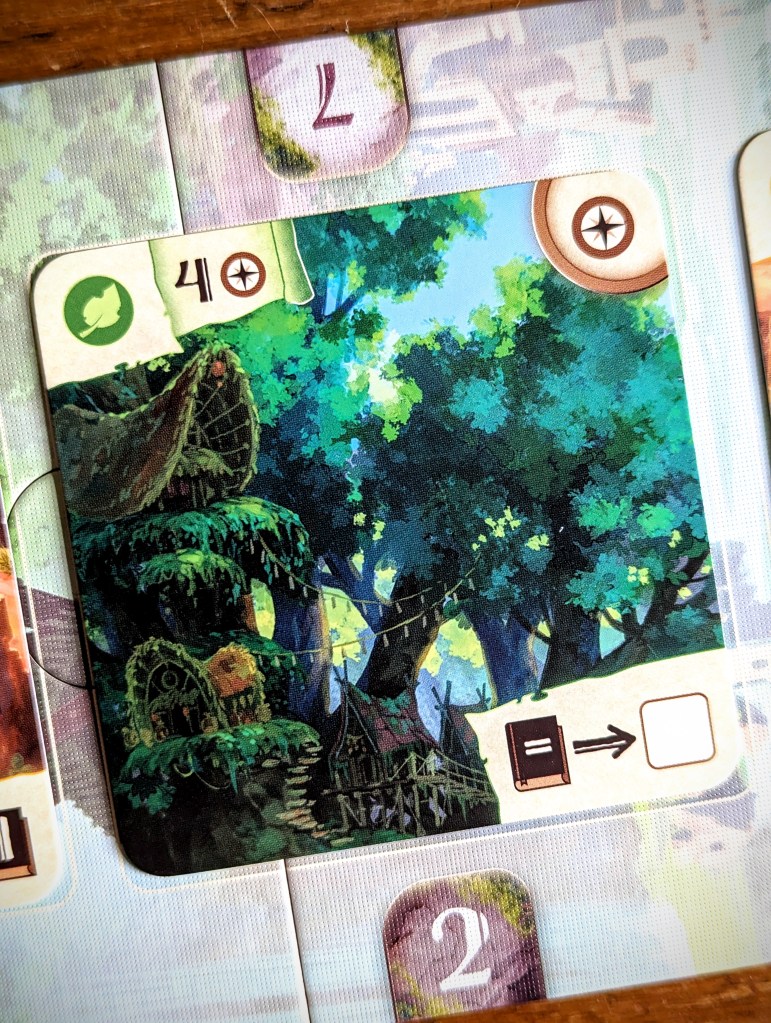
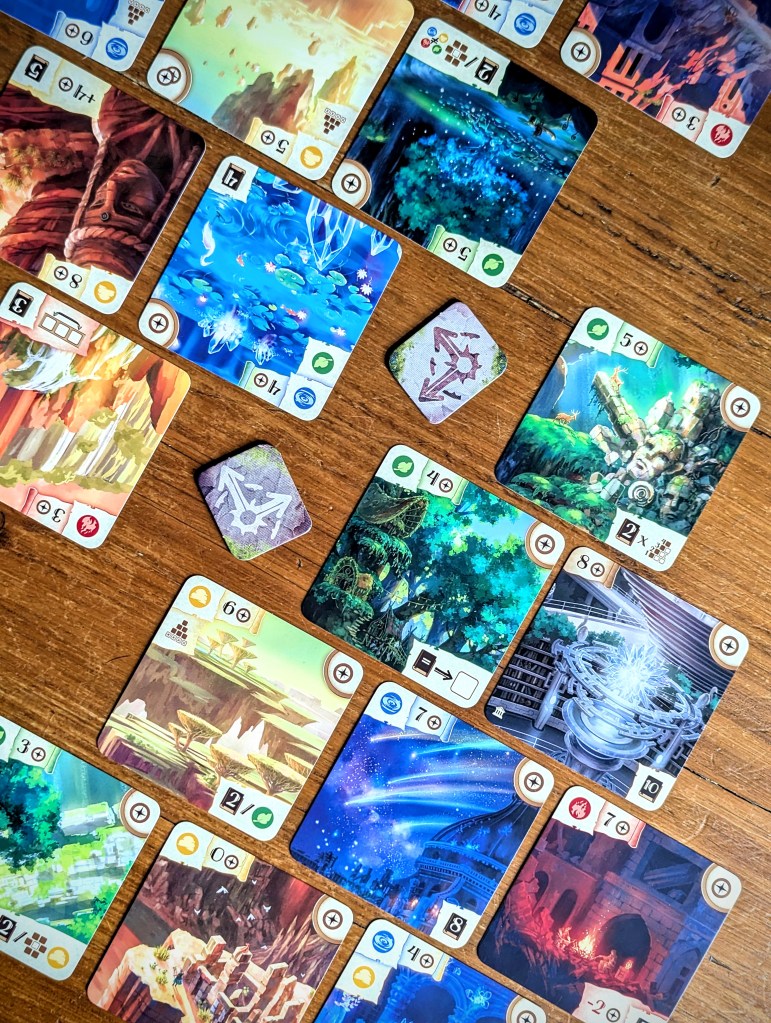
There is a bit of the luck of the draw in this game, and often you have to take a gamble on the cards that score based on other adjacent cards (for example, one that scores based on adjacent colours). Hopefully the right cards come out in time, and hopefully you can reach them. There are 3 super-special cards (Archive cards) shuffled into each game – you can only grab one, so they are hot property IF they come out (and you might grab the first one but regret it when you see another come out that would have been much better for your pyramid!)
While the box says 15-20 minutes, I think most games would be longer than that, depending on the players and how long they deliberate for. I would say 30 minutes is more accurate (45 minutes if you have a pair of analysis paralysis demons playing!).
Verdict
Overall we really enjoyed Boreal, it’s a clever little 2-player tableau builder and the art is absolutely gorgeous. It’s light with a little bit of crunch thanks to the unique compass/market tracking forcing you to make tight decisions. If you’re after a tight 2-player game and like the tableau building in Castle Combo, Boreal is worth your attention.
(…Castle Combo is still my GOAT, though).


