
Advert: Rock, Stone & Dice loaned a copy of this game (via the UK BG Review Circle) for the purposes of review. All thoughts and opinions are our own.
Today I’m sharing our thoughts on the dazzling Gems of Iridescia…but do we think it’s a true gem?
Key stats
1 to 4 players | 60 to 90 mins | Age 10+
Publisher: Rock, Stone & Dice Games
Designer: Roberto Panetta
Art: Sarah “Freedz” Conlon
Categories: Mining, Fantasy
Key mechanics: Set collection, End game bonuses, Dice rolling
Game overview
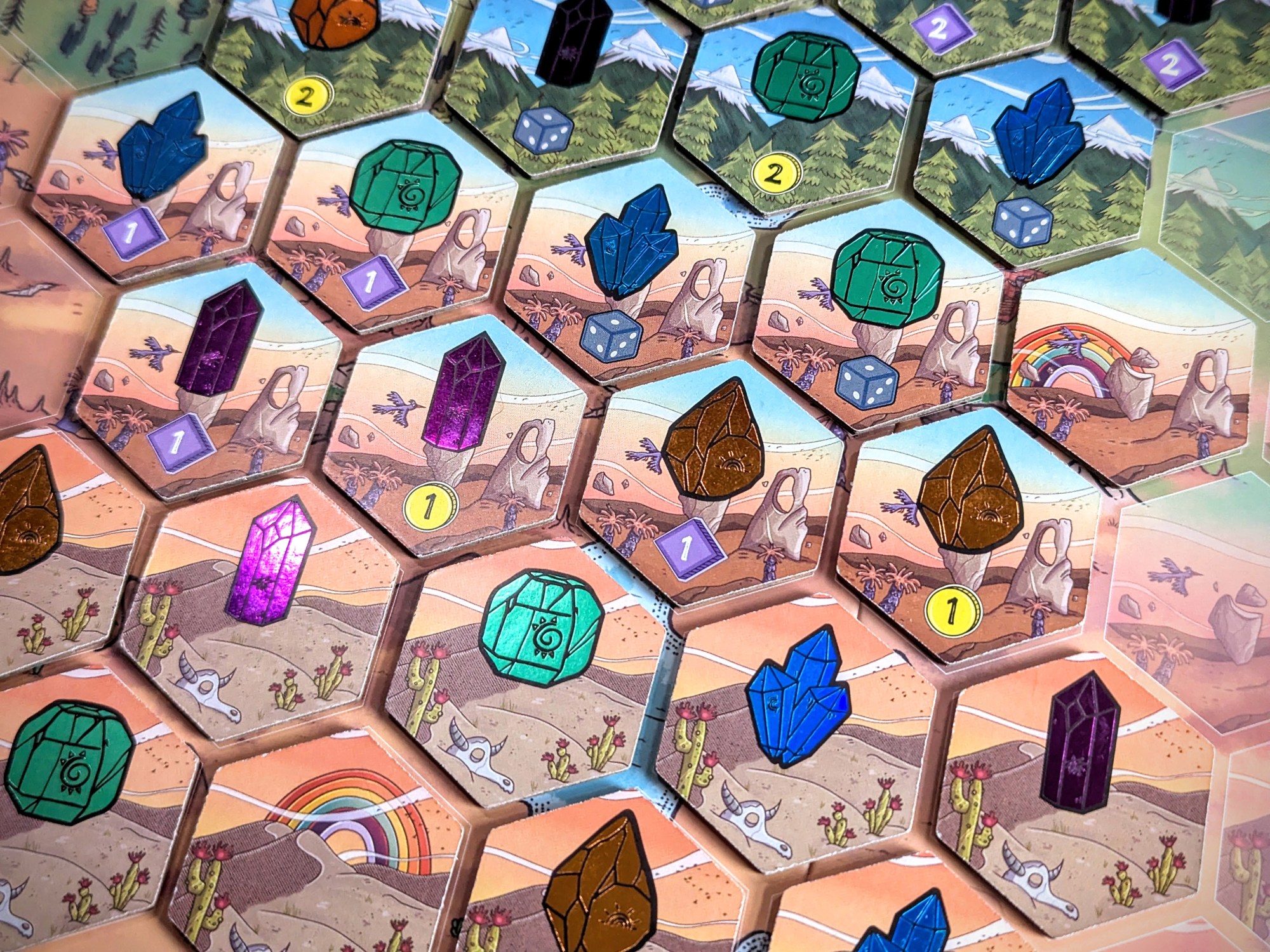
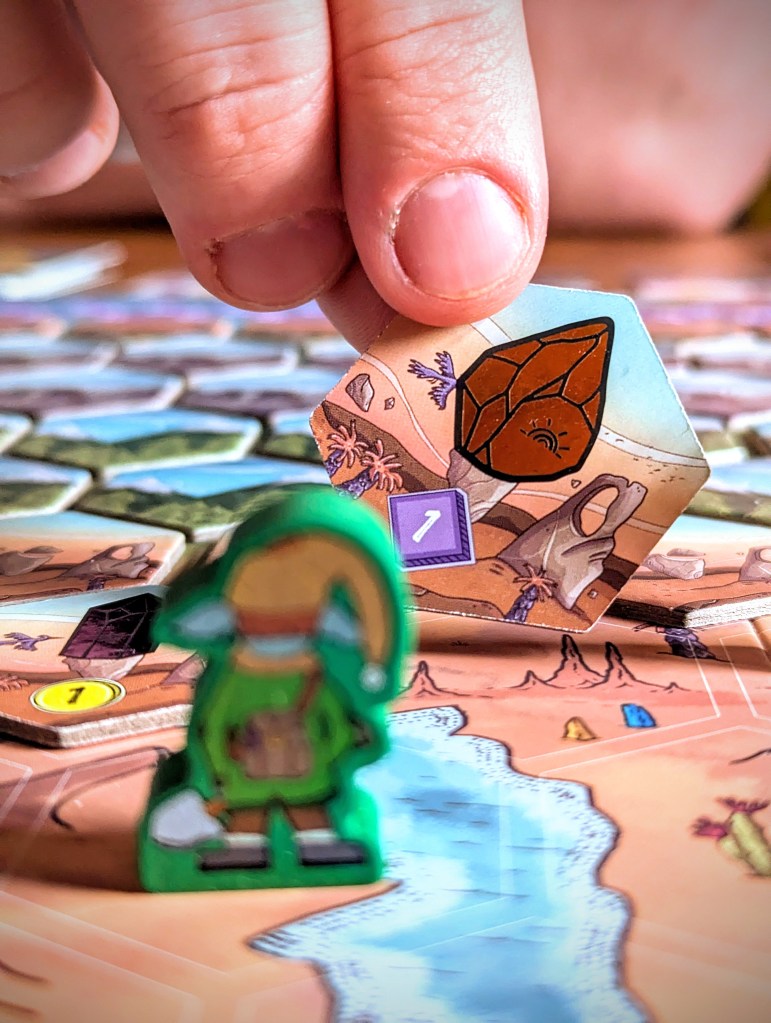
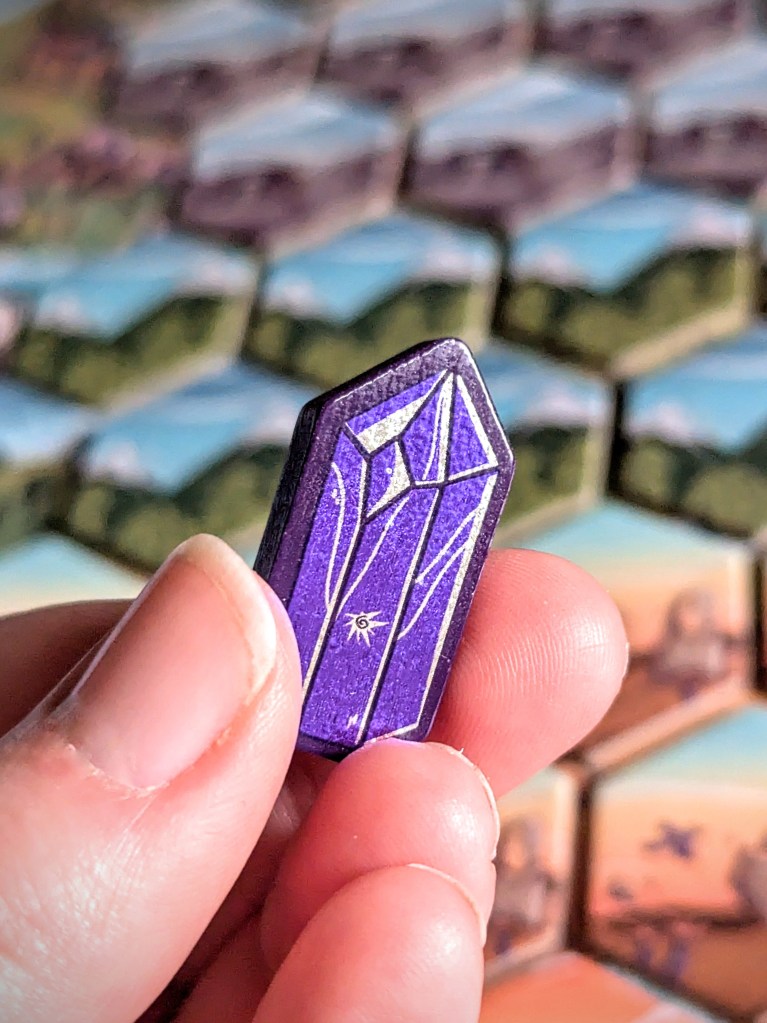
In Gems of Iridescia, players move their explorers up the board collecting gems, which can be exchanged for ancient relics. On your turn, you can reveal up to 2 tiles adjacent to your explorer before moving to an adjacent tile of your choice – this can be one of the tiles you revealed, or tiles revealed on previous turns, but you can never move ‘backwards’ down the board. The tile will show one of the four specific gem types (or a wild rainbow) which you take from the supply and add to a cargo space on your board. Some tiles also include a brucey bonus, like gold, points or a ‘stone’ dice (more on this later!).
On your turn you must always reveal & move, but there are also many additional optional actions you can take:
- Mining (costs 3 coins, can be repeated) is a way to get more gems matching the current tile by rolling two D6 explorer dice. For each explorer dice that exceeds the current market value of that gem – shown on a gem-coloured D6 – you can collect another gem from the supply. You can also choose to roll any stone dice you have to increase your chances (after they are used these are returned to the general supply at the end of the turn – so you can use them for more mining actions on the current tile!).
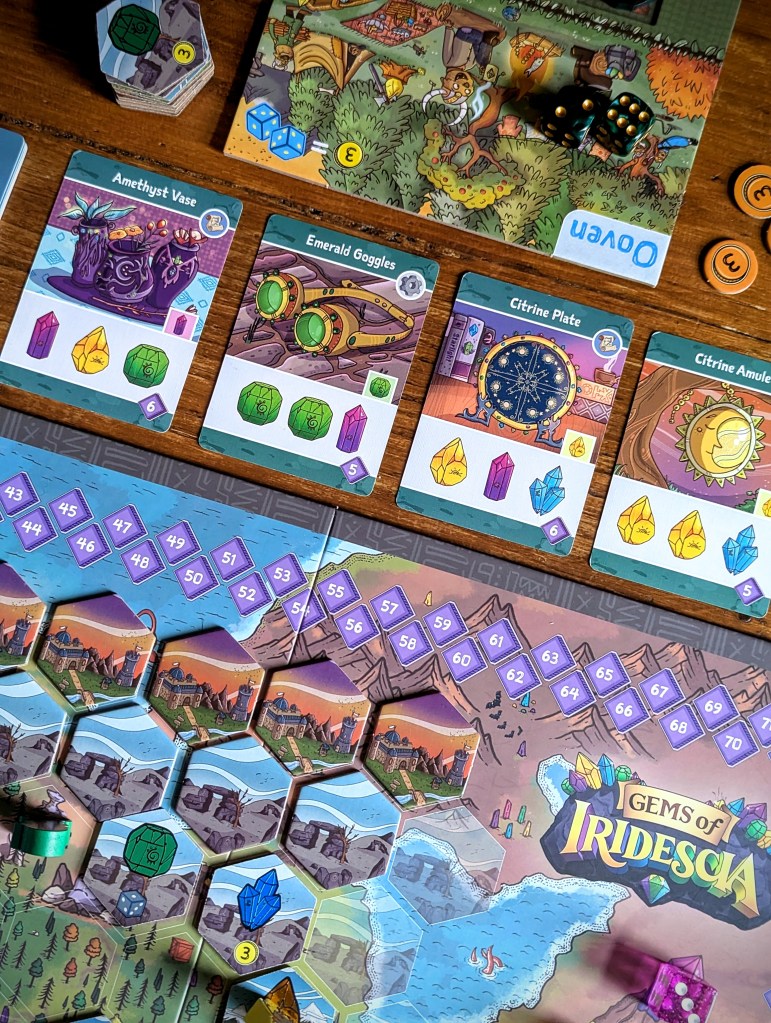
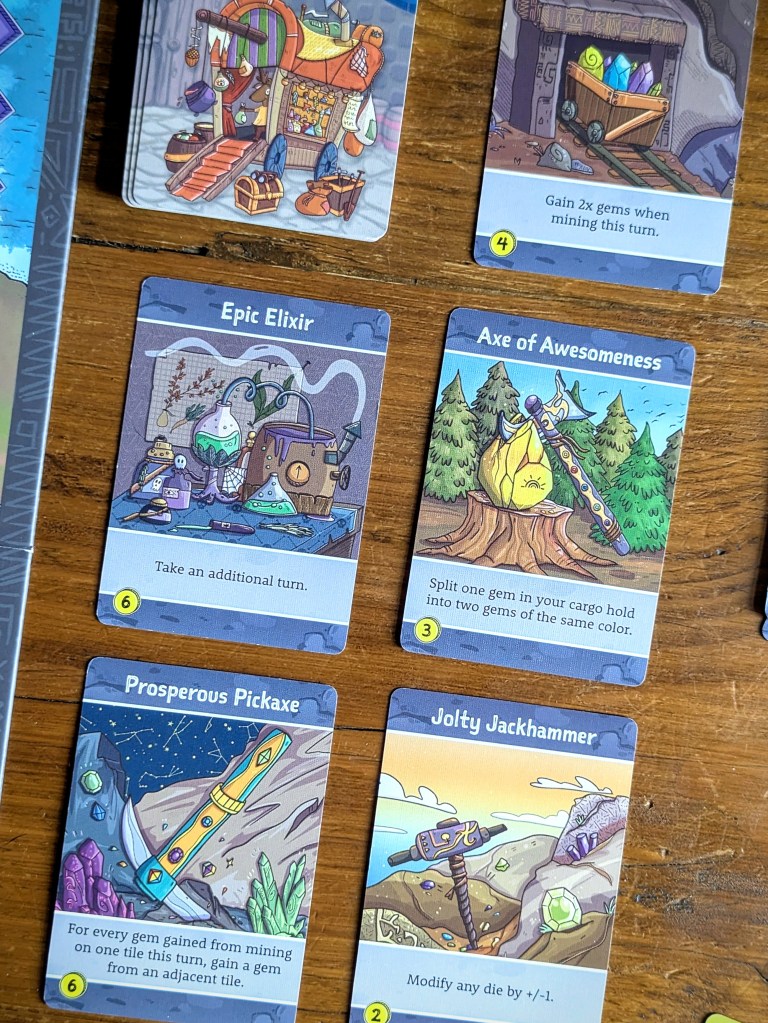
- Purchasing an item card from the market (once per turn) by simply paying its cost. These have helpful one-use actions, like duplicating gems or modifying dice.
- Playing item cards from your hand. You can play as many as you like (some cards can only be used at the start of your turn, before exploring).
- Selling gems from your cargo hold (once per turn). You can only sell one type of gem, but you can sell as many of them as you like. How much you get is based on their current market value (shown on their matching gem-coloured dice that I mentioned earlier).
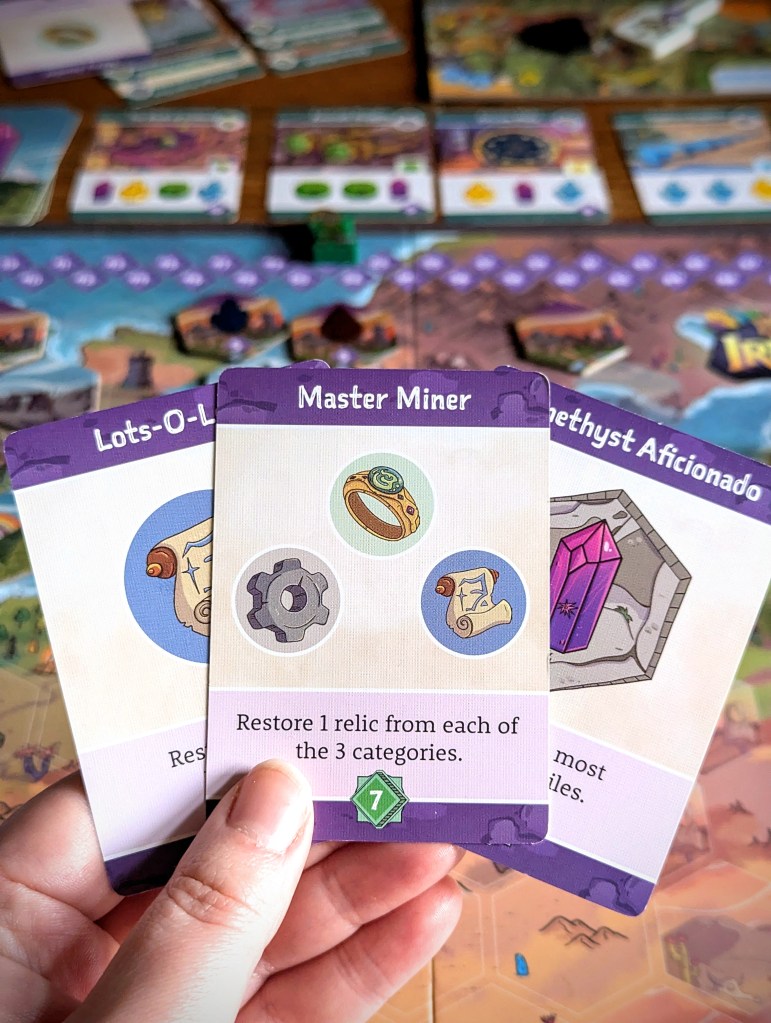
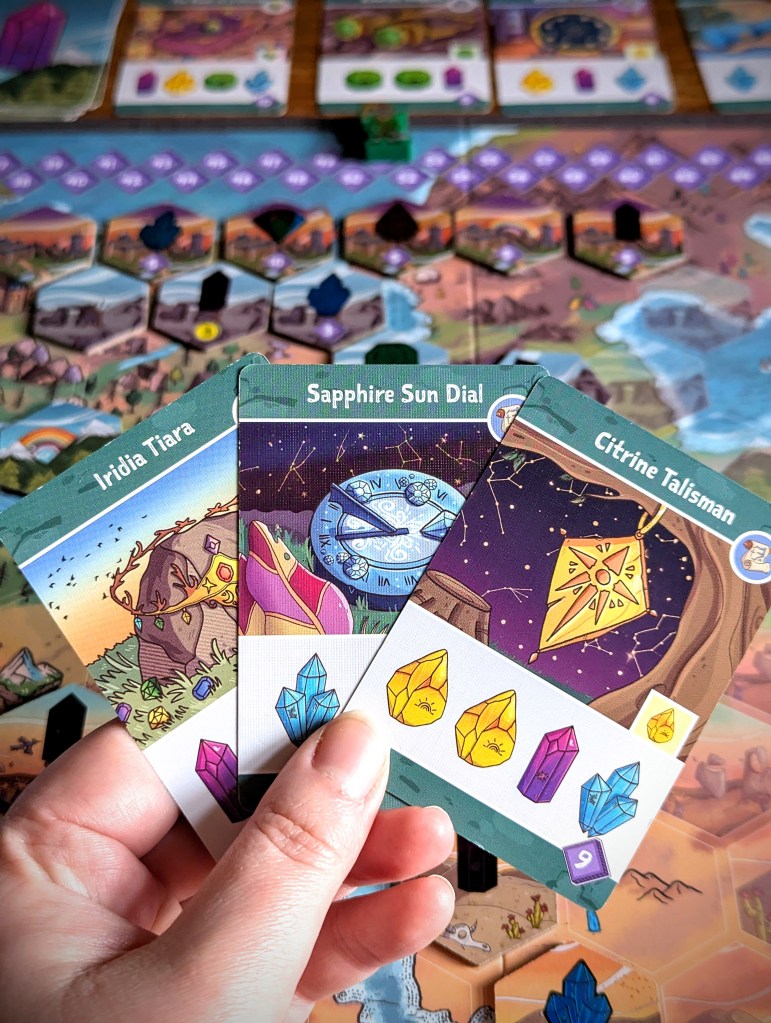
At the end of your turn (after you’ve finished taking any of the above actions you like), you can trade in gems from your cargo hold to restore Relics and claim their points value. Relics can also give you points at the end of the game depending on the sets you collect (e.g. 3 of the same type).
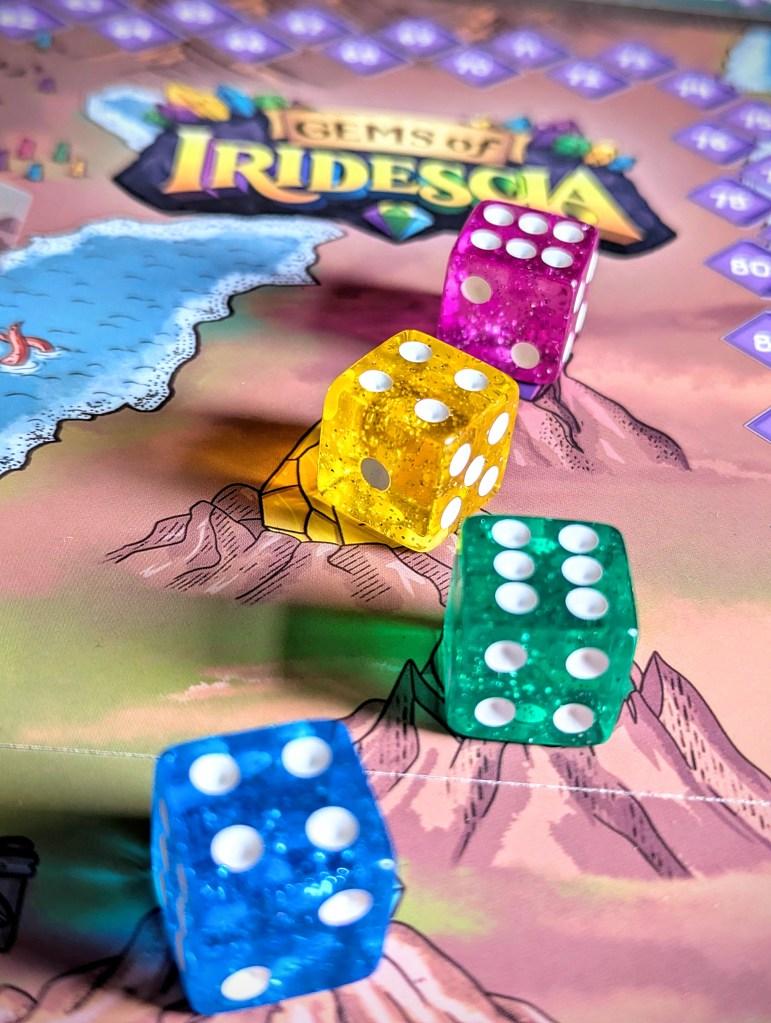
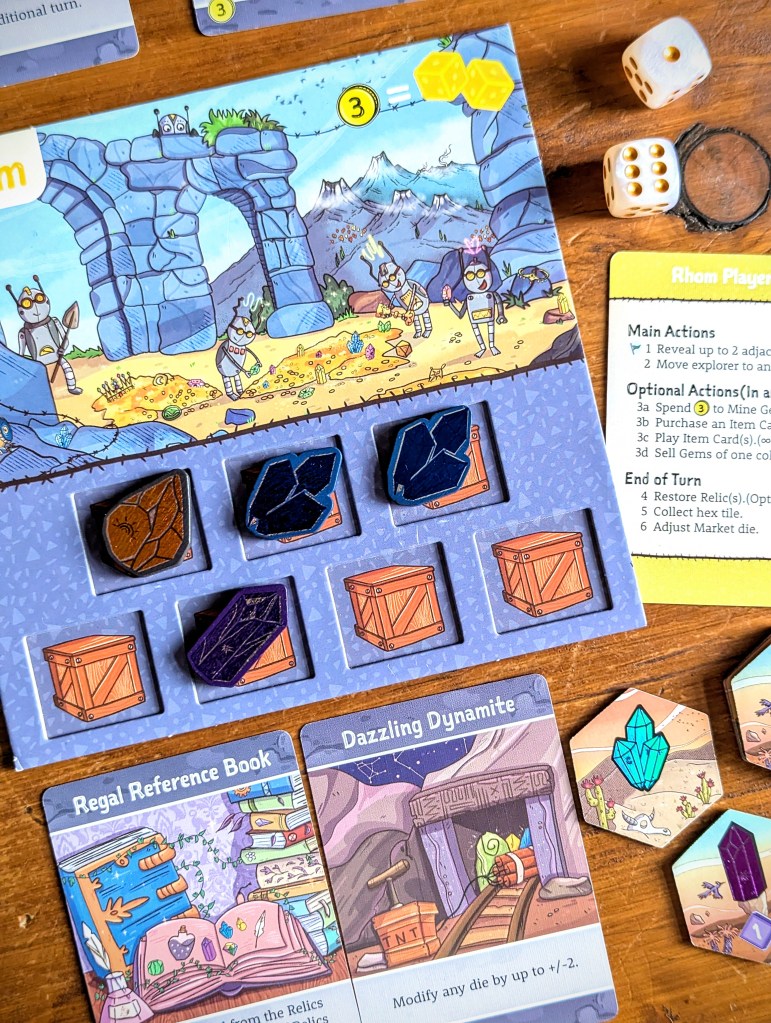
Finally, you take the tile your explorer is standing on and keep it in your own supply – these score points at the end of the game depending on how many tiles you have with the same gem. You also increase the market value of the gem you collected by increasing the matching gem die by 1 – if the die is at 6, the market crashes and the die is set to 1!
At the top of the board is the Castle Row. These tiles are similar to normal tiles, except one is hiding the lost Iridia Stone, worth a whopping 10 points if you find and claim it.
The game ends when all players have reached and claimed a tile from the Castle Row. If you get there before other players, you spend subsequent turns removing tiles from the board to mess with them. The player with the most points from tiles, relics, and their secret objective wins the game and gets to rule Iridescia forevermore!
Our thoughts
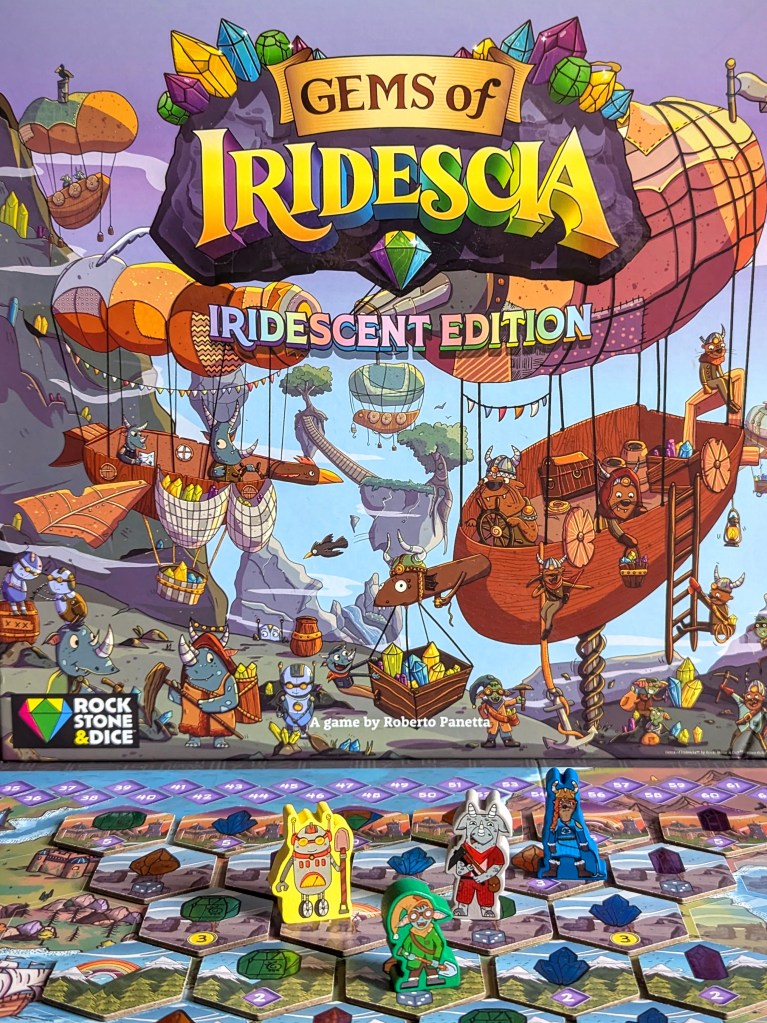
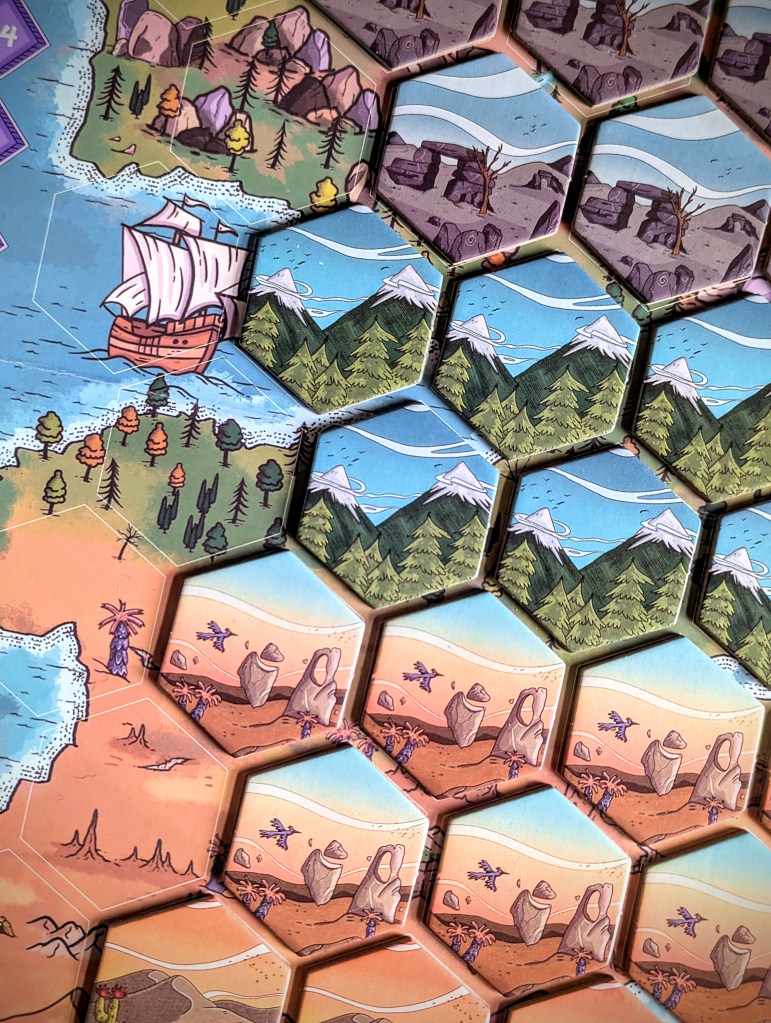
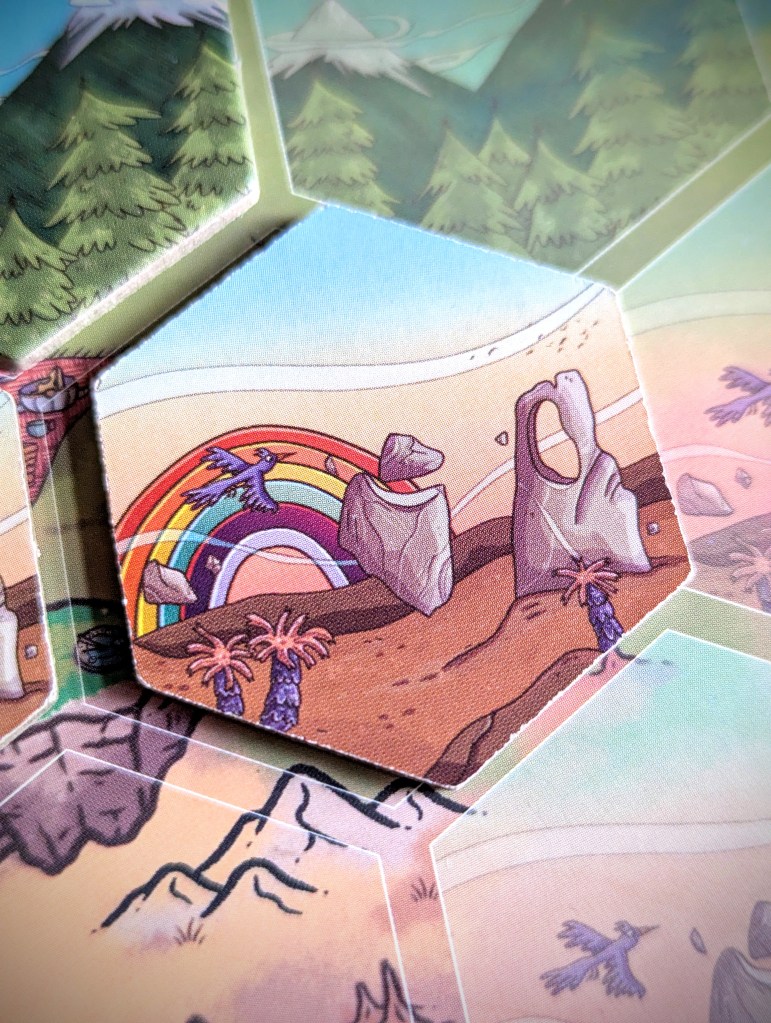
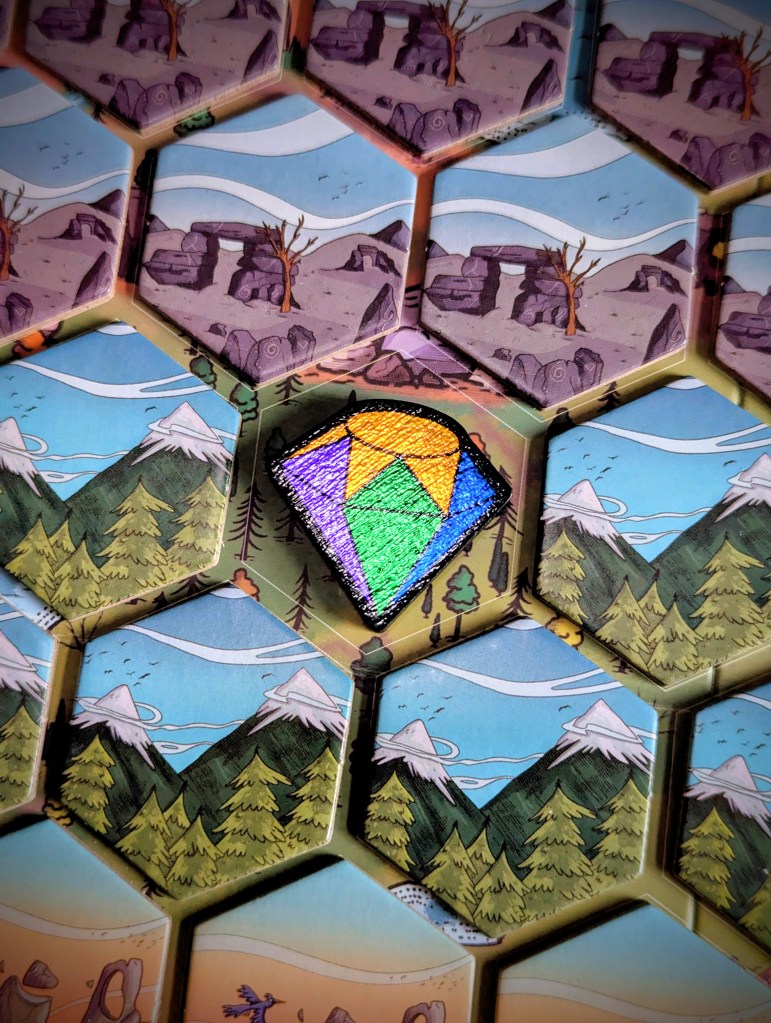
Firstly, the production is absolutely fantastic! We played the Iridescent (Deluxe) version, which is particularly jazzy with its chunky iridescent gem tokens, foiled tiles and glittery dice. The highlight though is the artwork from Sarah Freedz that brings Iridescia to life, particularly the different characters.
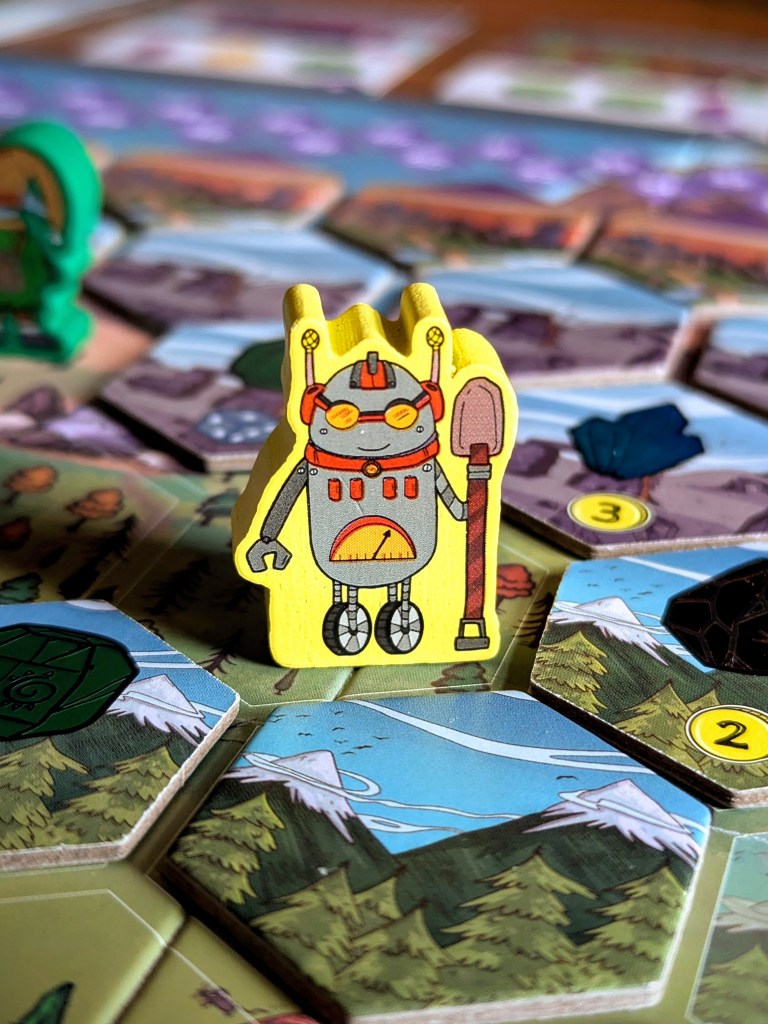
The gameplay itself is light and has the potential to introduce some interesting mechanics in an accessible way without being too overwhelming (although no push your luck here – don’t lie to me, BGG!). The fantastical world adds to that accessibility – they could have easily gone for a more realistic beige mining theme but I’m glad they didn’t as I don’t think it would have appealed as much to the people who I think would enjoy this game. I also want to note that the rulebook is excellent, well structured and clear.
However…we felt the gameplay fell a little short for us overall. It’s not that we disliked our plays, but we came away feeling like it was lacking something. There’s a few reasons for this. One is because of the different layers of luck involved – luck of the tiles, luck of the dice, and luck of the draw (for Items and Relics). Exploring sounds interesting on paper, but in reality it lost its shine fairly quickly and felt very samey. It can also feel frustrating if you’re struggling to get the gems you need.
I really liked the gem ‘market value’ dice as a concept, but it didn’t always feel like you could decide to use this to your advantage when selling – if you need money often it’s a case of selling whatever gems you’ve accumulated and can afford to lose (i.e. aren’t needed for a relic), regardless of how much they’re worth. It was very rare you could time it right, and again a big factor in getting that opportunity was luck.
The Item market is the only real way the game introduces mitigation, but we didn’t feel like it was enough and to be honest the market wasn’t overly useful in our games. I think you could play without it (further simplifying the game for players if needed) and it would have very little impact on the gameplay.
Something I did like was how you chose your secret objective. At the start of the game you’re given 2 secret objective cards. Now for most games I’ve played, you look at these objectives and pick which one to keep before the game starts. In Gems of Iridescia, you only do this when you reach the forest region (about half way up the board), so you pick them when you have an idea of which you’re most likely to achieve.
At 2 players you play with slightly fewer tiles (one column removed from either side), to encourage player interaction. And there were a few times where I managed to block Matt and force him in a certain direction. With more players, even with the added tiles I imagine blocking or limiting players’ options is exacerbated, especially for those on the edges. This combined with some bad luck might make you feel particularly hard done to.
Verdict
We really wanted to like Gems of Iridescia, but it didn’t dazzle us as much as we expected. It does have lovely table presence and accessible rules, so I can see new or casual gamers enjoying it more – it’s the kind of game I’d suggest at a board game cafe with non-gamer work colleagues, for example. And I would happily play it again in the future if someone really wanted to. But after a few plays I think most people would have got the most out of it and be ready to move on to something else.


