
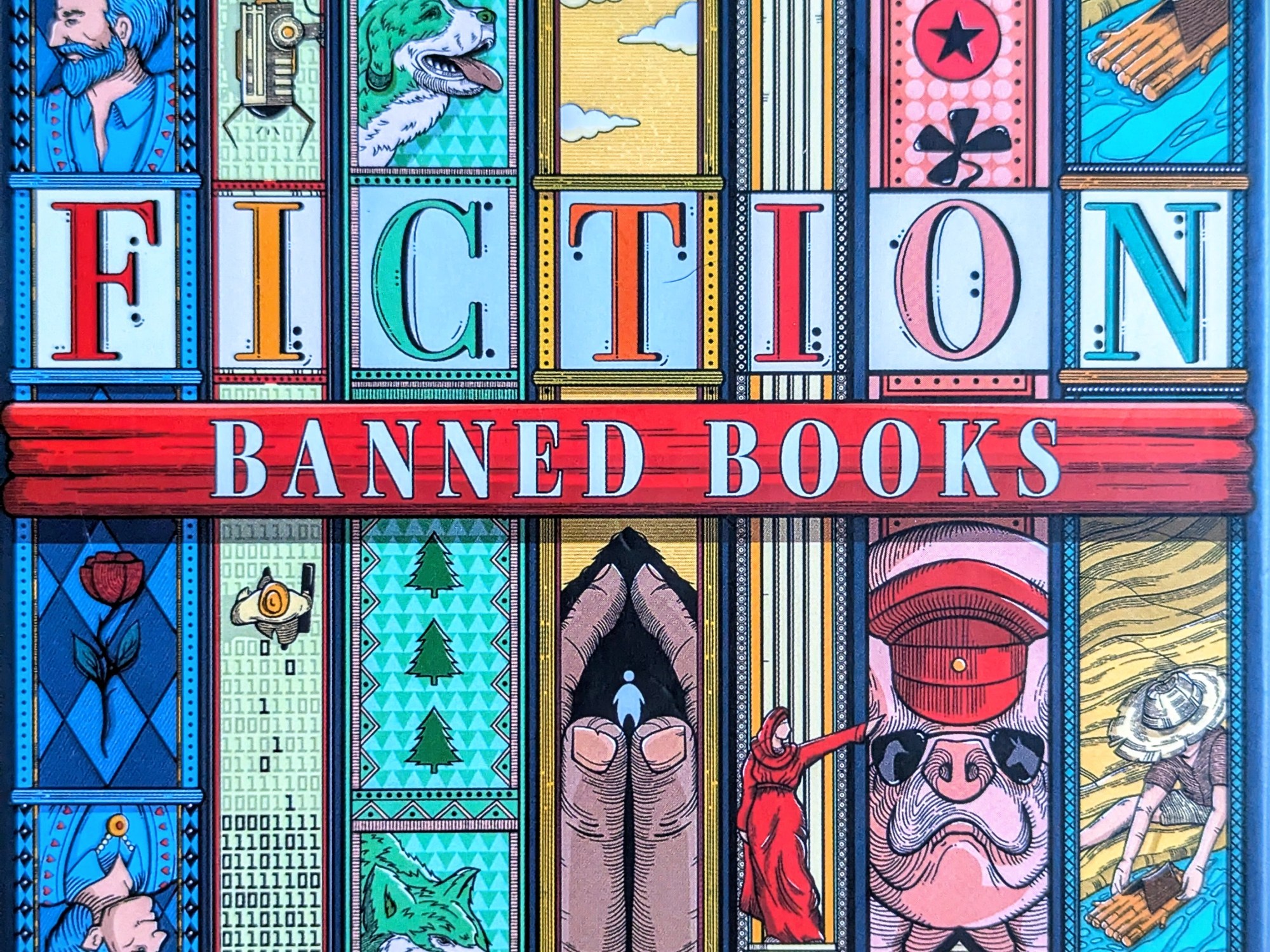
Advert: This game was gifted for the purposes of review. All opinions are ours.
you can navigate fact and fiction in this wordle-style deduction game? Let’s play Fiction: Banned Books!
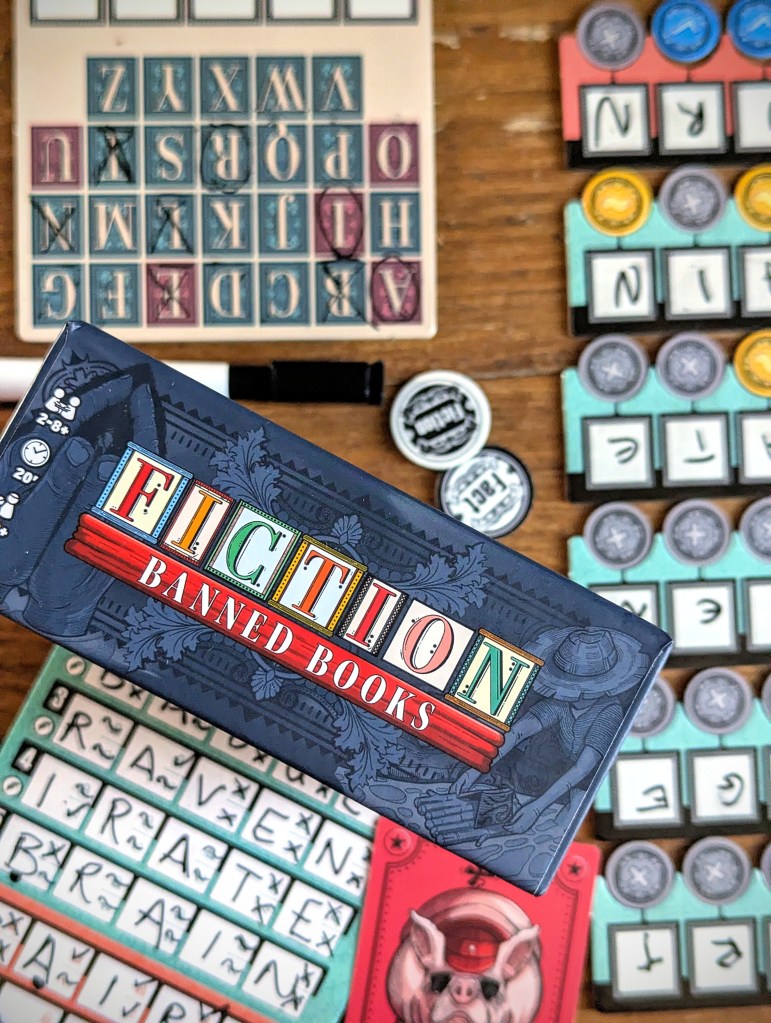
Key stats
2 to 8 players | 15 to 30 minutes | Age 10+
Publisher: Allplay
Designer: Peter C. Hayward
Art: Anca Gavril, Daniel Profiri
Themes: Literature, Word game
Key mechanics: Deduction, Spelling, Team-based, Variable player powers
Game overview
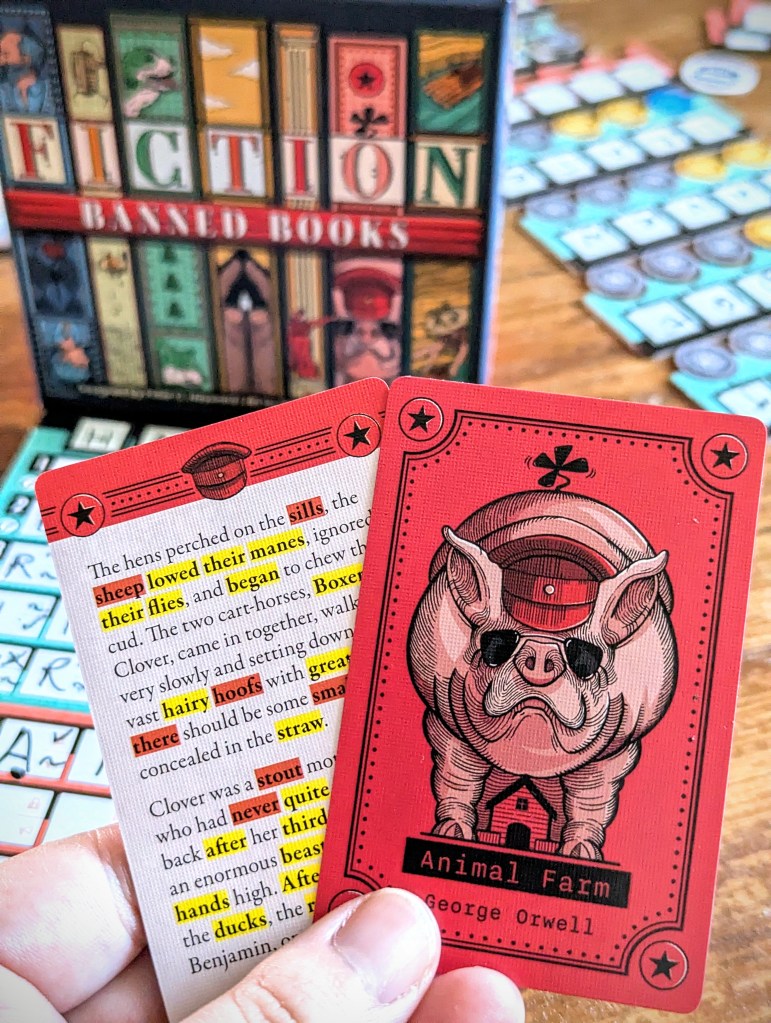
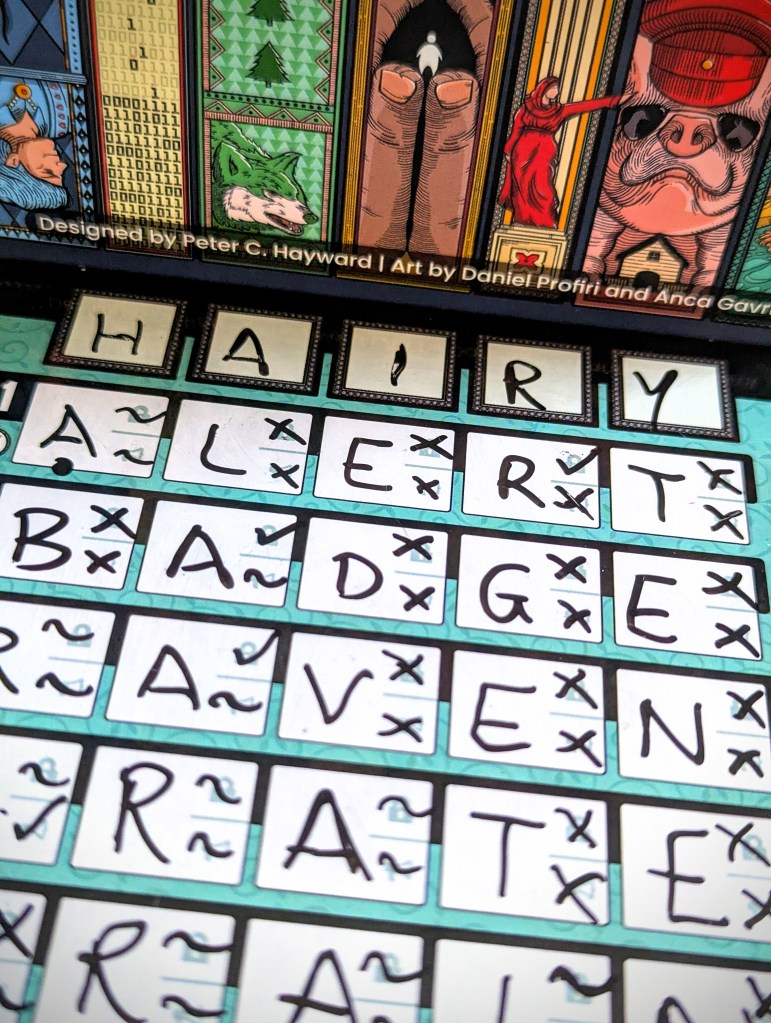
One player, the Lie-briarian, draws a book card and selects a highlighted 5-letter word from the passage – in this case, a passage from a banned book. The remaining players make guesses and gather information to deduce the Lie-brarians word before time runs out.
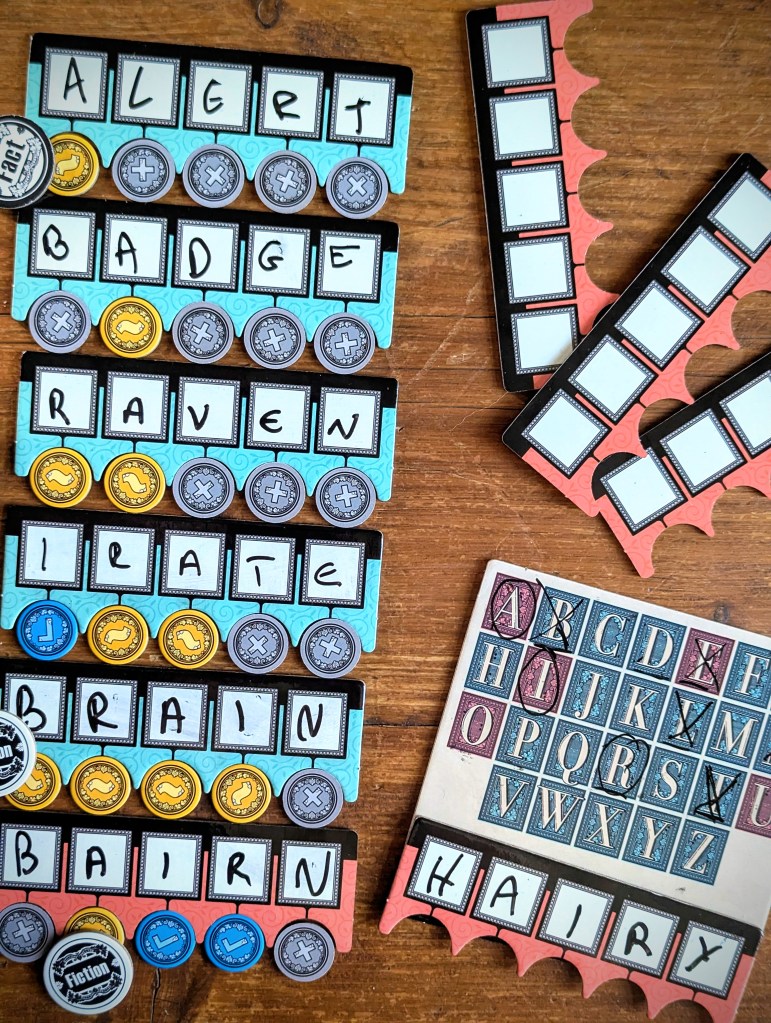
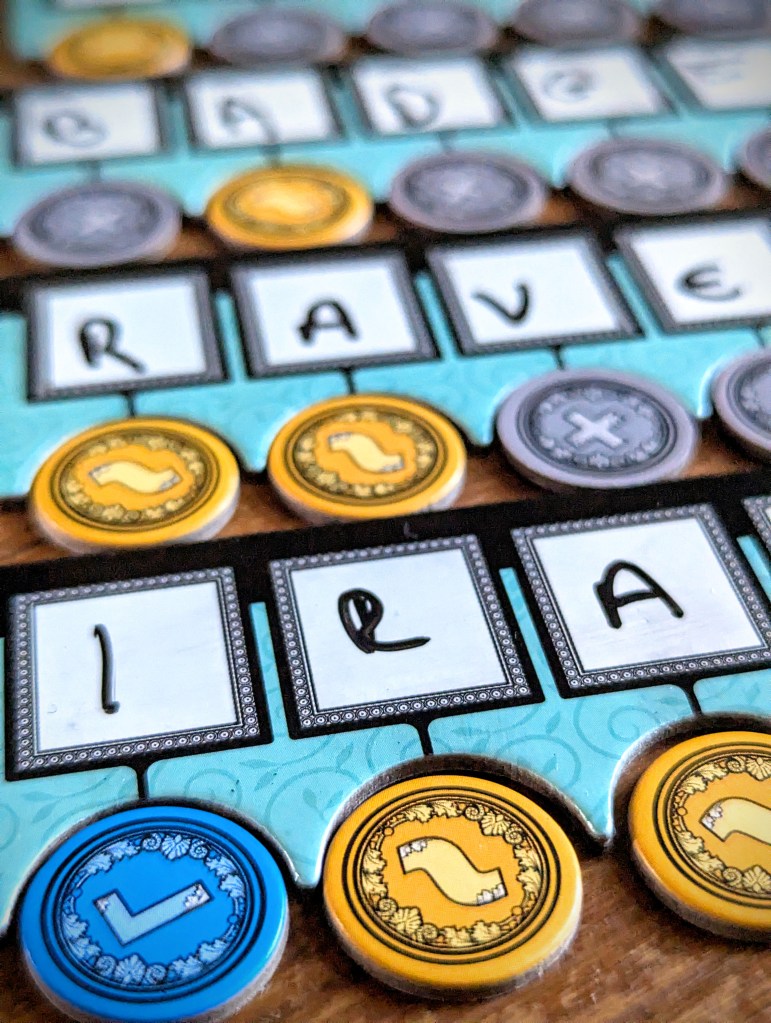
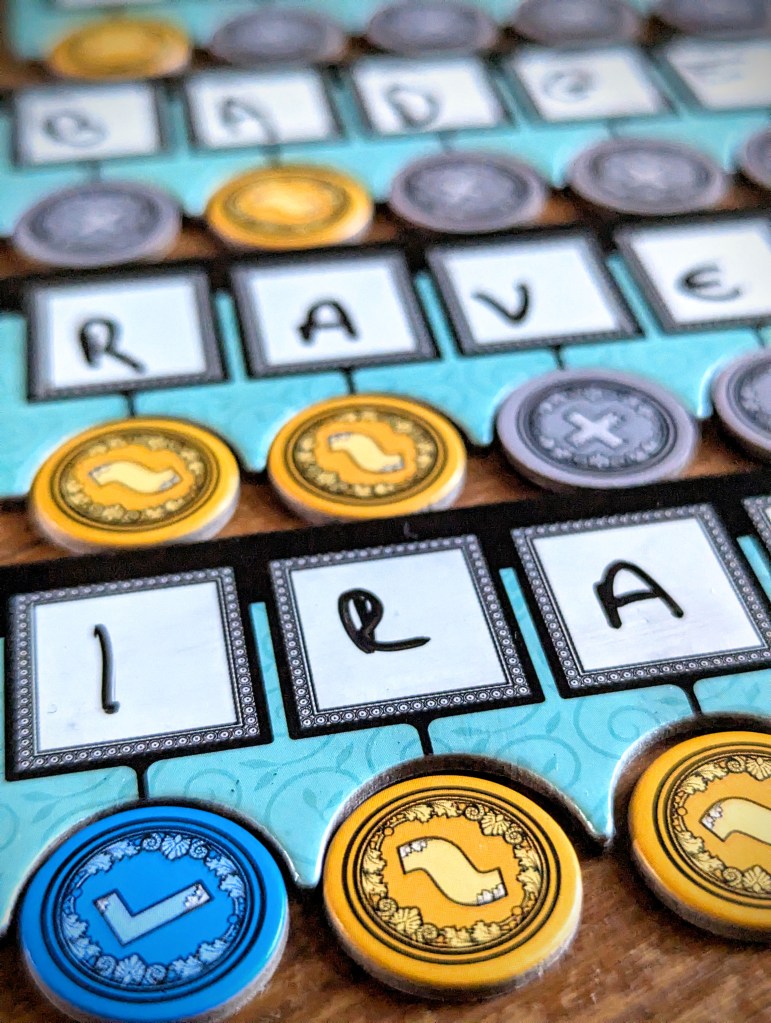
When the Guessers put a word forward, they write it on a guess board. The Lie-brarian will then use clue tokens to show which are wrong (X), which are right BUT in the wrong place (~) and which are right AND in the correct place (✓).
Sounds straightforward? Well here’s the catch: the Lie-brarian is lying about ONE of the letters!
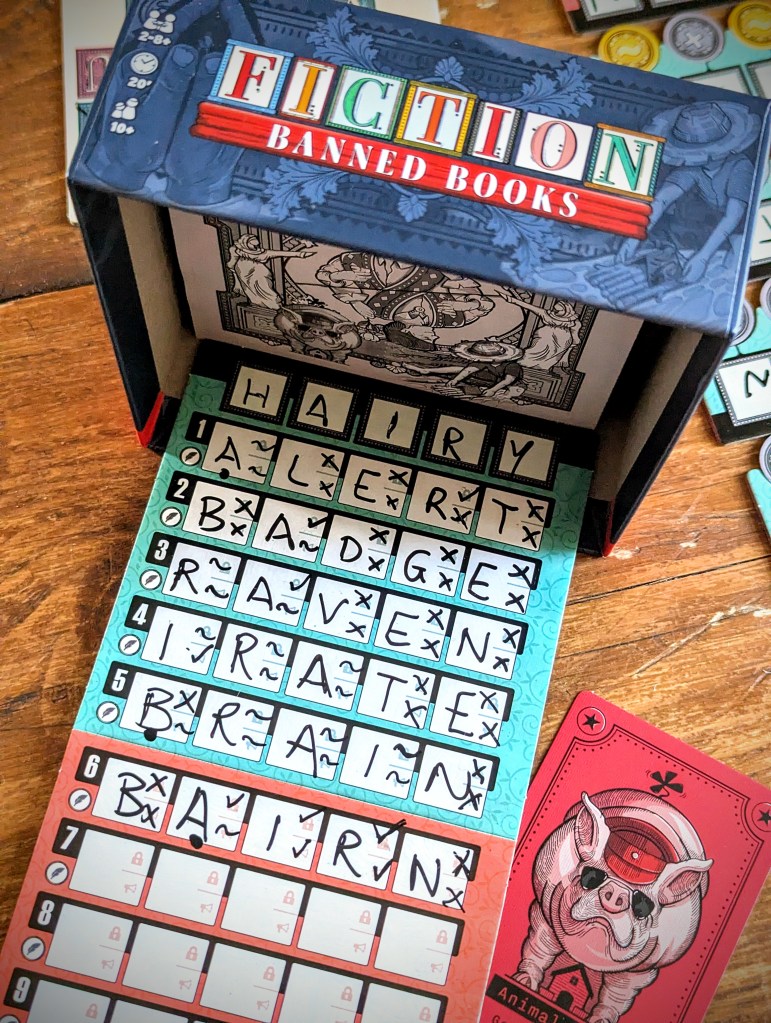
To help navigate these sneaky lies, the Guessers start the game with 3 Fact/Fiction tokens and can use one for a letter in their most recent guess. The Lie-brarian must then flip the token to confirm whether the clue for that letter is FACT (the Lie-brarian was telling the truth) or FICTION (it was their lie!).
The Guessers have 10 chances (and 20 minutes!) to guess the word. If they manage to pin it down, they win! But if they run out of time or guesses, the Lie-brarian wins!
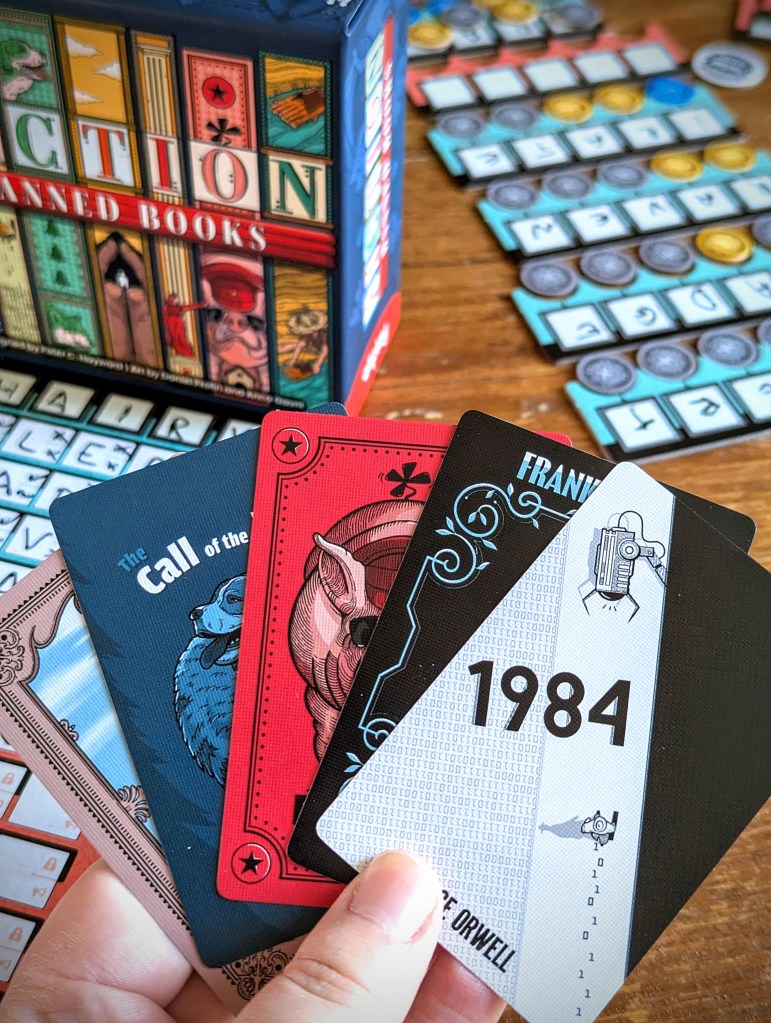
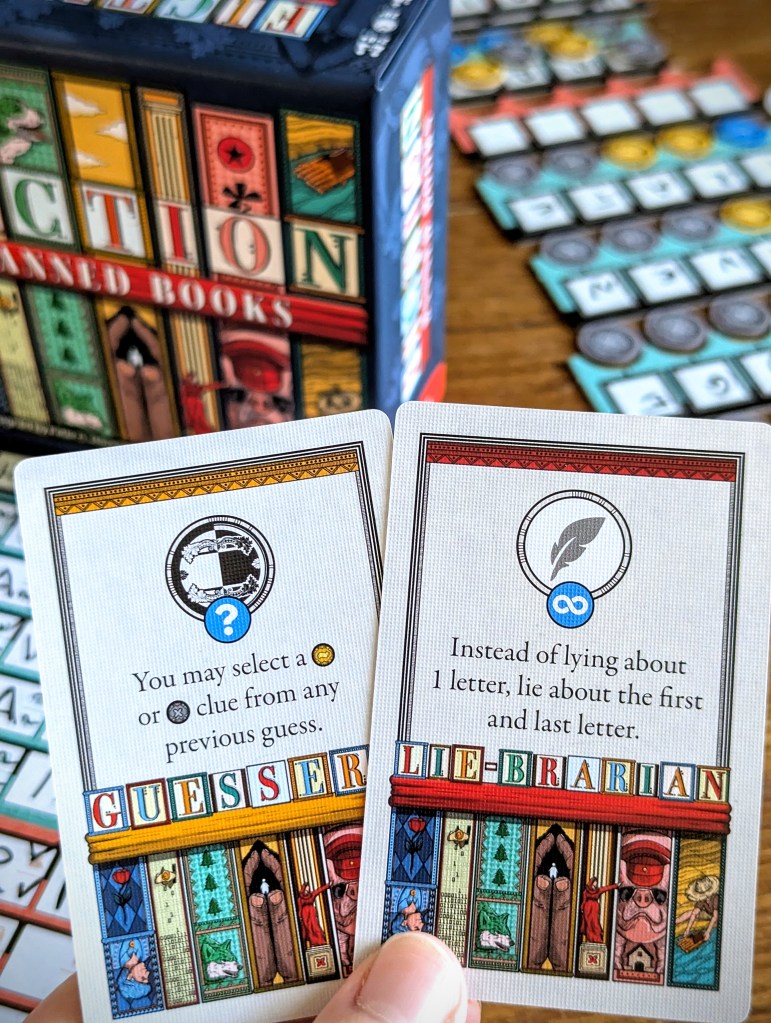
If you fancy a trickier game, the book cards also have words with duplicate letters, and you can modify the time or number of Fact/Fiction tokens. There’s also asymmetric abilities you can throw into the mix. At set-up, both sides choose an ability card for the game. The Guesser abilities need you to either spend a Fact/Fiction token to use them (e.g. discard a token to guess 5 letters that don’t actually spell a word), or they can be activated when you use the Fact/Fiction token in the normal way (e.g. it lets you select a letter from an older guess). The Lie-brarian abilities can be used once per round and they don’t have to declare when they use it, but they note it down on their Lie-brarian board. Each ability has its own limit on how many times it can be used.
Our thoughts
If you took part in the Wordle craze (or are one of the many still playing daily!), you’ll instantly get what vibe this game is throwing down. It certainly does feel similar, but the untrustworthy Lie-brarian ups the challenge. As the Lie-brarian, you have the tricky job of picking your lies wisely, otherwise you risk giving the game away. As the Guessers, you need to pick the right words to unpick those lies. It’s a brain workout for both sides!
It’s a quick game playing in under 30 minutes, perfect for a quick brainteaser. The timer helps ensure the game is quick without too much down time. It’s evenly split into 2 ‘halves’ (5 guesses in 10 minutes), which helps keep the pace and avoid wasting all the time on 1 guess.
The addition of book cards with set words takes the pressure off the Lie-brarian coming up with a word themselves, and on each card there’s several to choose from. That the passages are taken from banned books is an interesting bonus, and there’s even a pamphlet telling you how each book was banned (or burned or censored).
We enjoyed playing it at different player counts, although it can feel different depending on the numbers and group. When playing with 2 players, there’s obviously only 1 Guesser; with more players you’ll have multiple guessers who need to work together. Both had benefits and disadvantages. With multiple Guessers, you can bounce ideas and logic off each other, but you can also disagree and take up more time debating. With 1 Guesser, you don’t have anyone to disagree with, but you also don’t have anyone else offering ideas so if your brain starts buffering, you’re on your own.
The ability cards are a nice option to throw in if you start to find the normal game a bit too easy or boring. We played with and without, and the ability (particularly the Lie-brarian’s) ramped up the cognitive load, so for now we prefer the simplicity of playing without them – that’s already tricky enough! It did also feel like the Guesser ability was less powerful than the Lie-brarian ability – for many Guesser abilities you spend a Fact/Fiction token to activate, which means you’re sacrificing 1 of 3 precious chances to question a letter.
So far the components seem great quality, the pens and wipe-erase boards have cleaned off easily with no marks. I like that they’ve included an alphabet board for the Guessers to annotate as the game progresses. The clue tokens are double sided with different icons and we would have preferred them to have the same icon on both sides, to avoid risk of error when putting the token down (it happened to us a couple of times, but was quickly corrected).
What we liked
- Fun, quick and challenging word deduction game.
- The Lie-brarian lying about one clue each round adds an interesting dynamic that makes the game.
- The book passages being from real (banned) books is a nice touch and means you don’t have to come up with a word yourself.
- Fun at different player counts – the timer may get more challenging with 7 Guessers debating though!
- Ability cards to add more spice when the base game gets too easy (at the moment we’re happy with the base game though!)
- There’s a booklet that explains the story behind each banned book.
Considerations
- We would have preferred the clue tokens to have the same symbol on both sides.
Verdict
If you’re looking for a game that brings Wordle to the tabletop but does it better, then Fiction: Banned Books is a quick-but-tricky deduction quicky to add to your collection.


