
Advert: We were loaned the prototype of this game for the purposes of this review. All opinions are ours. Prototype components are subject to change.
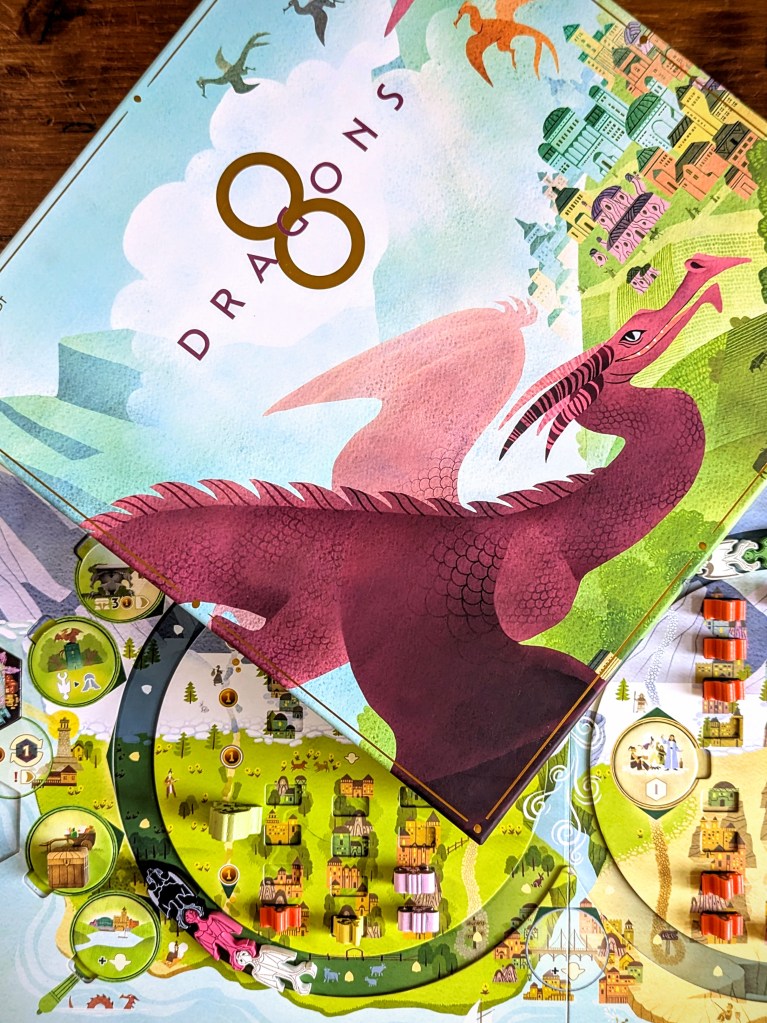
Is it a bird? Is it a plane? NO! It’s a swarm of dragons flying over the lands, having a lairy old time. 8 Dragons had a lot of interest at UKGE, but is it worth the hype? Let’s find out.
Key stats
2 to 4 players | 40 to 60 minutes | Age 10+
Publisher: Wonderbow Games
Designer: Sönke Schmidt
Art: Pauliina Hannuniemi
Theme/category: Fantasy, Dragon
Key mechanics: Tile placement/Tile laying, Set collection, Victory points as currency
Game overview
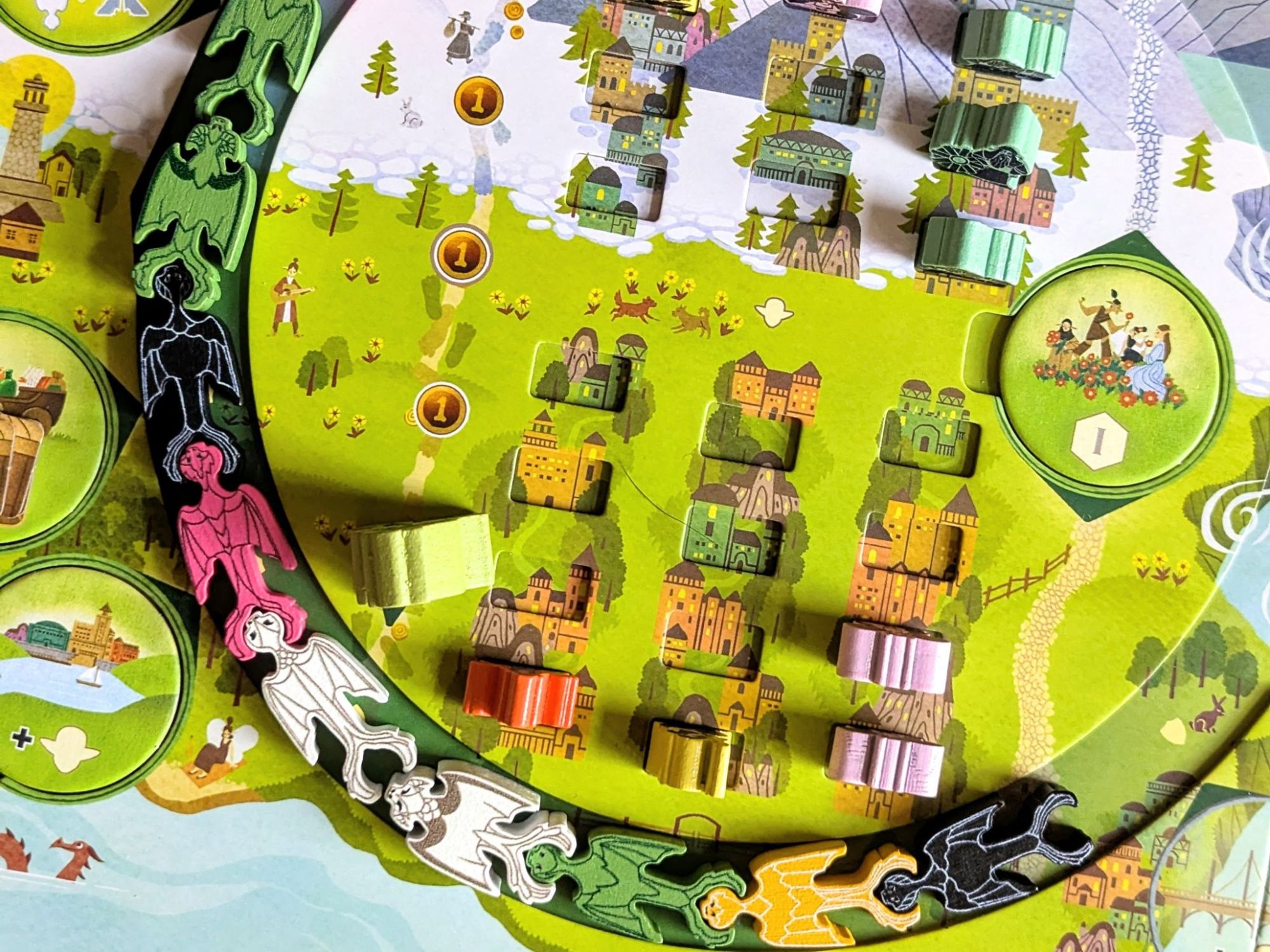
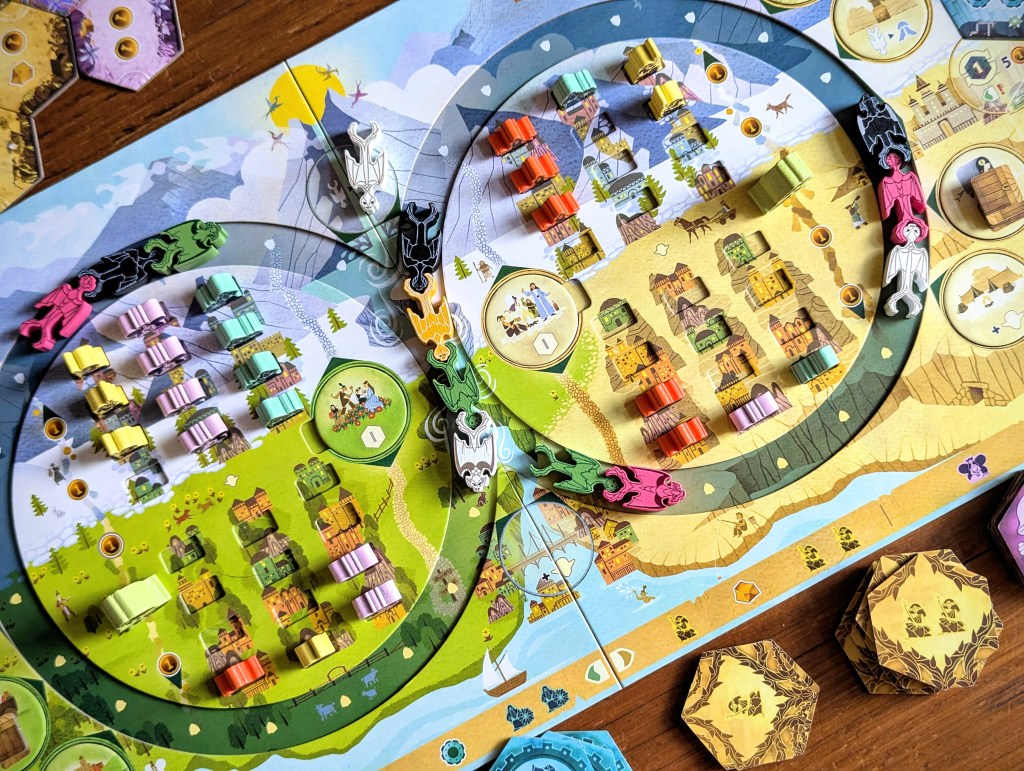
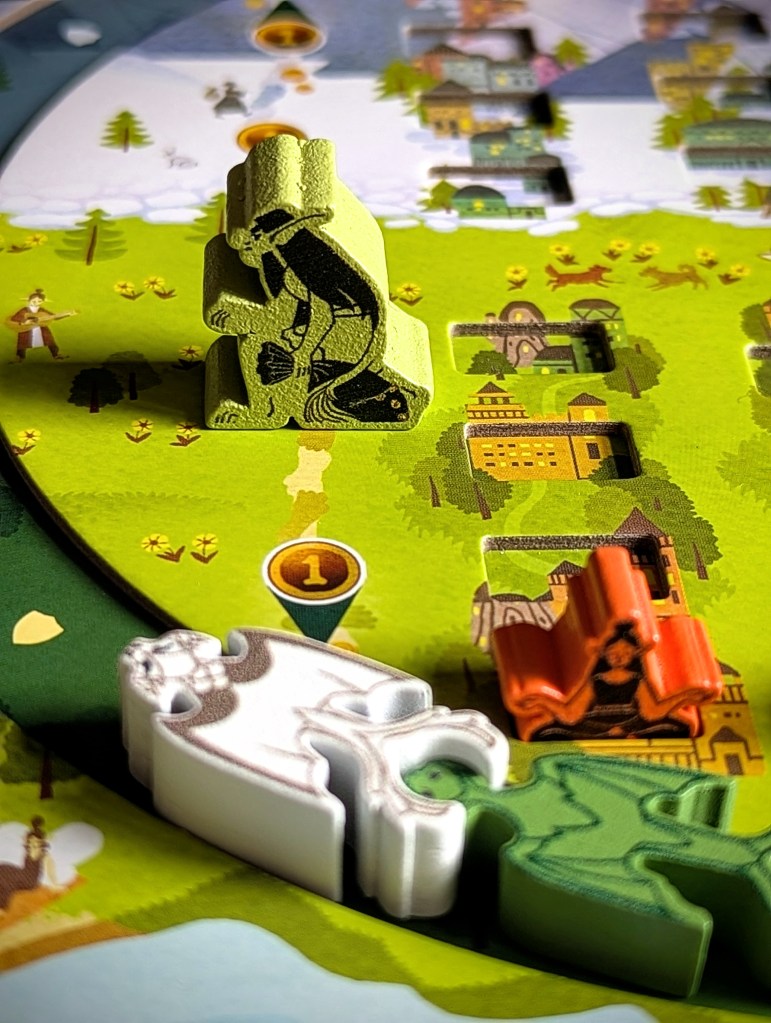
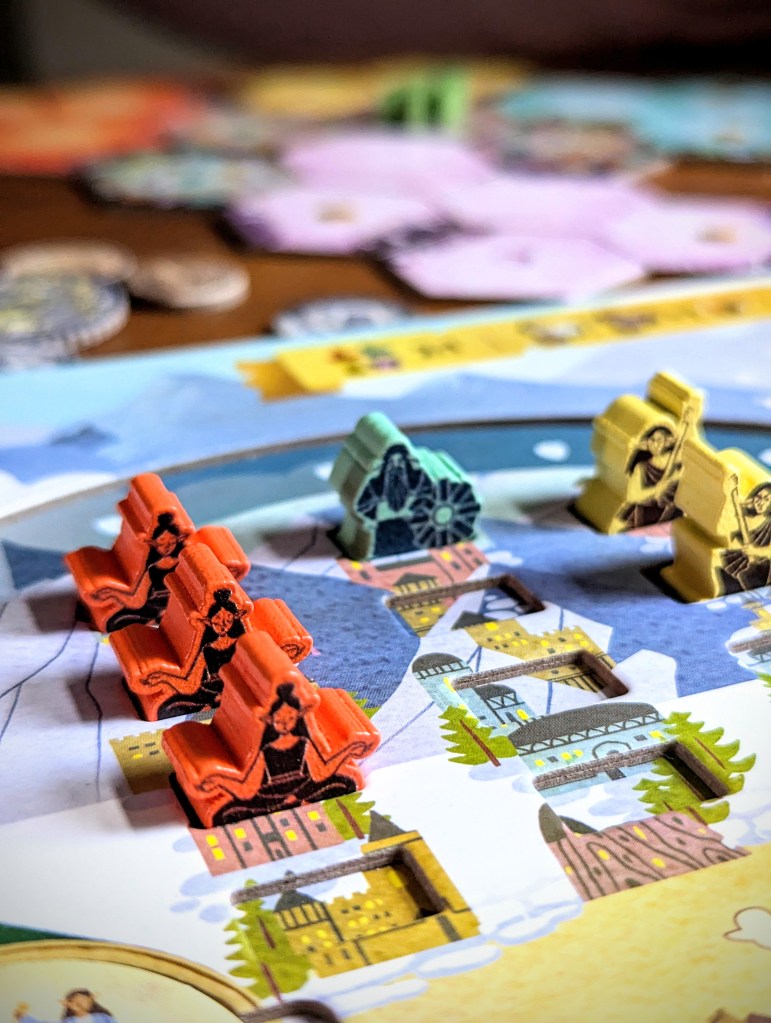
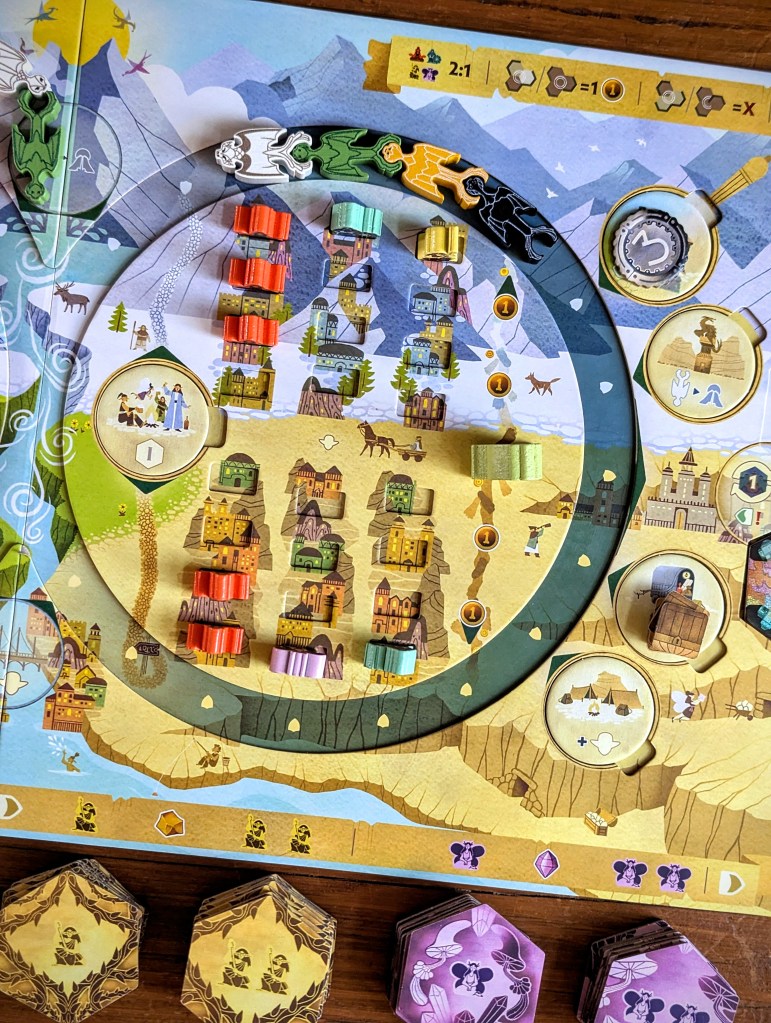
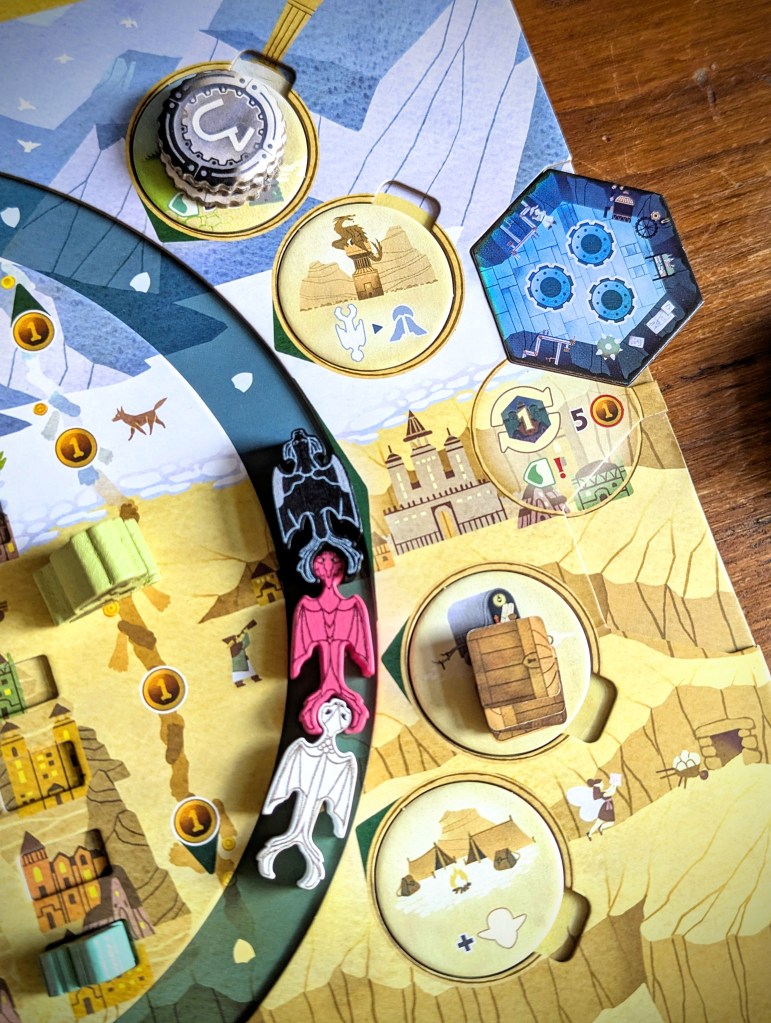
There are 2 phases in a game of 8 Dragons: FLY AND ACTIVATE LOCATION EFFECTS and EXPAND LAIR. In the FLY phase, the active player pushes their Dragon around the figure-of-8 board and stops at a location of their choice. Dragons start the game flying solo, but if they fly through the middle of the board – the Valley of the Wind – they can pick up a lil baby Wyrmling who joins their chain, joins the swarm and comes along for the ride.
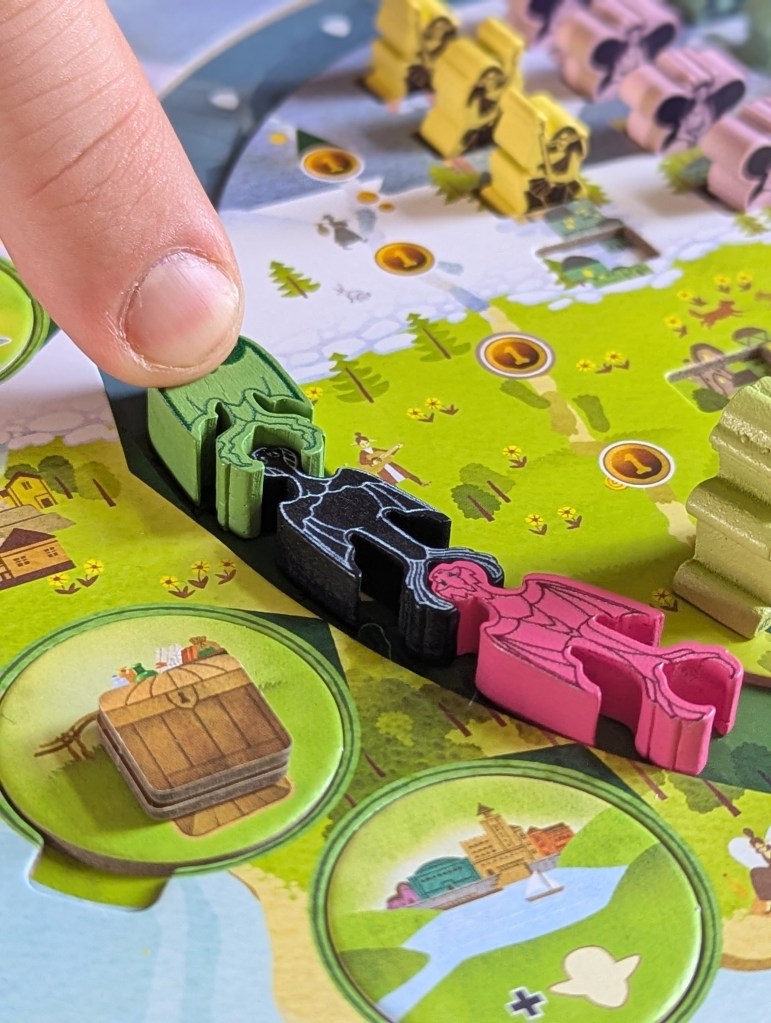
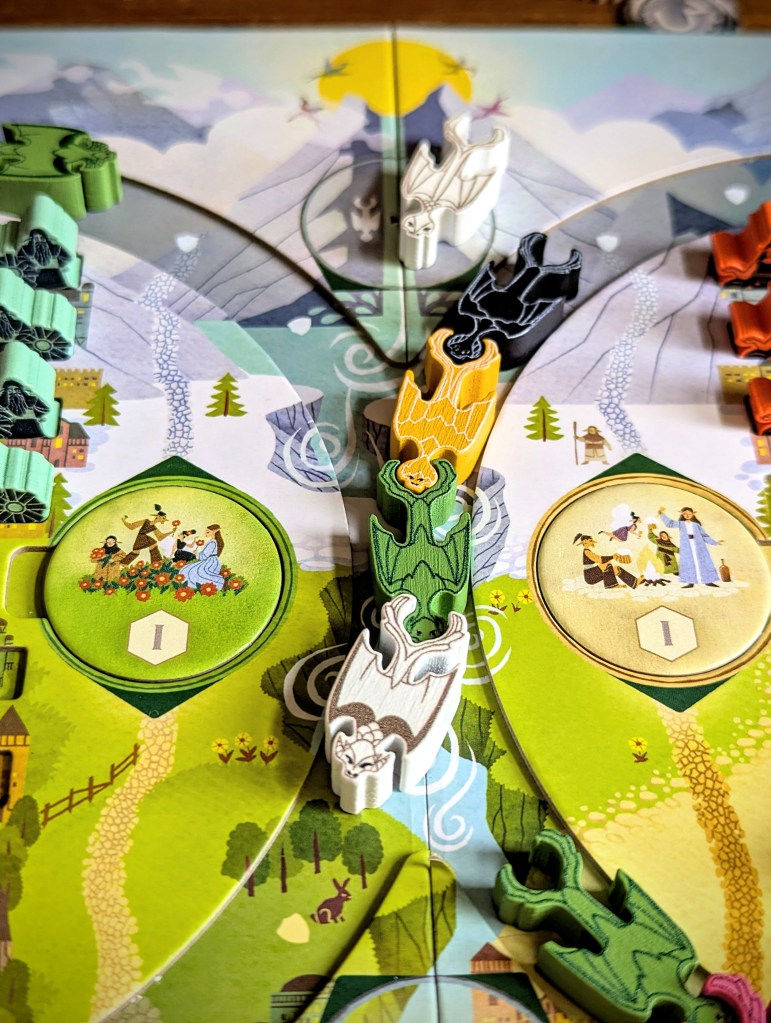
The board is divided into 2 kingdoms, Sinistra and Dextra, and both kingdoms contain the same locations. Each location triggers a specific effect, like gaining money, gaining treasure chests, growing villages or gaining/buying lair tiles. There’s even spaces that let you add a Wyrmling back to roost at the top of the Valley of Winds.
But it’s not just the Dragon that benefits – any Wyrmlings in the Dragon’s swarm also get to trigger the locations they’ve stopped at. Not only that, but if the active Dragon pushes any other Dragon swarm(s) during its flight, everyone in that swarm ALSO gets to trigger location effects – and they get to go first because each triggered location is resolved in order, from front to back!
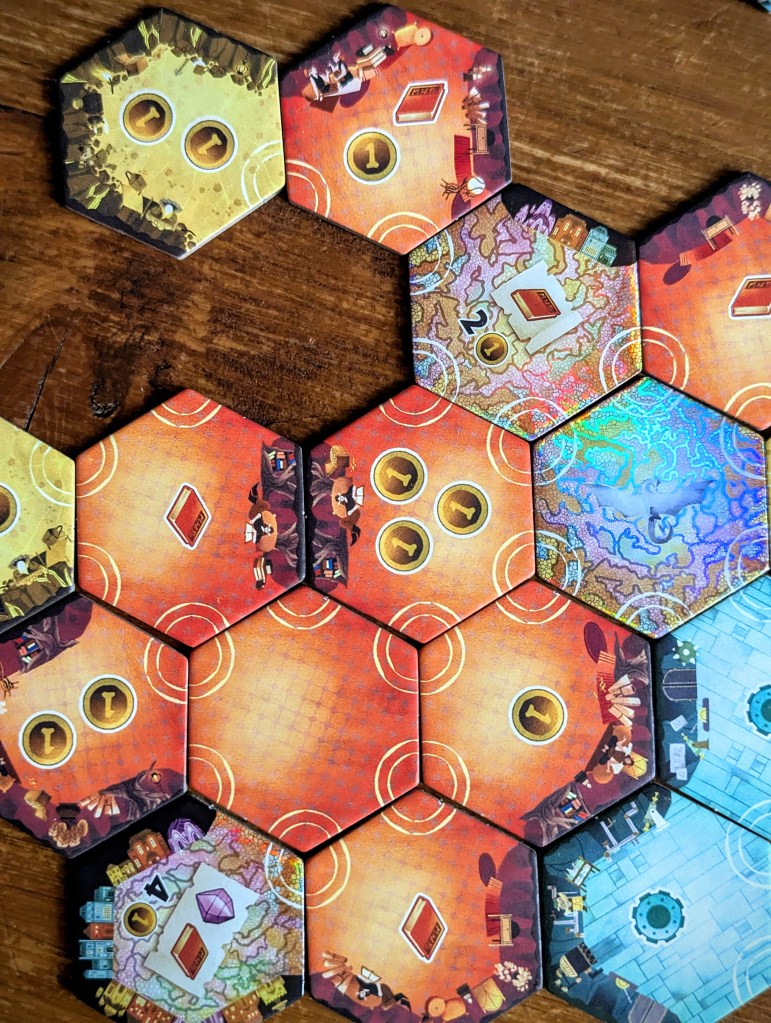
After all of the swarm (and any pushed swarms) have finished their actions, any players who gained lair tiles simultaneously add them to their personal dragon lair in the EXPAND LAIR phase. The 4 types of standard lair tiles are gained from visiting villages with the matching villagers, and the more villagers at that village, the more tiles you can get. On these tiles you’ll find corresponding artefacts, coins, or nothing at all. There are also special Merchant tiles that can be bought at each kingdom for 5 coins a piece; these usually have ‘missions’ that score coins at the end of the game, e.g. 4 coins for each pair of book and cog symbol in your lair.
But coins symbols on lair tiles are only counted at the end of the game, so where do you get money to buy these cool Merchant tiles? There are a few ways. Each Kingdom has a shrine location that you can collect money from (if there’s any money on there…). You can also visit clumsy trolls who drop money as they move up and down the board. The final way to get money is to form ‘large chambers’ (complete circles) in your lair with either 3 tiles of the same colour or 3 different coloured tiles (Merchant tiles are wild and count as everything!).
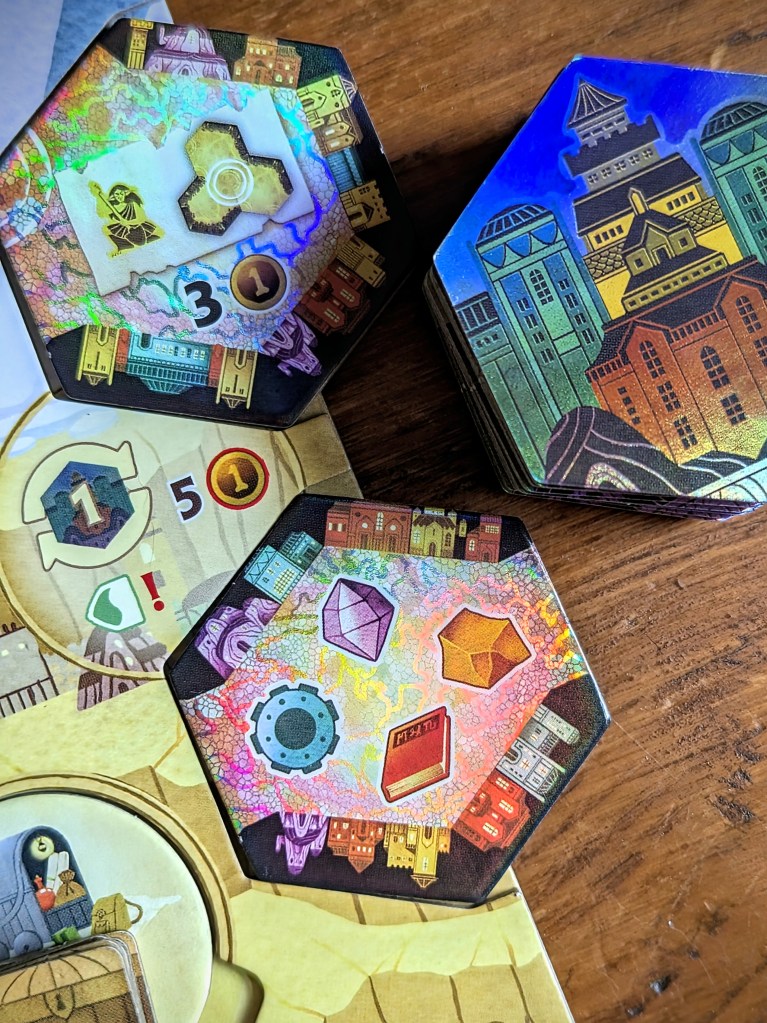
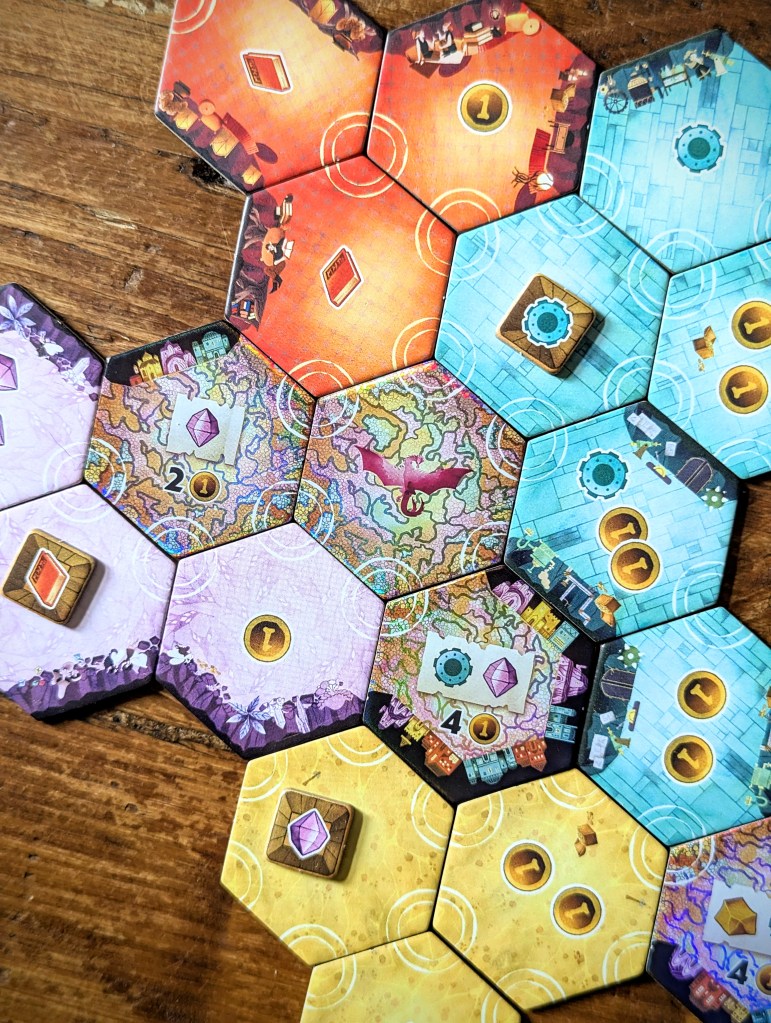
At the end of the game, players can place any treasure chests they gained on tiles in their lair. Each treasure chest shows an artefact, so they can be very useful for completing missions. Empty tiles are perfect for this, but you can place them on any tile and cover the original symbol if needed (like over a symbol that won’t earn you coins). Players collect coins based on the coin symbols in their lair plus coins for achieved missions. The Dragon with the biggest hoard wins!
Our first impressions
8 Dragons has been an absolute delight to have on our table! It combines a novel (and very satisfying) tactile method of action selection with laid back puzzly tile placement. The gameplay itself is fairly straightforward and encourages positive player interaction – most of the time!
The complexity mainly comes from the action optimisation: trying to balance getting what you want, and how best to get what you want, with giving others what they want. Sometimes you can at least minimise your opponent’s benefit (like stopping them at a village that gives them a tile type they aren’t looking for). Sometimes you can stop them at a location they can’t use (e.g. if you can’t afford a tile at market, or if the troll or shrine have no money to give). And sometimes you just have to accept that everyone wins! Yay!
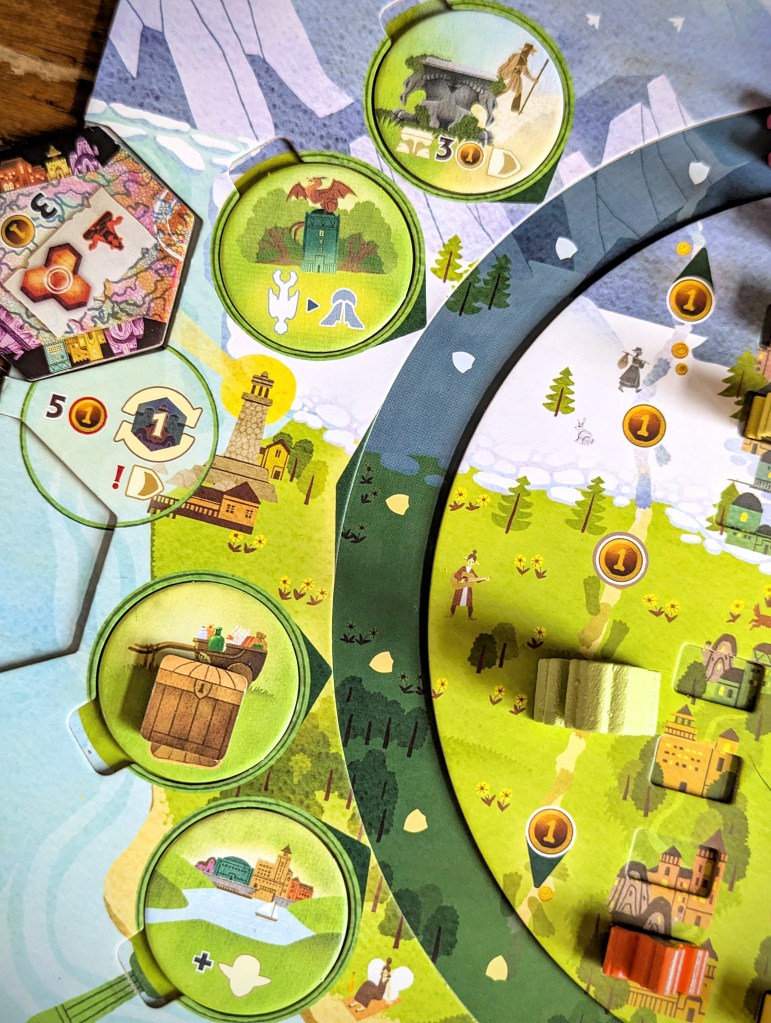
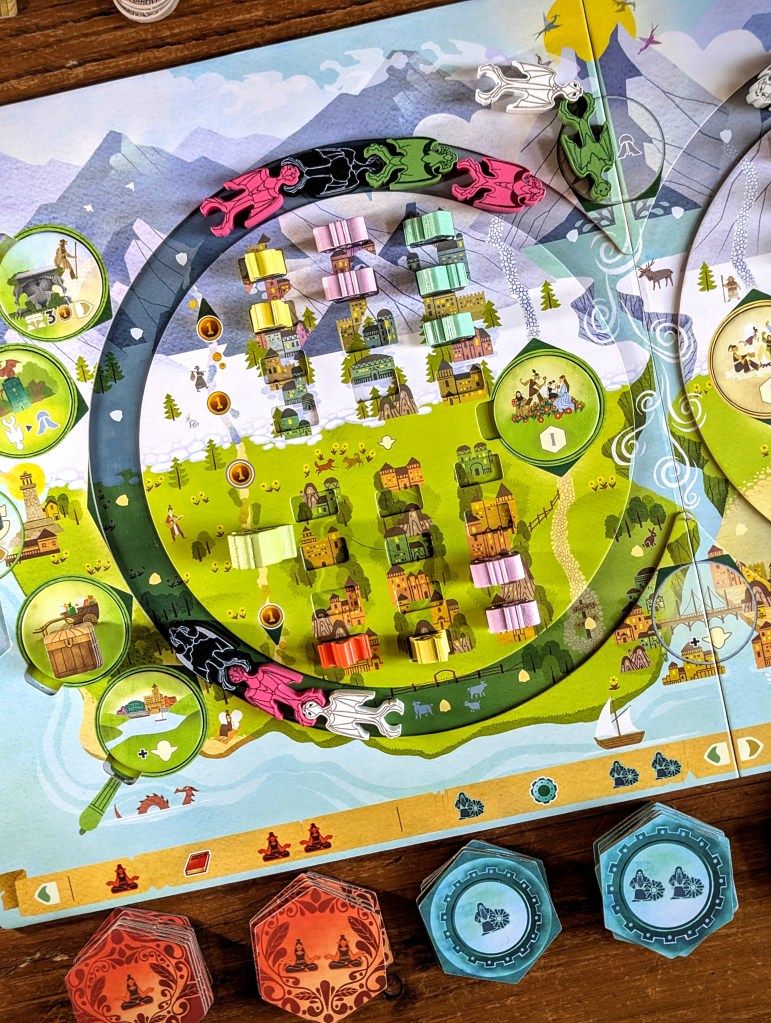
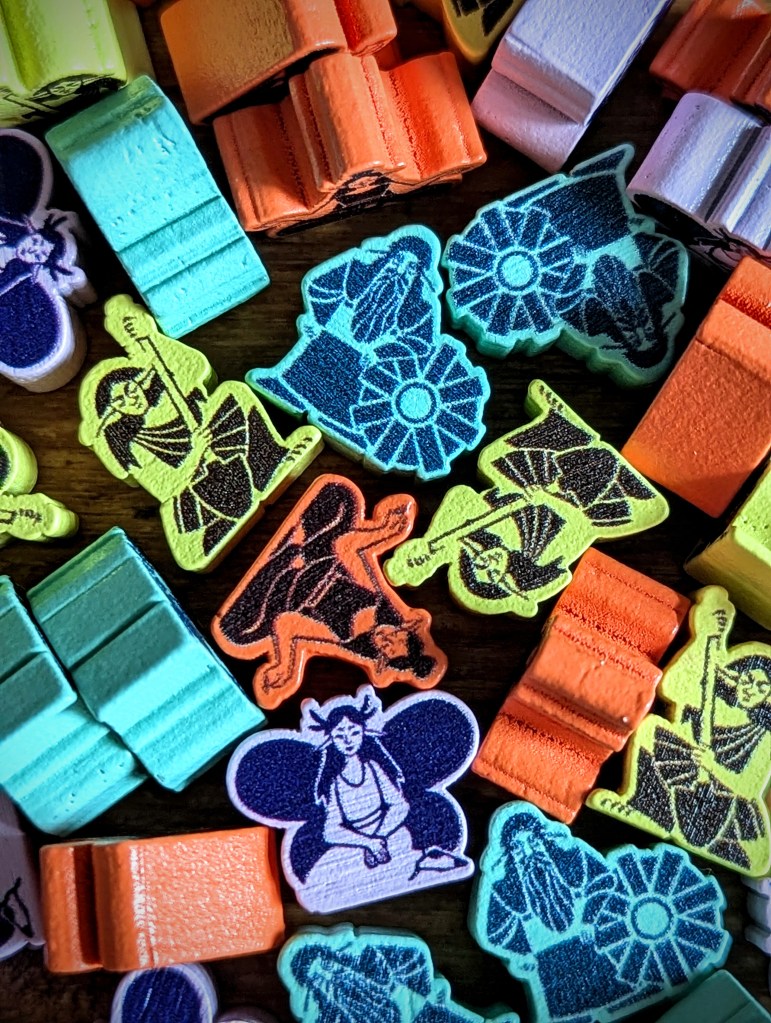
Something else worth mentioning is the ‘golden’ (yellow) Wyrmling Aureus. He joins a swarm like all the others, but he doesn’t belong to any particular player. Instead if he’s moved (by flight or pushing) he activates a location for the active player, and he sometimes adds a little more incentive to pushing a swarm if he’s in the mix.
Sending Wyrmlings back to roost is the only action that has the potential to feel a little bit mean, because you can roost each other’s Wyrmies (which is especially annoying for the player if that Wyrmling is about to activate a location). Not only that, removing a Wyrmling from the middle of a swarm advances any Wyrmlings behind it so they can reconnect with the swarm – so there’s a knock on effect if these Wyrmies still have actions to take and it can mess up people’s plans. And this is why remembering the order of activation is so important! Overall we liked this extra level of player interaction and didn’t find it too mean (no one was singled out).
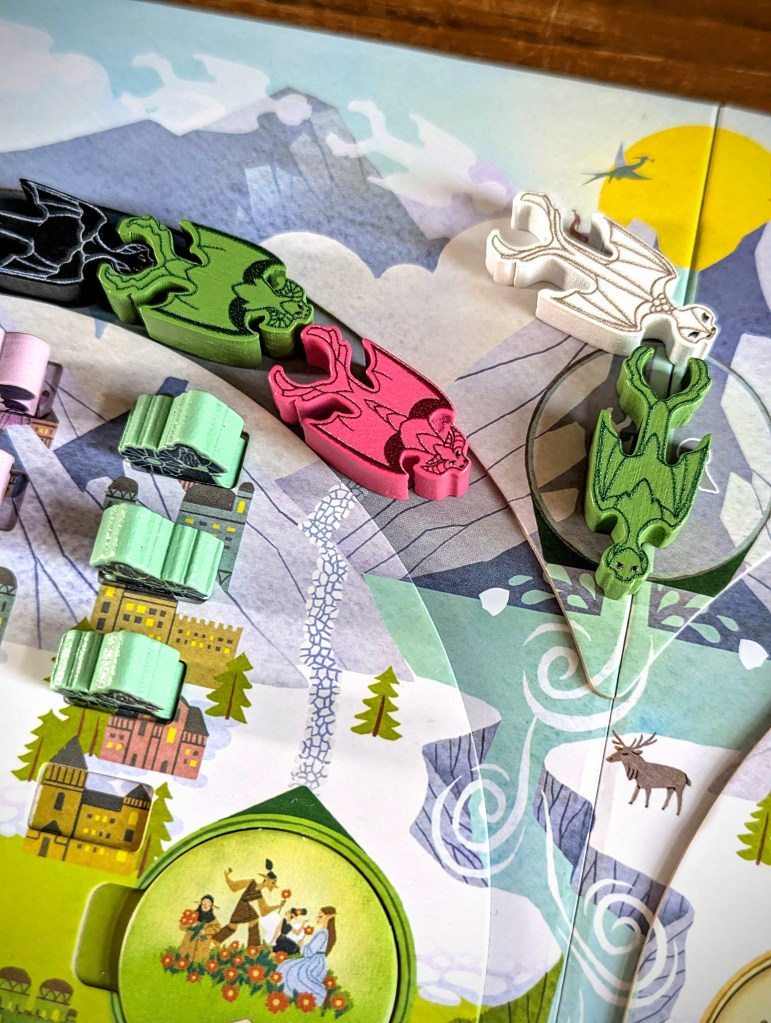
There are a couple of ways the 2 Kingdoms interact that are quite interesting. For example, when you stop at a shrine you add 3 coins to the shrine in the other Kingdom (this happens regardless of whether your shrine had money). If you buy a Merchant tile in one of the Kingdoms, you don’t refill the space with a new tile like you usually would at a market. Instead, you add a tile to the OPPOSITE Kingdom – if there’s no free space, you choose a tile to replace. These are further ways the game forces a level of positive player interaction and tactics.
While the locations actions are identical in both Sinistra and Dextra, you can mix up where most of them appear on the board so no 2 games are the same. Which villagers occupy which villages is also varied depending on set up (but there’s always an equal amount of each type spread across the Kingdom). These are the main sources of variability in the base game, but you can also add more with the advanced ‘Royal Challenges’, which give extra scoring objectives for the end of the game. I think there’s enough here to keep people engaged in 8 Dragons, but there’s also a mini-expansion set available through the Kickstarter which includes even more locations, which I think will help even more.
I love a rulebook, and the draft one we used for this prototype was wonderfully clear. I like that it includes a quick, visual ‘flyover’ of the game at the start, setting the scene and adding a bit of personality.
There are a couple of tweaks in a 2-player game. Firstly you get 3 Wyrmlings each instead of 2. The other main change is Aurea, a ‘golden’ (yellow) Dragon and she essentially acts as a dummy player. She doesn’t fly but can still be pushed and Wyrmlings can join her swarm. And like Aureus (the golden Wyrmling), she can activate a location for the active player. Aurea and the additional Wyrmlings do a good job at ensuring a 2-player game doesn’t feel dragon-lacking, and Matt and I enjoyed our 2-player games a lot. Even so, this game really shines at 3-4 players – the more dragons, the better!
Finally just a minor note: 8 Dragons was initially lighter than I expected, and I’ve heard similar feedback from people who saw the game at UKGE. I think this is in part due to the complexity rating on BGG – ignore it, it’s based on 3 votes! I would say it’s on the med-light end of complexity, depending on the group playing it (some will engage more in the tactics, some will take a laid back approach and go with the flow).
Verdict
The BGG description claims “Minimal downtime. Maximum Dragon time.” and we have to agree! Yes, the Dragons are a gimmick, but they are a GOOD gimmick that is integrated to the gameplay and makes it more fun to play. AND it has the benefit of being fairly straightforward to learn with mutually beneficial actions and a light tactical crunch. And dragons, did we mention the dragons?
8 Dragons has gorgeous table presence, smooth gameplay and tactile dragons going WHEEEEE. What more could you really want?
8 Dragons is currently crowdfunding on Kickstarter RIGHT NOW, so if this game sounds like a little bit of you go check it out!


