
Advert: A prototype of the game was loaned for the purposes of review. All opinions are ours. Components and gameplay may differ in the final version.
Today we’ve found ourselves in a sticky situation, trying to survive in a world swallowed by the sea. Let’s dip our toes into the world of Kalypso.
Key stats
1 to 4 players
45 to 60 minutes
14+ years
Publisher: Inside Up Games
Designer: Gilles Turbide
Art: Amelia Sales
Theme/category: City building, Nautical
Key mechanics: Tile laying, Pattern building, Contracts, End game bonuses, Layering.
Gameplay overview
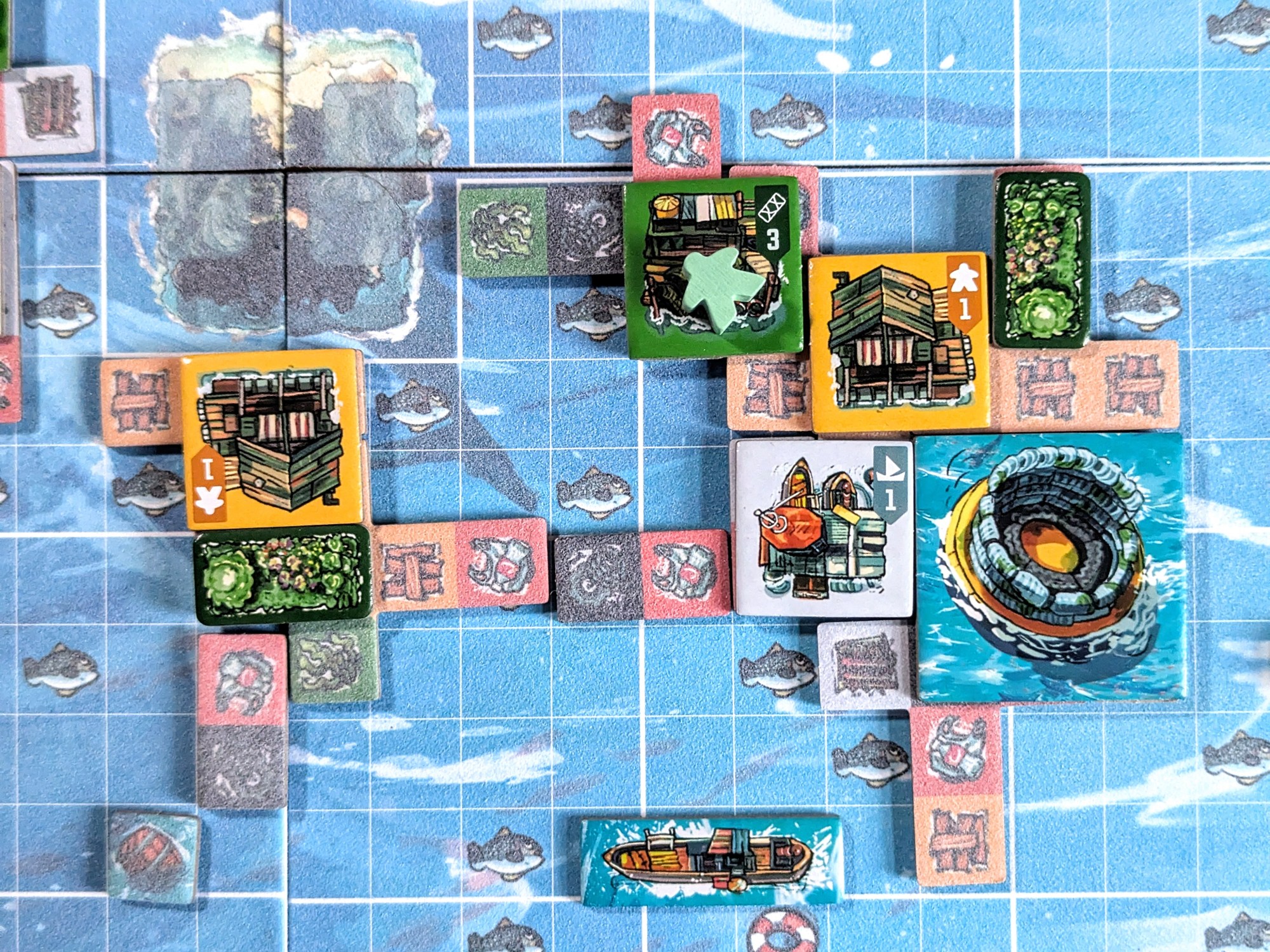
In Kalypso, players are – either competitively or cooperatively – building their own Water World, arranging salvaged polyomino scraps to build upon. Each turn you select a salvage T tile from your ‘vortex’ and place it alongside other tiles in your settlement. Create 2×2 squares containing at least 3 identical salvage types and you can build a matching structure and activate its effect. Make a 3×3 space including at least 5 of the same salvage (any type) and you can place a monument – these don’t have effects but are worth a hefty 11 points in competitive play. After you place your salvage tile the vortexes with remaining salvage are passed around, giving you a different selection to choose from.
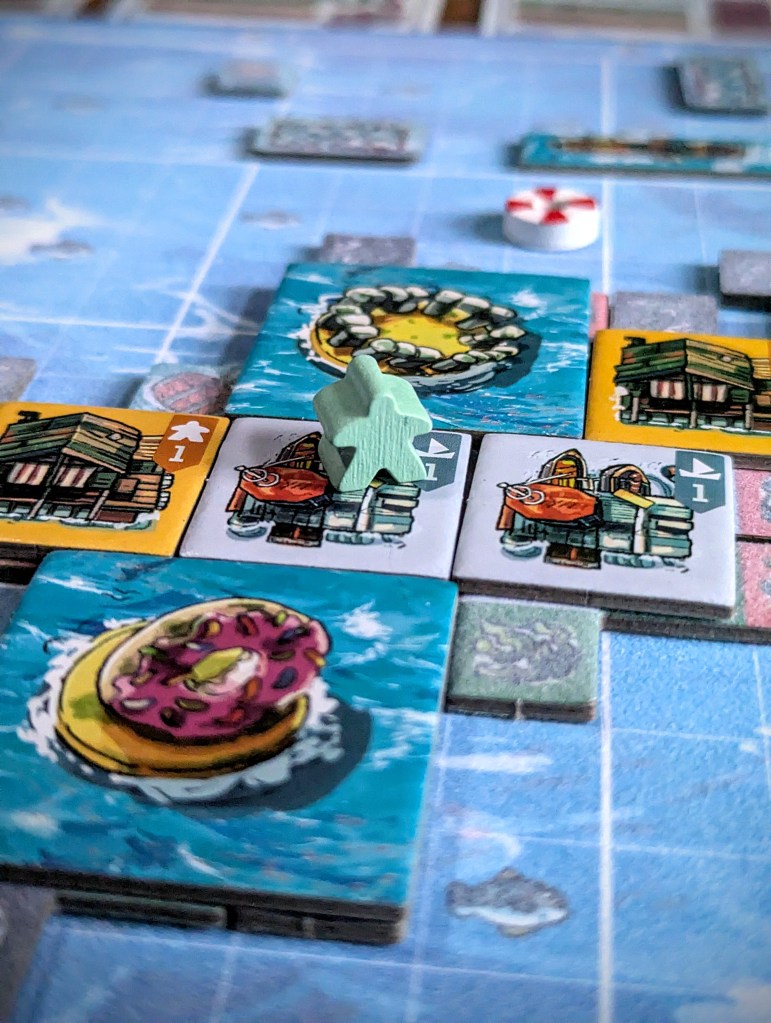
There are various Building effects to take advantage of: Boatyards and Net Workshops give you boats and nets to collect fish; Warehouses give you a bonus salvage tile; Scrapyards give you smaller scrap tiles; Coopers give you tiny barrels which act as wild salvage. Solar Panels and Greenhouses (which produce a garden) function differently depending on the mode you’re playing: in competitive mode they score endgame points (Solar Panels for adjacent water spaces, gardens for adjacent monuments), whereas in co-op they are important resources (more on this in a sec).
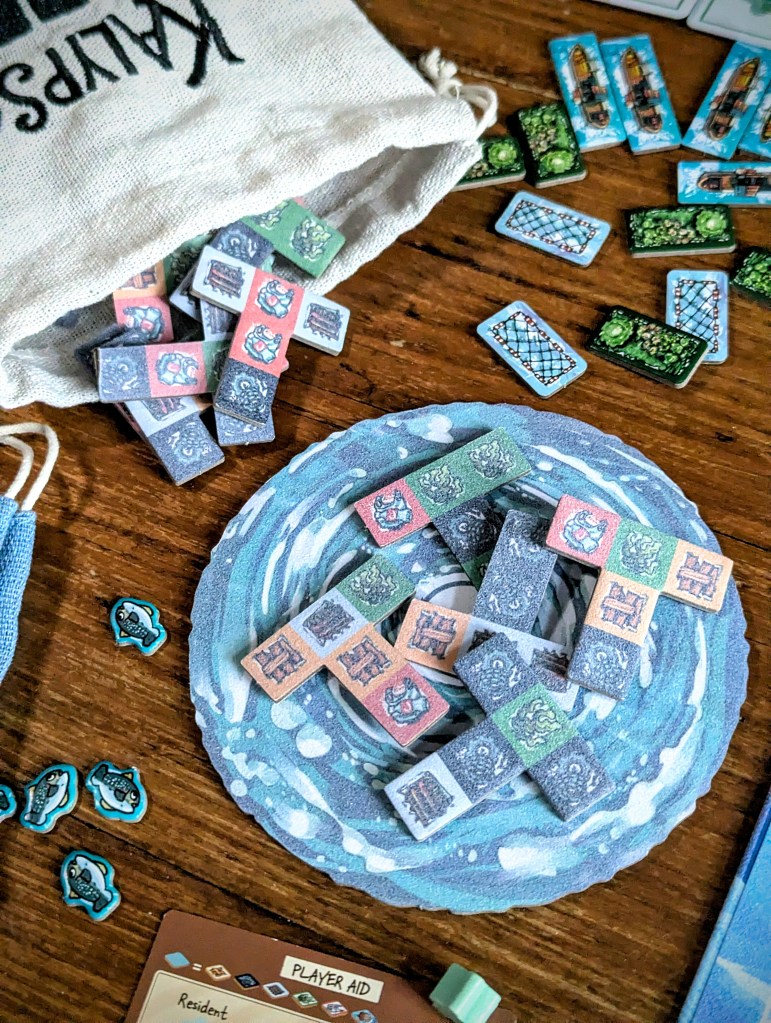
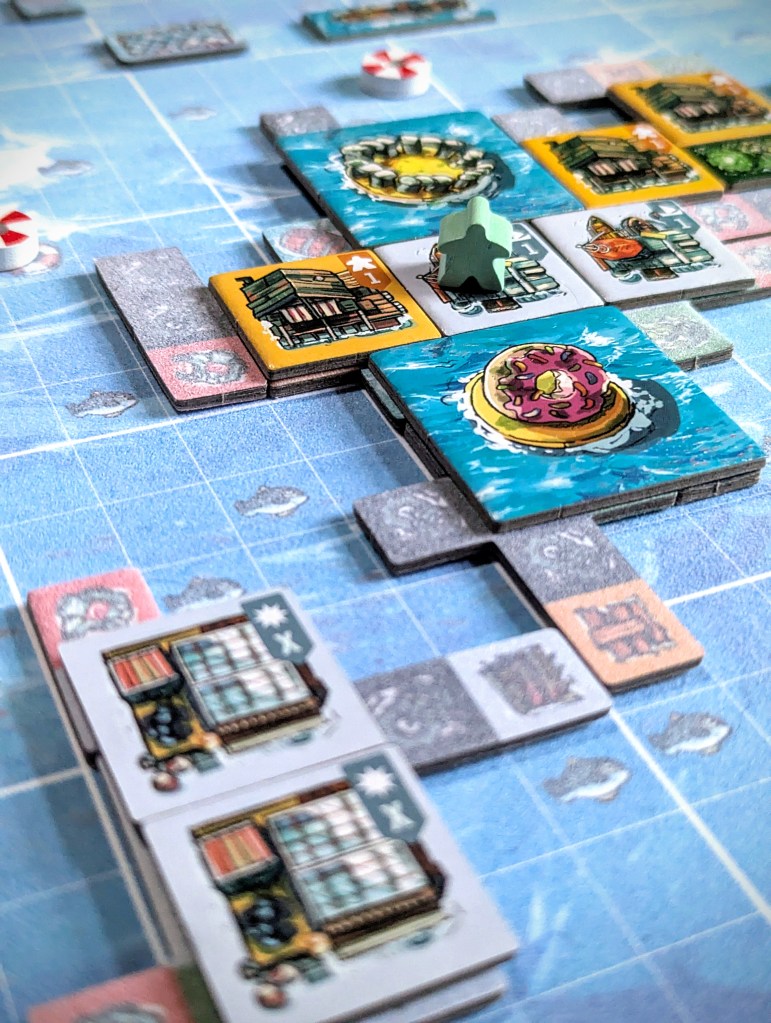
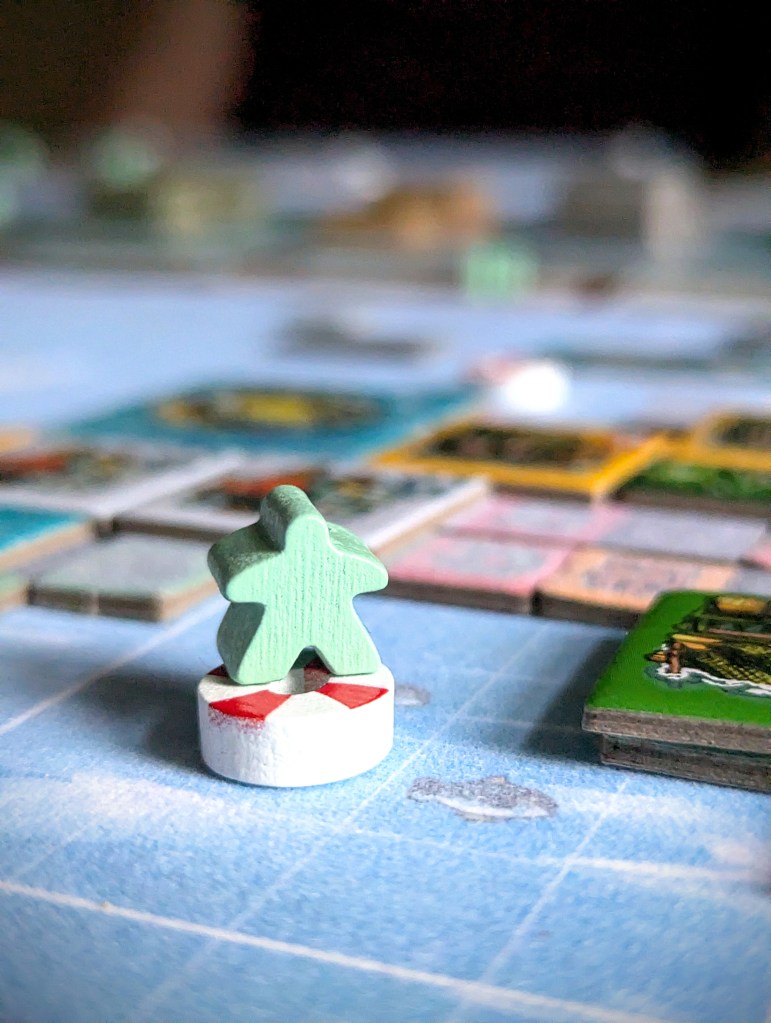
But perhaps most important of all are the Houses. Each house you build lets you place one survivor onto a different unoccupied building and this lets you trigger that building’s effect again. In competitive mode, you start with 2 survivors and you can rescue more by covering life raft tokens with your tiles. In co-operative mode, more survivors wash up on your central island at the start of each round (how many depend on difficulty), and if you don’t house them before the round ends you lose!
In cooperative mode, you also have the tricky challenge of making sure you can sustain the community you build, monitored through a resource tracker. Solar panels are required to deploy new boats. Rather than giving points, fish and gardens are essential to feed your community. If you don’t have enough at the end of each round for the number of survivors you’ve housed, you lose.
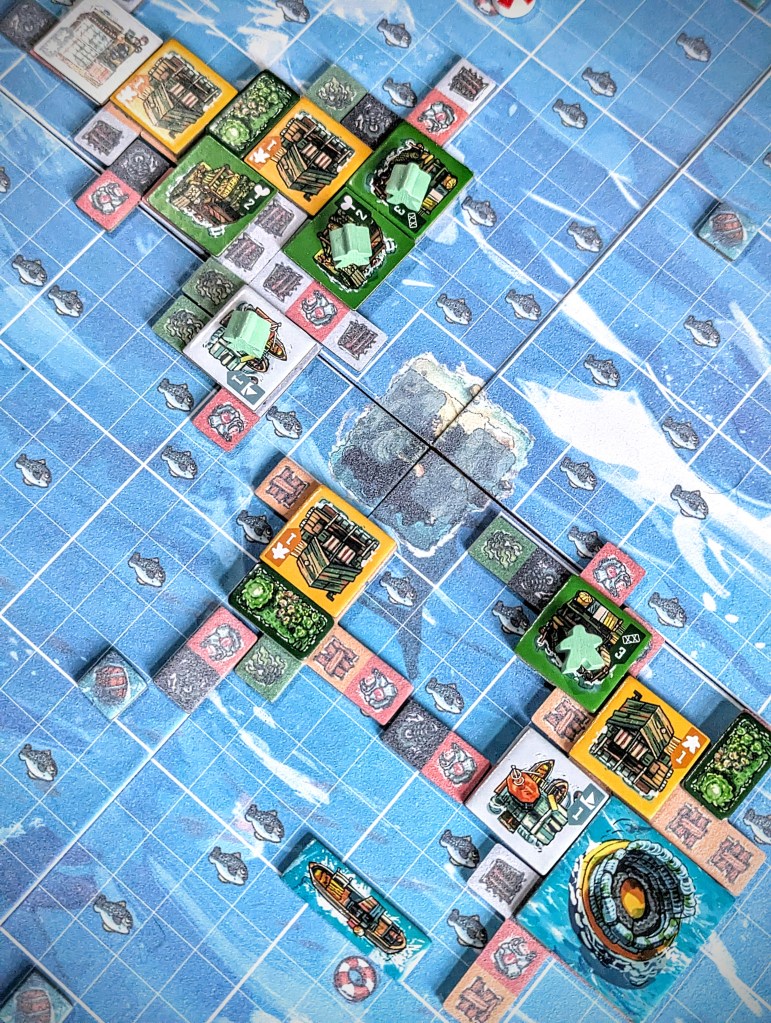
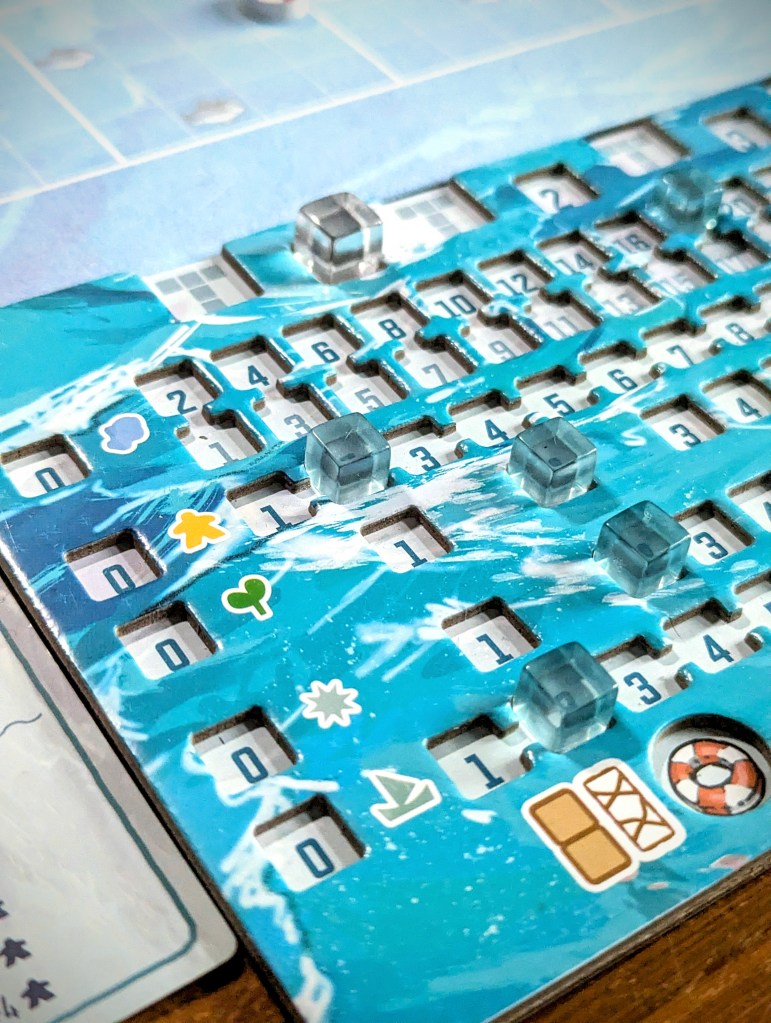
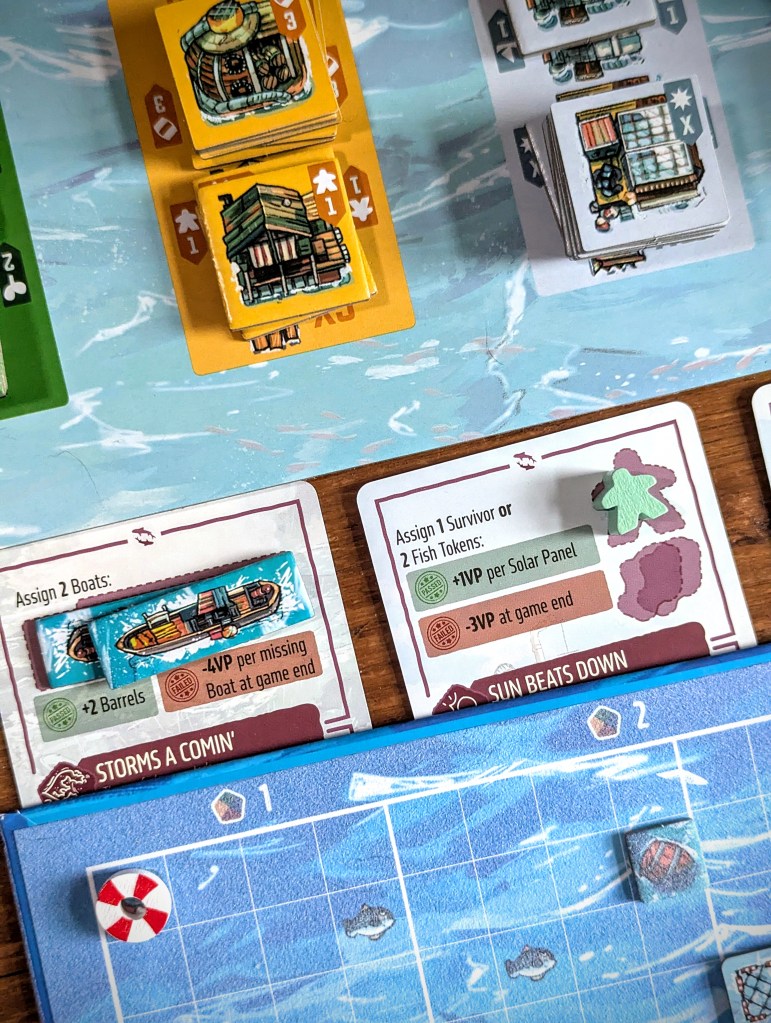
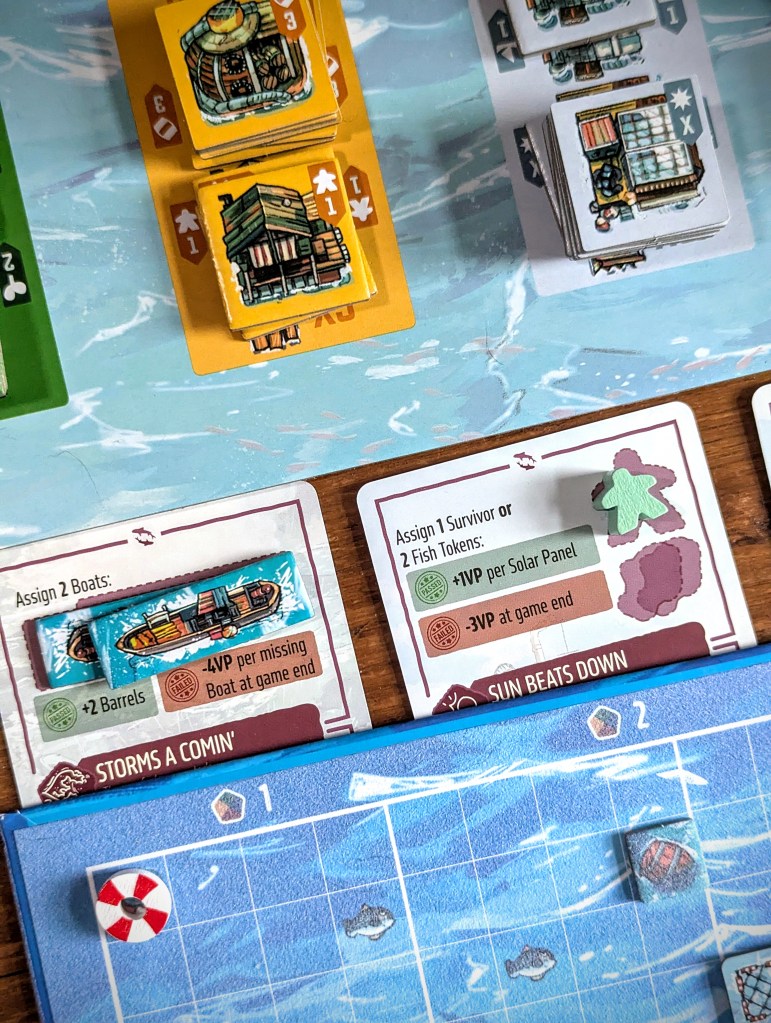
And if all this wasn’t already enough to keep you busy, there’s also the round objectives and 2 end-game goals to keep on top of. Each player has a forecast deck, giving you a challenge to prepare for each round; in competitive mode, your forecast for the round is chosen by an opponent, but in co-op mode it’s randomly drawn. Successfully prepare for the forecast by the end of the round and you’ll get a reward, fail and suffer the consequences (usually negative points, but in co-operative mode of course it means game over).
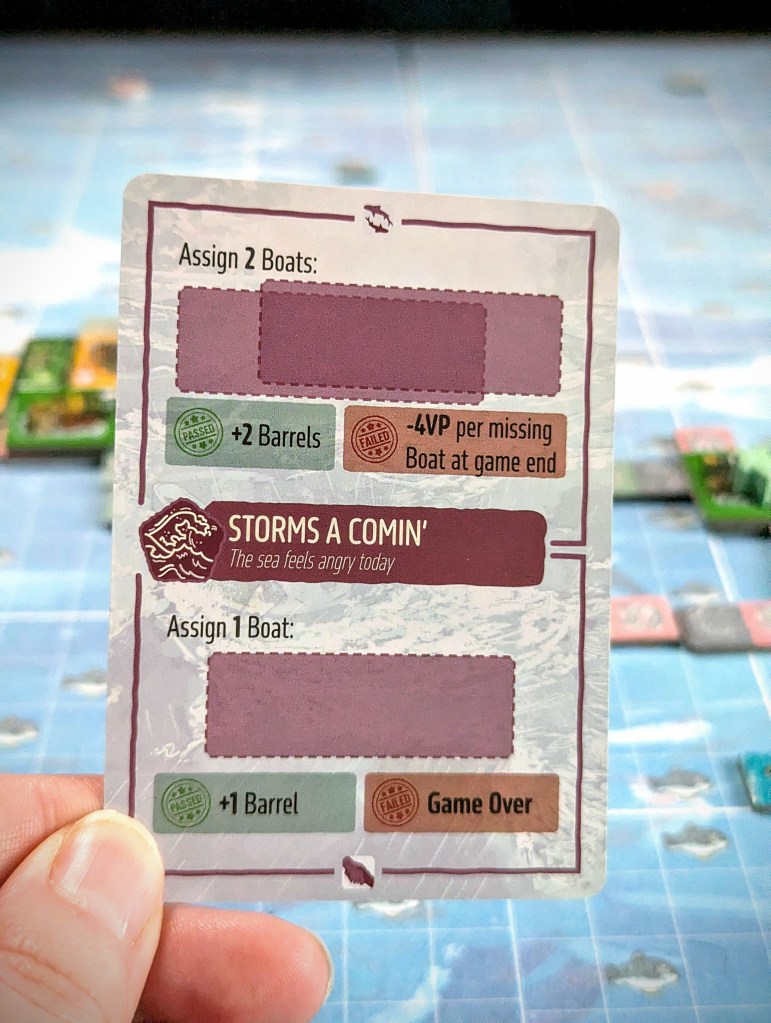
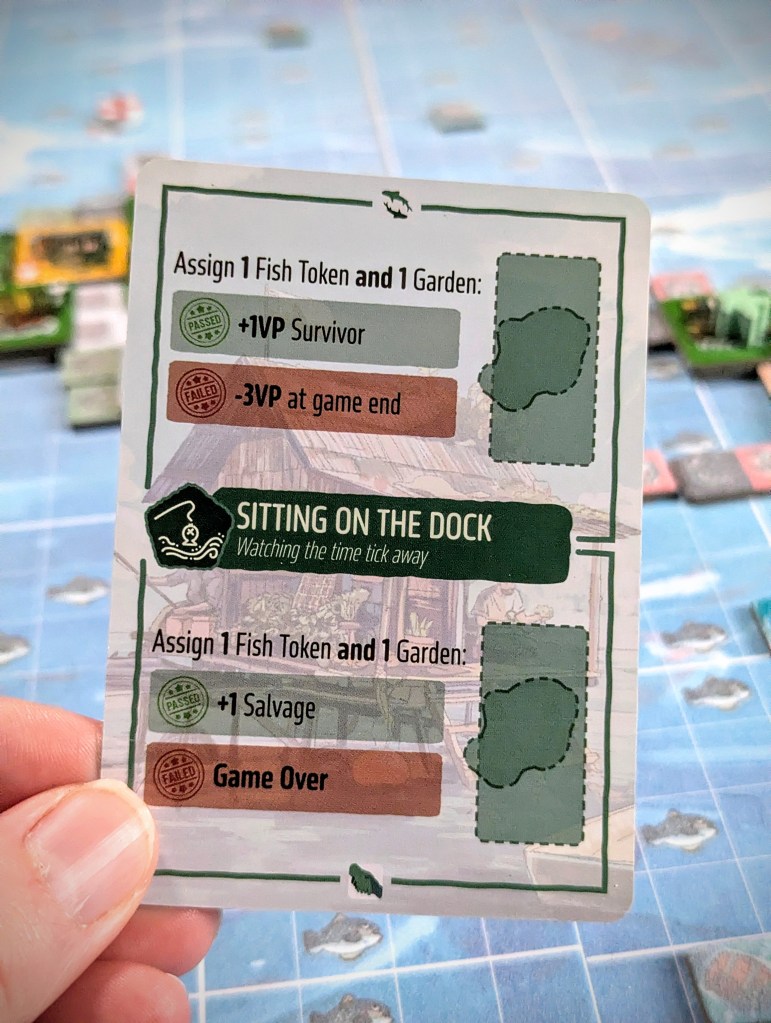
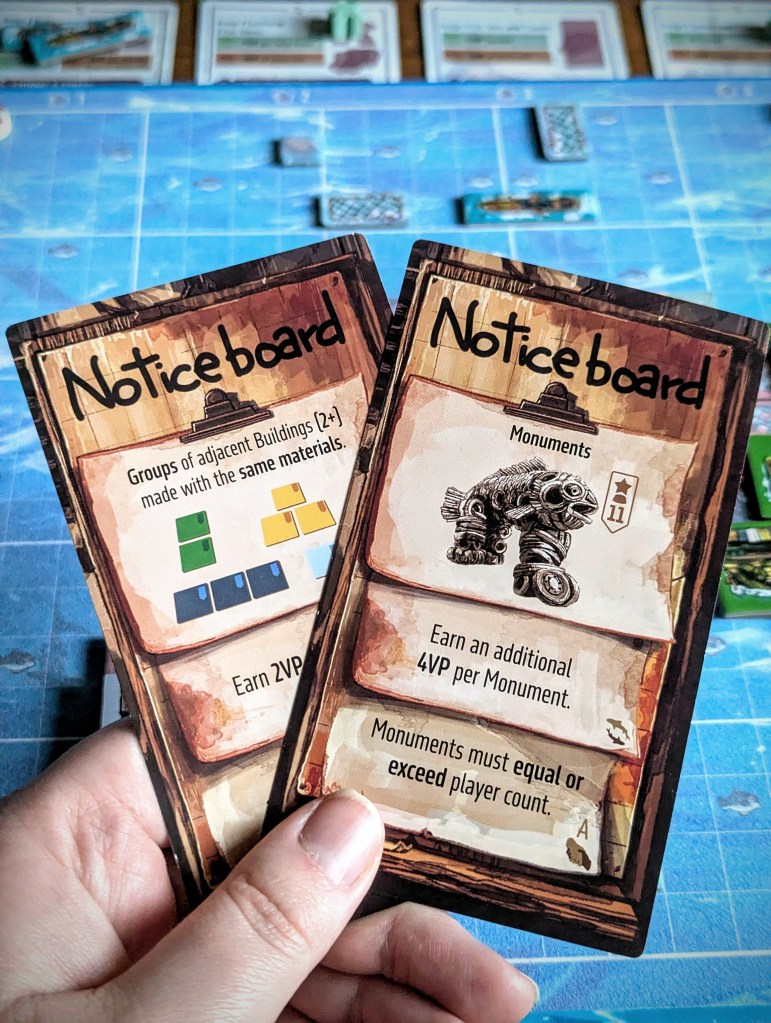
The game ends after 4 rounds. In competitive mode the player with the most points (across buildings, survivors, monuments and objectives) wins. In co-operative mode, you win if you (and your survivors) make it to the end AND fulfil both end-game objectives.
Solo mode
Solo mode is similar to co-op. The main difference is that instead of vortexes, you pull 2 salvage tiles straight from the bag and pick one to place and one to track how many turns you’ve had – at the end of the round the ones used on the tracker are discarded from the game.
Our thoughts
As you’ve probably picked up from the photos, this isn’t an ordinary game board with ordinary tiles: they have a special coating to help keep the tiles in place. The best way I can describe it is it’s like fuzzy felts but…fuzzier? It works really well, but may not be everyone’s favourite texture (it was borderline sensory ick for me, if that means anything).
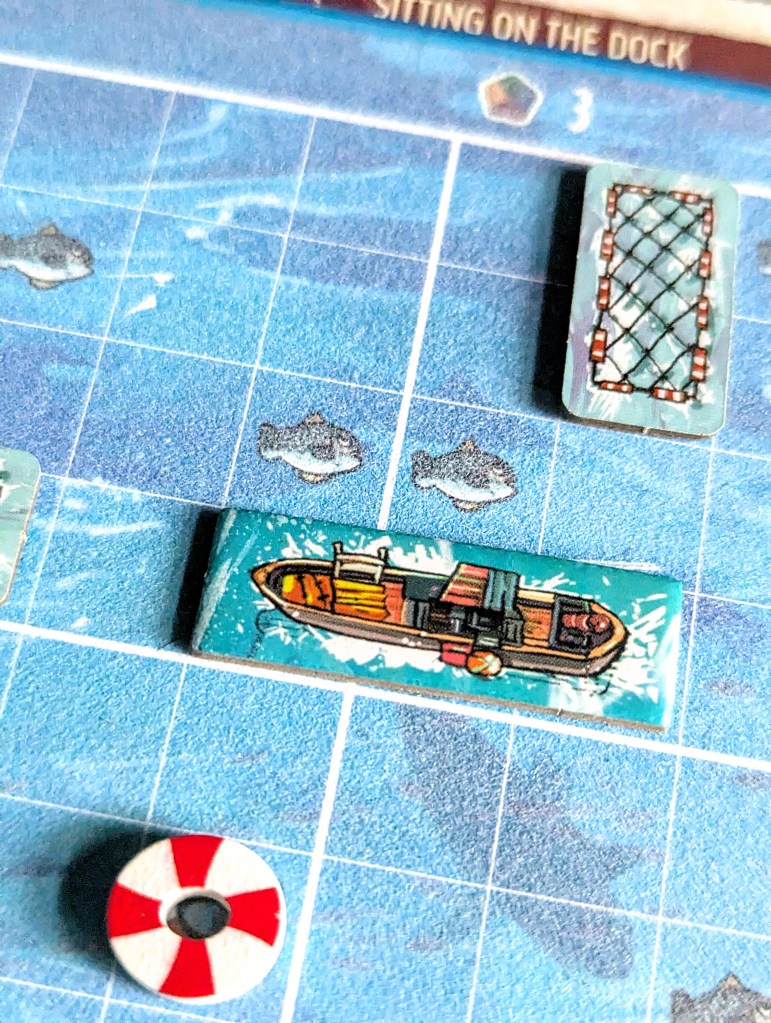
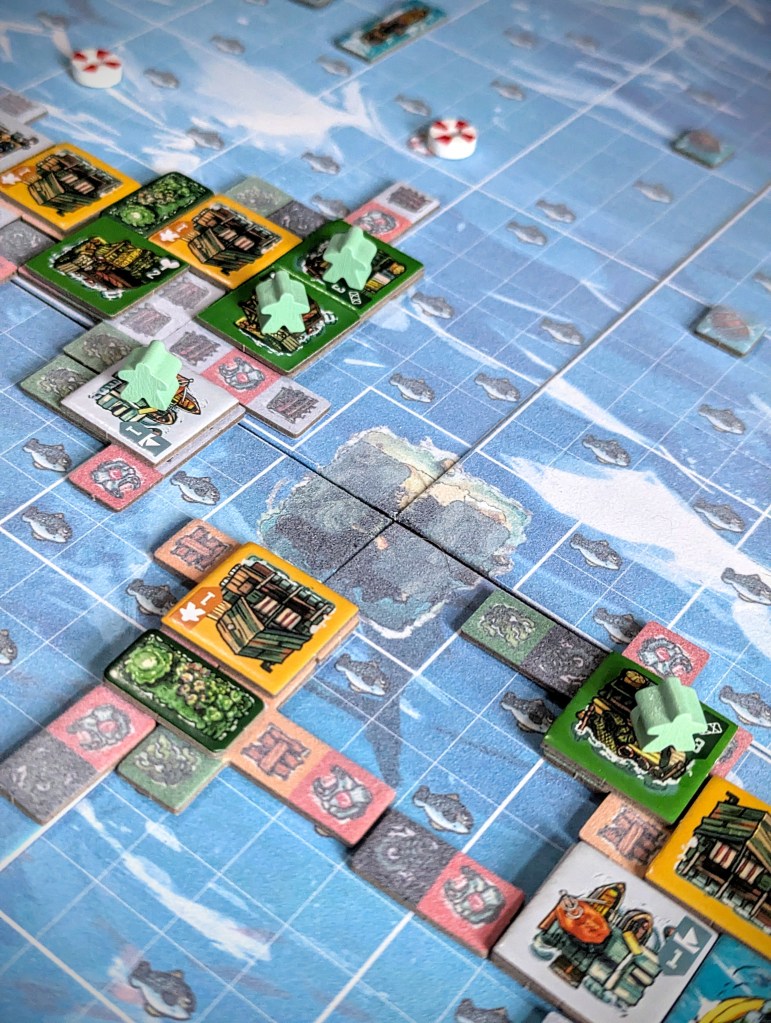
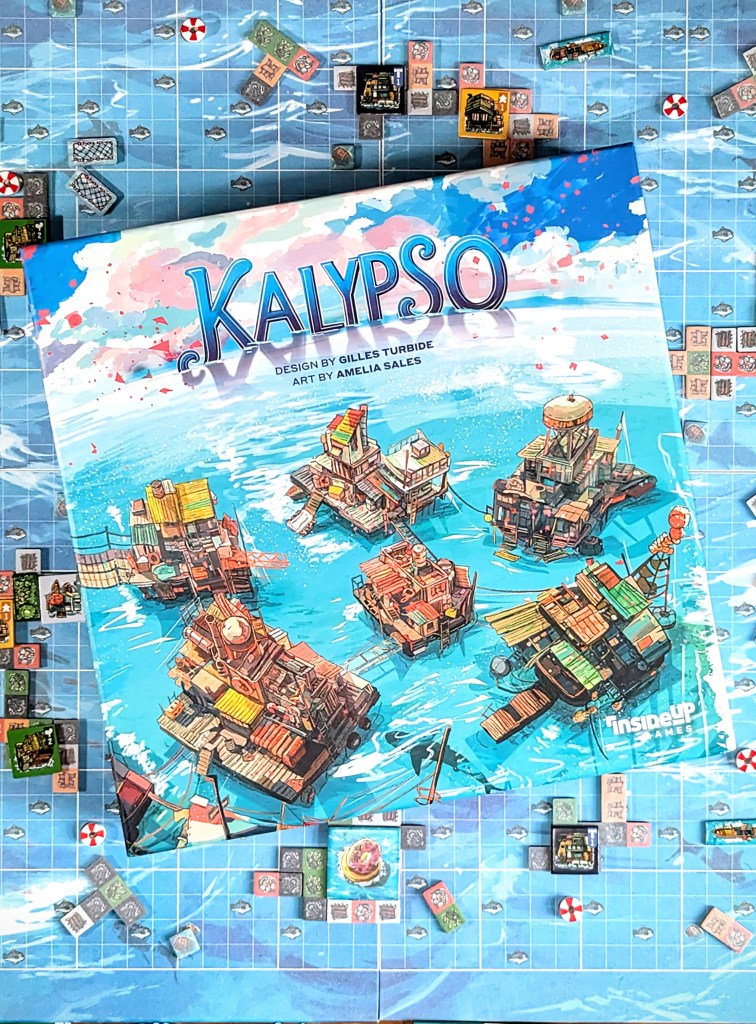
Water World is one of Matt’s favourite films when he was growing up, so the theme was an instant win for him – although the design is more cozy survivor core than weird dystopian Smokers (a good thing, in my opinion). The tiles and ocean boards have clear visuals without looking too busy and there is so much rich artwork on the back of the cards, they are an absolute treat to look at!
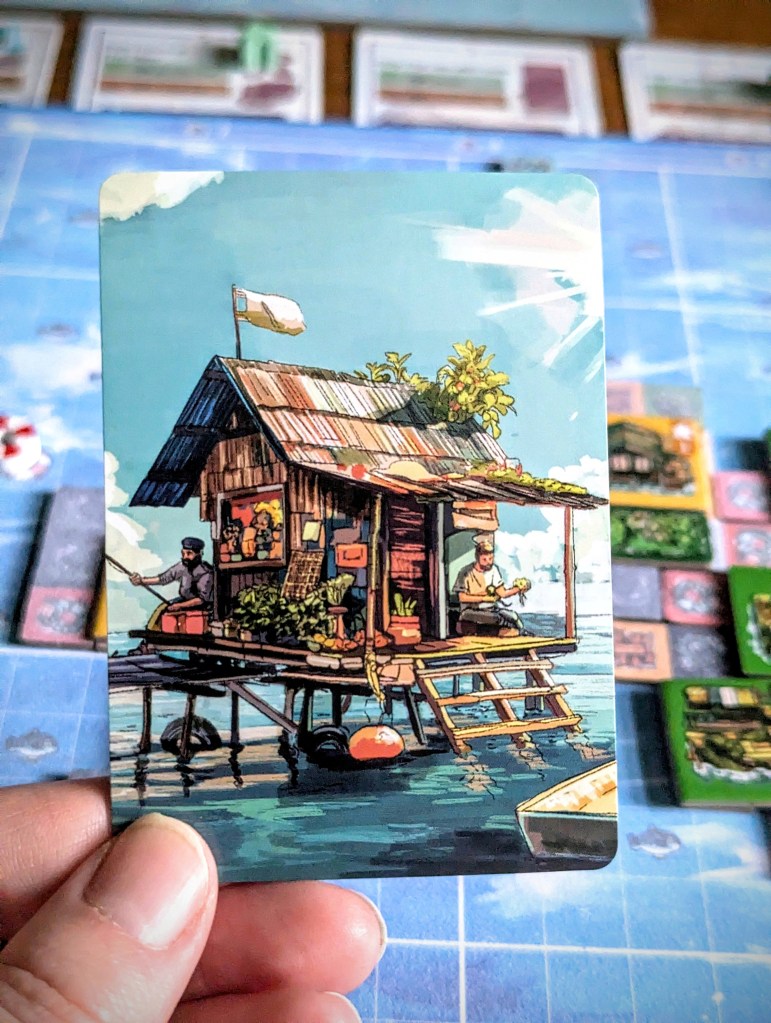
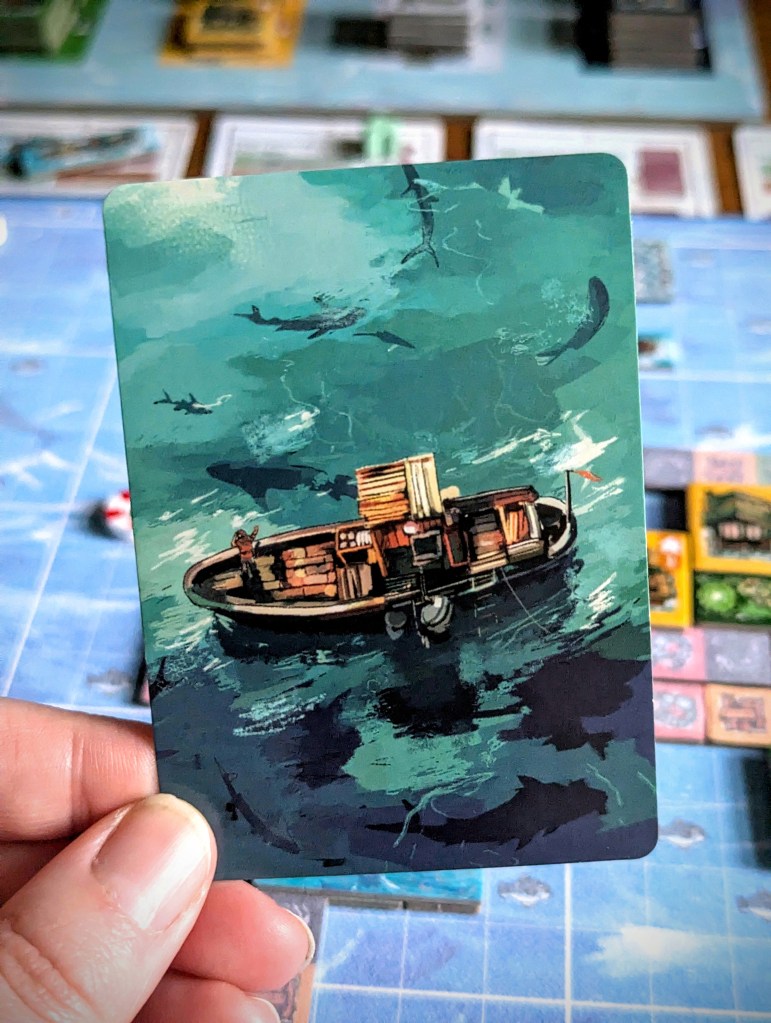
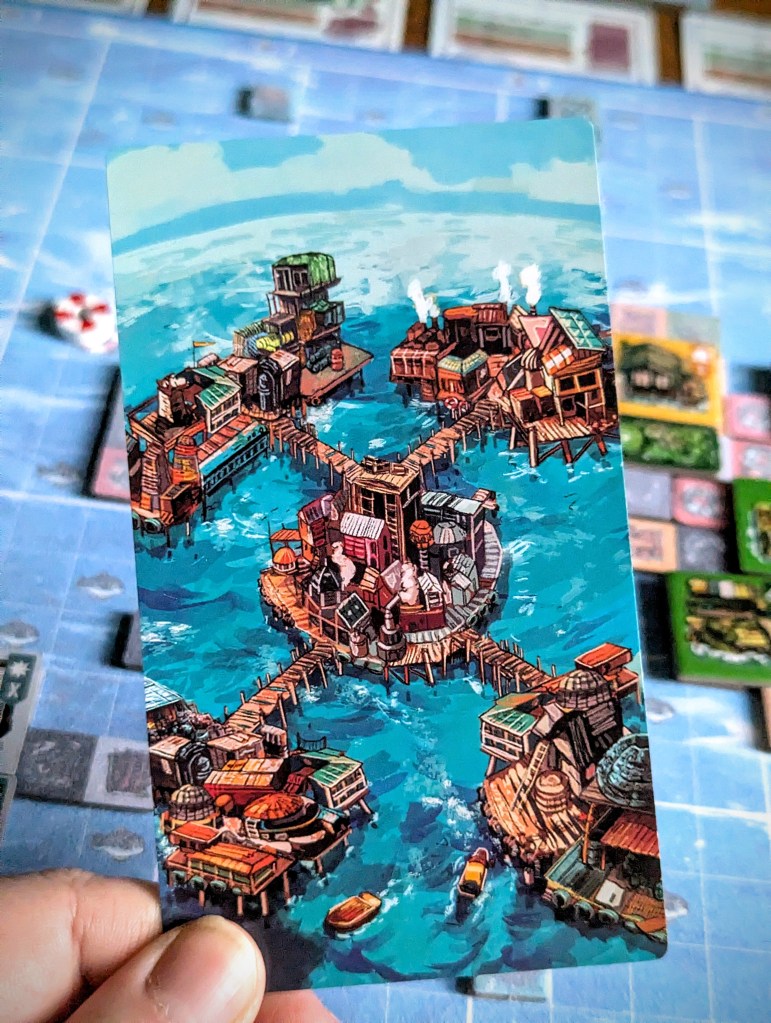
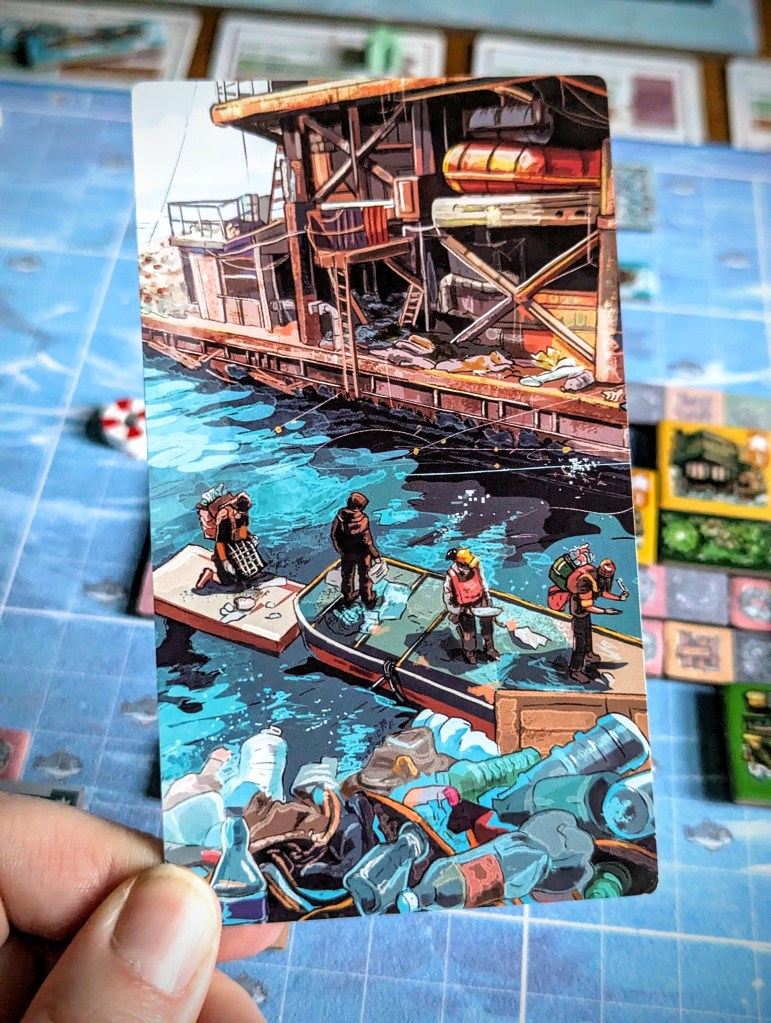
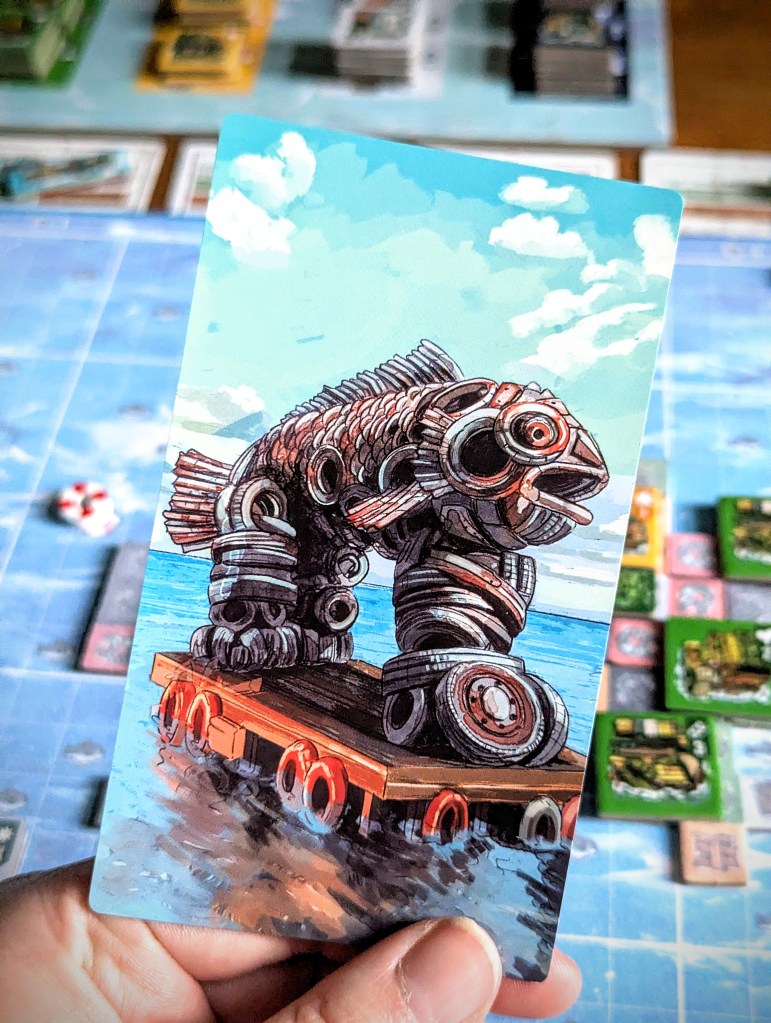
We love that there’s a choice of playing competitively (with one player board) or cooperatively (4 player boards joined together). Both modes are great, overall our favourite was co-operative. Balancing the resource requirements alongside everything else felt more tense!
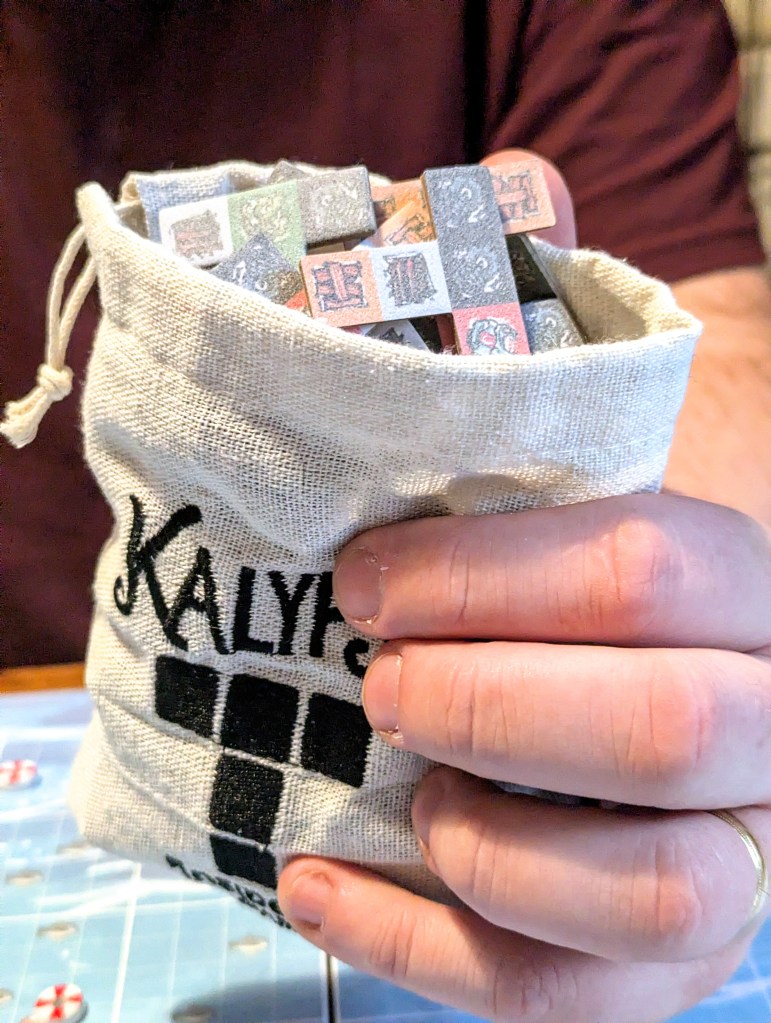
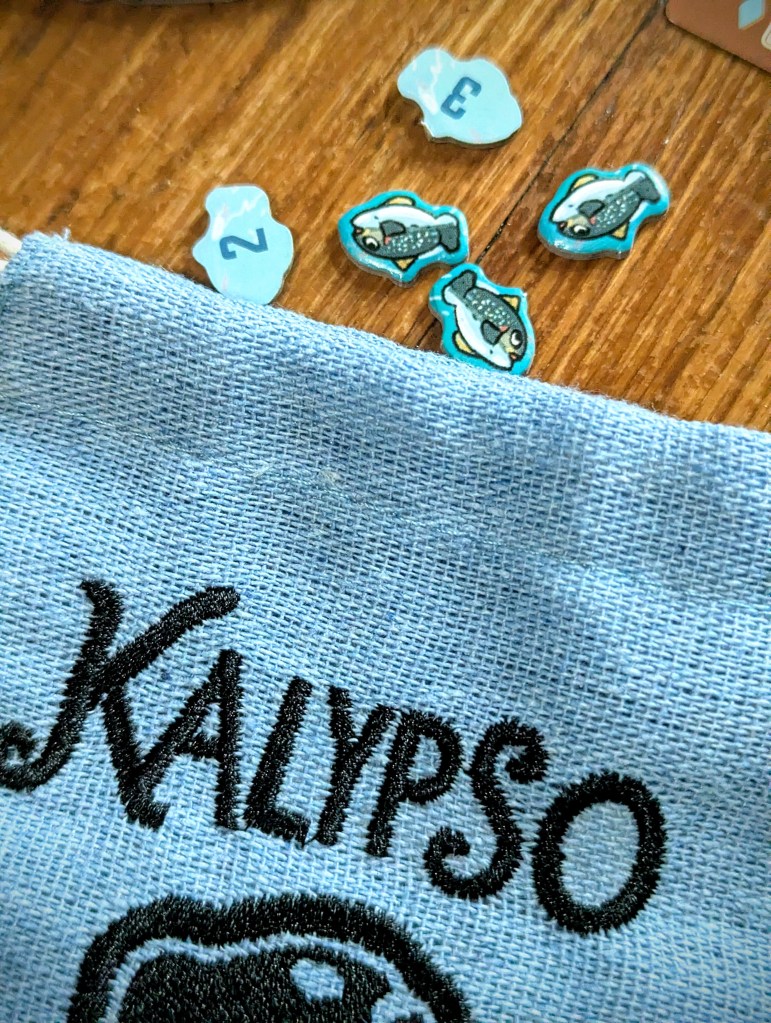
My main criticism of the copy we used is that the tile bags (for salvage and scrap) were far too small for purpose. You couldn’t give the tiles a good mix (the tile adhesion exacerbates this, making a bigger bag even more essential) and it felt like you were just stuck picking tiles from the top.
What we like:
- Great theme choice with beautifully detailed art.
- Two modes to choose from: competitive and co-op (co-op was our fave but both are fun)
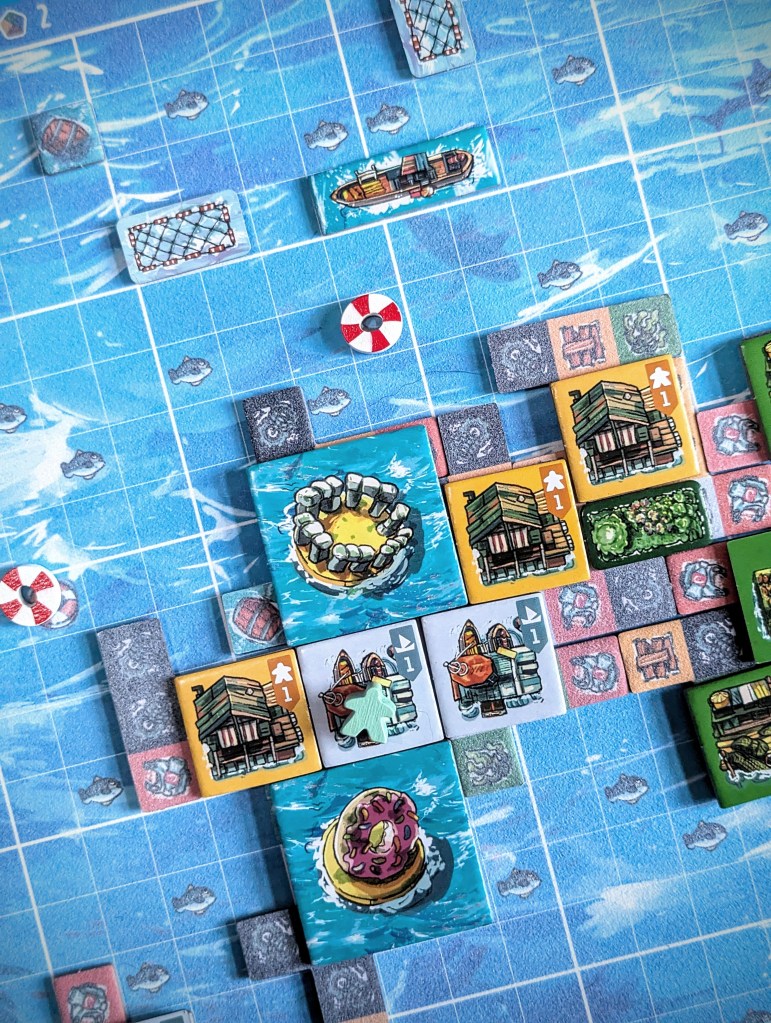
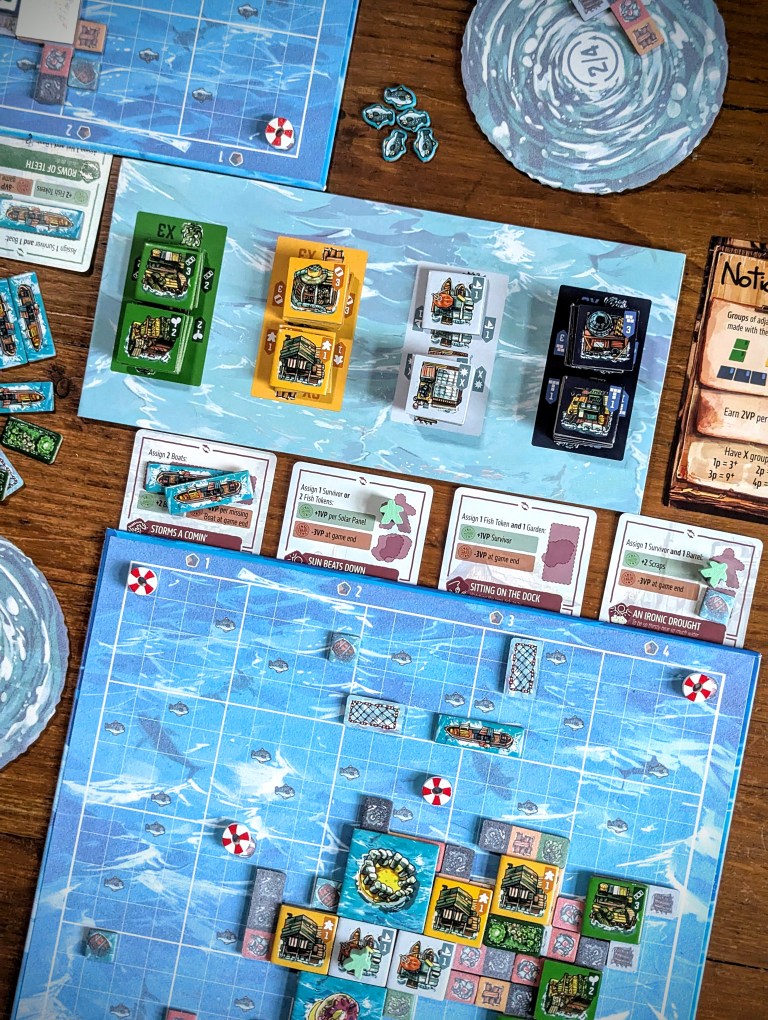
- Puzzly tile placement with a lot of things to balance, like working towards endgame objectives and dealing with forecasts (and earning points in competitive).
- Even more tension in co-op: endgame objectives are compulsory and you have the added challenge of keeping survivors housed and fed.
- Simultaneous play which reduces downtime.
- Very thorough rulebook, although it’s length is a bit intimidating!
Considerations:
- Some people with sensory issues might not like the fuzzy tile texture.
- The tile bags should be bigger so you can select (random) tiles more effectively..
- Set-up/teardown takes a bit longer than I’d like for a game of this play length (mainly getting the life savers and barrels on).
Verdict
Inside Up Games have knocked it out of the park again with another innovative board game that gives you a lot of bang for your playtime. Whilst not overly complicated once you understand the rules, there’s a lot going on with some satisfying tile laying and tense (but almost cozy) survival gameplay.


One thought on “Kalypso – First impressions review”