
Advert: We were loaned a copy by Thunderworks Games for review (via the UK Board Game Review Circle). All views are ours.
Think you gots what it takes to make the next animated blockbuster? Because it’s time to put your agent hat on and recruit the best cartoon talent in showbiz. This is FlipToons, baby!
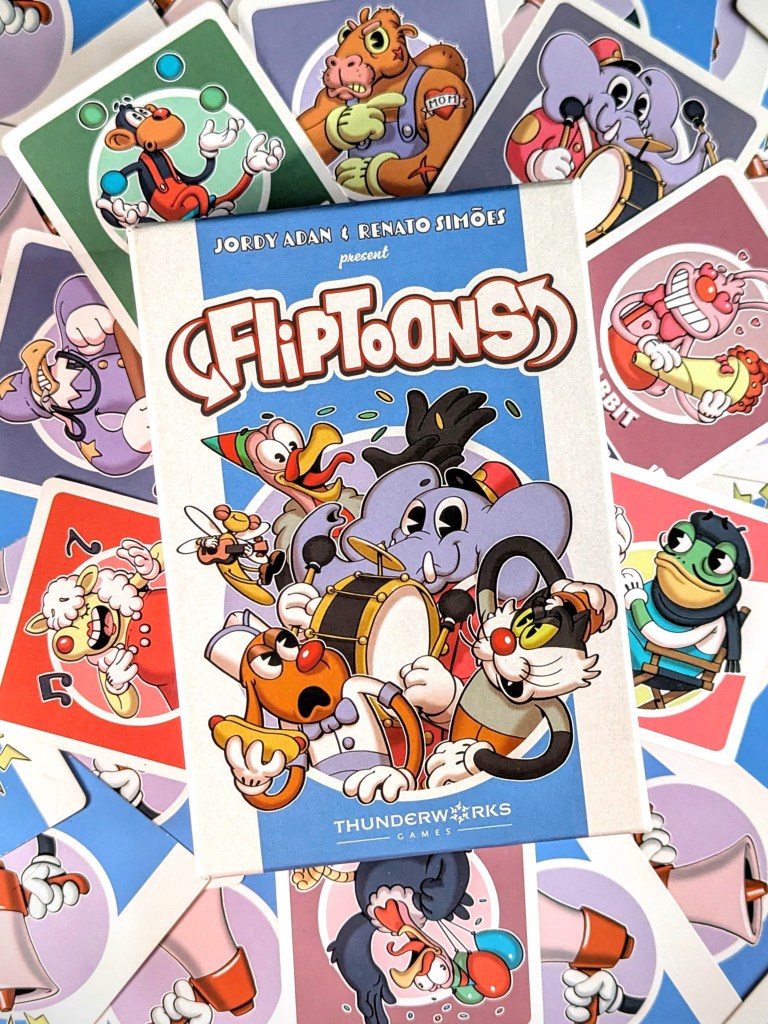
Key stats
1-4 players | 15-30 mins | Age 10+
Publisher: Thunderworks Games
Designers: Jordy Adan, Renato Simões
Artist: Diego Sá
Categories: Card game, Animation, Cartoon
Key mechanics: Deck building, Market, Race to win, Tableau building
Game overview
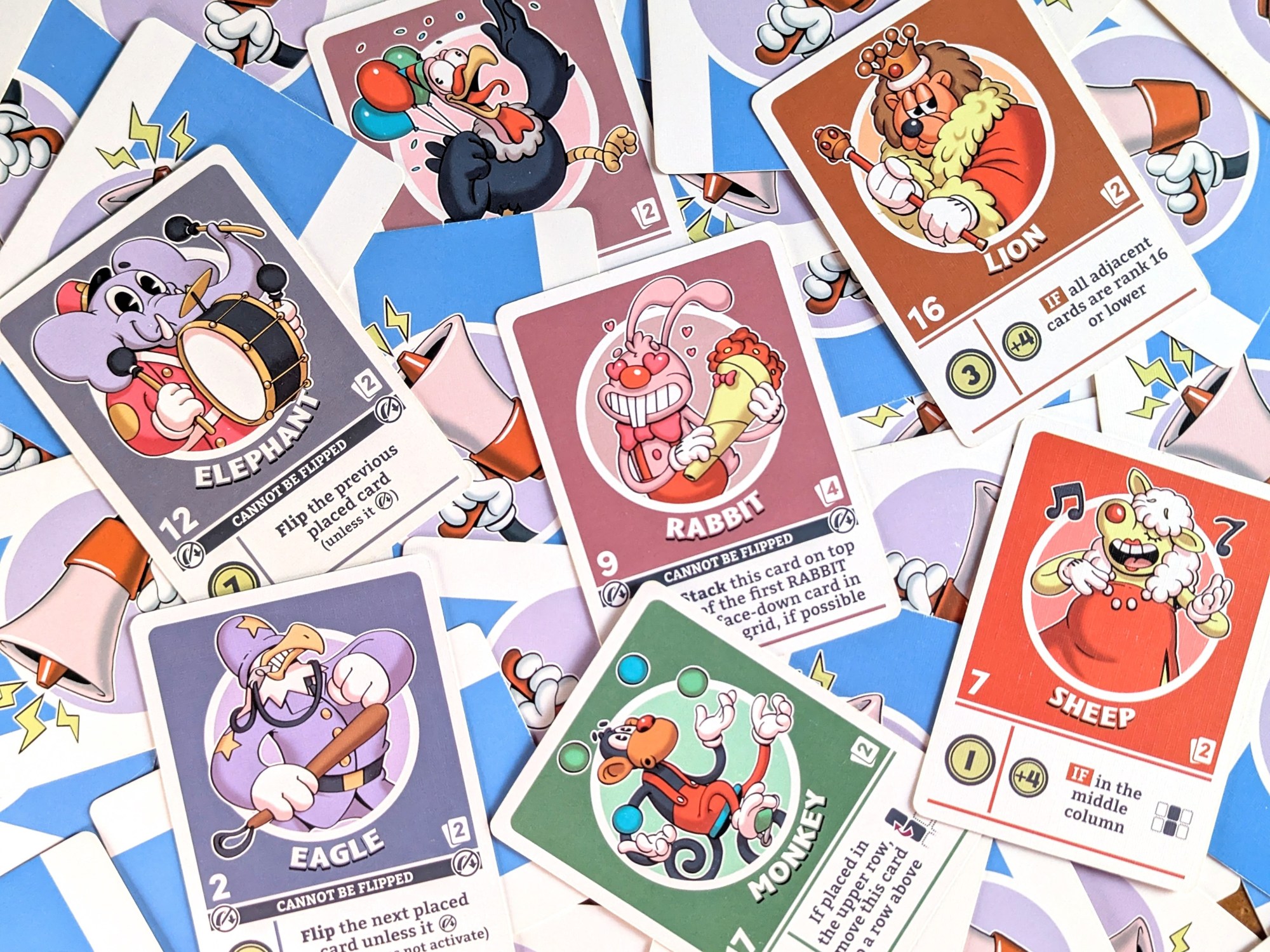
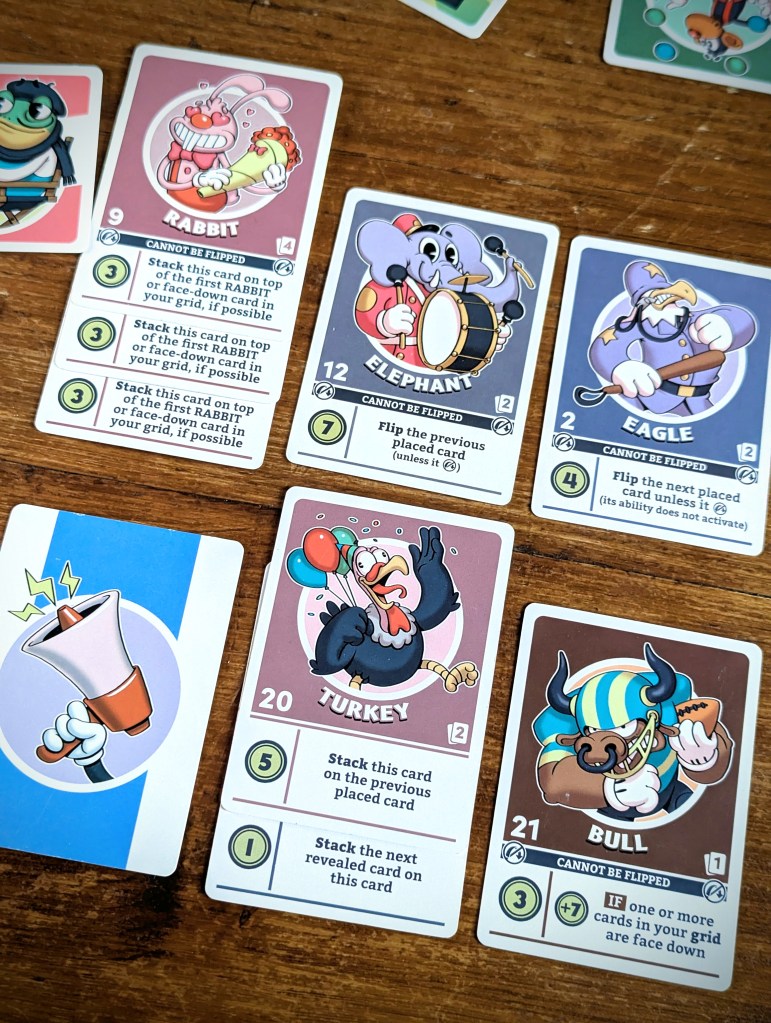
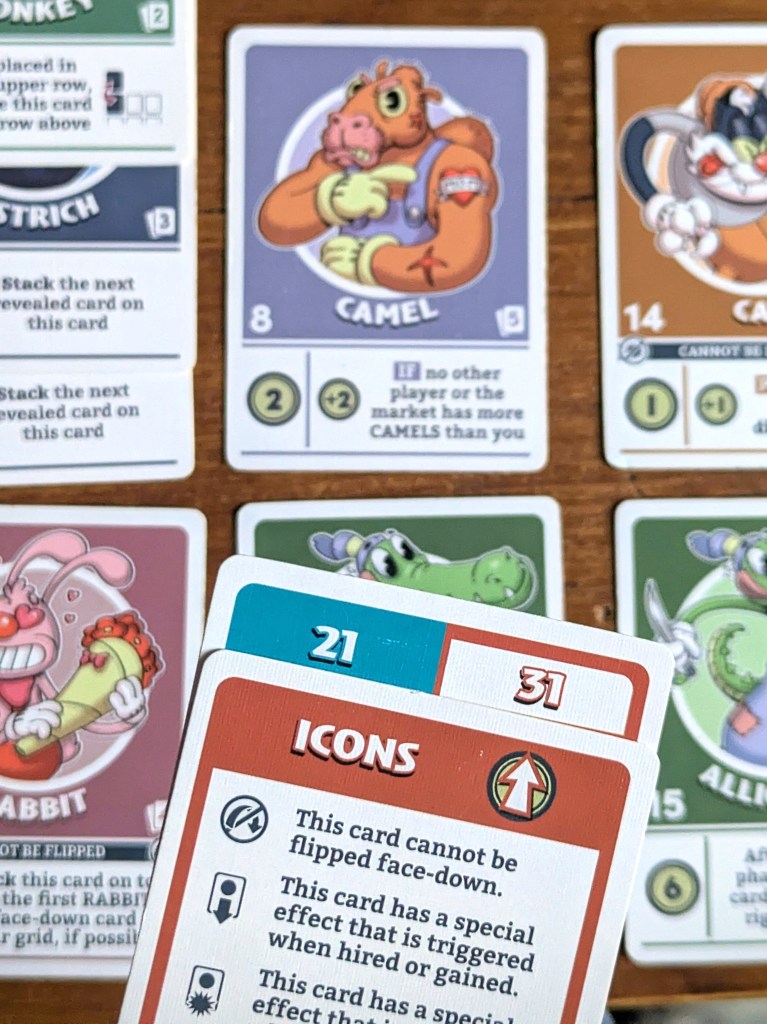
Each round, players simultaneously flip Toon cards from their decks into a 2 by 3 grid. These Toons earn you fame for the round – some have specific fame values, while others may score depending on other Toons you have in your grid. And some Toons have special abilities that activate when drawn, like stacking them onto another card in the grid. This can mean you end up with more than 6 cards in your grid, which means more fame! But to start with, every player has the same 6 starting Toon who, let’s be frank, haven’t got star quality.
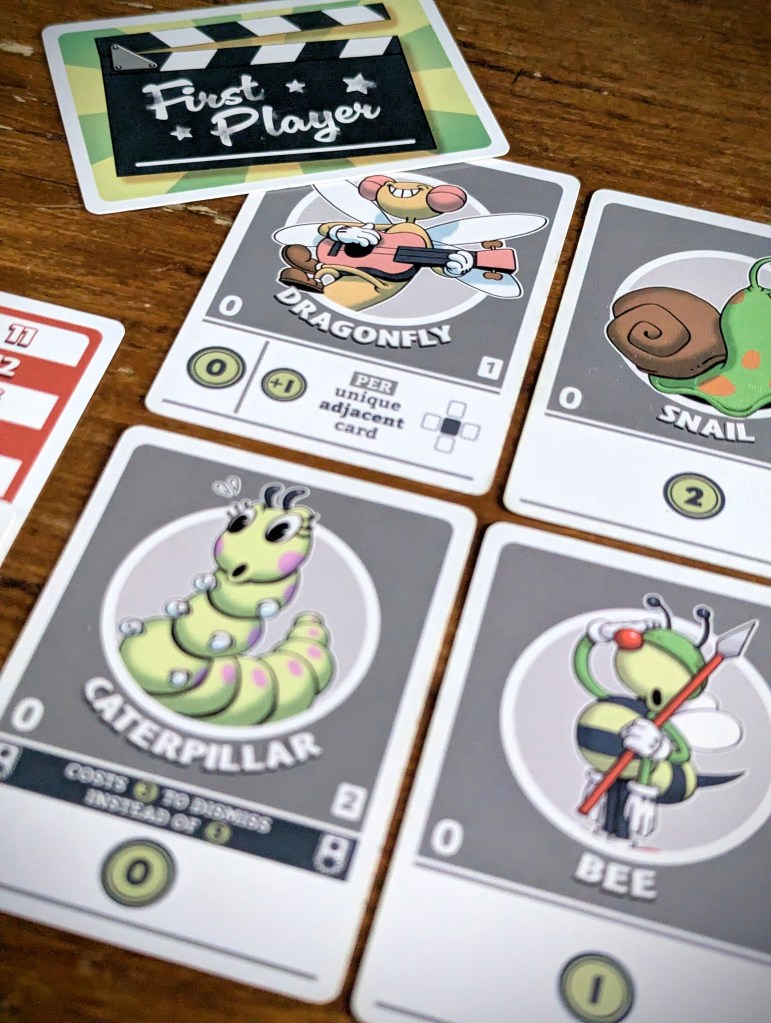
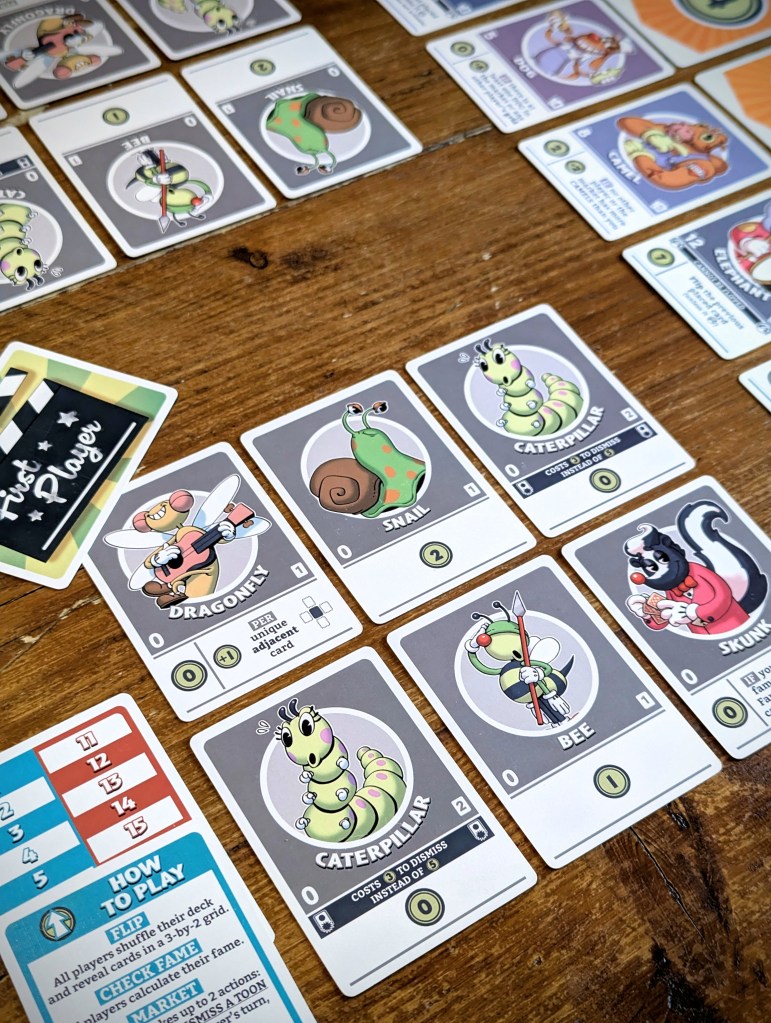
Once everyone has calculated their fame for the round, players in turn order spend fame to either:
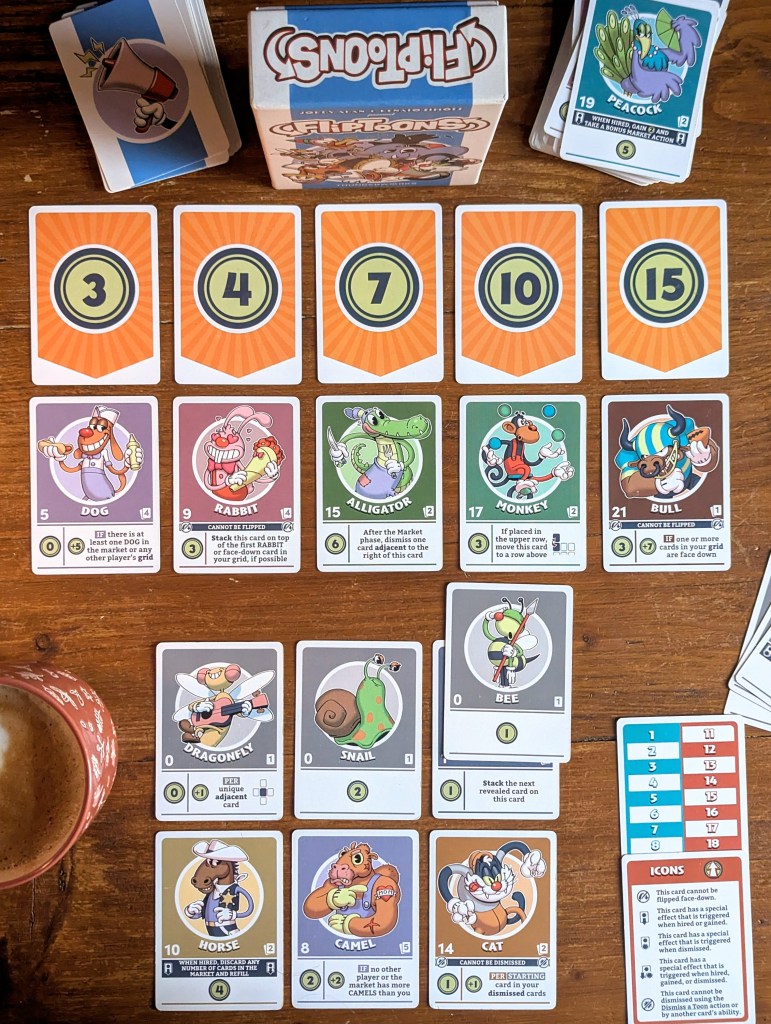
- recruit new Toons from the market, paying their current value and adding them to their deck, or
- dismiss Toons from their grid and into their discard pile, removing them from play for the rest of the game.
You can do up to 2 actions a turn, which can be the same action twice or a combination of the two. You can also pass one or both actions. But fame doesn’t carry over, so use it or lose it!
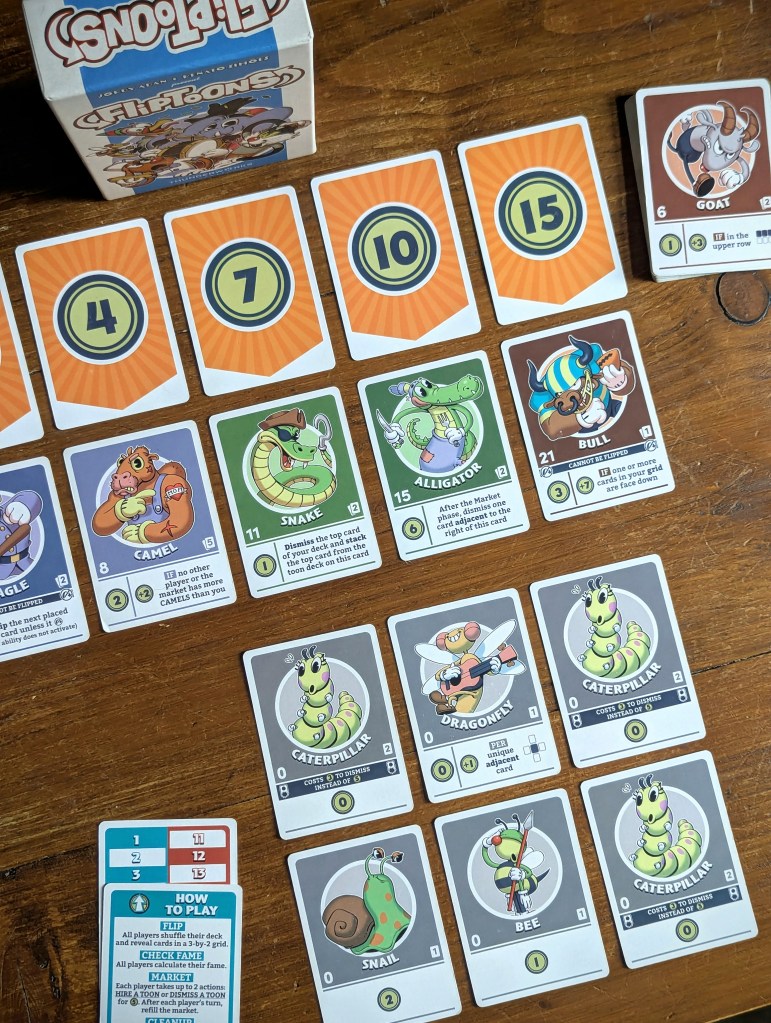
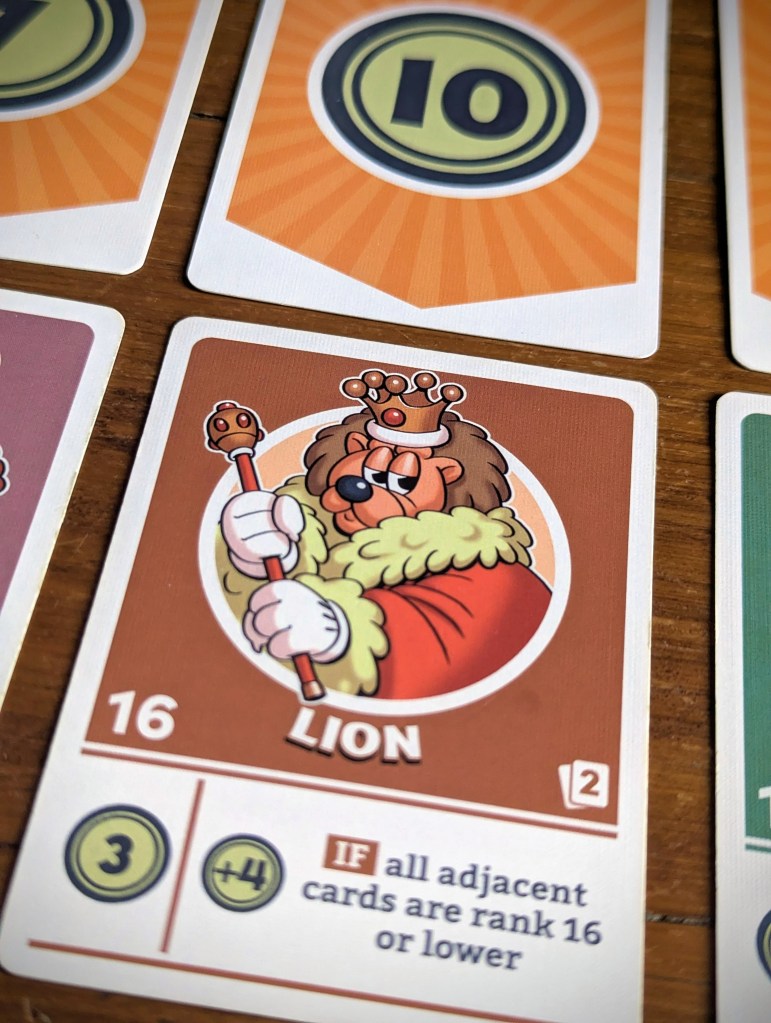
How much a new Toon costs to recruit depends on where it sits in the market row, ranging from 3 to 15 fame. And Toons are placed in the market row in rank order, from lowest to highest. Whenever you replenish the market between turns, the new Toon gets slotted in the row based on its rank – this can move the others around and change what they cost!
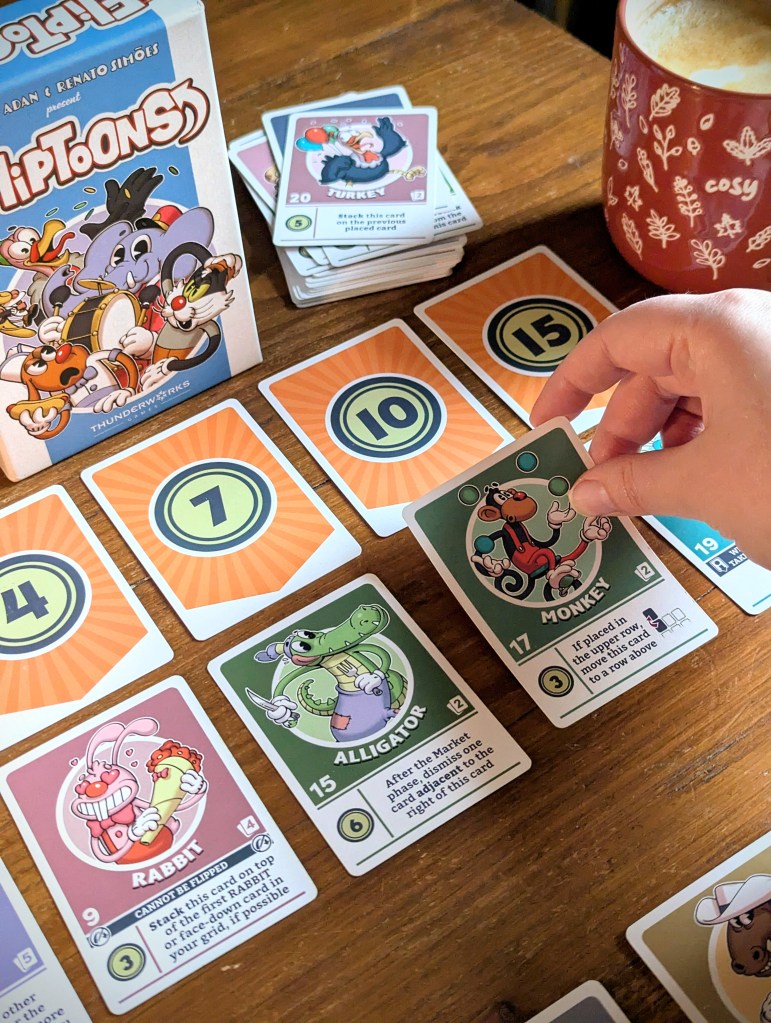
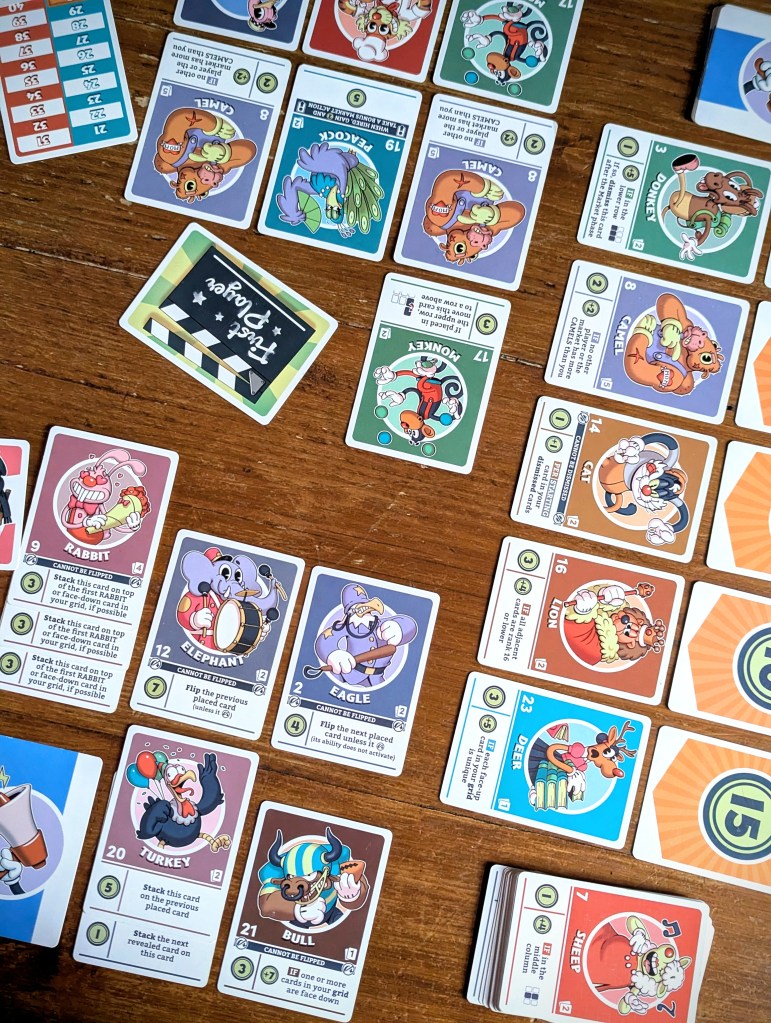
Once the last player has finished their actions, it’s time for the next round: the first player passes to the left, and everyone shuffles the cards left in their grid with the rest of their deck (including any new Toons that have been bought), before dealing out a new cast of Toons and adding up their fame all over again! In a 2-player game, you also discard the least and most expensive Toons from the market between rounds.
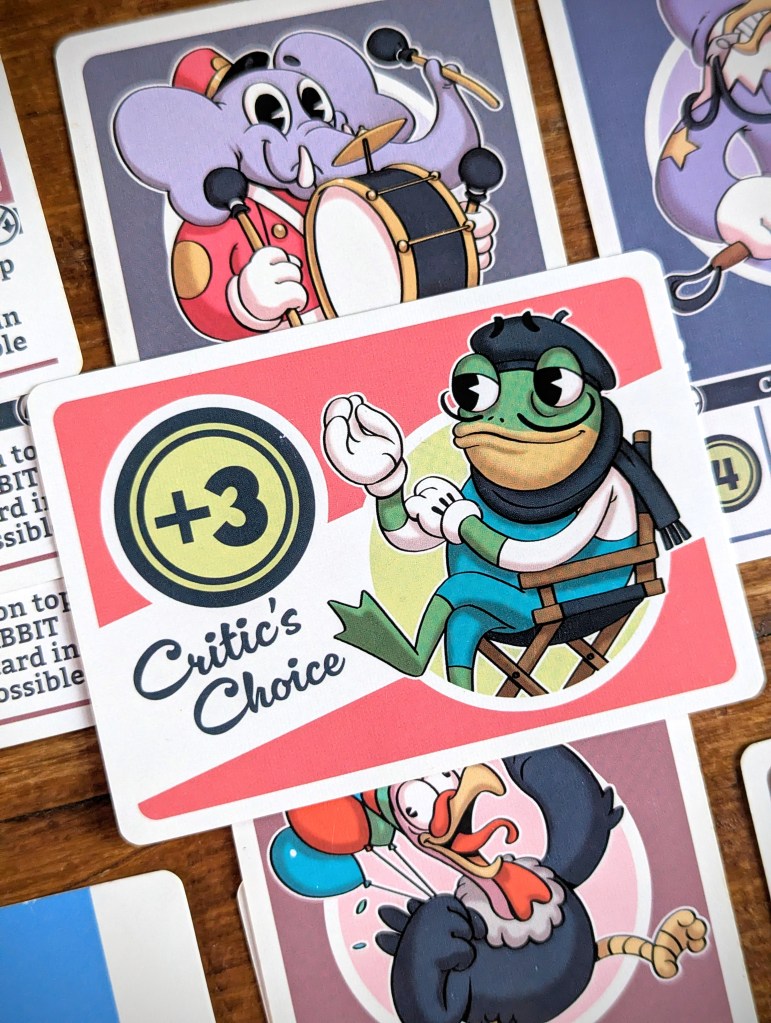
As soon as someone earns 30 or more fame, they earn the Critic’s Choice Award (worth 3 fame at the end and bragging rights). That round is now the final chance for players to recruit and dismiss Toons. After everyone has taken their actions it’s time for the Final Flip, and the player with the most fame from the Final Flip wins – whether they are the Critic’s choice or not! That’s just showbiz, baby!
Solo mode
The solo game is a race to hit 30 or more points before the Toon deck runs out – unlike multiplayer, you don’t shuffle the market discard pile back around. If the deck runs out and you can’t re-fill the market, it’s game over instantly.
To make this even trickier, you start the game with 20 of the Toon cards already in the discard pile. Plus, like in a 2 player game, you lose 2 additional cards from the market each round (with the lowest and highest cost), forcing the deck to run out quicker!
There are some other tweaks in the set up, such as removing cards that relate to other players (Toons and the Critic Award – although I say you should award it to yourself anyway if you win!).
Our thoughts
I will admit that I didn’t play FlipToons for the longest time because I dislike rubberhose artstyle (I appreciate I’m in the minority) and it had a lot of hype around it – and still does, deservedly so. Because when a friend brought it to a games day and I got to play it for the first time, it was an instant hit and I absolutely love it. It’s been one of the mainstays at group hangouts ever since, and I play it constantly on Board Game Arena. The BGA implementation is great, especially if you want to try before you buy, but it doesn’t beat the thrill of the flip in person.
There are so many reasons I love this game. It’s quick and light, but carries a fun level of tension with every flip, especially in that final round. I get a similar thrill with it as I do with push-your-luck games. You’re just hoping that the powerful card you just recruited comes out, and when it does it comes out at the right time. Nothing beats that satisfaction when all the cards come out perfectly and you get a high score. Or the disappointment when they don’t, tanking your fame. Them’s the breaks, kid.
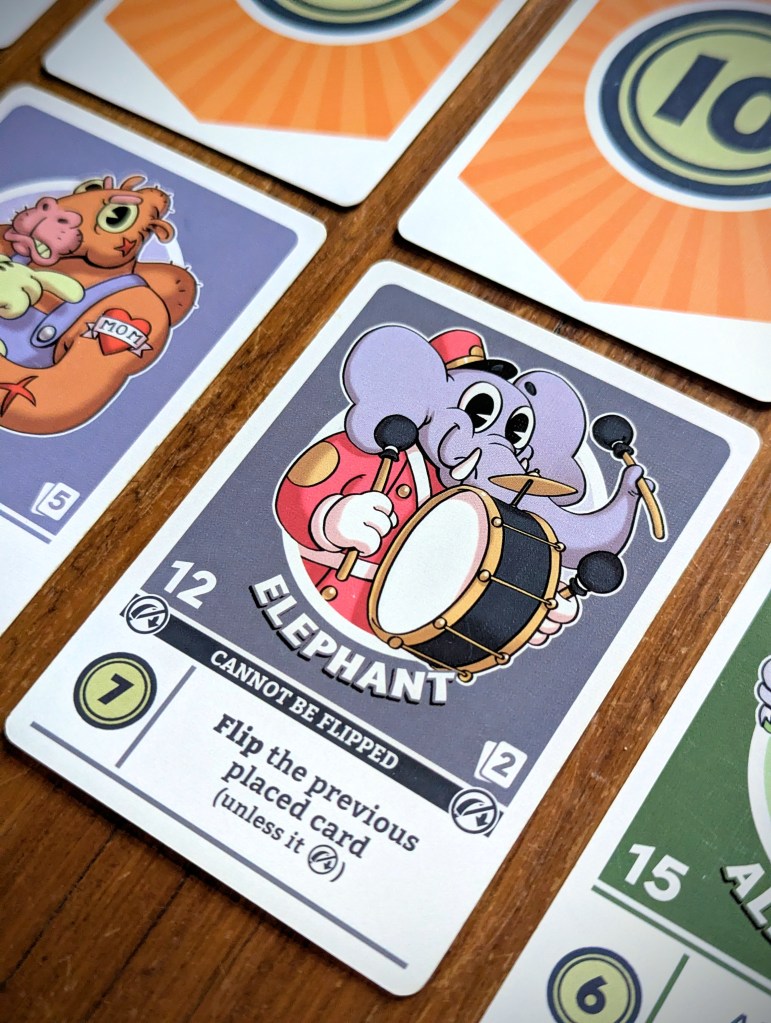
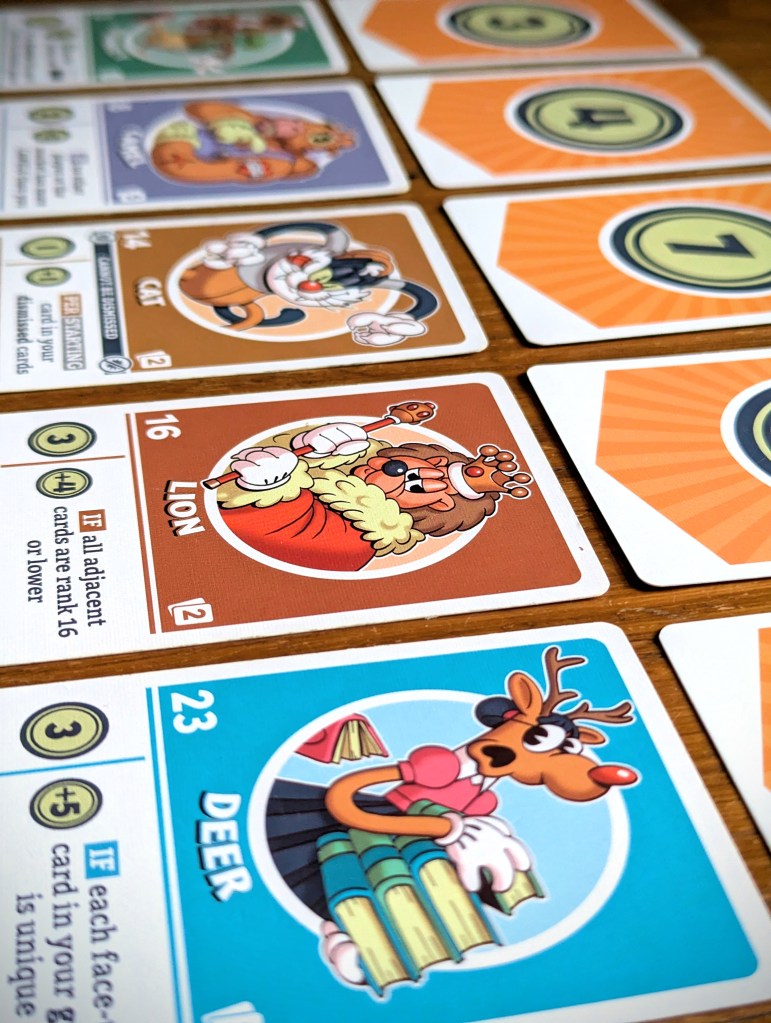
While you start with a meagre 4-6 fame (depending on the order your starting cards come out), this quickly ramps up and before you know it someone has triggered the final flip – and sometimes you’re surprised to find that it’s you! Recruiting better Toons with better abilities and/or combos in turn gives you more fame to recruit even better Toons, because of course the best Toons are higher ranked and therefore (usually) more expensive. Recruiting is only half the fun, though, because what makes FlipToons particularly interesting is the balance between recruiting and dismissing – you need to keep a tight roster of Toons in your deck, otherwise you risk diluting your combos.
I just wish the base played up to 6 players, there’s been a few occasions where I think it would have been perfect for the group but there were just too many of us.
(Note: you can now combine FlipToons 1&2 to make a mega deck, but as they have different abilities this dilutes different strategies and in my opinion, makes it longer and less fun. I’d prefer to just combine two of the same FlipToons, but I’m not paying for two of the same game!)
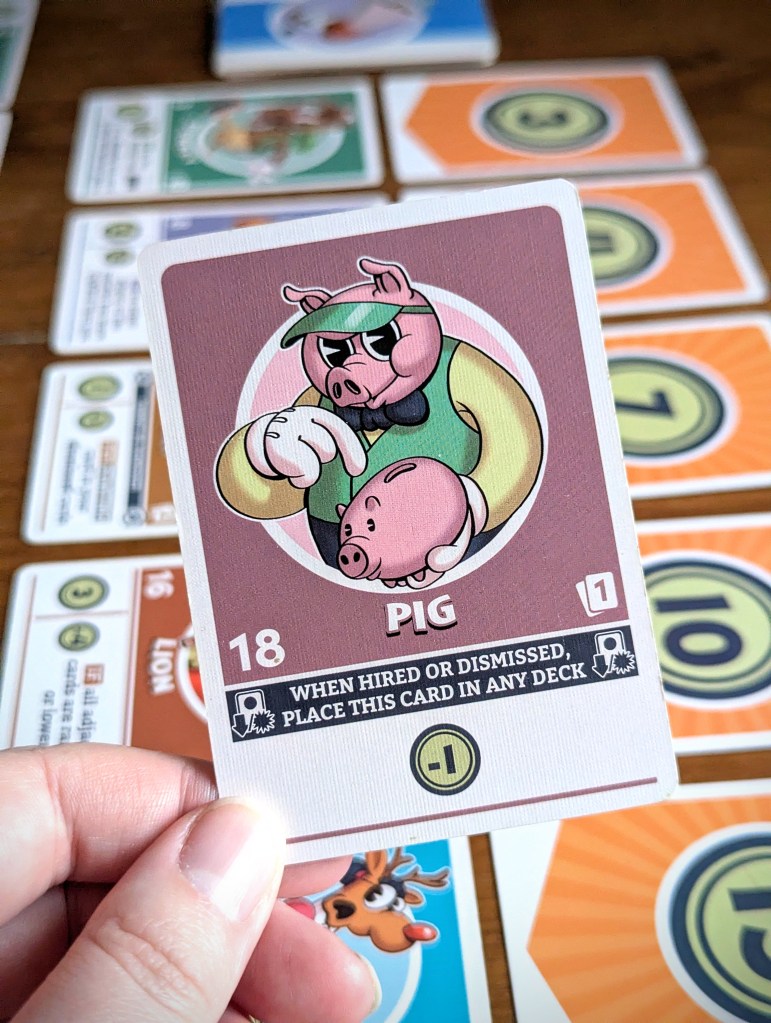
There is little direct conflict in FlipToons. But there are a few cards whose abilities and fame values can be affected by other players and this really helps with player interactivity. For example, if you have the Starting Skunk in your grid and end up with the least fame out of all players, you can dismiss a Toon from your grid for free. There’s also the Camels (Matt’s faves), who are worth more fame if no-one else has more camels than you. Sometimes you may choose to ‘hate draft’ to stop another player from getting hold of a specific Toon. But the only way to mess with another player’s deck is by recruiting the Pig, which you then give to another player. This can take up a valuable space in their grid AND is -1 fame. Fortunately, you can dismiss it and pass it on to another unfortunate soul. I enjoy this little bit of ‘take that’ flavour, but I presume Mr Piggy is quite unpopular, because BGA has an option to play without it. No-one said fame and fortune was going to be easy!
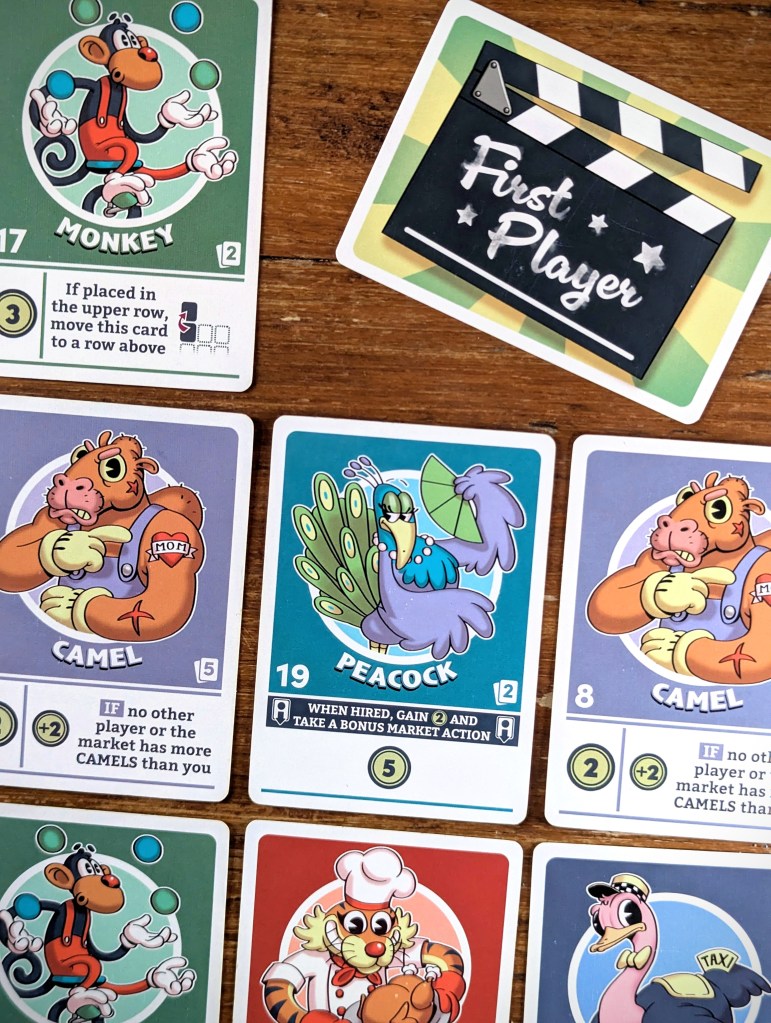
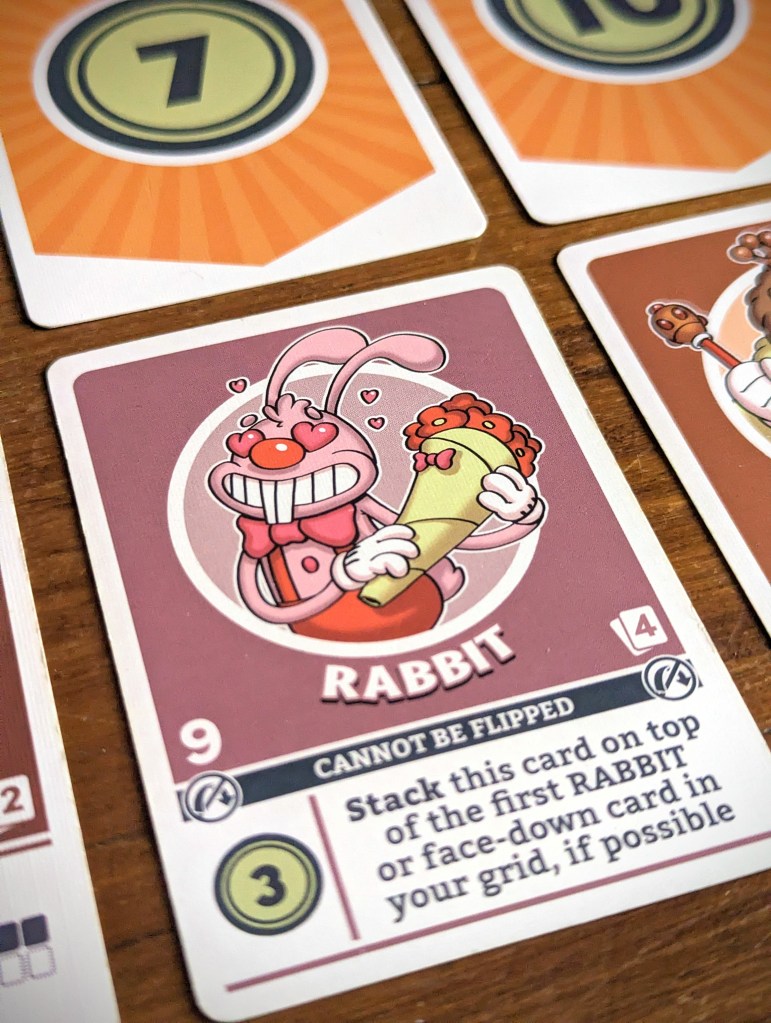
After you’ve played FlipToons a few times you’ll quickly get familiar with the different card abilities and which ones work better together. But that doesn’t mean it will get boring – it hasn’t for me anyway, and I’ve played it bloody loads! You may be biased towards certain strategies (like Matt and his aforementioned Camels, I like the stacking Rabbits), but you have to work based on what comes out of the market when, and what other players are going to recruit before you can. The solo mode’s ‘race against the draw’ is also good for pushing you out of a comfort strategy. But even if you do recruit your faves, there’s still the fate of the flip to contend with.
I’ve played a lot of FlipToons solo, mainly on BGA, and in my opinion it works great and feels similar enough to multiplayer. Although it may force you to tweak your strategy – you have to keep an eye on that Toon deck and be mindful of how much you are recruiting, so you only recruit what you REALLY want. Sometimes the deck is unlucky and the right cards don’t come up at the right time, but mostly once you know the good Toon combos well enough, you can win semi-regularly.
There is a Toon called the Dog, which only scores fame if another player/the market also has a Dog visible. I do think this card becomes somewhat redundant in solo play (and even 2-player games), because it’s less likely to score (and even if it shows up in the market, it is likely to get trashed). I wonder if removing it would make a difference at all.
I will say that a lot of what I’ve said here also applies to FlipToons 2. There are slight differences in the Toon deck abilities and strategies, but both are fun.
Play it if:
- You want a quickie card game with fun card combos/synergies.
- You enjoy deck building and/or tableau building.
- You enjoy ‘risky’ games, with the thrill of a good or bad card pull.
Skip it if:
- You’ll find the chance of a bad flip frustrating, because there’s always a chance your cards will come out in the worst order.
Verdict
As a unique deckbuilder meets mini tableau, FlipToons is a flippin’ good time! My initial scepticism was unfounded, because for me it’s allllmost up there with Castle Combo (which if you didn’t know I absolutely love Castle Combo!).
The only reason I don’t own a copy yet is because I’m still deliberating over owning FlipToons or the more recently released FlipToons 2 (at this stage I don’t feel the need to own both, but both are equally fun!).


