Advert: Radical 8 Games loaned us a prototype copy of this game for the purposes of review. All thoughts and opinions are our own.
Let that inner cartographer out and become a modern day Alfred Wainwright in this new map building abstract strategy game… Latitude! Coming to Kickstarter soon.
Key stats
1 to 5 players | 30 mins | Age 14+
Publisher: Radical 8 Games
Designer: Andrew Juell
Artist: Rusembell
Categories: Exploration, Map building, Abstract game
Key mechanics: Abstract strategy, Area majority.
Game overview
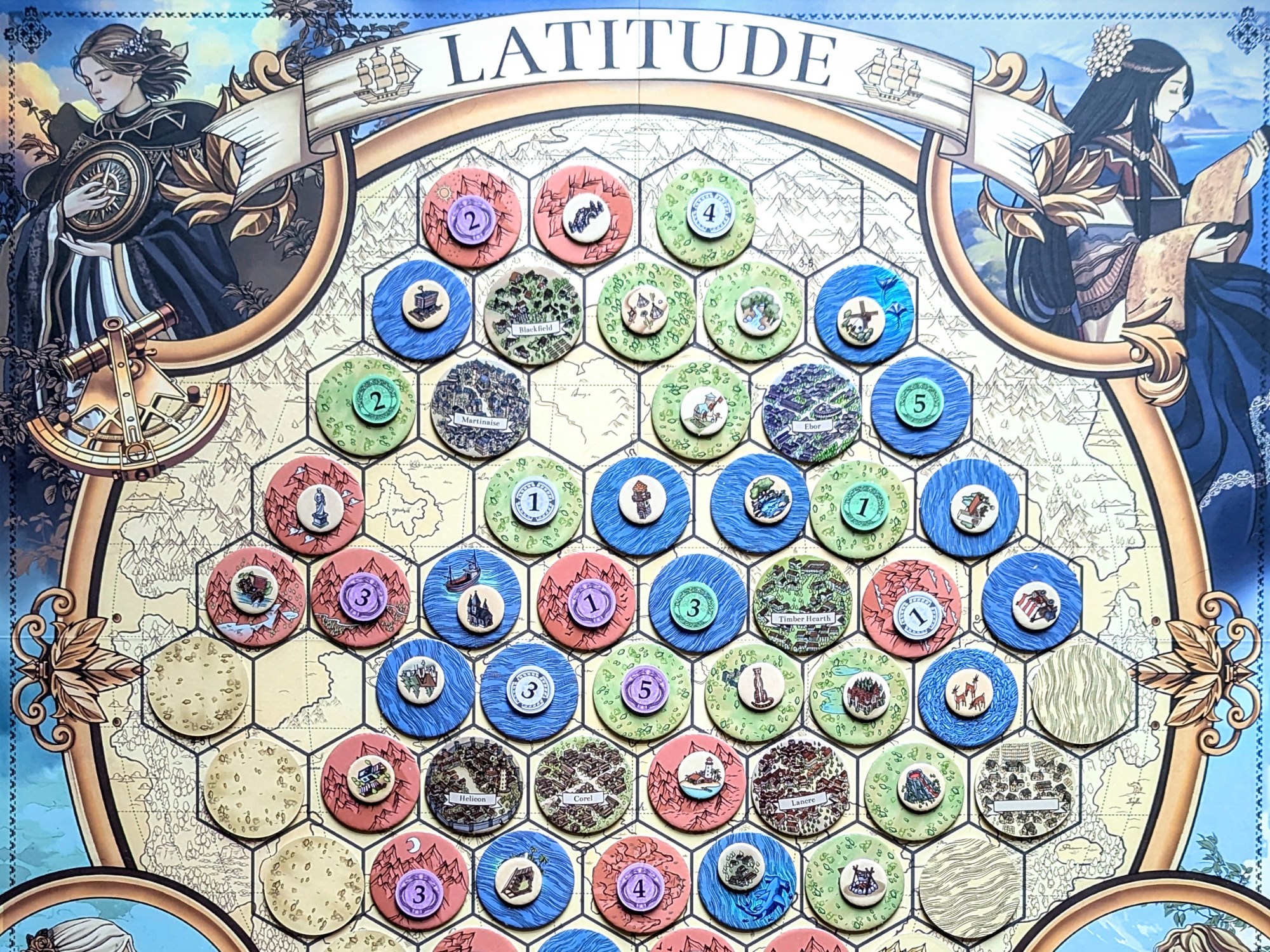
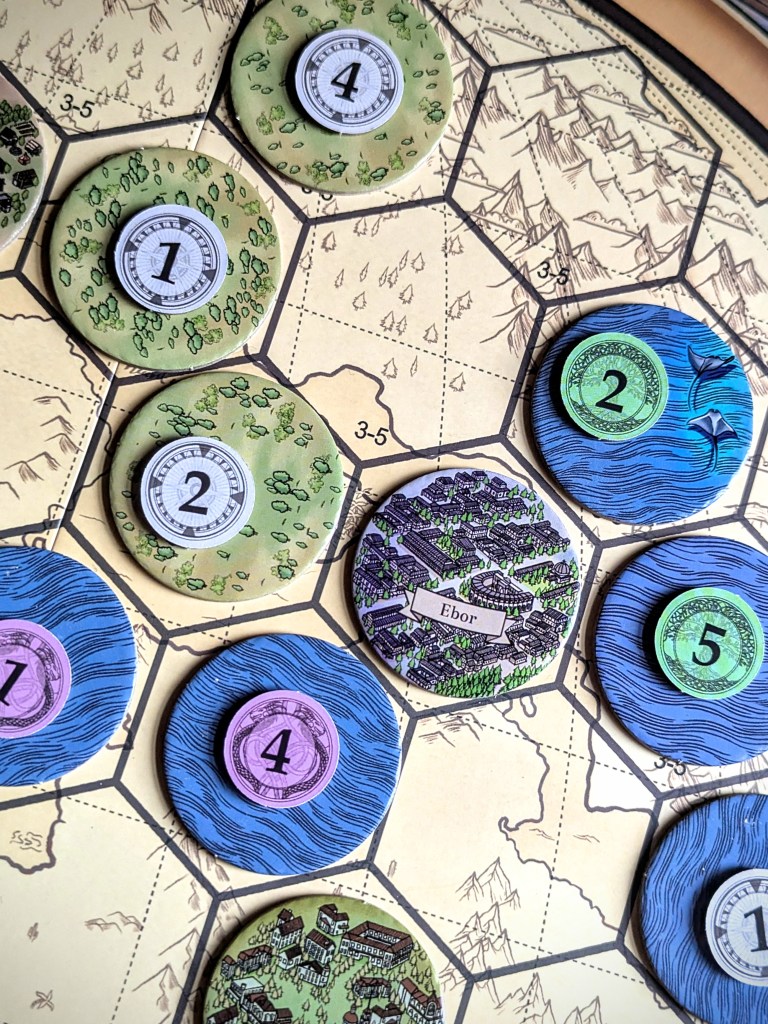
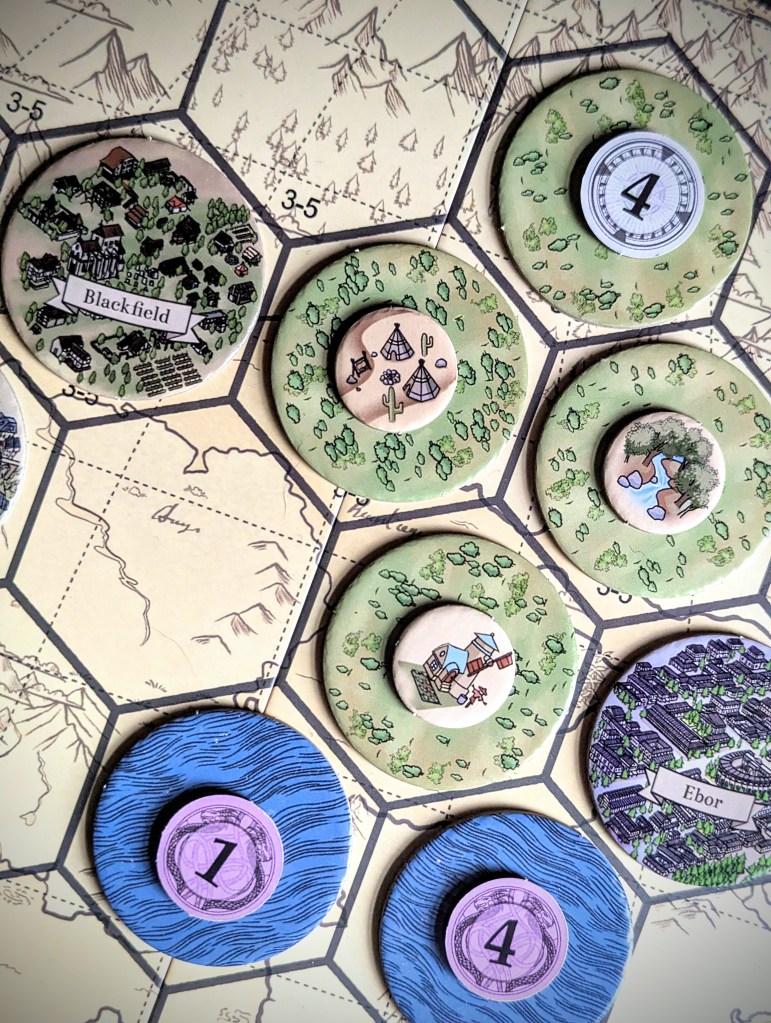
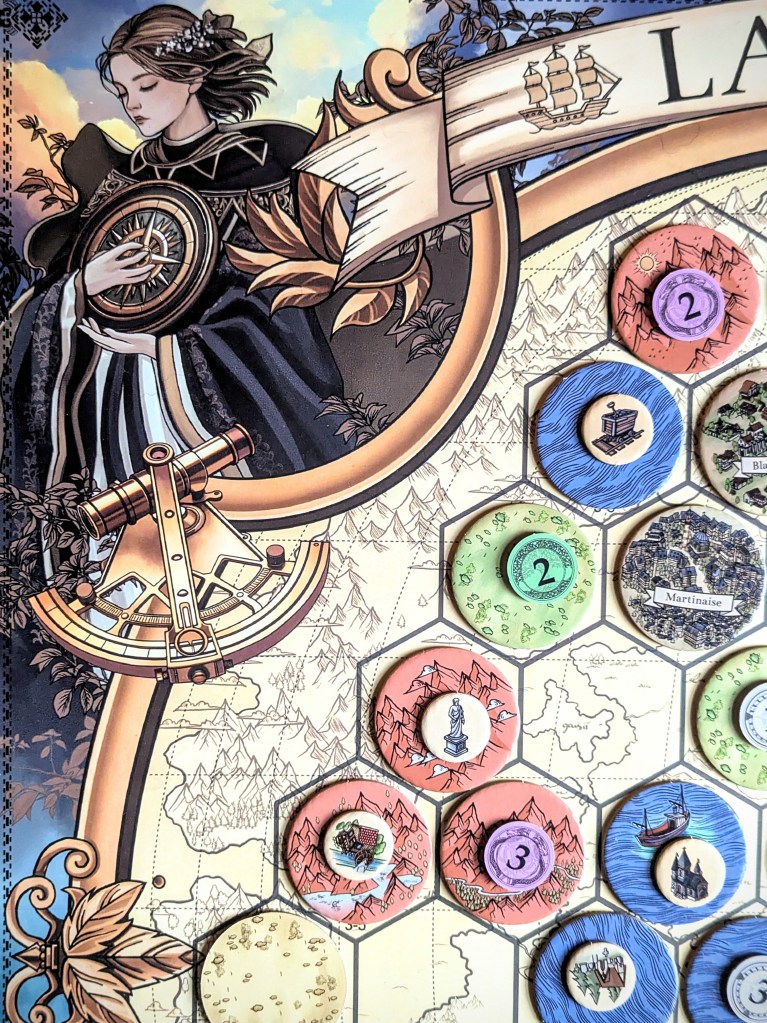
In Latitude players take turns placing land tiles from a common supply – ocean, mountains and plains – to build different regions on a shared map. And each time you place a tile you must place one of your own number tokens on it, predicting what the final size of that tile’s region will be. When the map is complete, the game ends and each region scores points equal to its size for the player who has the right numbered token in that region – all other players score nothing. The player with the most points wins.
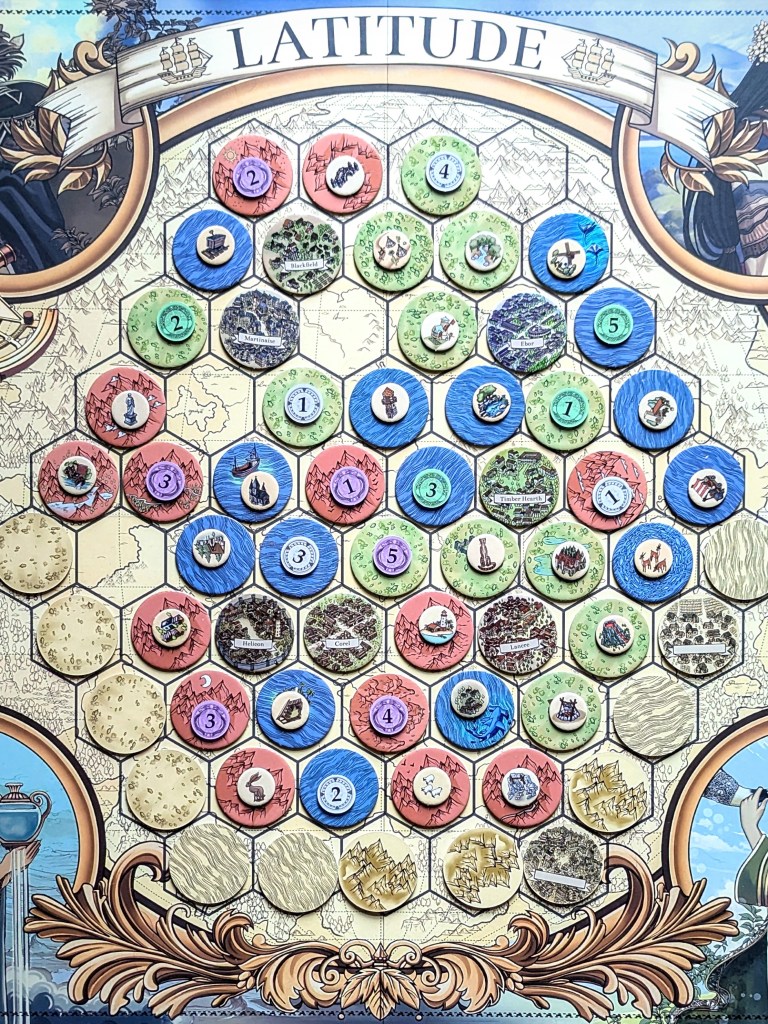
A region has a maximum size of 5 tiles (which is the highest value token players have). Each region can only have one occurrence of each number, i.e. you can’t place a second token with the number 2 in the same mountain range. This also means that while you can connect separate regions of the same type, you can only do this as long as every token value is different, i.e. you can’t connect two mountain ranges if both have a number 3 in them. As the game progresses, regions can get blocked and placement gets trickier!
Our thoughts
Latitude has an elegant gameplay loop that is both simple and clever. Simple in that all you need to do is pick and play a tile, but clever because the sort-of-betting token mechanic (and the placement rules) create an interesting decision space. The more we played the more scheming tactics we started to see.
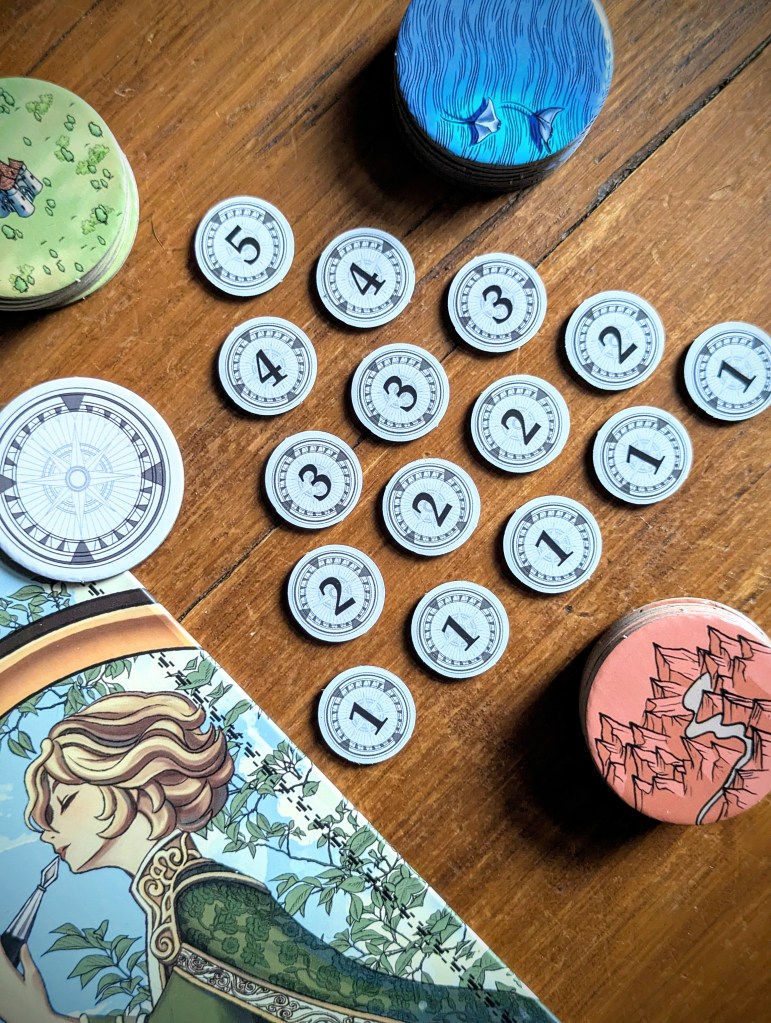
Each player starts with the same set of tokens: five 1s, four 2s, three 3s, two 4s and one precious 5. You have to play each token tactically – calculating, prioritising and even sacrificing – to grab the most points. That includes thinking ahead and trying to outwit or block your opponents.
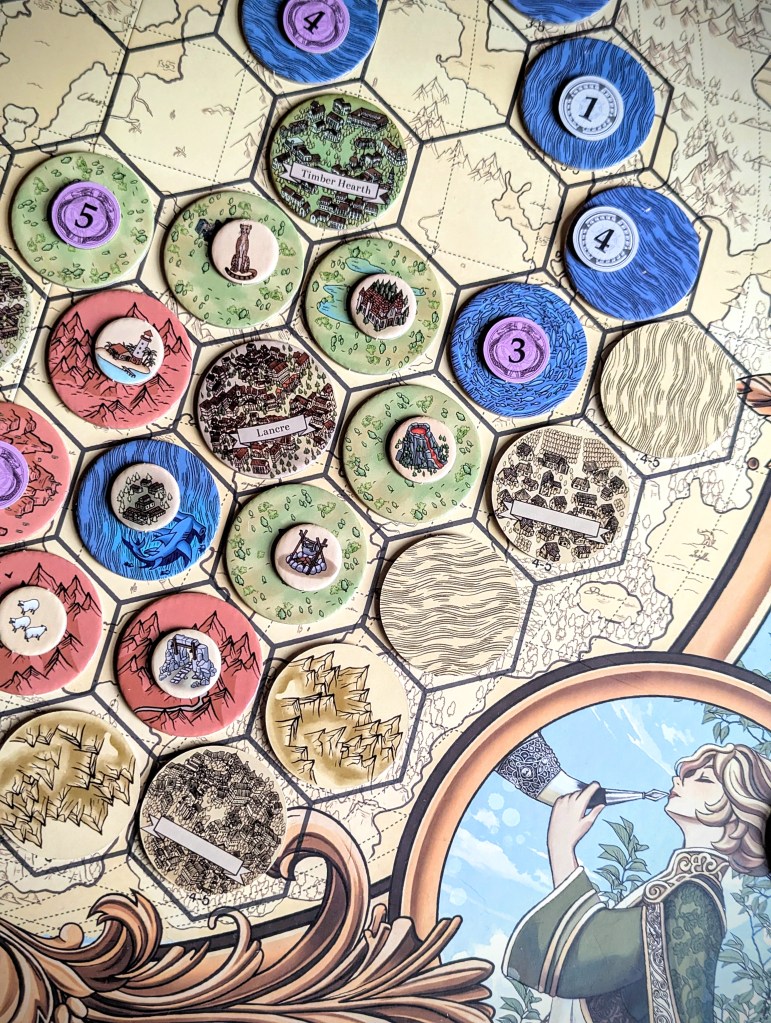
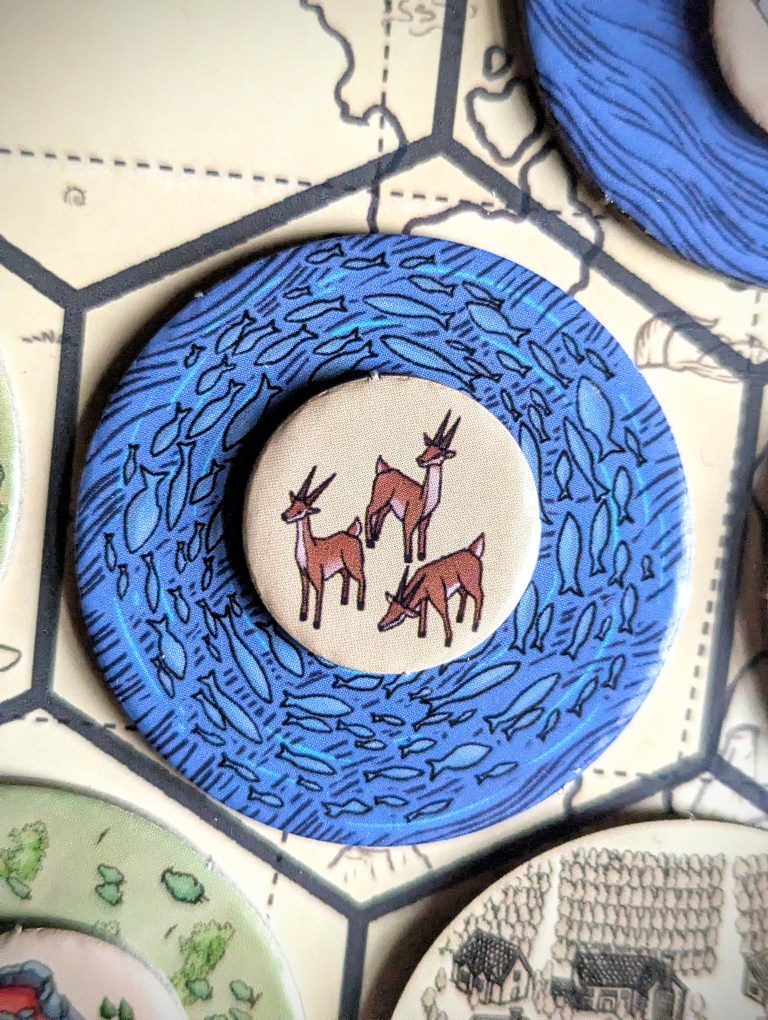
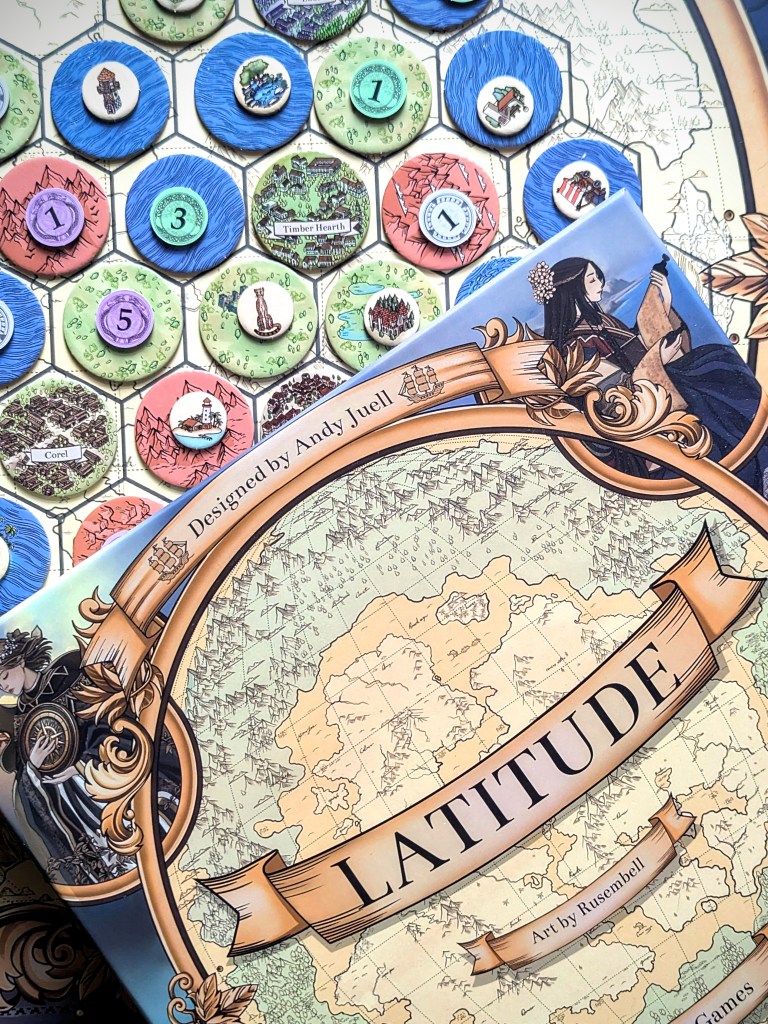
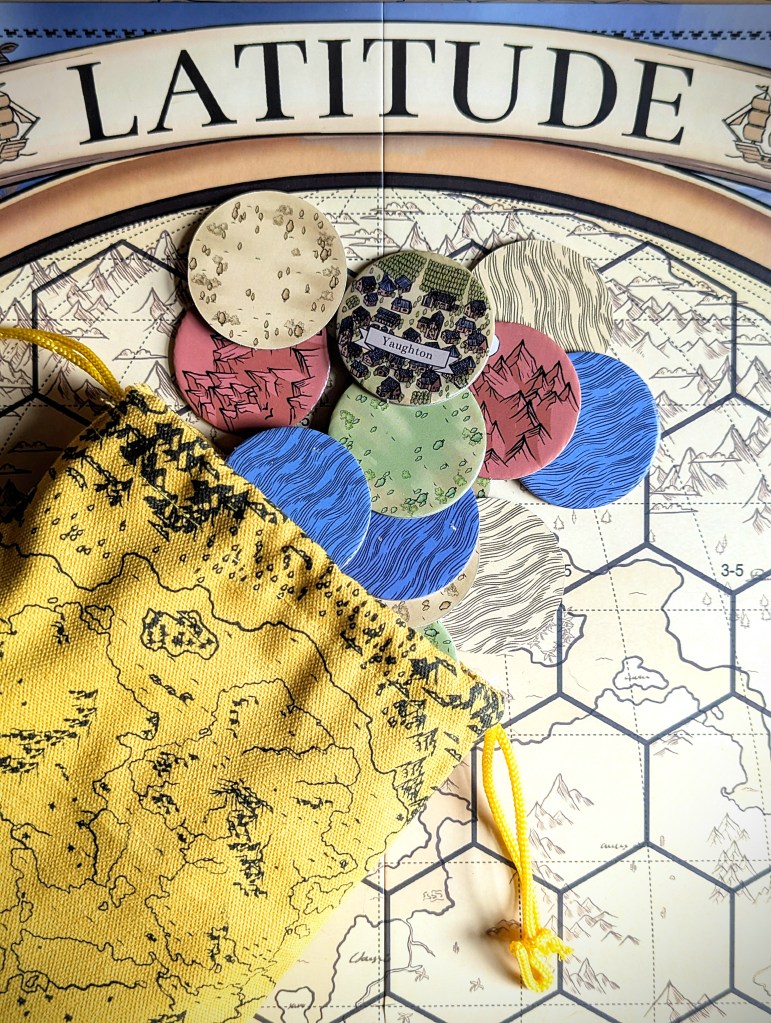
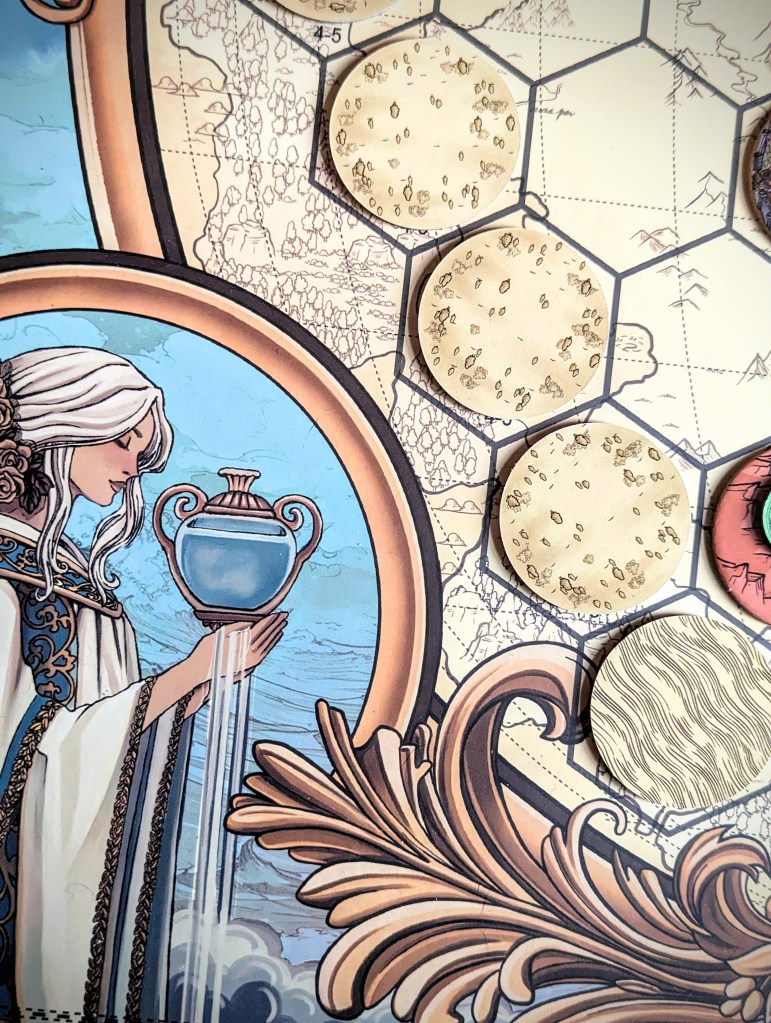
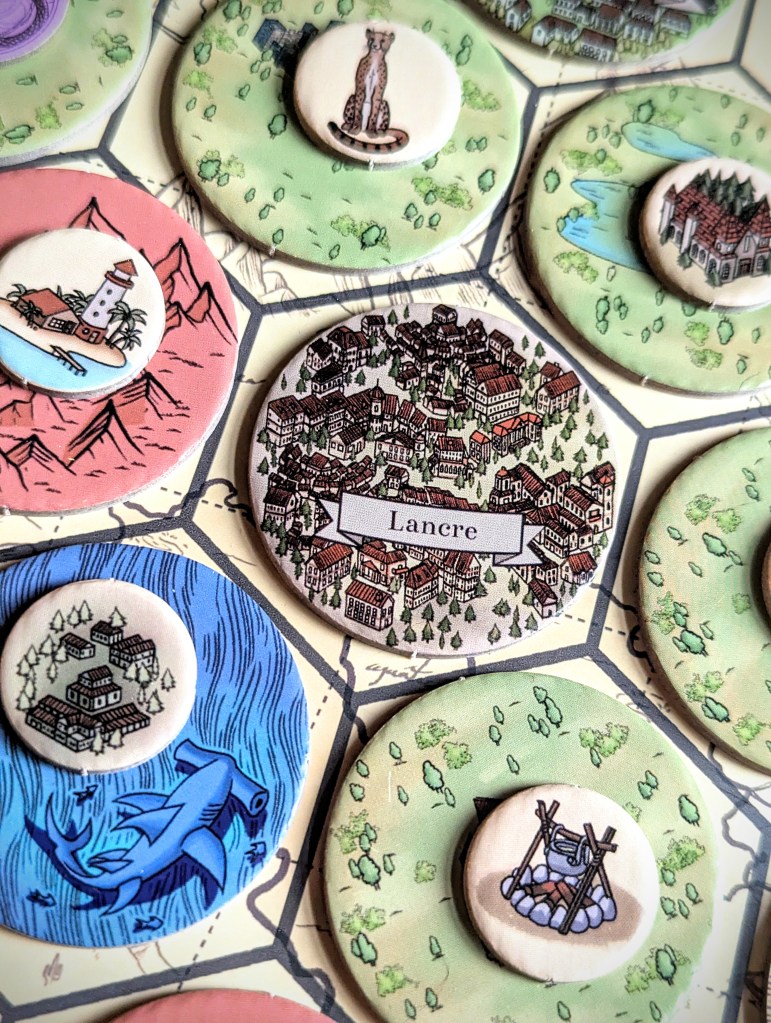
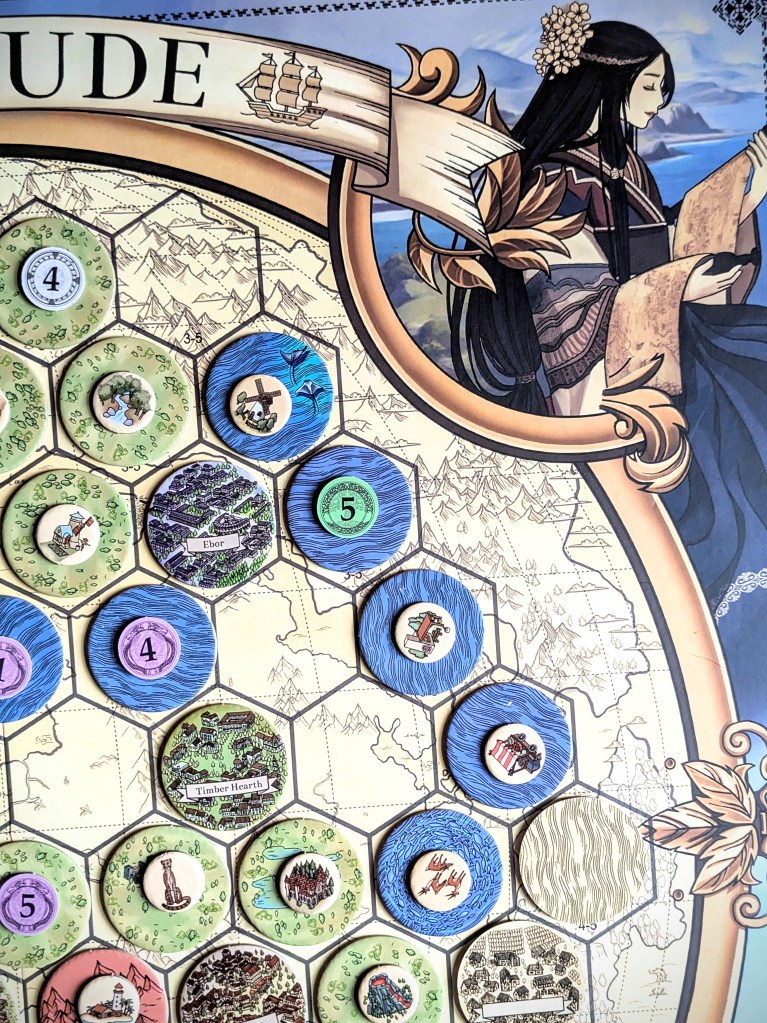
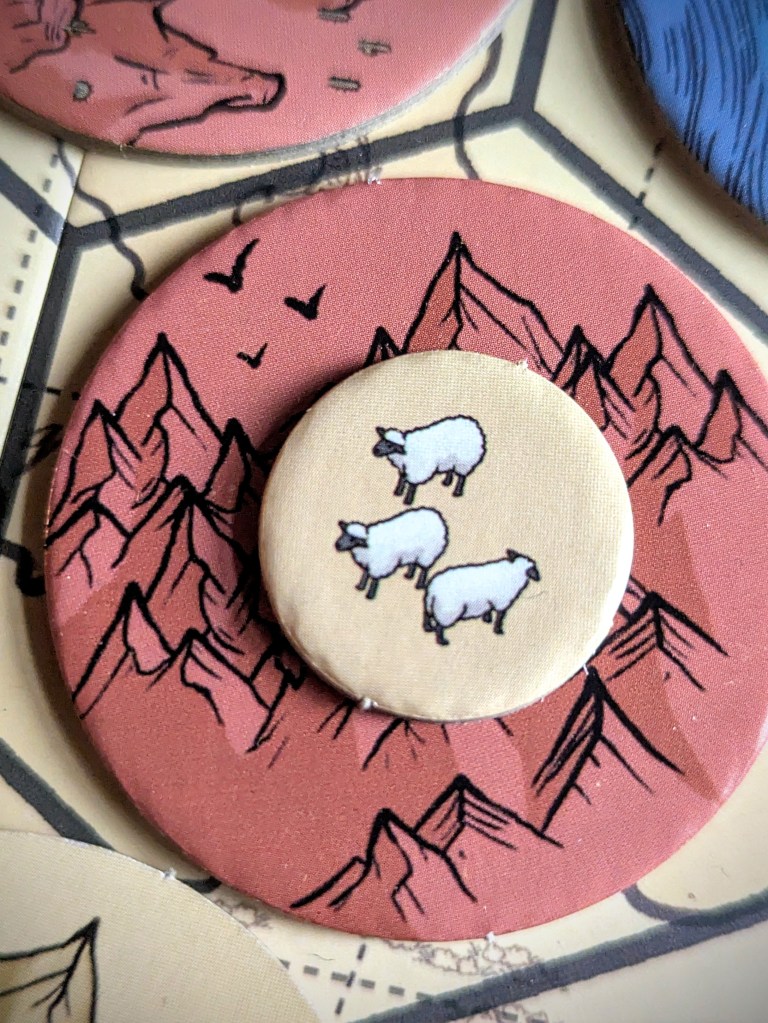
Latitude’s production is gorgeous. The map-charting theme is perfect for making you feel like you’re creating a world of your own. If the final product has similar components to this prototype then others will be happy. There are lots of artistic flourishes that show how much care has been put into the design, such as little varying details on the land tiles and images on the back of the number tokens (these can make some funny combos, like deer in the middle of the ocean).
The tile bag is lush as well, and feels very high quality. If we’re being niggly, we would prefer separate bags for each tile type, it would be a quality-of-life adjustment that would speed up set-up, particularly for 2-3 players.
As part of the set up players alternate adding town tiles to the board. This adds variability to each game by changing the map layout slightly – for example, it can cause bottlenecks, creating interesting interactions between players. We really liked this element as it kept each game feeling fresh for very little effort.
The game scales well and essentially feels the same regardless of player count, and that’s because it changes the number of tiles used in a game and how much of the board you can access. I would say the only difference is that with more players there’s more scope for making brief alliances, like teaming up to stop another player from winning their 5 point token.
The game board is a bit of a table hog. On one hand it was great because it shows off Rusembell’s art. But it does mean this isn’t as travel friendly as some other abstract games. . Maybe there’s scope for a travel version in future, because it would be perfect to play in a cafe!
I often play abstract games with my mum – Chess, Azul, or Pond on the go through BGA. I’m absolutely gutted that I wasn’t able to play Latitude with her while we had the review copy because I’m convinced it would be right up her street and we would have some tense games!. One for the future….
You will like this if:
- You like quick abstract games like Boop., Donuts, or Chess.
- You’re looking for an abstract game that scales well to different player counts.
- You want an ‘easy to teach, hard to master’ abstract game that works for casual gamers and kallax-owning hobbyists alike.
- You love games that are covered in artistic flourishes with no AI in sight.
You won’t like this is if:
- You don’t like games where you have to ‘think 3 steps ahead’.
- You’re not a fan of direct conflict games where you are interfering with each other’s plans.
Verdict
Latitude is the type of abstract game we love – simple, elegant gameplay that’s easy to learn but has a lot of space for scheming tactics. And unusually for an abstract game, it scales nicely and can be played with more than two players.
Latitude is launching on Kickstarter later this month (planned launch October 20th) – be sure to check out the prelaunch page here!