

Advert: Flatout Games loaned a copy of this game in exchange for an honest review. All opinions are ours.
Bears and bees and espionage, oh my! Here’s our thoughts on Honeypot.
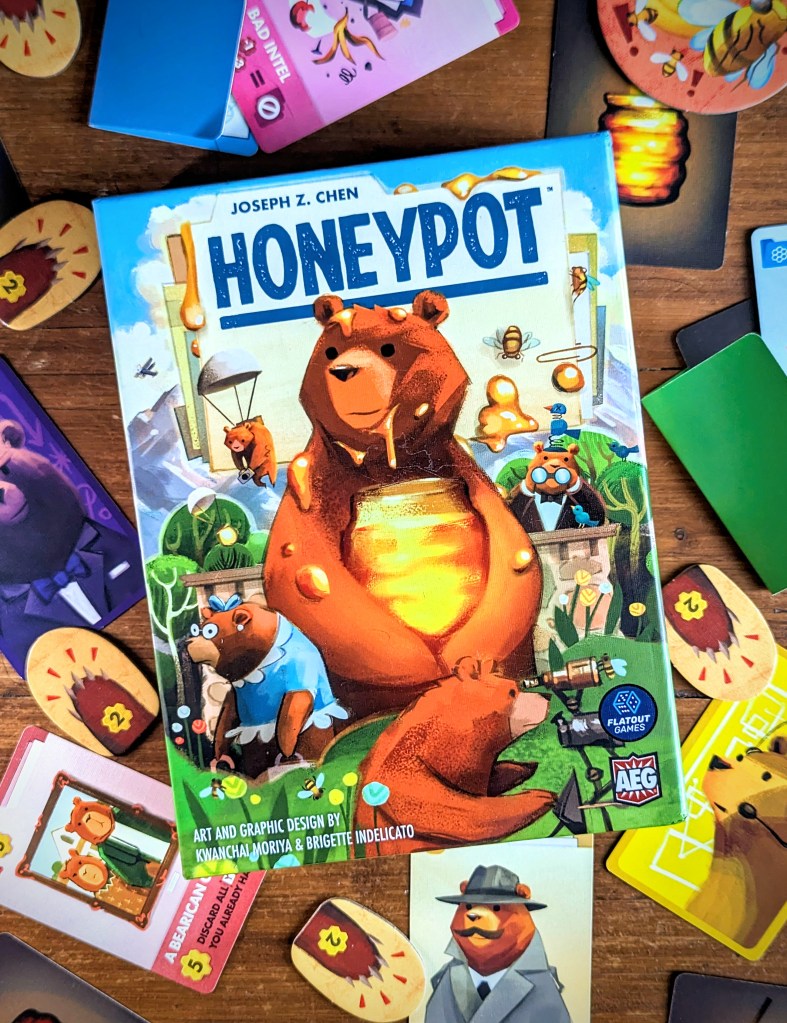
Key stats
1 to 6 players | 15 to 30 mins
Publisher: Flatout Games / AEG
Designer: Joseph Z. Chen
Artist: Kwanchai Moriya
Categories: Animals, Spies, Bears
Key mechanics: Closed drafting, I stack you choose, Set collection, Push your luck, Bluffing
Game overview
Honeypot is a card drafting selection game with a difference. Players (who are bear spies, obviously) need to collect the best intel from other players, while avoiding getting stung!
Each round, players simultaneously draw 8 cards and stack them face down in their secret spy folder, in whatever order they choose. These folders are then passed around – so you end up with a cache of intel stacked by another player. On your turn, you reveal the top two cards from the stack and choose whether to keep them, or discard them and reveal the next pair. The pair you ‘stick’ with gets added to your collection: action cards are resolved instantly, whereas other cards form various point-scoring sets. But watch out – collecting bad intel gives you negative points. And Honeycomb may be worth 3 points, but when you collect it you also have to take the Bee Swarm token, and whoever has the Bee Swarm at the end of the game gets -7 points!
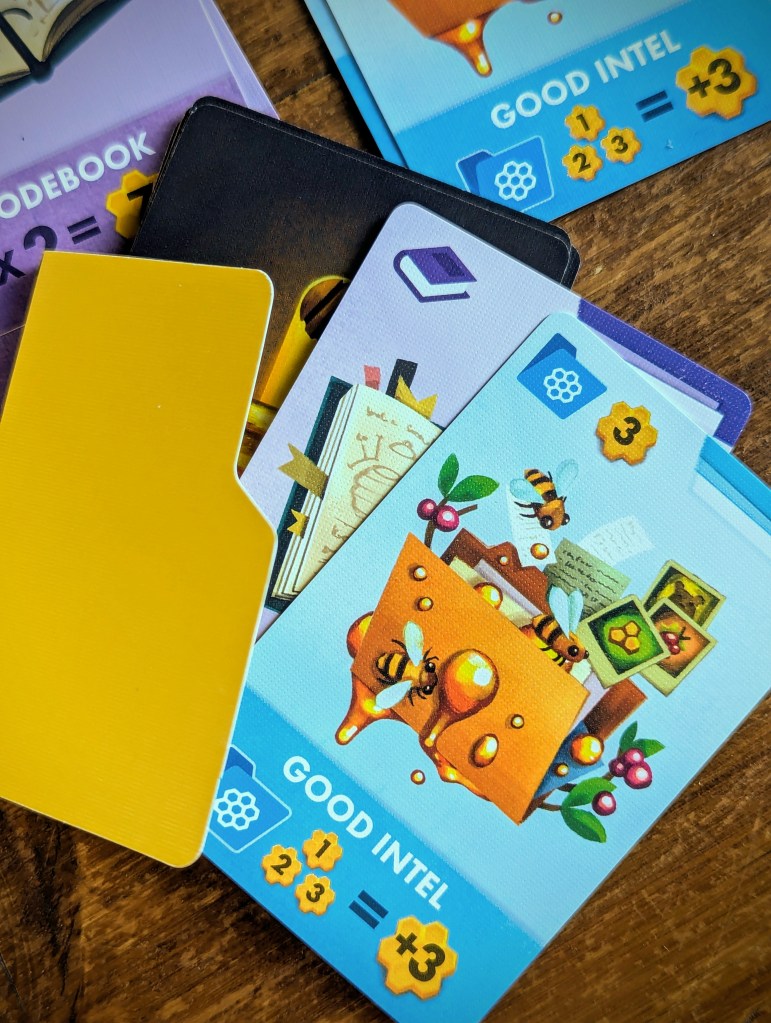
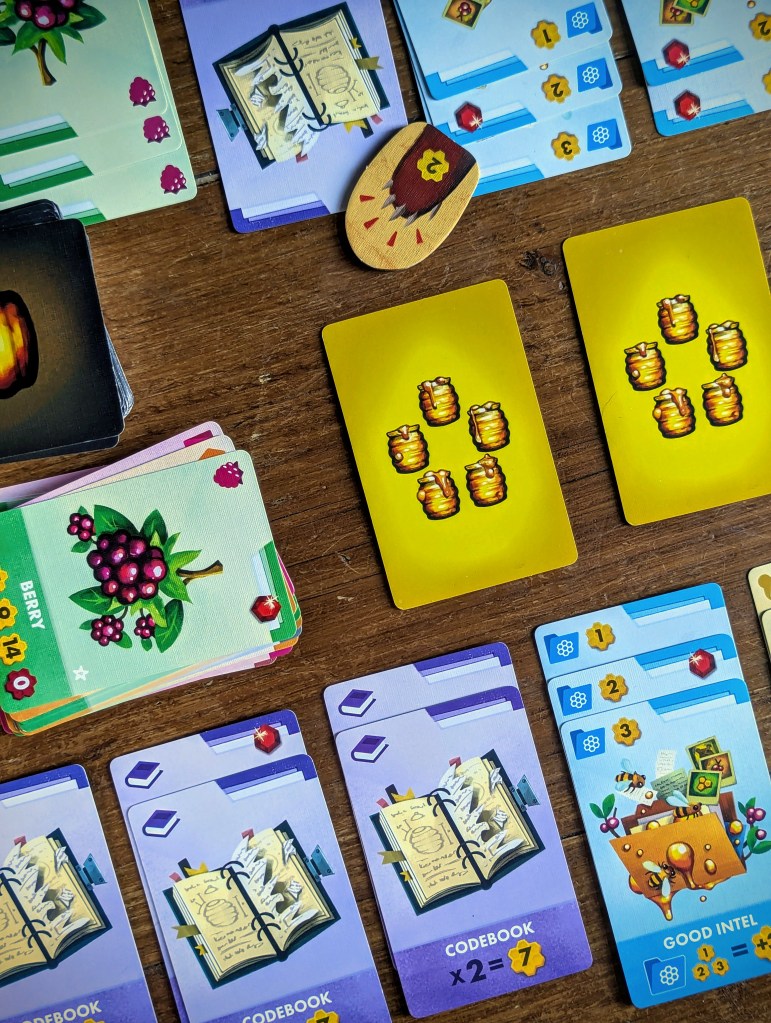
Once a player has ‘stuck’ the other players can optionally swipe 2 extra cards from that player’s stack using a swipe token, as long as they didn’t build the stack. (in a 2-player game, swipe tokens are used to swipe an additional pair from your own stack).
Rounds are helpfully tracked by 5 face down bonus cards. At the end of each round the player who has the most negative points from Bad Intel gets to draw a bonus card of their choice and add it to their collection (or resolve it if it’s an action). After the 5 rounds are over, the player with the most points from their sets and tokens wins!
Solo mode
In solo mode, you draw 8 cards for yourself, keeping them facedown. Then you look at the top 2 cards, before shuffling the 8 cards together to form your own stack. From here you play as normal, flipping 2 and a time and choosing whether to stick or flip.
When you stick, your Rival Agent will take the next two cards from your stack for themselves – if there’s nothing left in your stack (i.e. you took the last 2 cards), they draw 2 cards from the Honeypot deck instead.
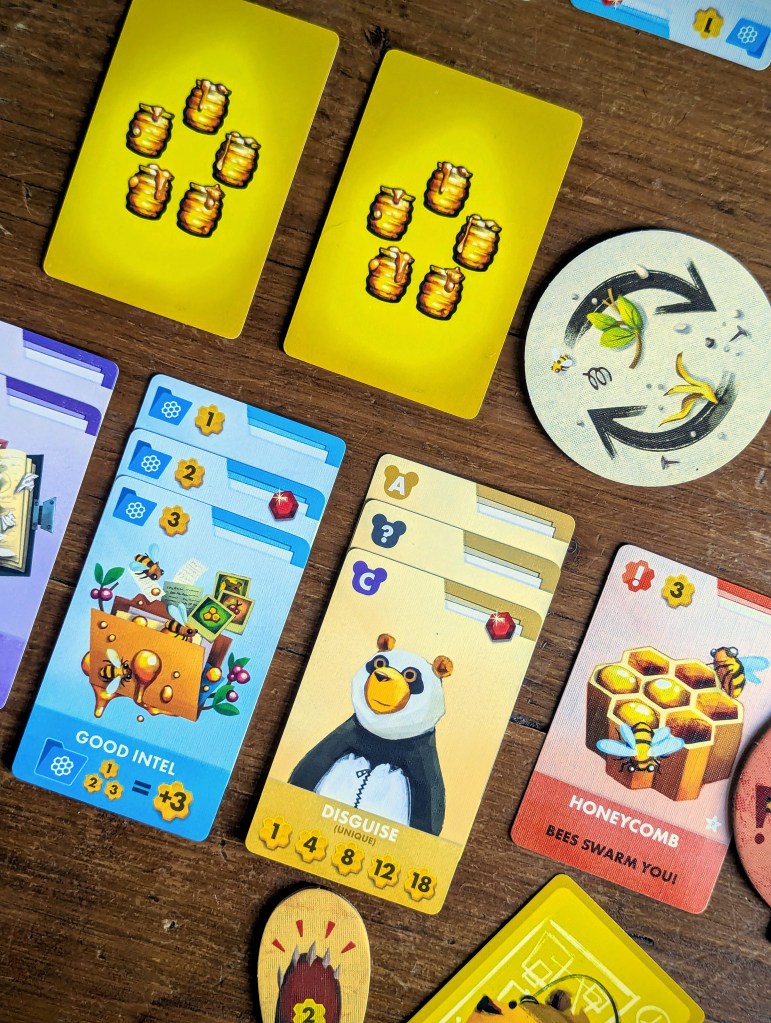
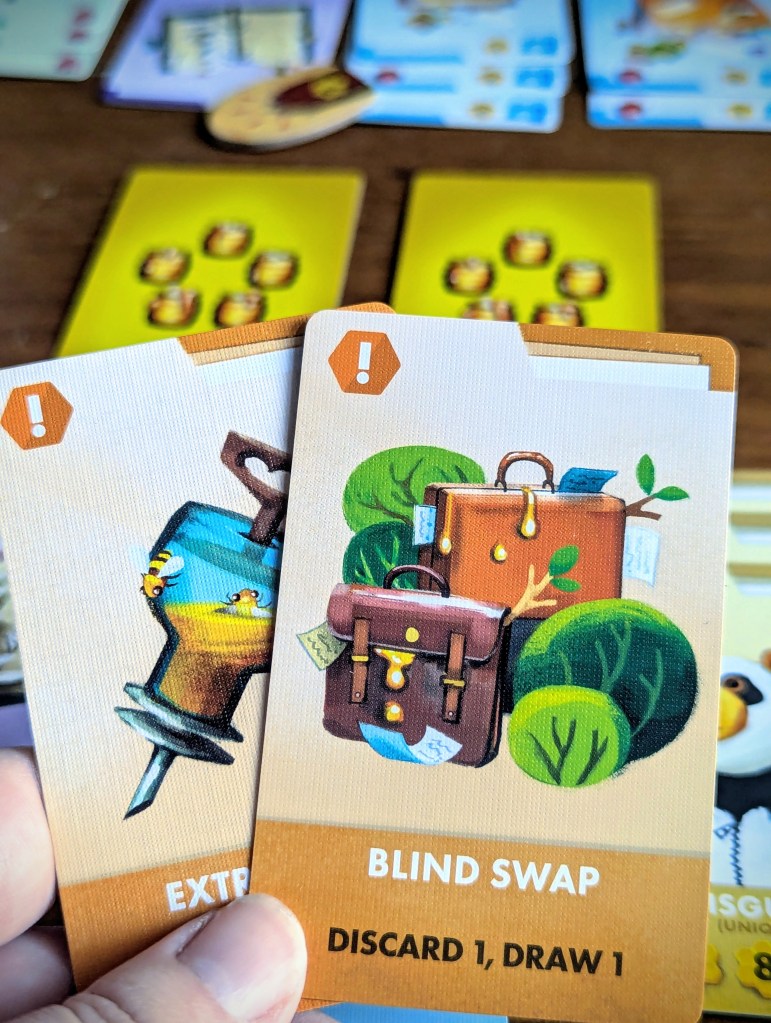
Swipe tokens work in a similar way as with 2-players – you can spend to grab another pair from your stack. The Rival Agent always uses a swipe token if it can (i.e. if it has a token, and there’s still cards left in the stack), but only once per turn.
There are ways to modify the difficulty, such as the Rival Agent getting to draw more cards if they are drawing from the Honeypot deck, or you only get to see one of the 8 cards before shuffling.
At the end of the 5 rounds, you win if you’ve scored more than the Rival Agent.
Our impressions:
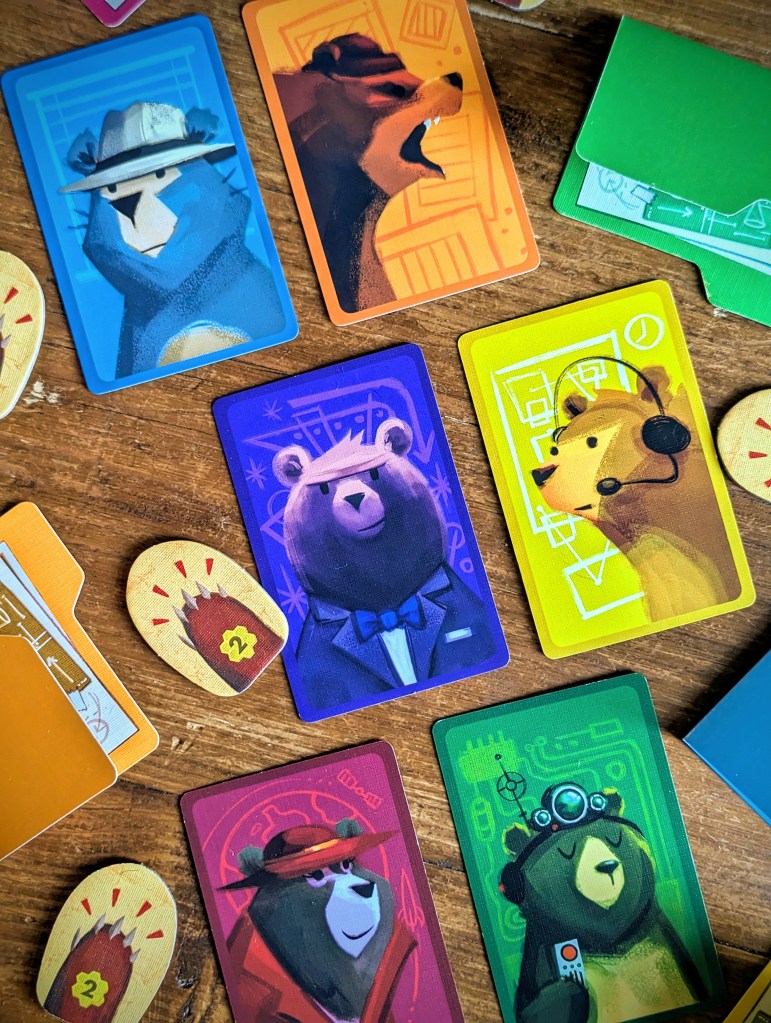
- I love love love the art, from the bear spy characters to the angry bees. The bear disguises were my fave when they came out of the honeypot deck. The art adds a lot of personality to the game – so much so that in solo I still picked bear cards & for me and my ‘opponent’, even though they aren’t needed. The bear pun art in the microexpansion is funny too.
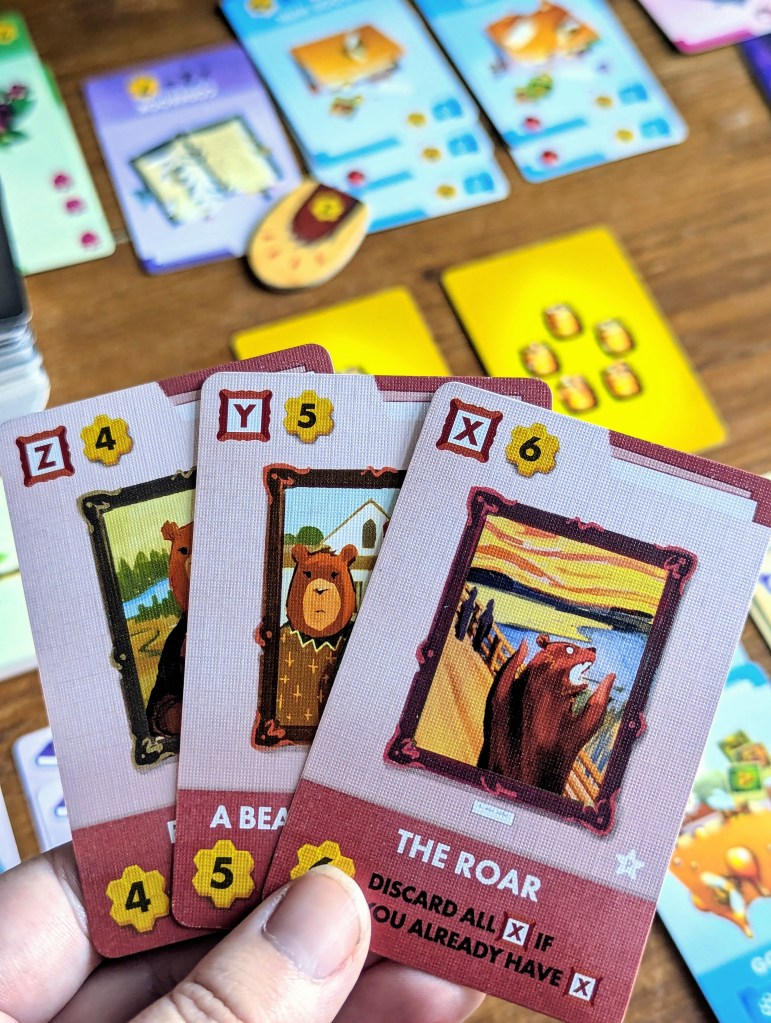
- I like the I stack, you choose aspect, it feels like an interesting variation of pick-and-pass. There are various different ‘sets’ with different scoring requirements. I also liked that you could discard bad intel if you collected a complete ‘set’ (3 worth -1, -2, -3 points) – encouraging you to sometimes stick with a bad pair!
- Unfortunately the gameplay fell short for us as a couple, particularly Matt. You’re completely blind to what’s in the cache handed to you, so the decision to flip/stick didn’t feel impactful enough. You have no idea if a card you really want is even in the stack, most cards are usually useful to some degree, so it lacks the thrills and tension we were expecting.
- Stacking often felt obvious and even repetitive. We were usually splitting cards the opponent wants most, and pairing them with negative cards – but only if you have negative cards, otherwise just something that doesn’t help them as much. You can choose where they go in the stack and try to catch your opponent out…but because pushing your luck is never overly punishing, it’s easy enough for them to end up with a reasonable ‘safe’ pair. We weren’t bluffing much, which may be an us thing, but I think some of these shortcomings could be overcome with more players where social bluffing would have more influence (and you’re also swiping from other player’s stacks, rather than your own).
- I enjoyed solo more and I think that’s because it added some of that risky tension back in. You’re making your flip/stick decision with some information on what cards are in there (“This pair is okay, but if I flip again I might get that card I really want…*flips* oh crap it’s with a bee swarm!”). Games were quick and perhaps a little too easy for me with the default difficulty, but there are ways to make it trickier if needed (and several achievements to tick off).
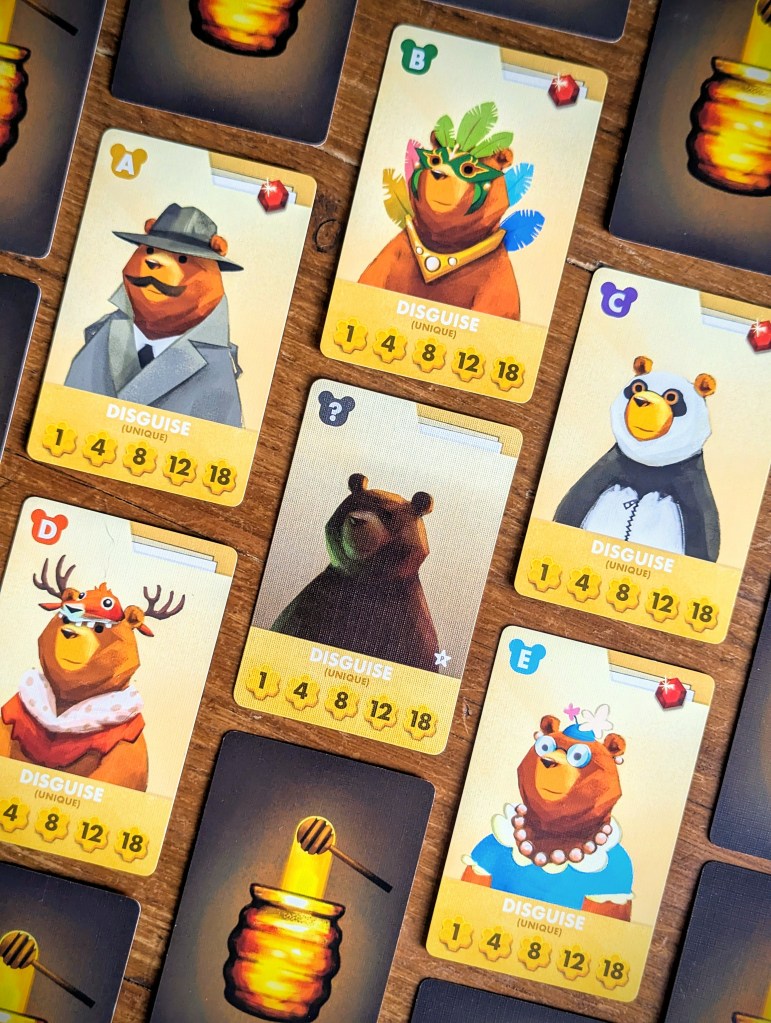
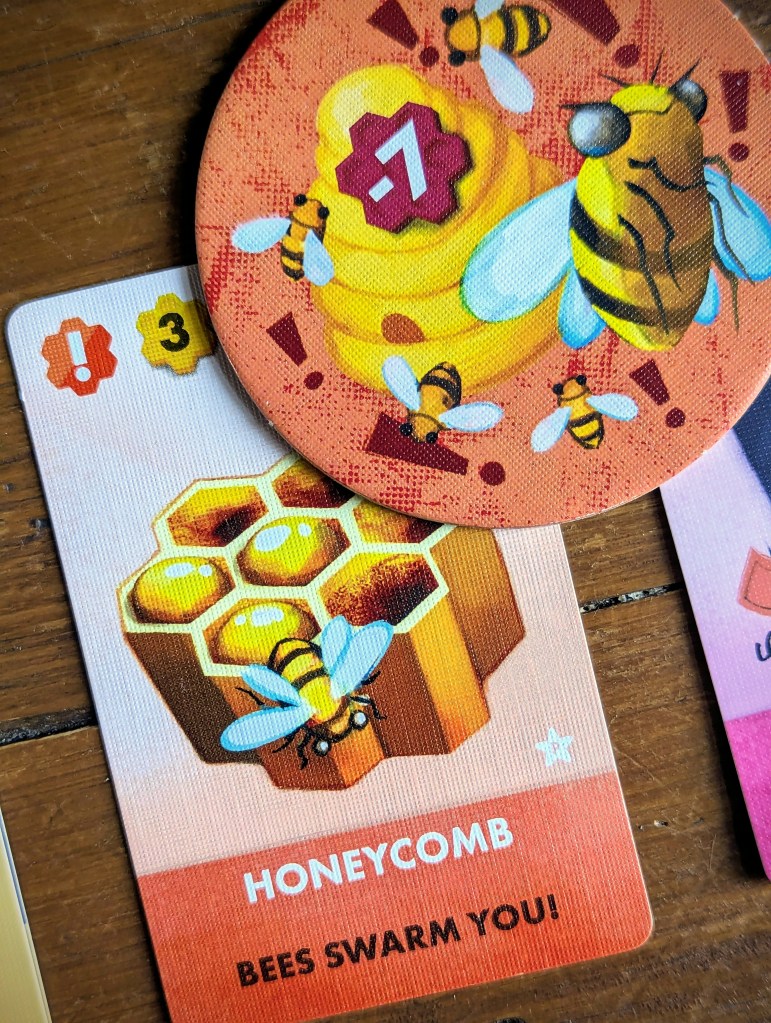
- My only criticism with the components is that the honeypot deck is large (172 cards in base game) and feels quite cumbersome to work with – solo and 2-player games barely scratch the surface. This adds to the luck of the draw and meh feeling we had about what would be in the stacks.
Verdict
Honeypot is a light filler game with some interesting mechanics, but unfortunately it didn’t quite hit the sweet spot for us. We expected more tension and thrills, and decisions to feel more meaningful. I found solo better and I think I’d enjoy it with a bigger group.


