Advert: This game was gifted from Perplext Games in exchange for an honest review. All opinions are ours.
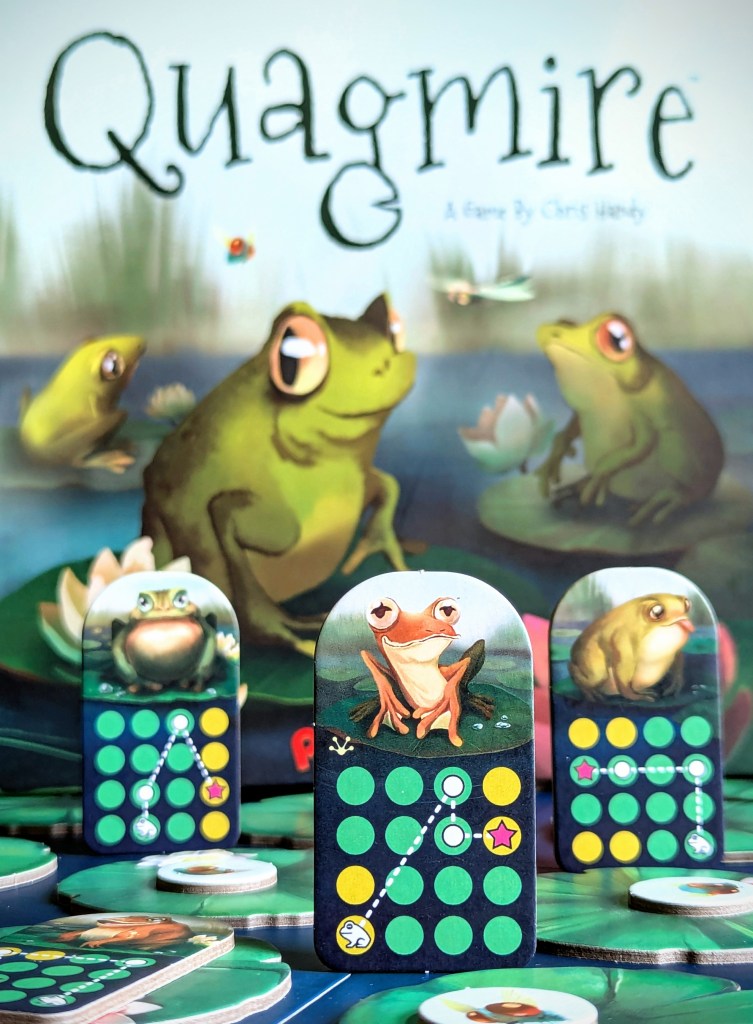
It’s frog eats frog in this blown up version of BOG! This is Quagmire and it’s hitting the market soon – read on to see if it should be hopping into your basket.
Key stats
2 to 4 players | 20 to 45 mins
Publisher: Perplext Games
Designer: Chris Handy
Artist: Magdalena Markowska
Categories: Nature, Frogs, Abstract
Key mechanics: Grid movement, Multiuse cards, Point-to-point movement
Game overview
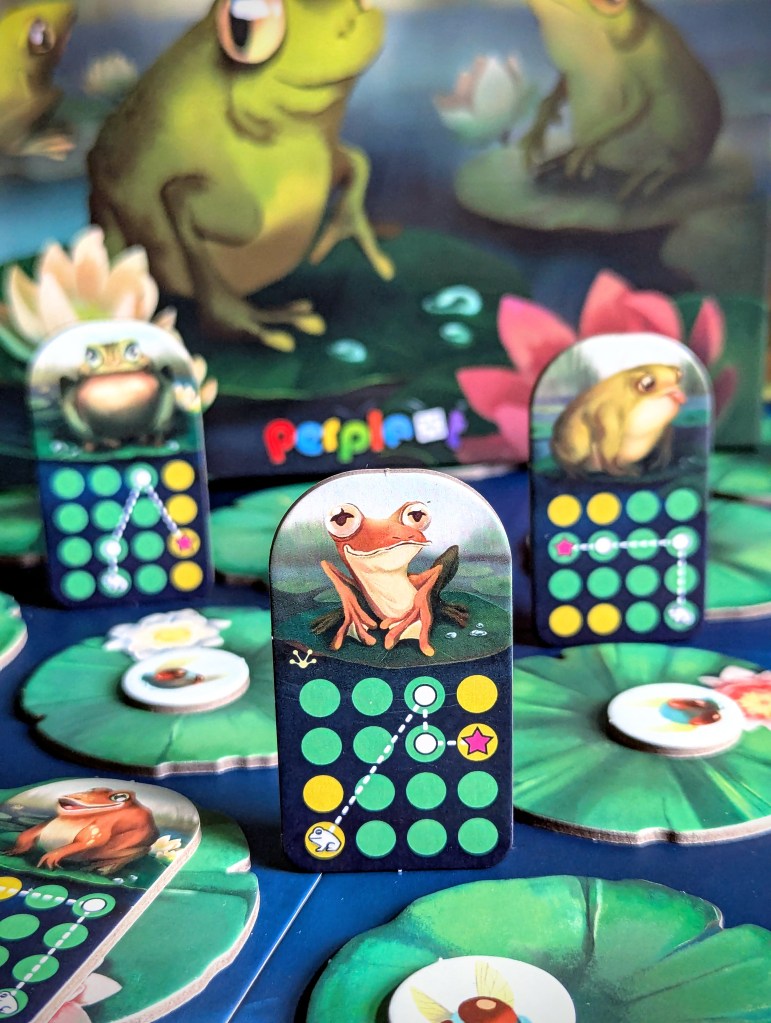
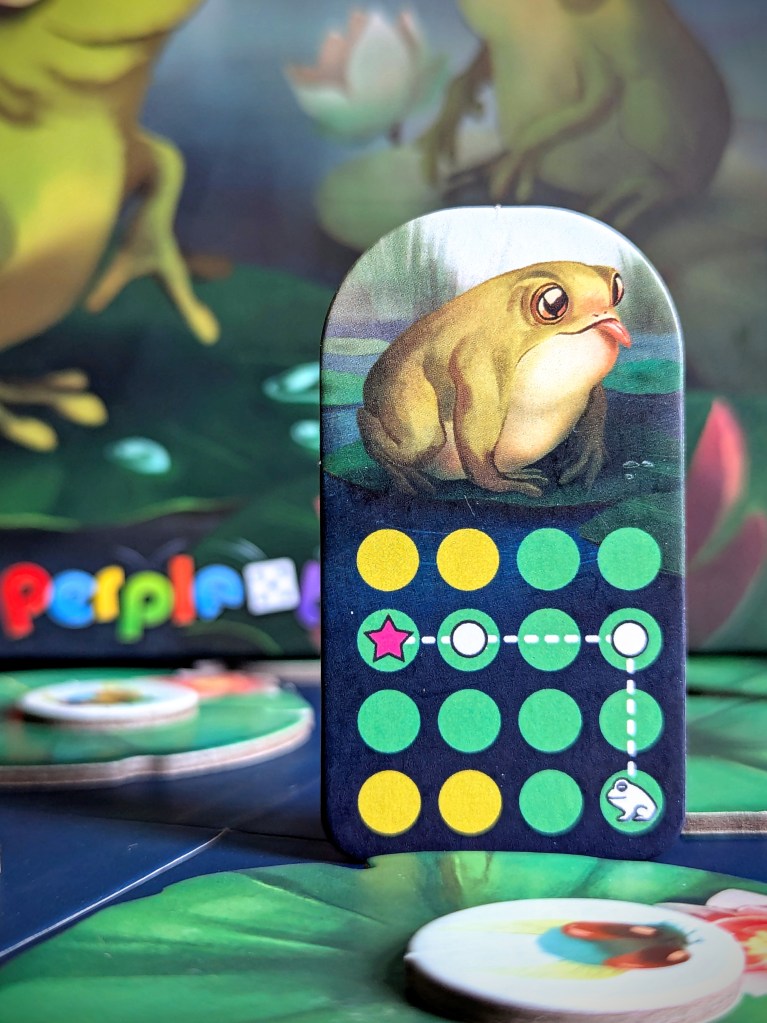
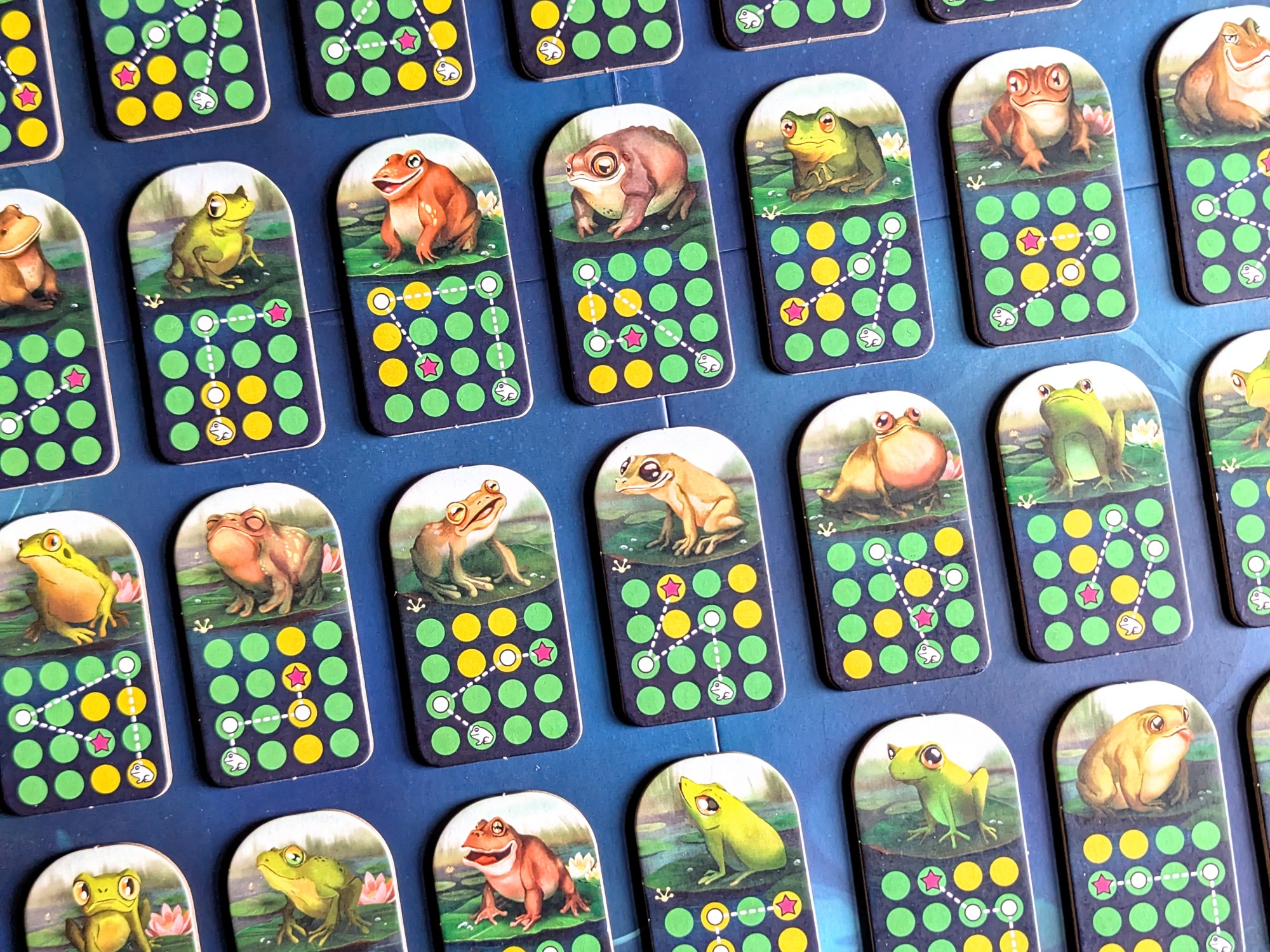
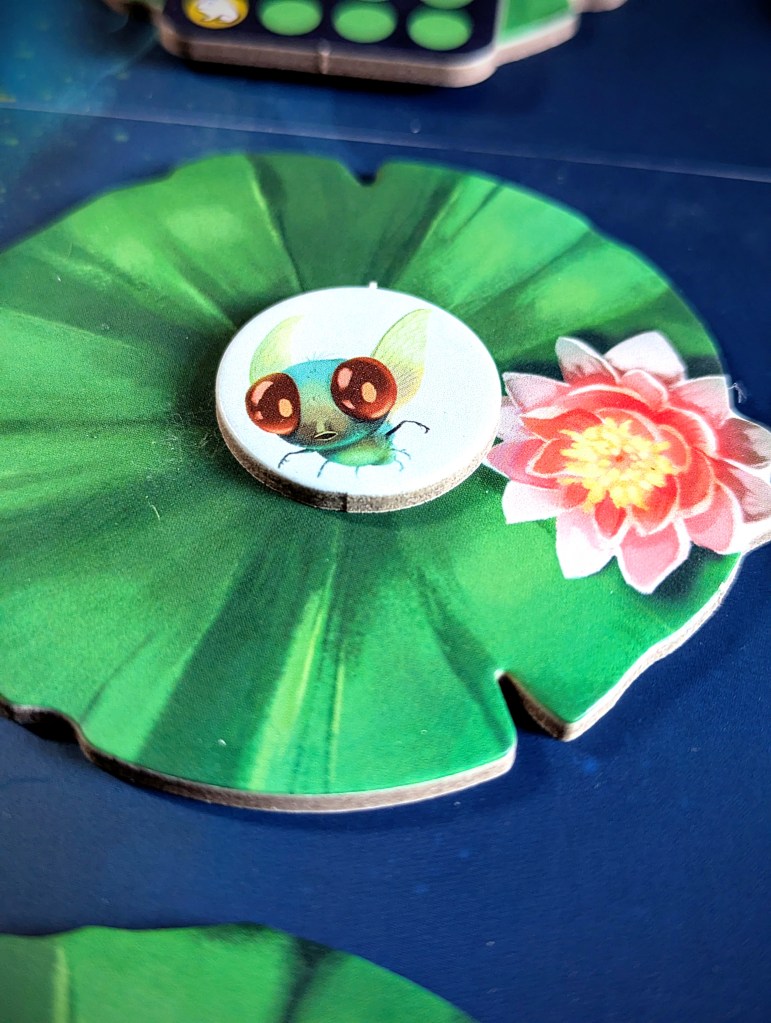
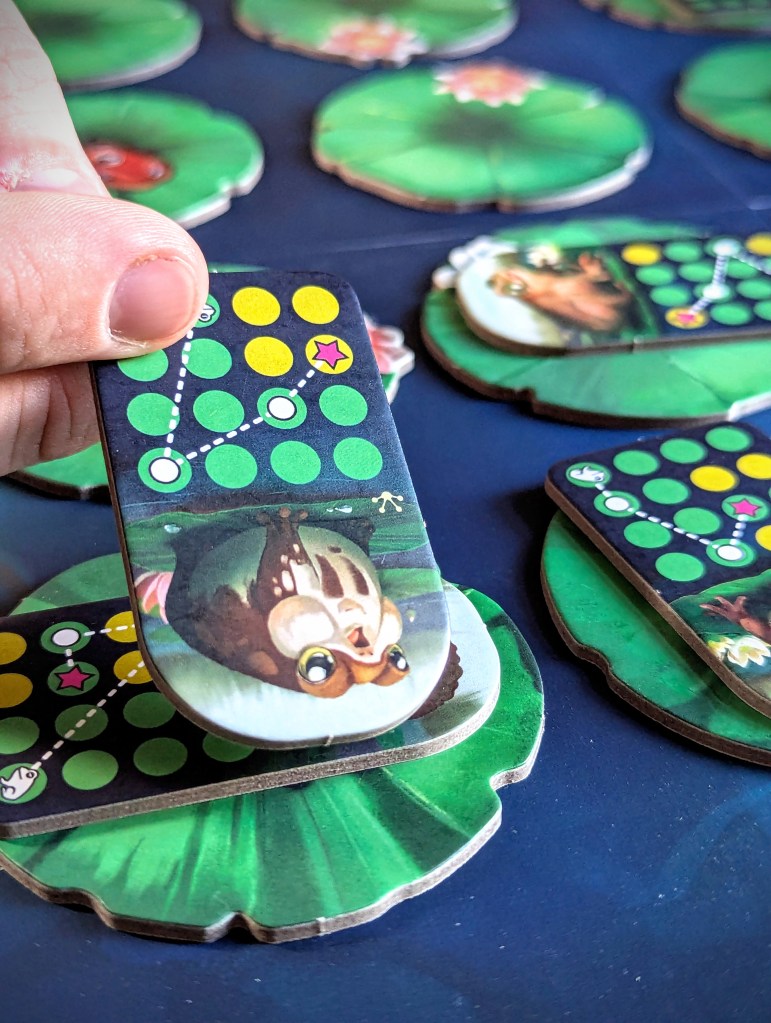
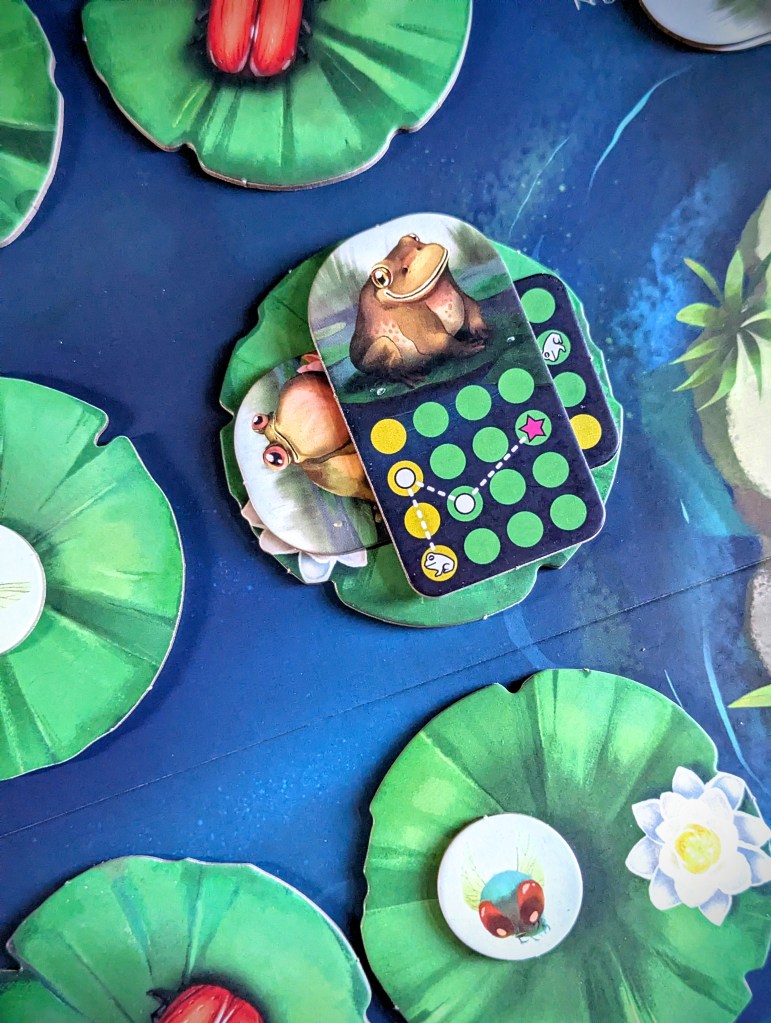
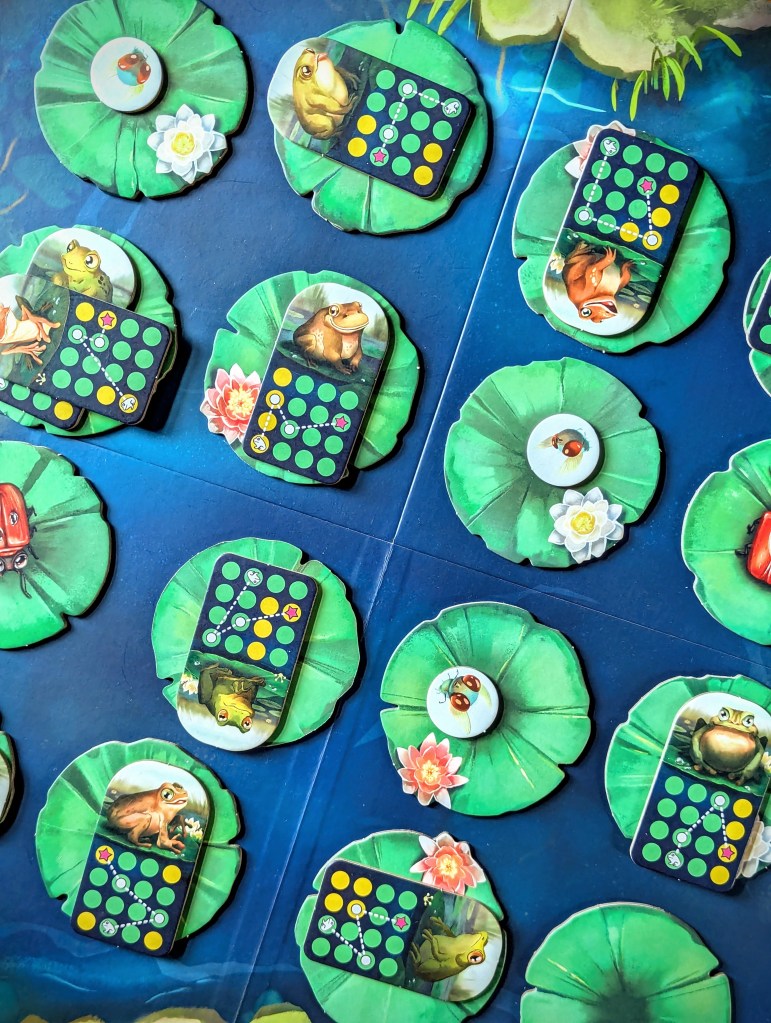
In Quagmire you play frogs from your hand and hop them from lily pad to lily pad to complete their unique routes and score points. Land on a fly and add a new frog tile to your hand, but land on a frog and SQUISH – that frog is removed and added to your points pile. Each frog tile also has 4 highlighted lily pads, called a ‘formation’ – instead of playing a frog to the board, you can score it straight away and get points based on how many frogs are in the formation at that time.
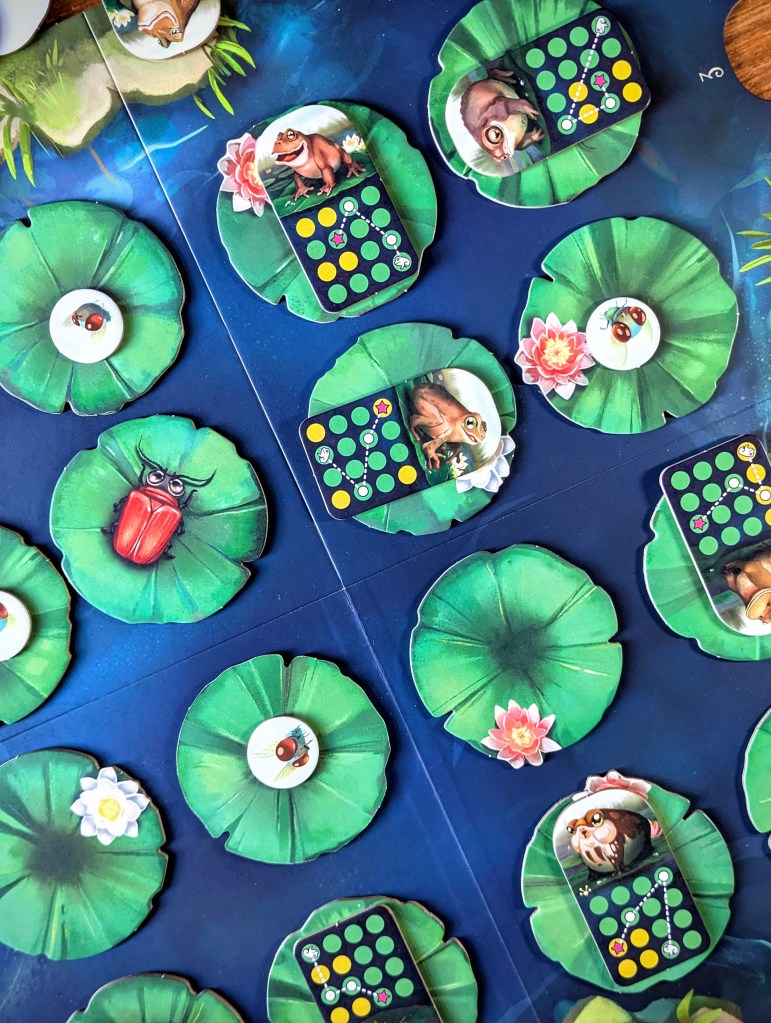
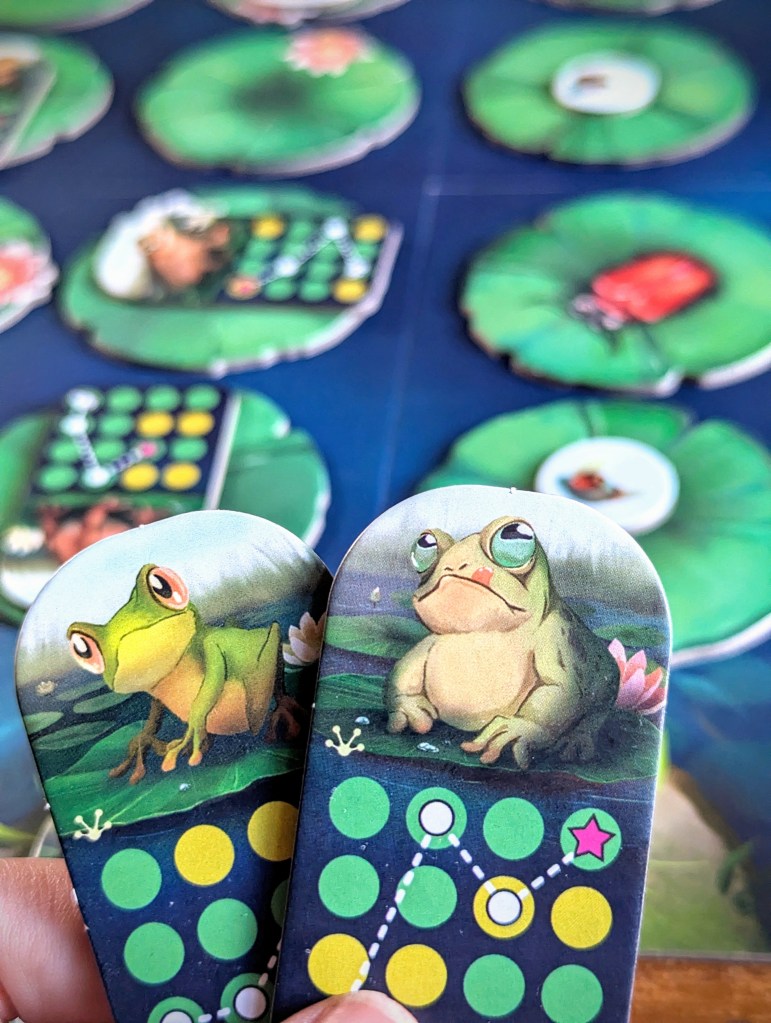
What’s important to remember is ORIENTATION. YOUR frog tiles are played rounded top away from you – i.e. the frogs and their routes are facing your way up. This is the same for every player, and each person plays from a different side of the board so you can tell who’s frog is who’s. Similarly, the frog formations score from your orientation only.
Each turn you only get one action: play a frog to your ‘shore’ (to start its route), advance a frog to its next lily pad, score a completed frog (remove it from its final lily pad) or score a frog formation from your hand. If you can’t do any of these actions (if you can, you must, even if it’s a move you don’t want to make), you lose 3 points, draw 2 new frogs and play 1 to your shore. Any scored frogs – from completed routes, squishing or formations – are slotted into your side of the board denoting the points they are worth.
The game ends IMMEDIATELY as soon as someone can’t make a legal move after the frog stack has run out. Players score up points from:
- Frogs that completed routes (2-4 points, depending on player count)
- Completed frog patterns (up to 4 points, based on how many of the 4 formation spots were occupied)
- Squished opponent frogs (1 point each)
- Any flies collected towards the end of the game when frog tiles ran out (1 point each).
The player with the most points wins!
Our thoughts
I’ve not had the chance to play BOG (I’ve been trying to hunt it down!) but as I understand it, the gameplay in Quagmire is pretty much the same. Quagmire is just a scaled up version with more table presence, that you can also play with more people (as BOG is 2-player only).
Quagmire is fairly simple and surprisingly quick, but it still somehow manages to be quite a puzzle! Weirdly, it reminds me of chess-light: it’s certainly lighter and there’s an element of luck with which tiles you draw, but it’s still fairly abstract with different pieces moving all over the place. You need to ‘think ahead’, line up your movements and block other players under threat of squishing. In many cases it leads to ‘frog-offs’, with multiple frogs threatening for control over one space. And on top of that you have to keep your eyes on the flies, because running out of frogs risks you getting stuck and losing points. I’m no chess fan, so the lighter puzzliness of Quagmire works better for me but the abstract spatial likeness means it appeals to chess-loving Matt too. Plus this has frogs, and frogs make anything 100% better.
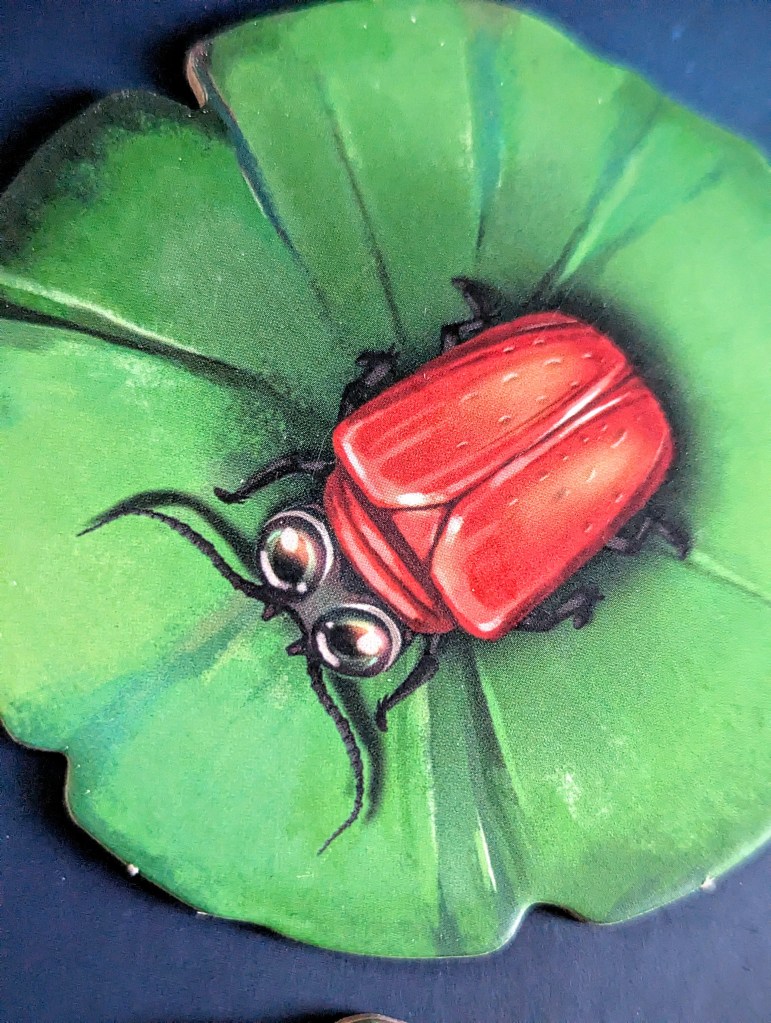
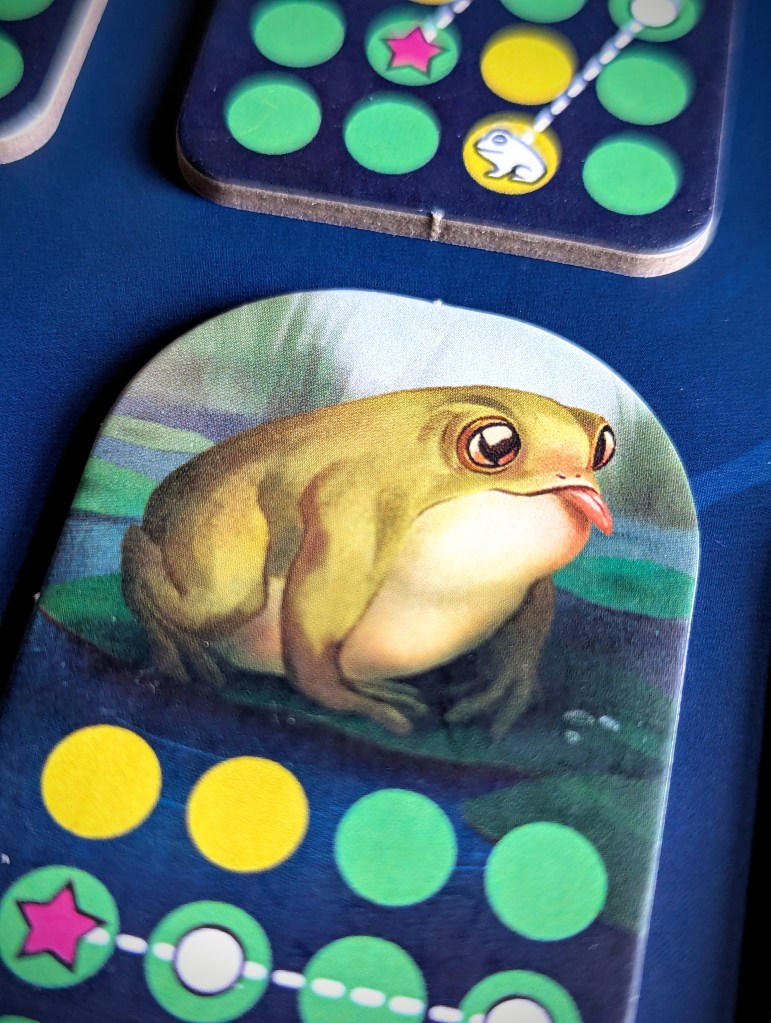
Speaking of which, there was more artistic detail than we expected – not only is each frog unique, but so are the flies! It’s a level of detail that you might not expect, but they add so much personality to what could have been a dry abstract game. It’s always fun drawing a new tile and seeing which frog you get. Happy? Chonky? Snooty? All great choices.
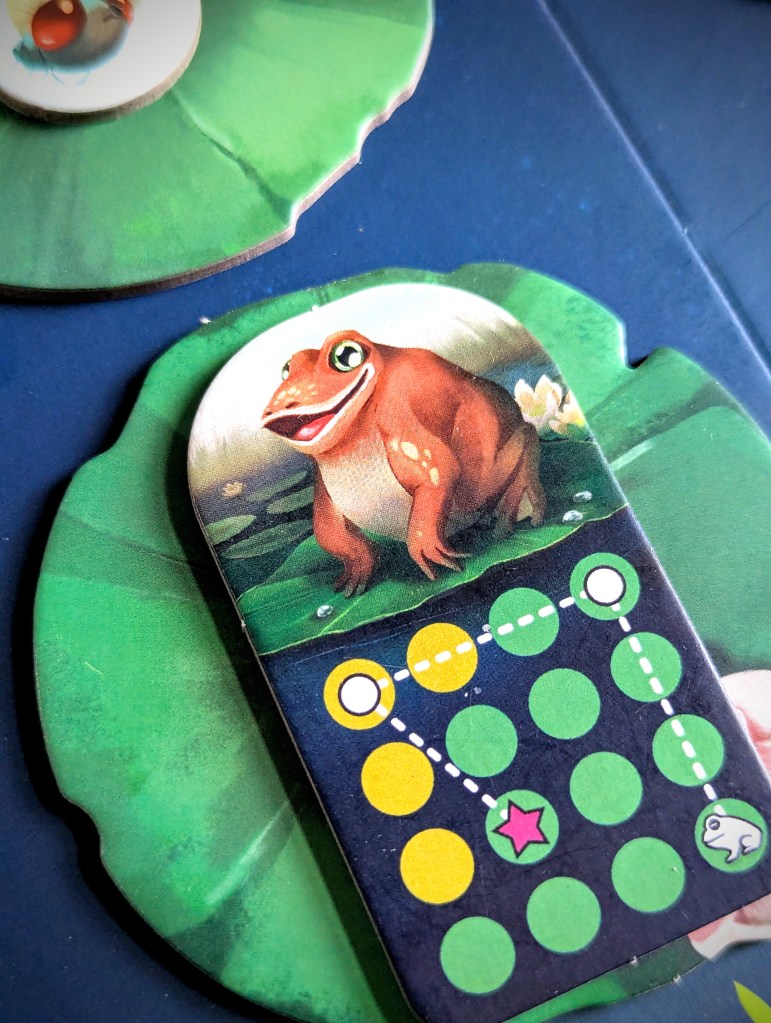
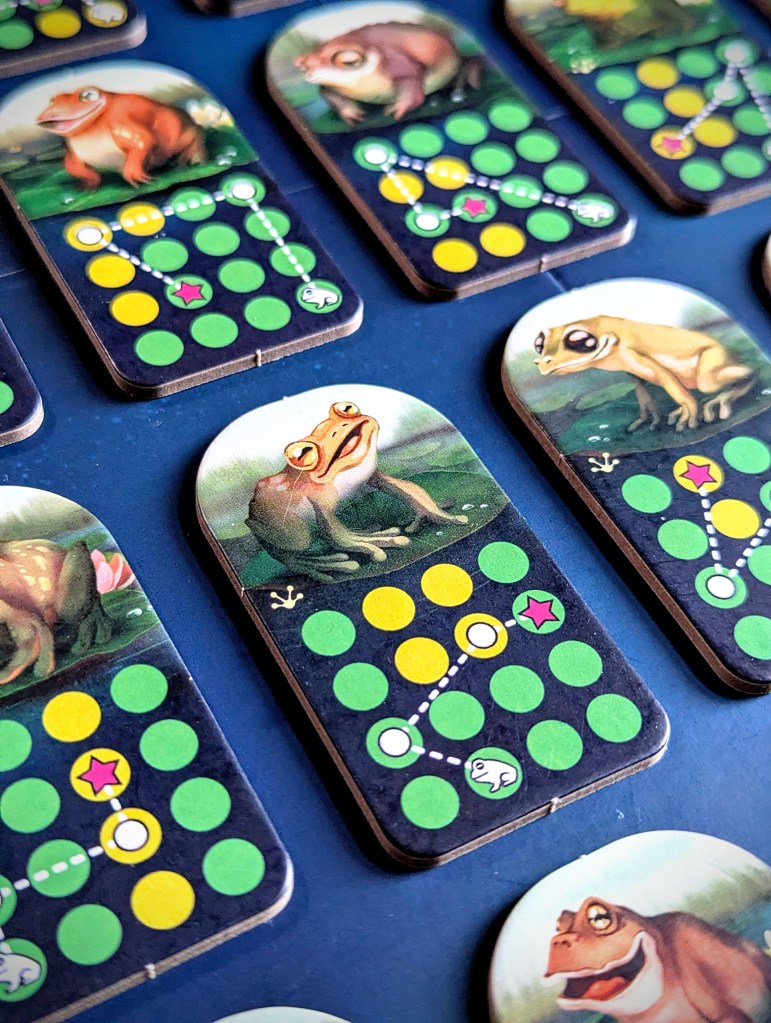
I’m also glad Quagmire increased the player count from BOG, because while it works well 1v1, I prefer it with 4 players. There’s a little more to keep track of – frogs from all directions! – which feels a bit more chaos BUT it also feels less mean because the blocking and squishing get shared around. Completing routes also feels more worthwhile because you get more points for them (even though it’s probably not, coz of the squishing). There were a lot more funny moments where someone smugly makes a move they think is safe, only to get squish-attacked from someone they didn’t expect!
At 2-player, our games felt more tense, with a lot of 1v1 stand-offs over various lily pads. And it was often more appealing to score a formation, even if it was only 2 frogs, over taking 6 turns to complete a route. BUT you still need frogs on the board to score those formations, block your opponent and catch flies for more frogs. So overall I do think it balances out across player counts, but the dynamics can vary and depending on your play style you might have a preference like me (I imagine most people will .
When playing with 3 or 4 players, it works best if you sit at a table where each player can sit ‘straight on’ at each side of the board (e.g. a square or circular table). If you’re sitting on a table with 2 people on each side, your side of the board will technically be angled 45° away from you – probably not something that would affect most people, but some people may struggle with the spatial aspect if they aren’t sitting straight on.
You’ll like this if:
- You’re looking for a new abstract game that’s light but still with some depth to it.
- You like high player interaction on a shared board.
- CUTE FROGS
You won’t like this if:
- You don’t like being mean – or people being mean to you!
- You don’t enjoy (or struggle) with spatial formations.
Verdict
Quagmire is a fun, surprisingly snappy abstract puzzle that doesn’t get too bogged down by extensive or complex rules. It’s light and easy to learn (with cute art!), with enough depth to keep it interesting – and often very competitive!