
Advert: we were sent this game from Playte in exchange for a review.
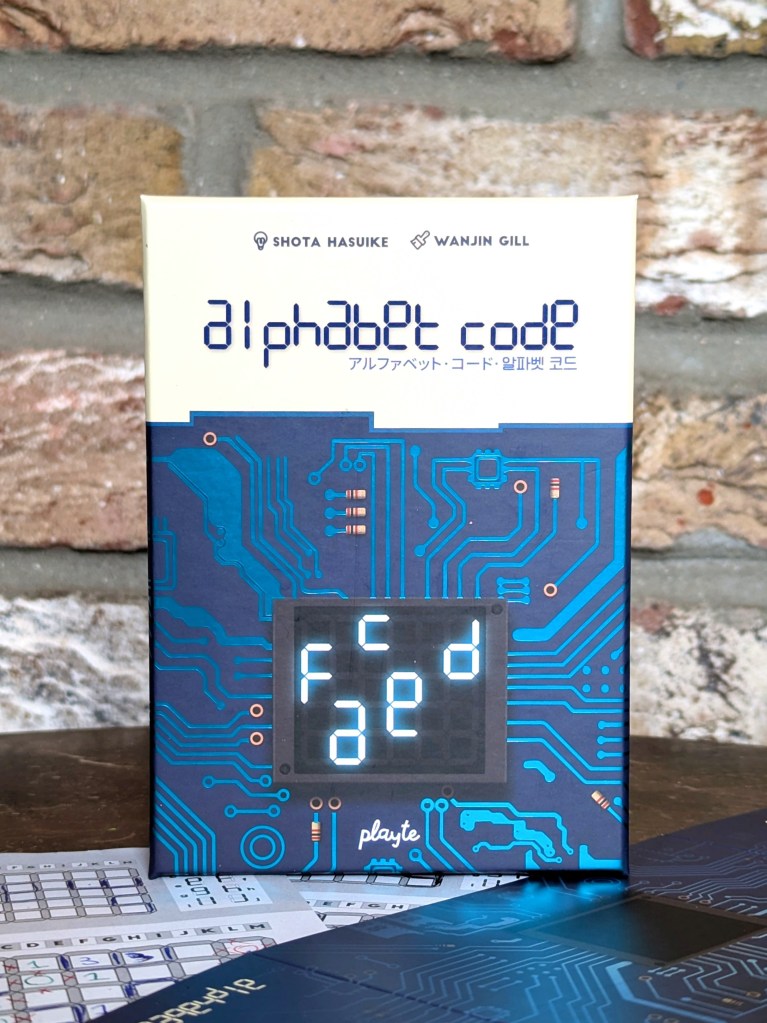
Beep boop beep boop! Playte is back with another tea-time deduction teaser: Alphabet Code!
Key stats
2 to 5 players | 20 to 30 minutes | 8+ years
Publisher: Playte
Designer: Shota Hasuike
Art:Wanjin Gill
Theme/category: Abstract, Puzzle, Deduction, Letters
Key mechanics: Deduction
Gameplay overview:
In a 2-player game, each player secretly sets a 5-letter code using digital-style letters in a segmented grid (think digital clock face, but bigger). Each letter has to be unique (no repeats allowed!), upright, and not touching any other letters.
On your turn you can use grid co-ordinates to ask one of two questions:
- How many spaces (sides) are filled around a specific square in the grid
- Whether a specific space is filled in or not.
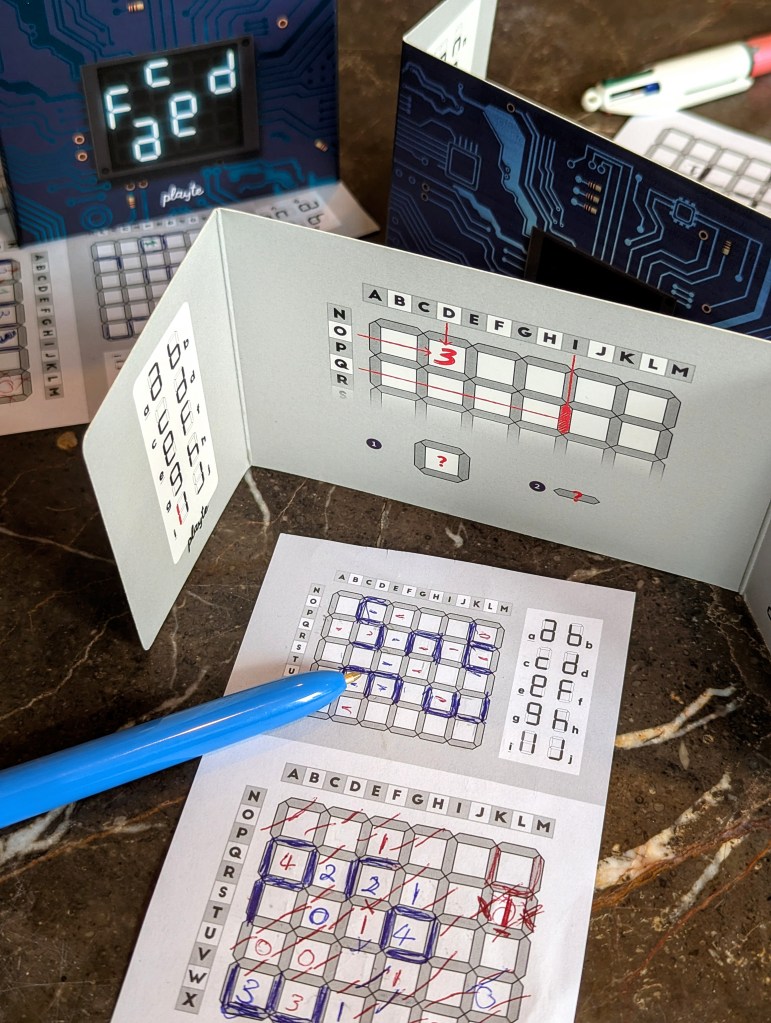
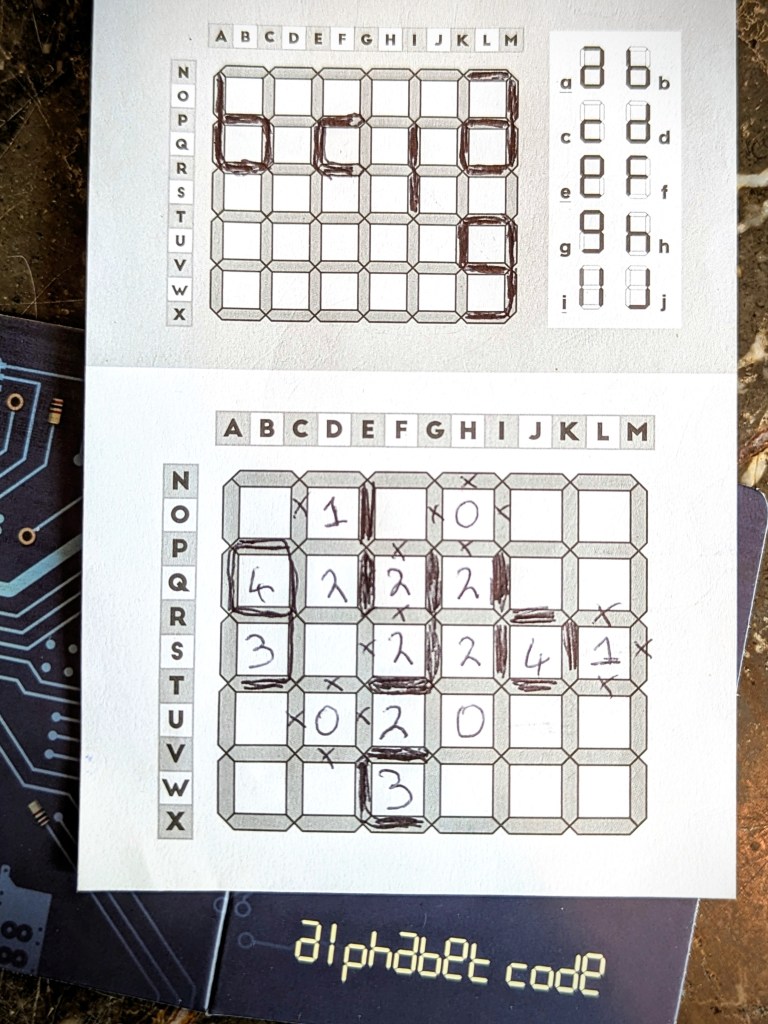
When you think you’ve cracked the code, you can declare the answer. If you’re correct, you win! But if you’re wrong, your opponent will tell you but won’t say which letters you got wrong. The first player to prove they know their ABCs and guess their opponent’s code wins!
In a game with 3 players or more, one player is the code setter while the remaining players take turns to ask questions. The same information is heard by everyone. The first person to crack the code wins.
Our thoughts
If you’re feeling some deja vu, that’s because Alphabet Code is a sister sequel to Digit Code, another quick deduction game that we reviewed last year. Both are what I’d describe as tea-time teasers because you can squeeze them into a lunch break.
When I first read the rules for Alphabet Code, I thought having only two questions to choose from would feel simplistic, but I was wrong. What became apparent very quickly is that this game is trickier than you think it’s going to be: when 2 spaces around one square are filled in, they could belong to the same letter (connected) or two different letters. And the filled in spaces around 2 adjacent squares may overlap, or they may not. It often requires an extra level of fact finding to deduce what is where – always keeping in mind the potential letters that make sense.
Trying to ‘hit’ the right squares (with filled info) feels similar to Battle Ship. So there is a bit of luck involved, and it also means some games can feel like it’s first to win through ‘process by elimination’. Despite the luck, in most of our games we both progressed at a similar pace. Some of your edge can be down to luck and hitting the right squares first, or the other player messing up.
One thing we really like with Alphabet Code is that you can switch up the game mode. In a ‘standard’ game you pick 5 different letters from a to j. But if you want more variety, you can choose from more letters, including some from the second half of the alphabet. There’s also an ‘advanced’ mode, where each player chooses 5 letters to spell out an actual codeword and hides them in the grid in order – the first person to guess their opponent’s codeword wins.
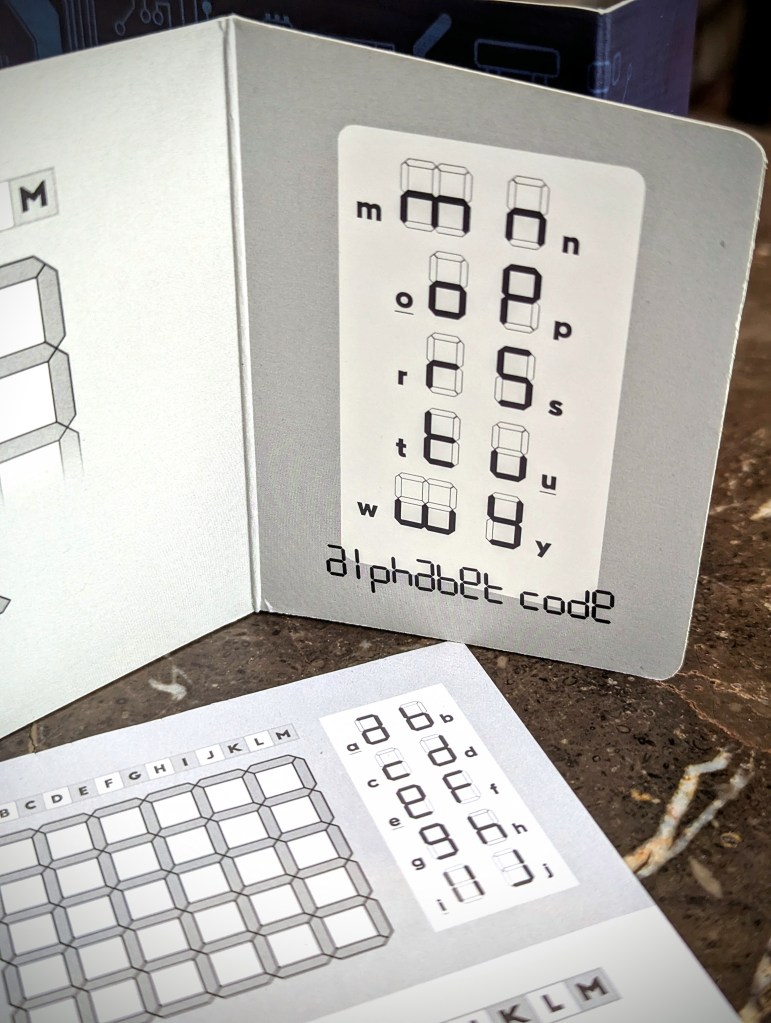
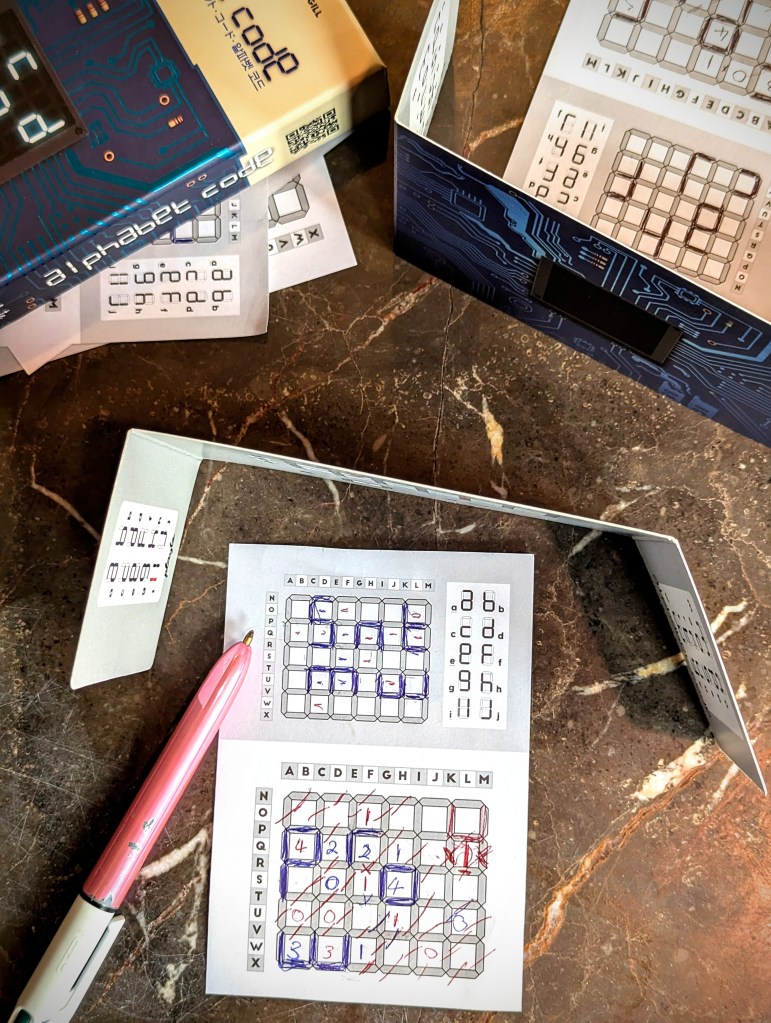
Note that in Alphabet Code, your mission is to correctly guess the opponents letters/code word. You do NOT necessarily need to have fully pinned down their locations. We found this adds a bit of spice, particularly in advanced mode, because you can try and deduce the codeword before finding all the letters! And this is what makes that mode extra challenging – you don’t want your word to be too obvious!
What we like:
- A satisfying spatial deduction puzzle for 2 players.
- Very quick playtime – perfect for tea or lunch breaks.
- Trickier than it looks on the surface because of how 1 square can be connected to 2 letters – I really enjoyed puzzling this out.
- Different game modes add a bit of variability and spice – we particularly enjoyed making actual codewords!
Considerations:
- Definitely more suited as a 2-player only game (more players need a ‘code master’, there are only 2 shields in the box).
Verdict
Alphabet Code is on the lighter end of the deduction game spectrum, but that doesn’t stop it from being a satisfying puzzle, perfect for 2 players to enjoy over morning coffee or when you just want a quickie puzzle break.
Alphabet Code or Digit Code?
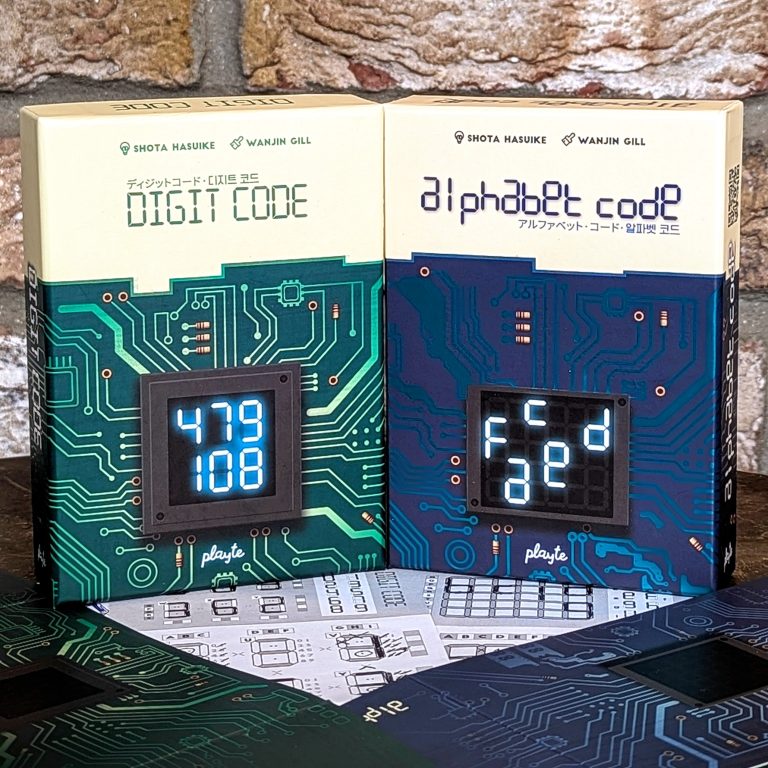
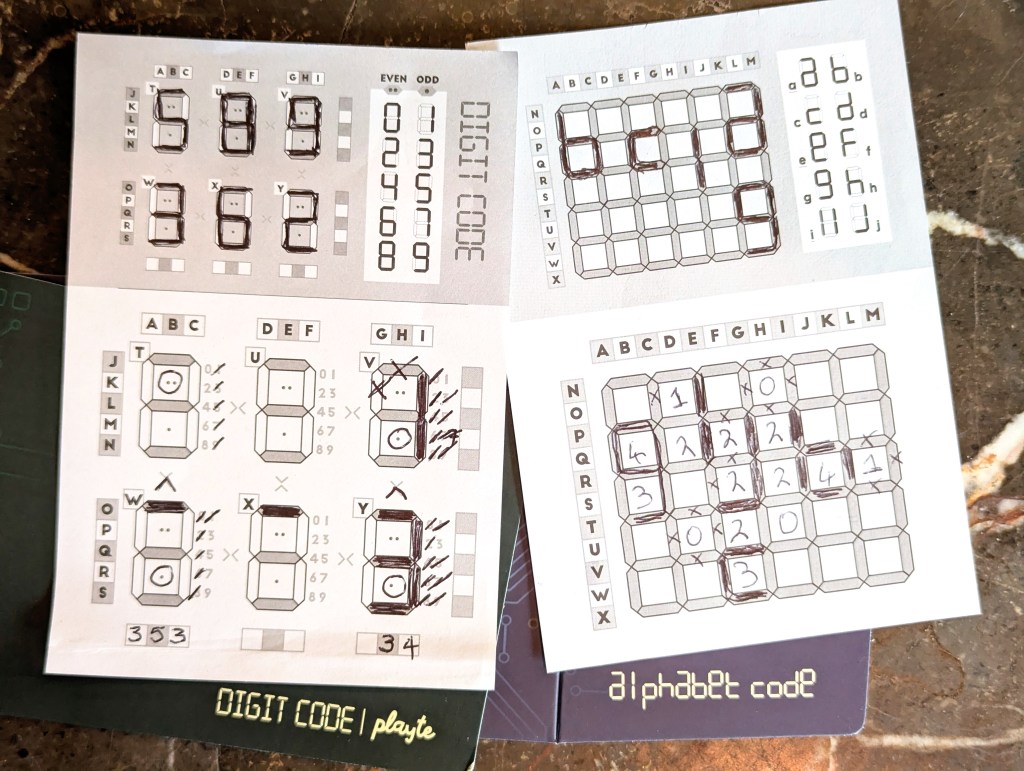
While Alphabet Code and Digit Code share some similar blueprints, they aren’t exactly the same. I think they are different enough to have both. But if had to pick one we would choose Alphabet Code – we prefer the ‘battleships’ style grid and there’s more room for gameplay variability by introducing different characters and even spelling out words. There’s a lot more room for strategy.
Playte will be at UKGE on 29-31 May 2026 – you can preorder games with them for UKGE pick-up here and check out their stand at 3A-602.
They will also be at the Tokyo Game Market 23-24 May, and you can preorder games for that here.


