
Advert: This game was loaned for review through the UK Board Game Review Circle. All opinions are our own.
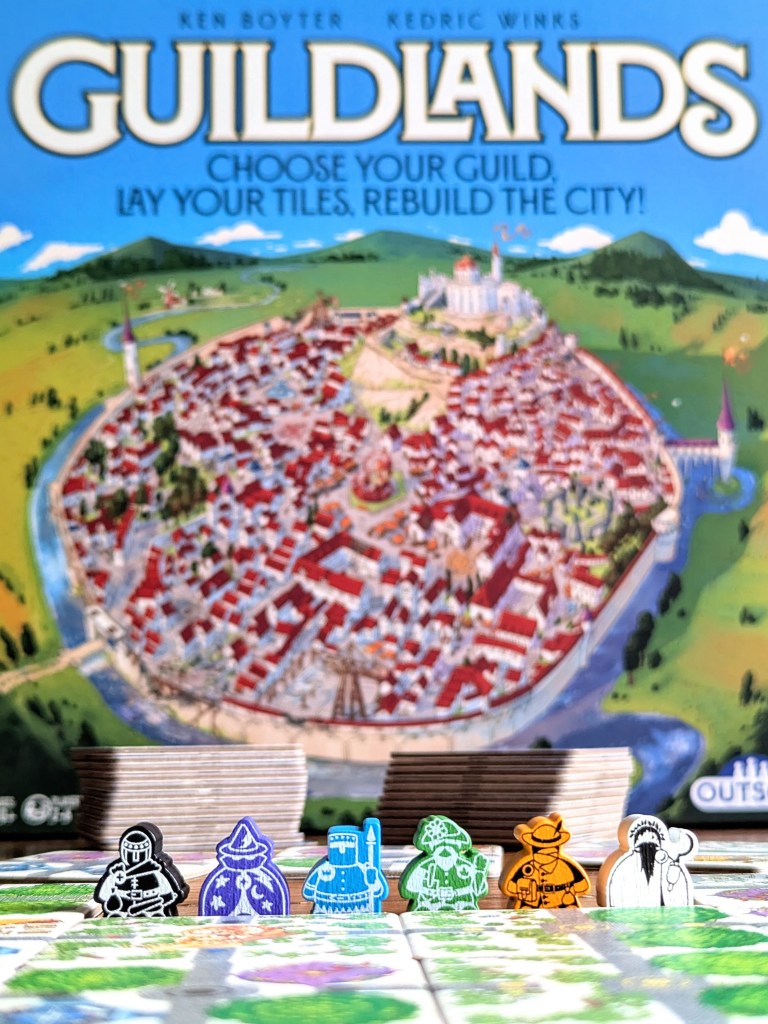
Dragons have scorched the lands and it’s down to you and your fellow guilds to restore the city to its former glory – the problem is, you all have different ideas on what glory looks like! Welcome to the asymmetric tile-layer Guildlands.
Key stats
2 to 6 players | 45 to 90 minutes | 10+ years
Publisher: Outset Media
Designer: Ken Boyter, Kedric Winks
Art: Laszlo Riba
Theme/category: City building
Key mechanics: Tile laying, Asymmetric Powers
Gameplay overview
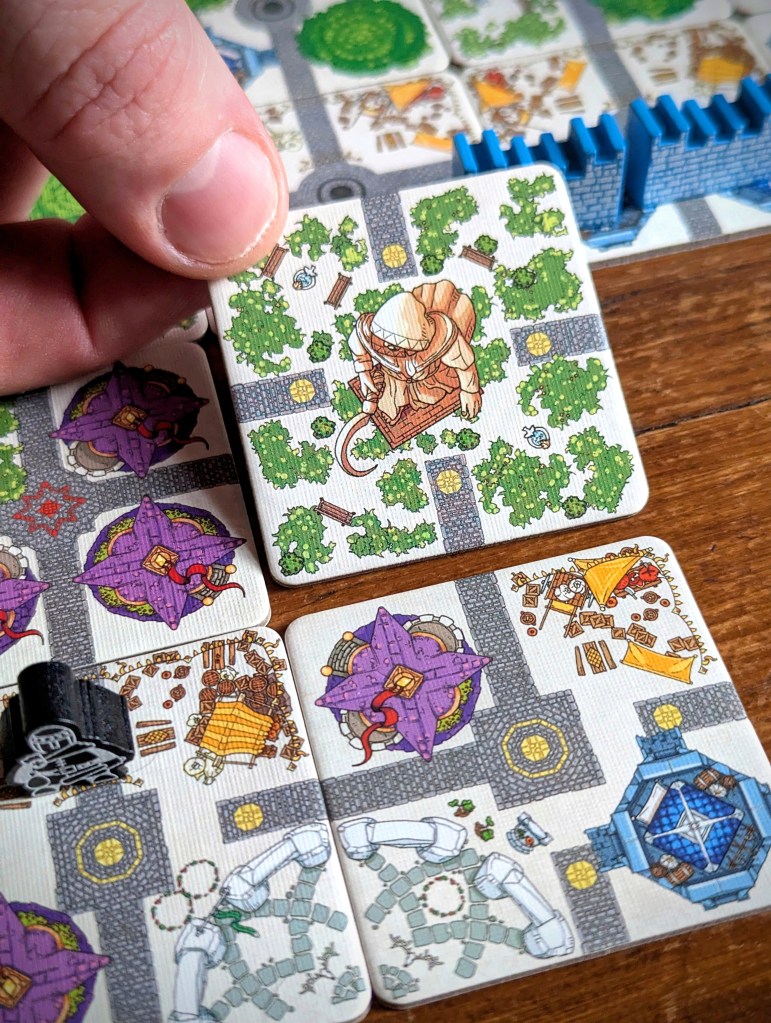
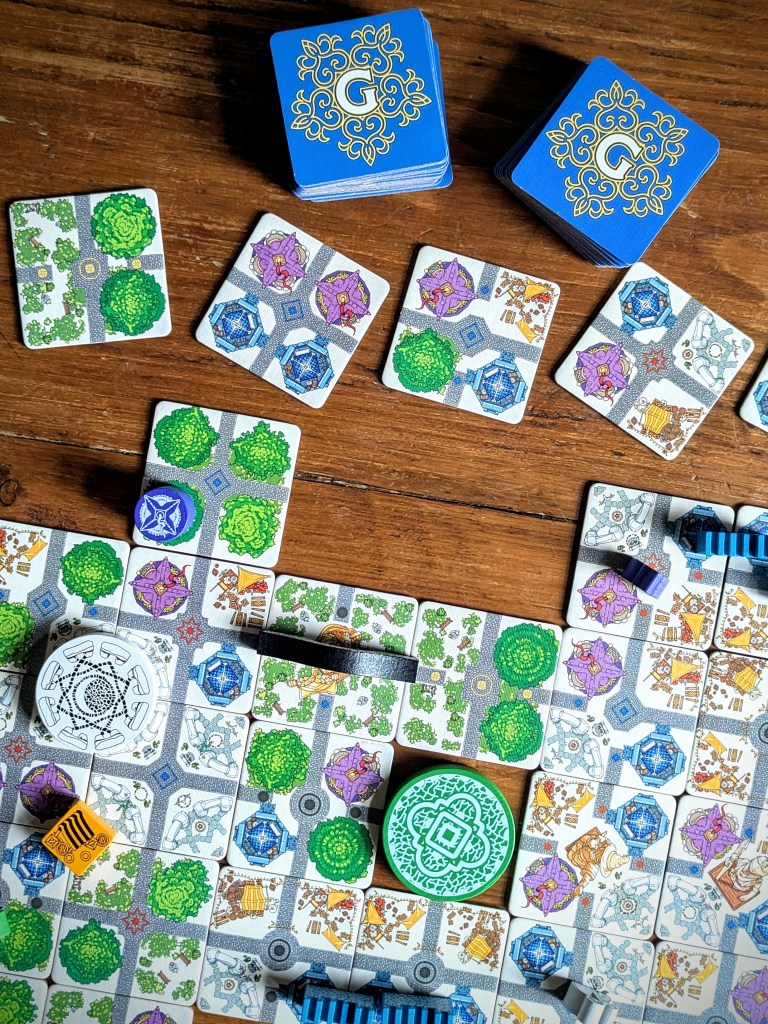
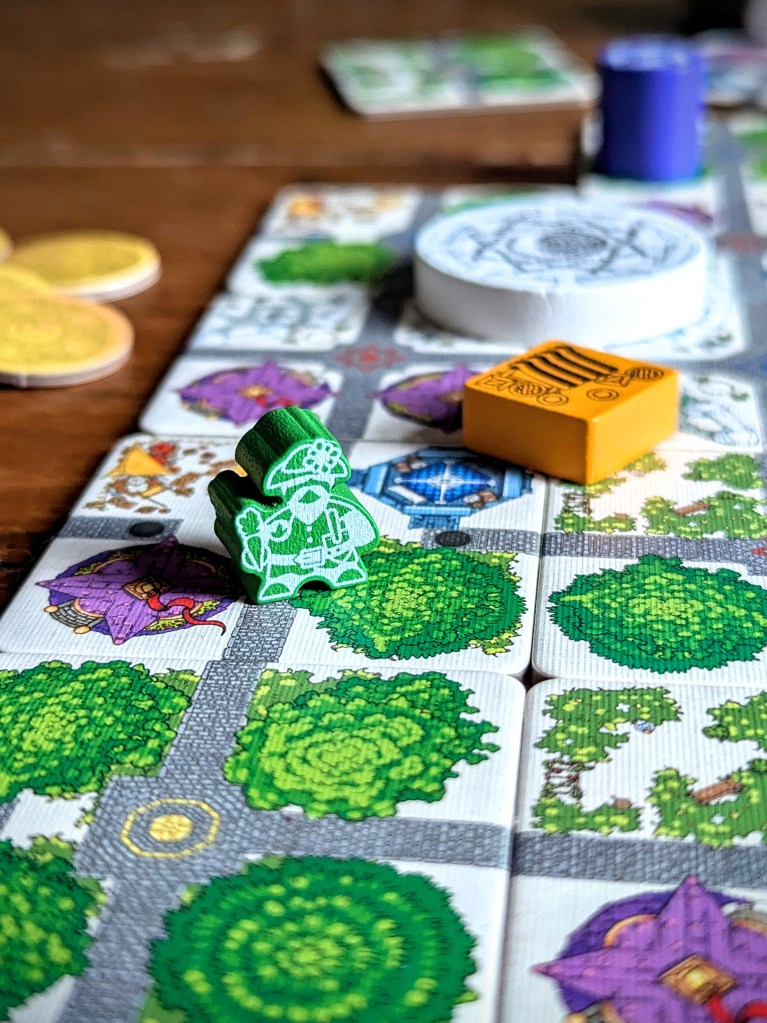
In Guildlands, players take on the role of a different Guild, each with their own special actions and scoring objectives. On their turn, players draw and place city tiles into a communal area Carcasonne-style, choosing from either the market row or a blind draw from the top of the stack. Each tile has 1 or more sections that appeal to different Guilds and colour-coded roads in various configurations – the only rule when placing a tile is the roads have to connect to other roads. Alternatively, instead of drawing a tile, you can choose to rotate tile already in play, as long as it’s on the ‘city edge’ (i.e. not covered on all 4 sides).
In addition to your ‘tile action’, you can optionally perform one ’special action’:
- Play one of your Guild Workers onto a tile – Guild Workers protect tiles from being rotated.
- Move your Worker to a new tile, following the roads.
- Any guild-specific action.
Each guild has one or more guild-specific actions they can perform. For example, the Road Toll Collectors’ Guild has a road token that can be placed to connect 2 separate roads – handy because this guild scores points for the longest road at the end of the game. The Wizards’ Guild can move other player’s Workers, or place one of their two special Wizard’s Tower tokens on any tile (the Wizard scores points for perfect squares made with Wizard Towers at the end of the game).
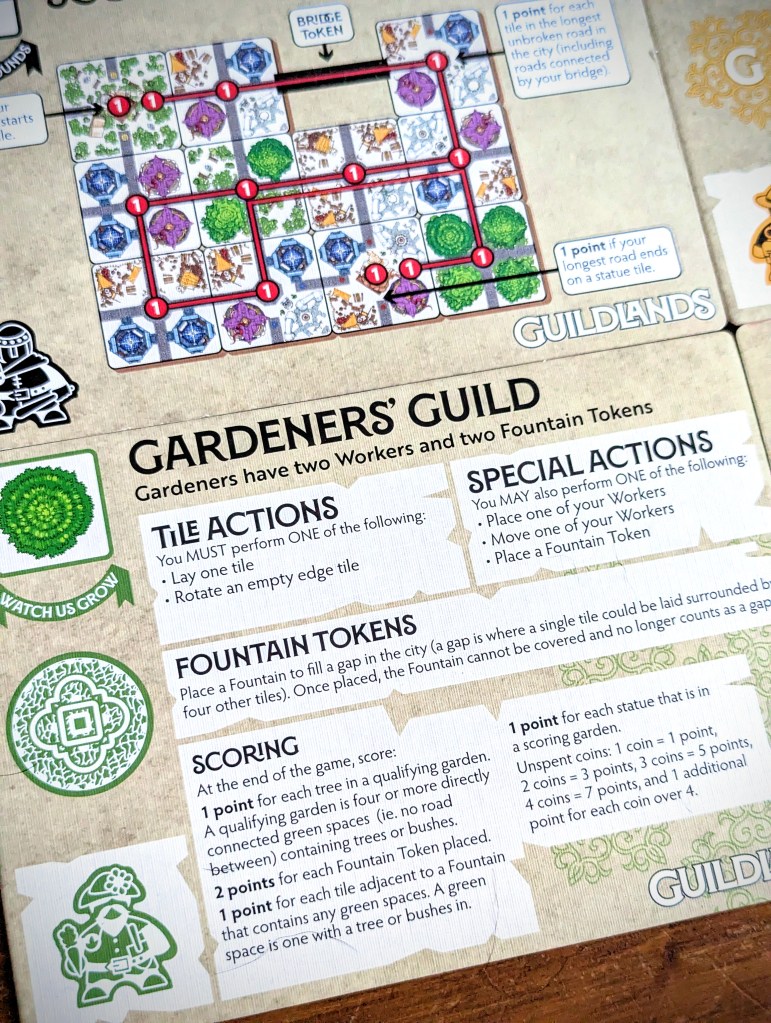
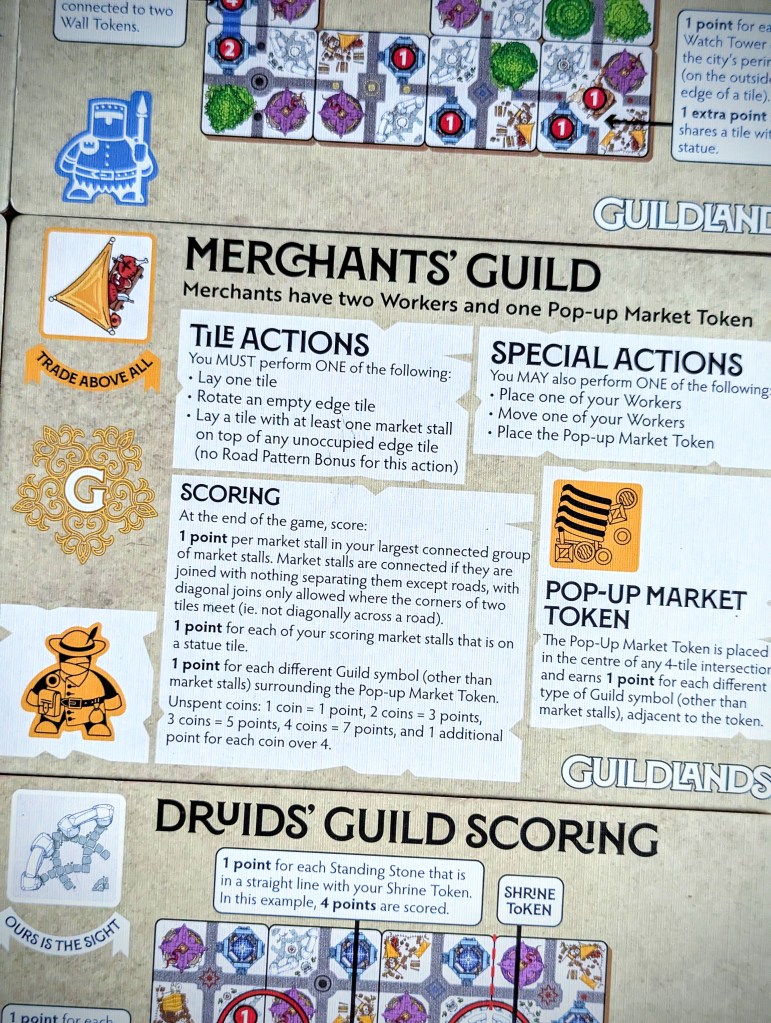
If you like, you can spend coins to take an additional action, but coins can be worth a pretty penny at the end of the game. Additional coins are earnt by forming a set-of-3 matching coloured road.
At the end of the game, each player scores according to their Guild’s specific scoring criteria, plus any extra points from left over coins.
Our first impressions
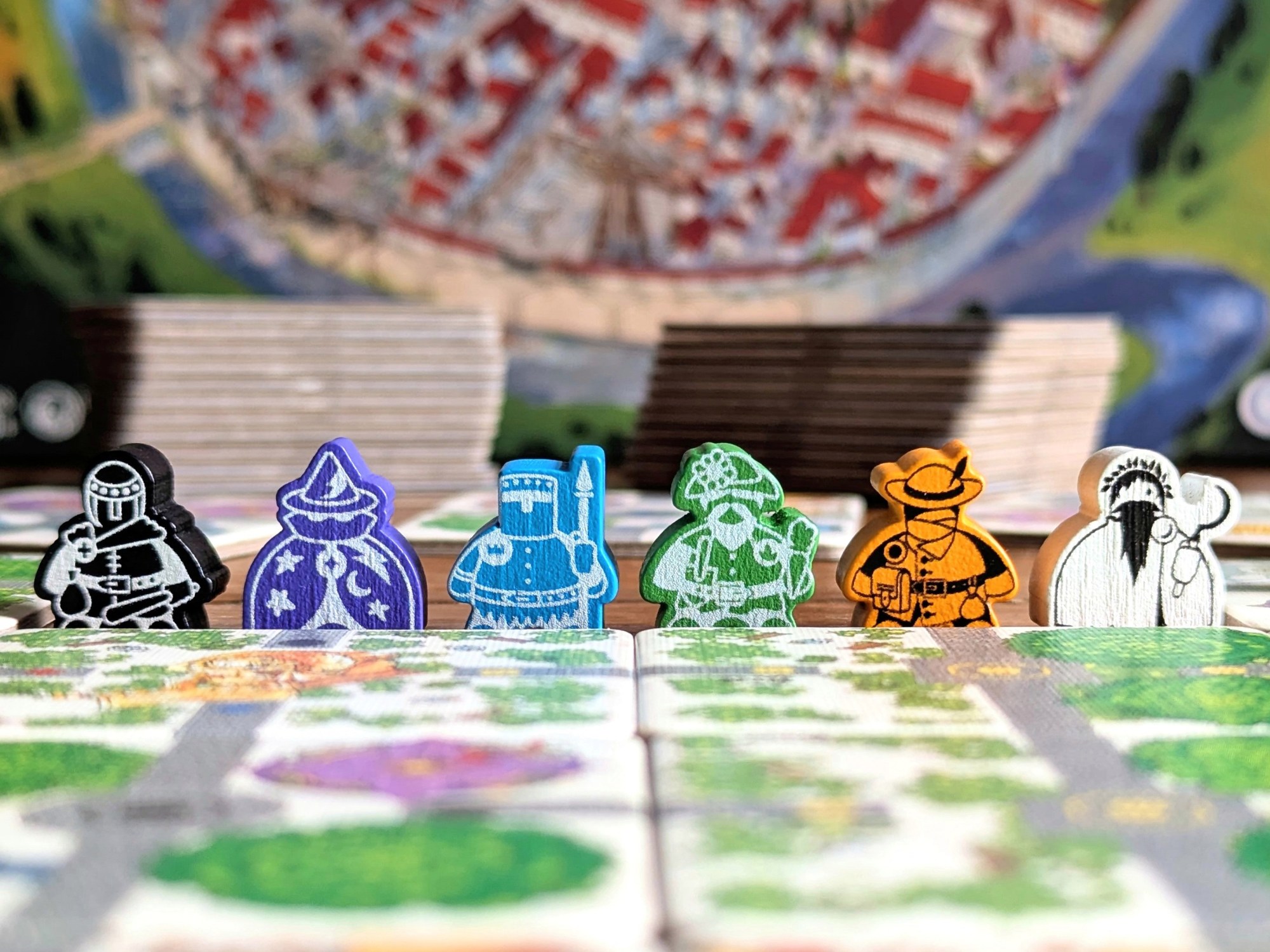
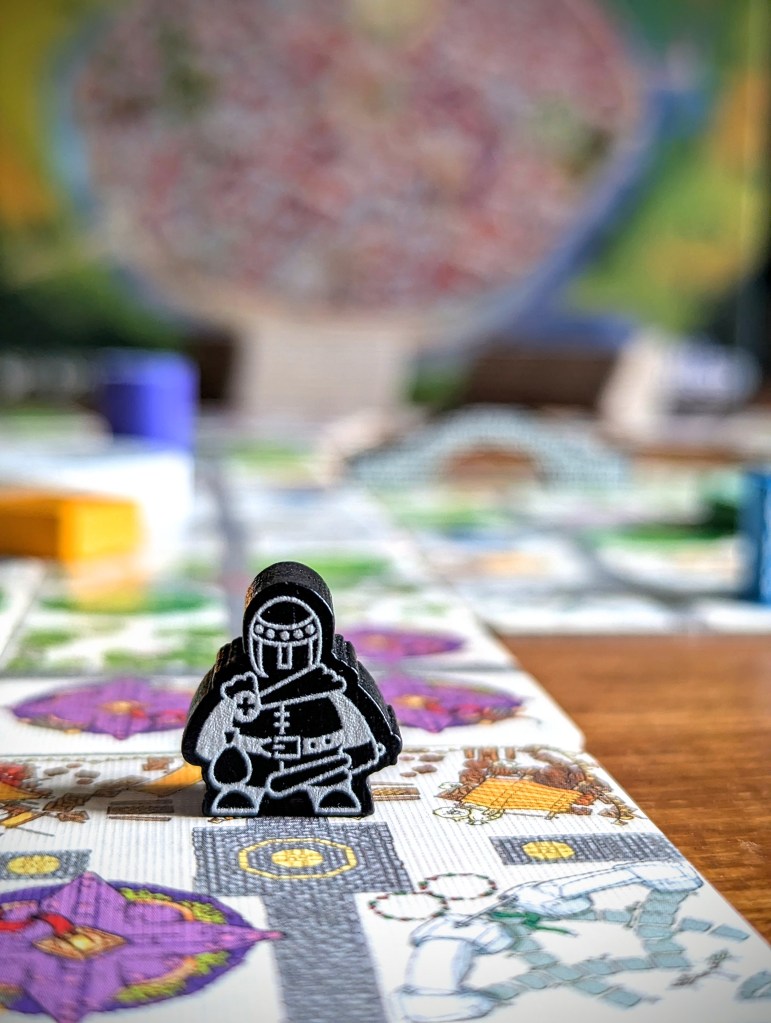
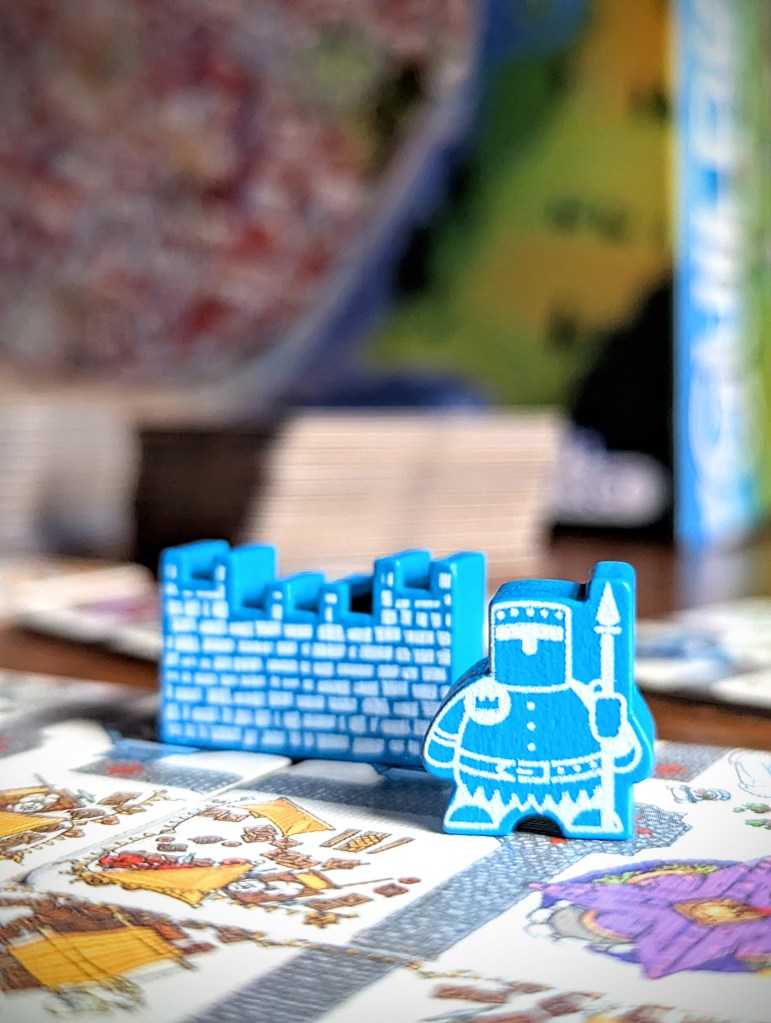
- We loved the little Guild Members, the meeple designs and special asymmetric rules made each one feel distinct and I’m sure everyone will have their favourites. They even have their own Guild mottos! I thought my favourite was going to be the Wizards, but I actually quite liked playing the Merchant and Road Toll Collectors.
- Unfortunately at 2 players we found the gameplay a bit lacking – we were drawing and playing tiles with very little need for interaction. I know we could have chosen to mess with each other more, but there was no impetus to because it was rarely more beneficial to do that over progressing your own goals. We also often had a tile that had neither player’s Guild on – drawing and placing multiple ineffectual tiles made a few turns feel anticlimactic. I think with more people there will be more going on, and players would have to be more reactive, defensive and tactical.
- I think the main challenge with Guildlands is that you’ll have more satisfying playthroughs if you have a committed group who will play it multiple times to get familiar with the different Guild strategies and goals. But the reality is it feels like a lighter game that we’d only play occasionally and with various people. It feels accessible to learn on the surface, and in a way it is, but it will be harder on newer players who are less familiar with the Guilds’ strengths and weaknesses and they will be disadvantaged going up against more experienced players.
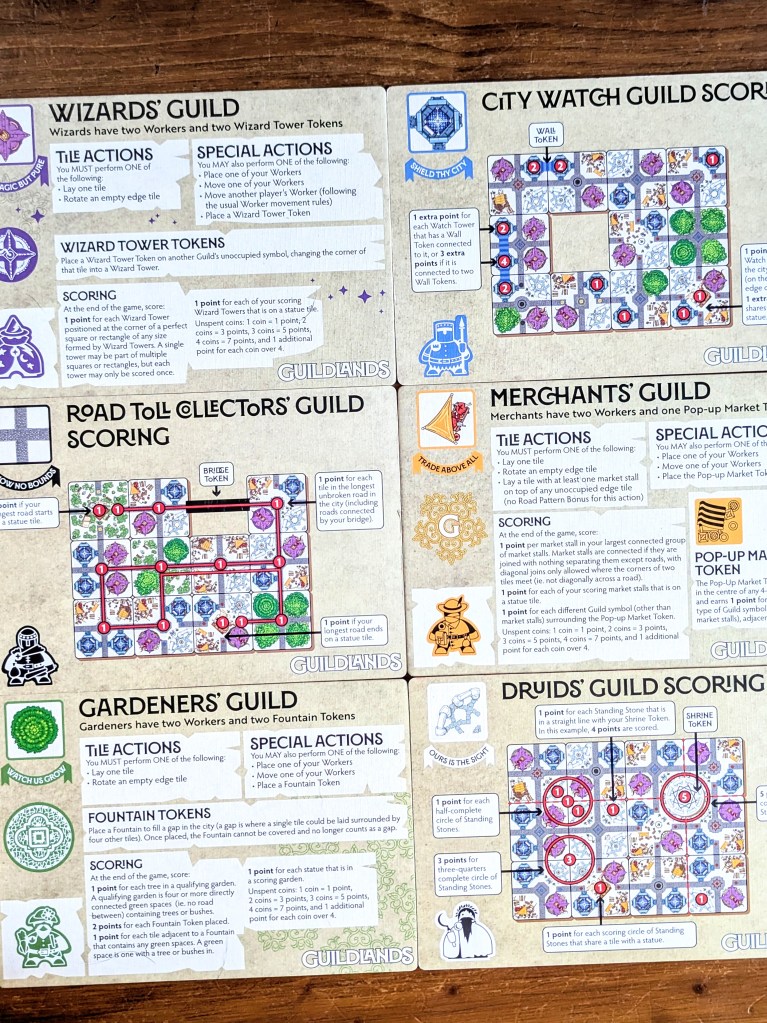
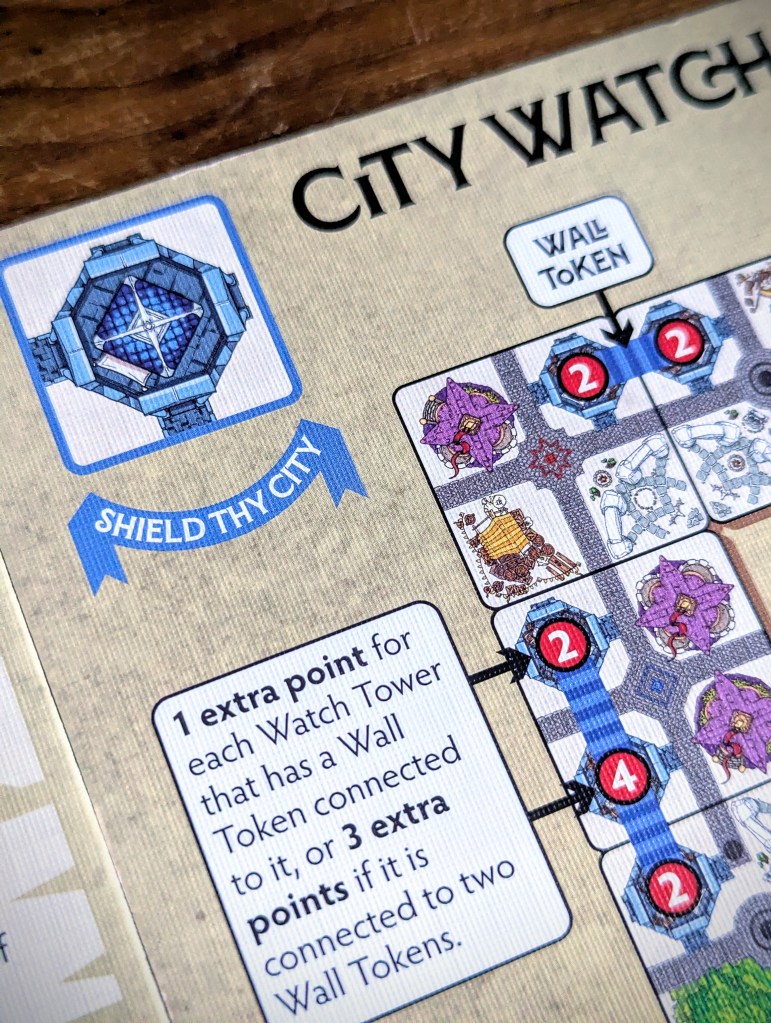
- The (very brief) rulebook and Guild info tiles are simple and mostly straightforward, but there are a few occasions where something isn’t explained or definitive, so we had to agree on a logical interpretation. The scoring examples on the back of each Guild player aid also aren’t always as clear as intended. A bit more detail and clarity, and more Guild-specific explanations in the rulebook, would reduce the ambiguity.
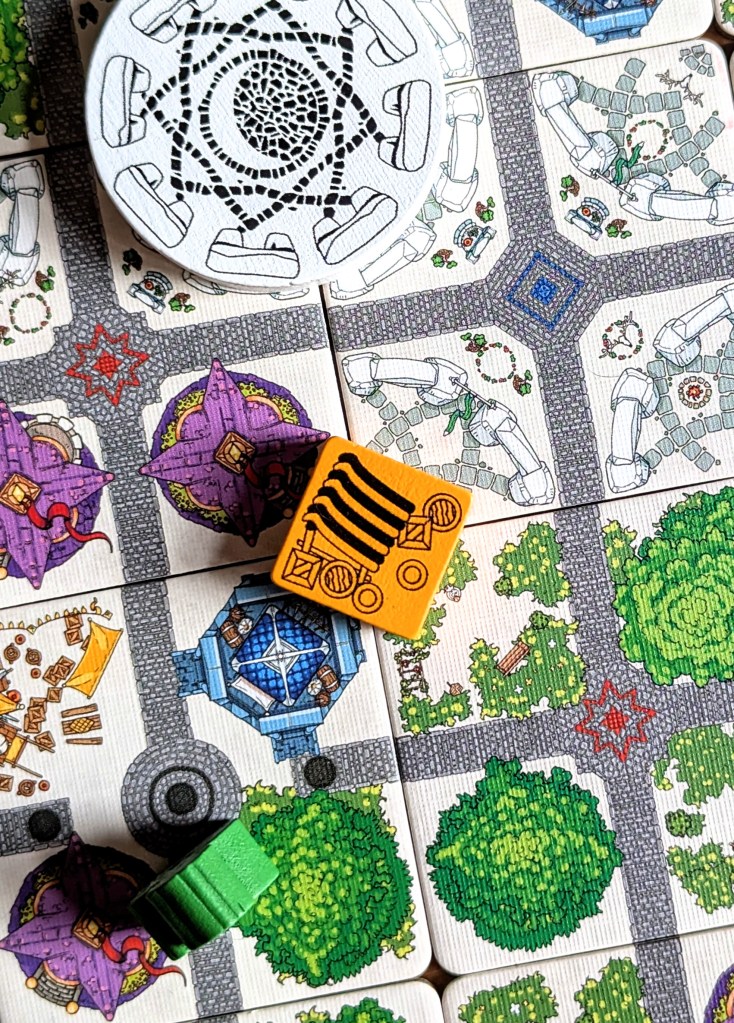
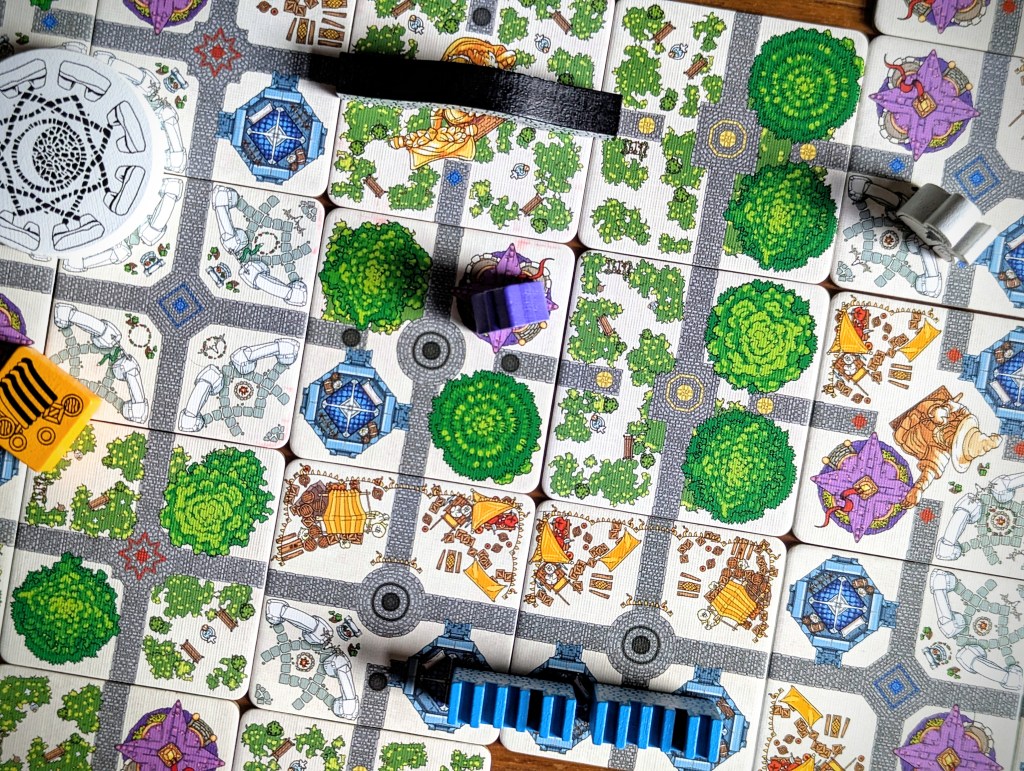
- I liked the aesthetics of the city tiles but when laid out they are visually quite busy and in some cases it made Guild scoring tricky (some Guilds were more affected than others) – I think it could be quite easy to miss something and mis-score.
Verdict
As tile-layer lovers, we were very excited to play Guildlands, and an asymmetric tile layer with cute meeples and simple rules certainly feels unique. But we felt it was missing something at 2 players, which would be our regular play count, and we don’t think we’d play it enough to get the most out of it. But if you have a regular group who would enjoy a competitive tile-layer, Guildlands is a solid, original take on the genre and well worth exploring.


