
Advert: We were loaned a review copy of this game via the UK Board Game Review Circle. All opinions are ours.
Today, dear adventurers, we’re embarking on a journey to the perilous Isla. Will you escape the Island unscathed or get lost in the overgrowth?
Key stats
👥 1 to 5 players
⌛ 30 to 45 minutes
🧠 8+ years
Publisher: Ocean City Games
Designers: Oleta Forde, Aaron Grove, Alexander Lucas
Theme/category: Exploration
Key mechanics: Roll-and-write
Game overview
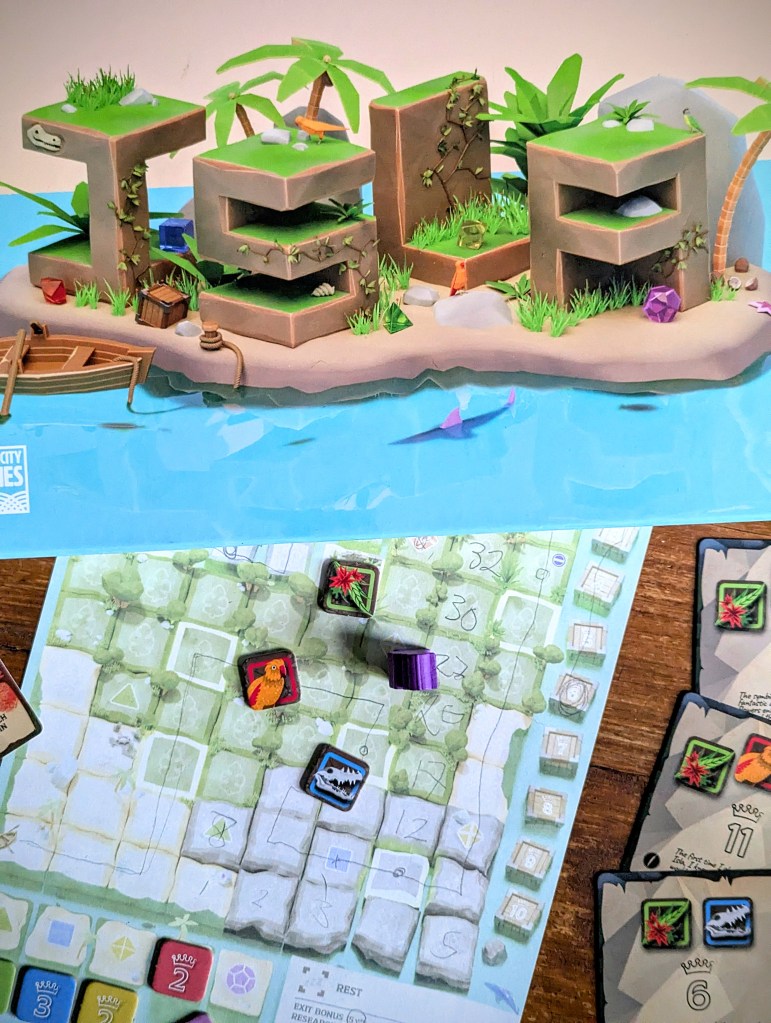
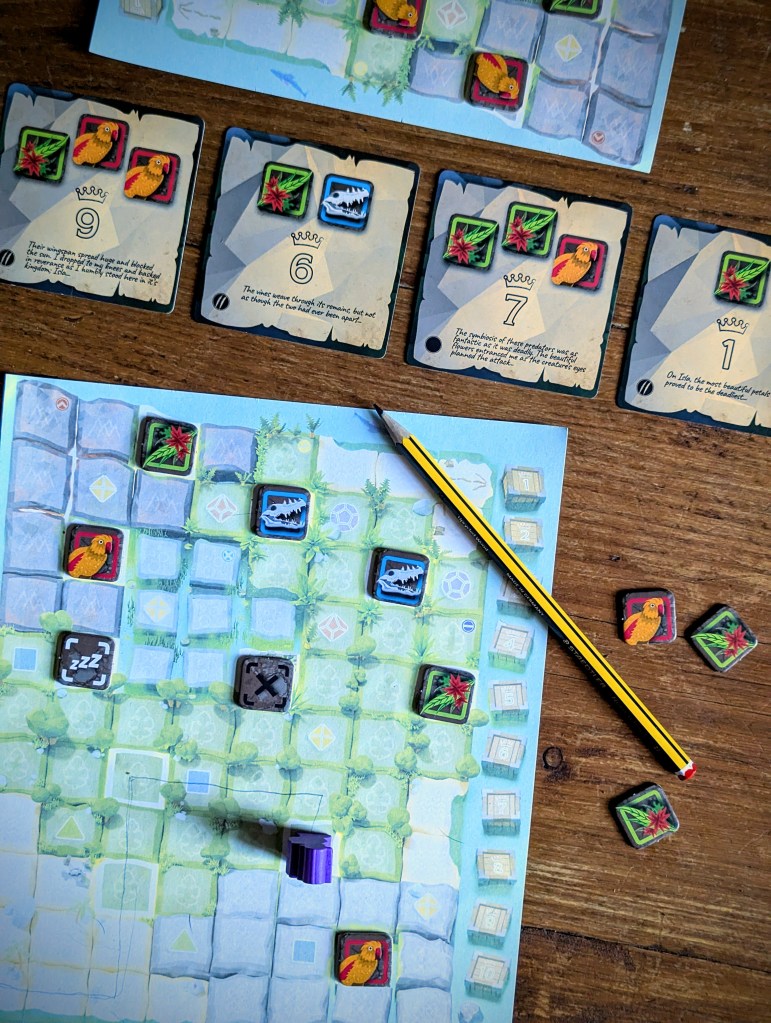
Isla is a roll and write adventure where players move around an island to collect flora, fauna and fossils, exchanging them to claim research cards worth sweet sweet points. Each player has their own copy of the map to draw their movements.
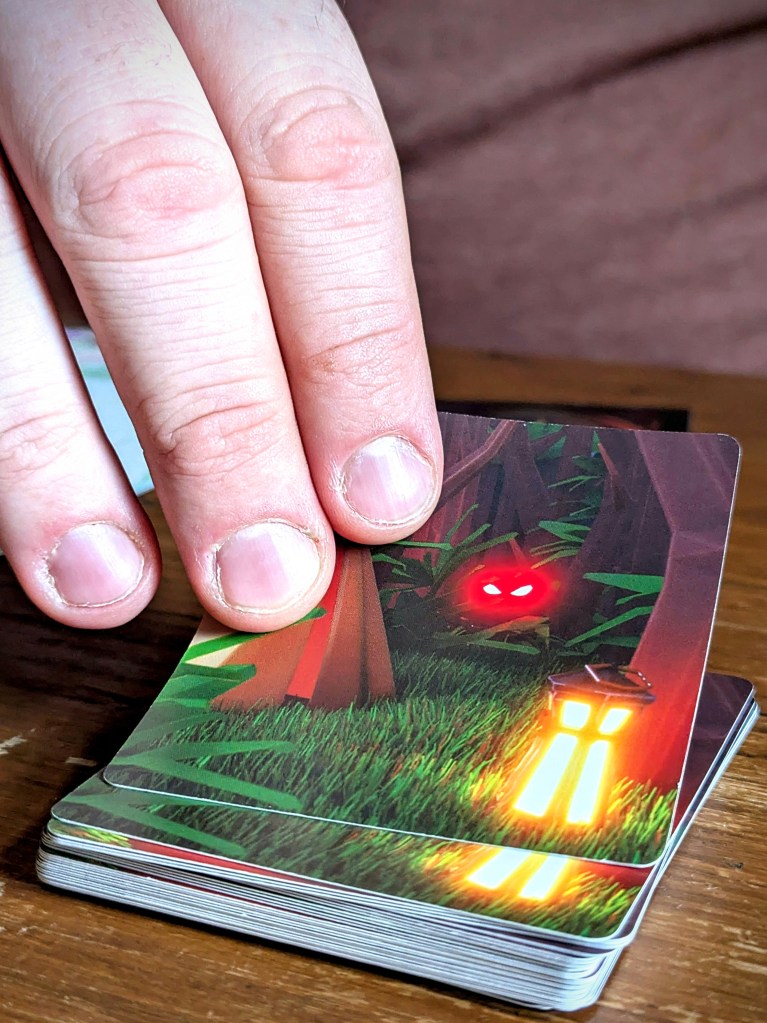
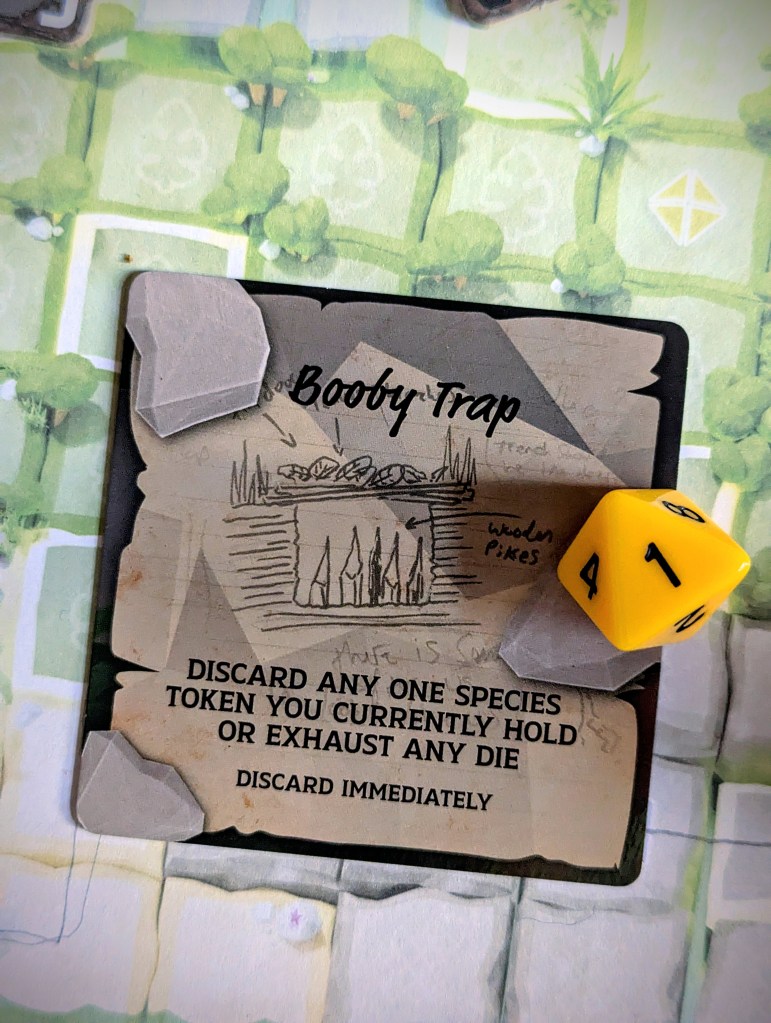
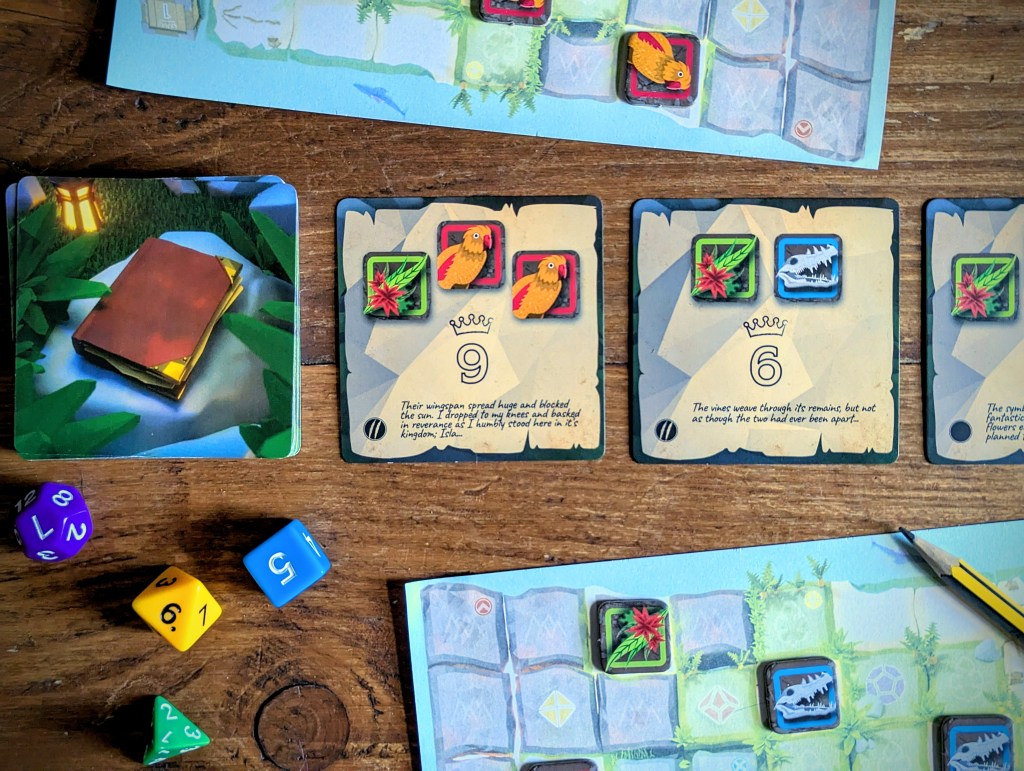
At the start of the round, everyone locks in their action of choice: Rest, Explore or Research. Then the active player rolls 5 different coloured dice ranging from D4 and D12 – if any of them show a result of 1 then the active player draws a threat card, which can have various negative effects on the player.
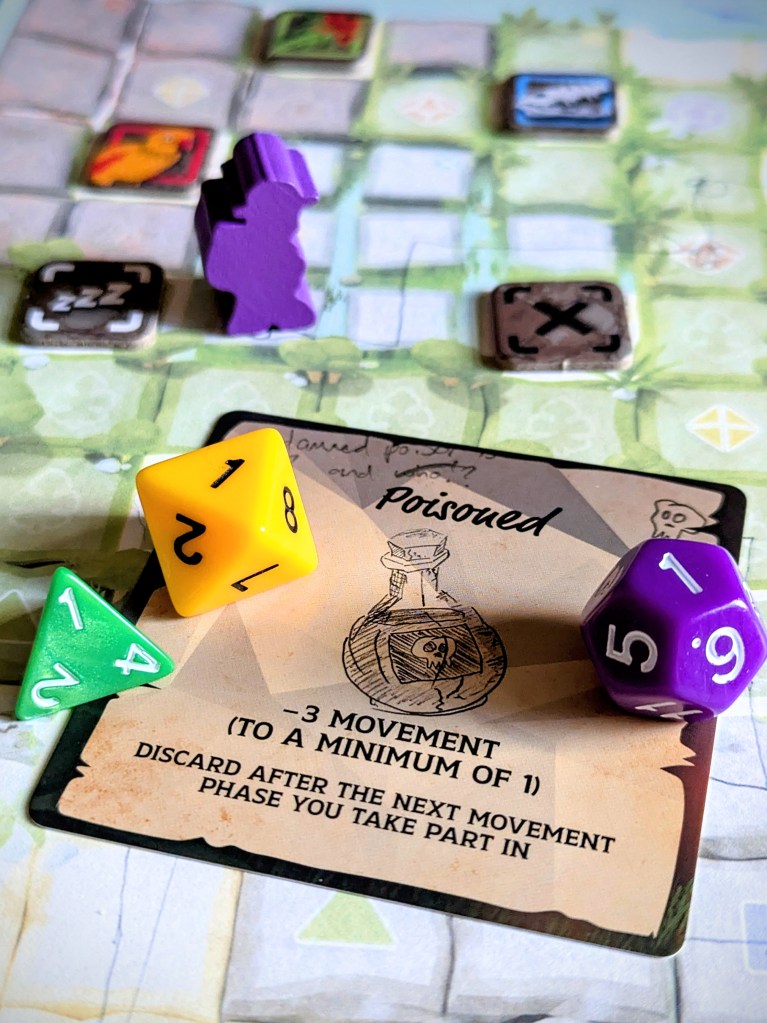
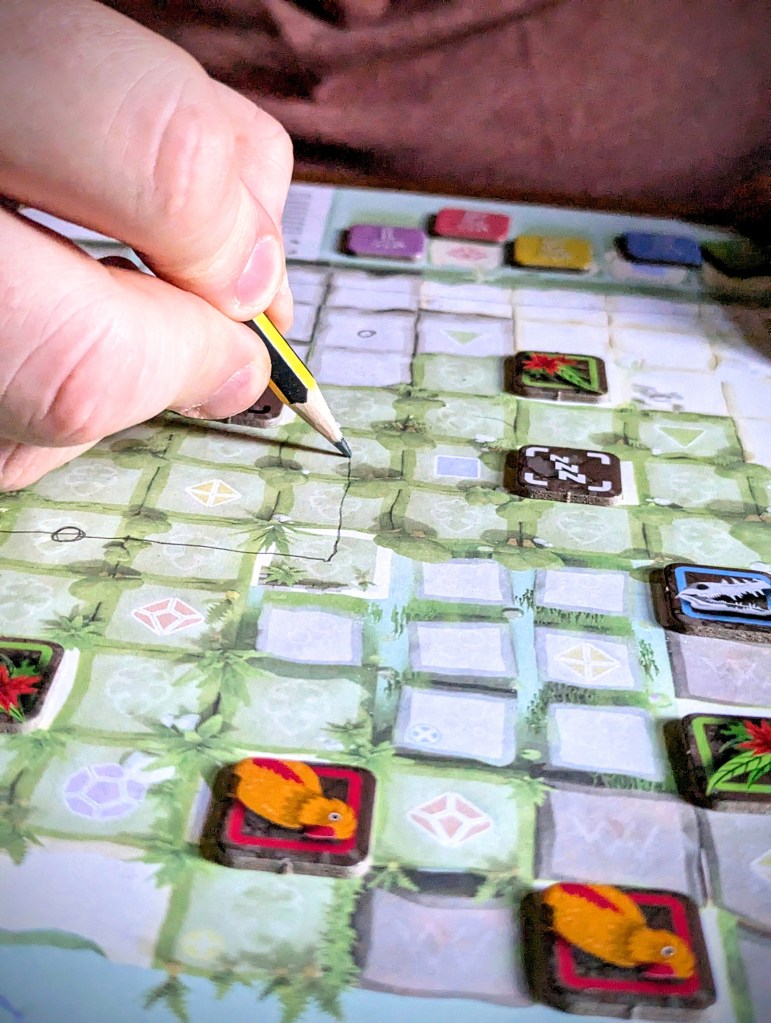
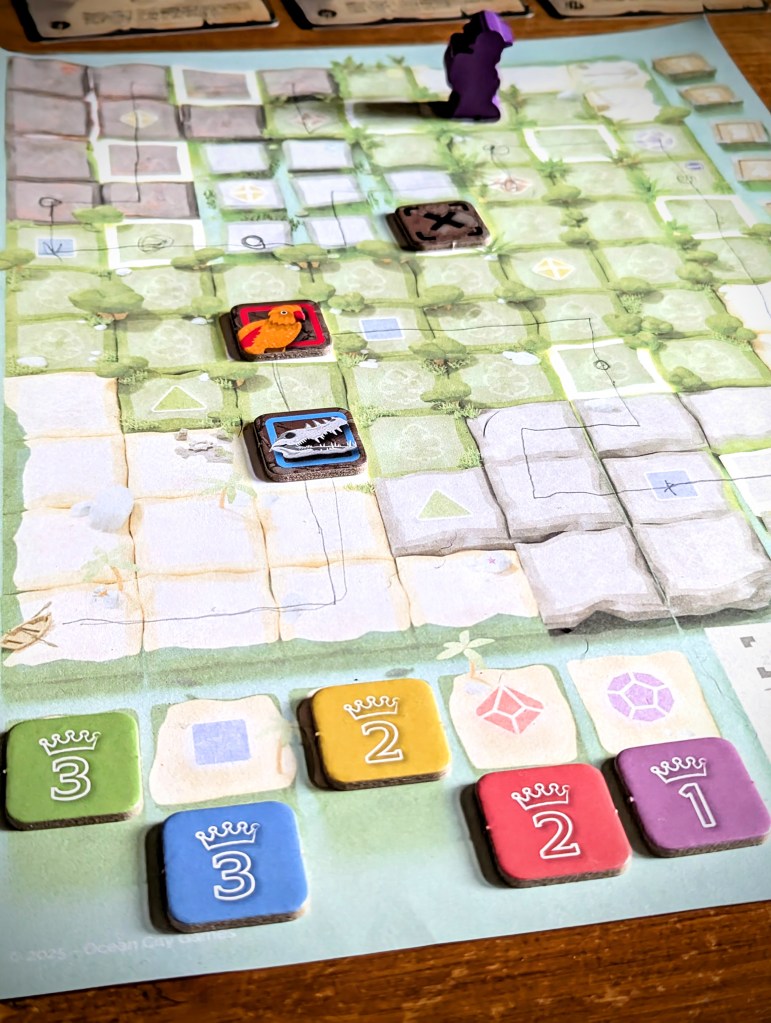
Anyone who chose to Explore this turn chooses a dice result and moves that many grid spaces in on their Island map, collecting any tiles they walk over. They can follow any orthogonal route they want, but can only visit each space once. Whichever dice that player chose now gets covered on their island sheet – it is now exhausted and can’t be selected again unless it gets refreshed.
This is where the Rest action comes in, which lets players cross off the ‘Rest’ box on their sheet and refresh their smallest exhausted die. This is only available once per game, plus a bonus extra time if the player manages to pick the Rest tile when exploring. BUT…there are also dice icons scattered across the island, and if they move onto a space with a dice icon they can immediately refresh that specific dice.
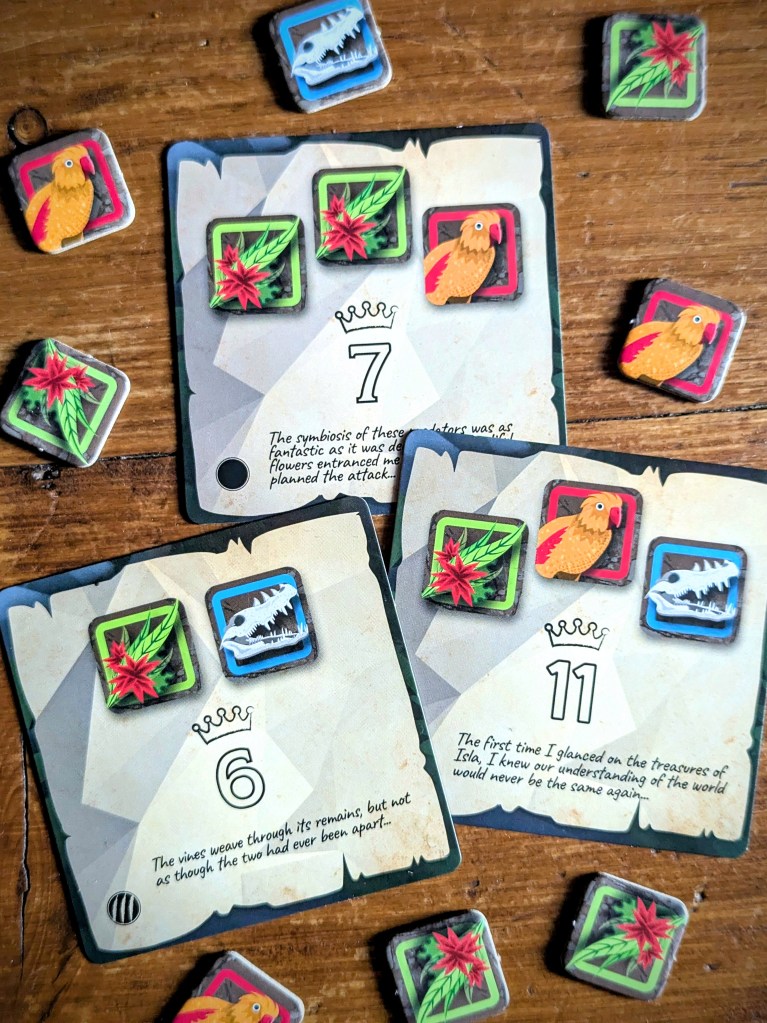
Finally, Research: grab a research card from the face-up Research row by discarding the matching tiles from your collection. These cards are worth points at the end of the game.
Actions are resolved simultaneously, but in a specific order: Rest first, then Explore, then Research.
The game ends when everyone has either exited the Island or have got stuck in the undergrowth. Points are awarded/lost for:
- Being the first/second person to exit the island
- Research points on the research cards you collected
- Threat card points (often negative)
- Threats you’ve encountered (1 point per card)
- The space you ended on after exiting the island (the further along the exit track, the more points you get)
- Any unexplored spaces on the map (negative 1 per space).
The player with the highest score wins!
Solo mode
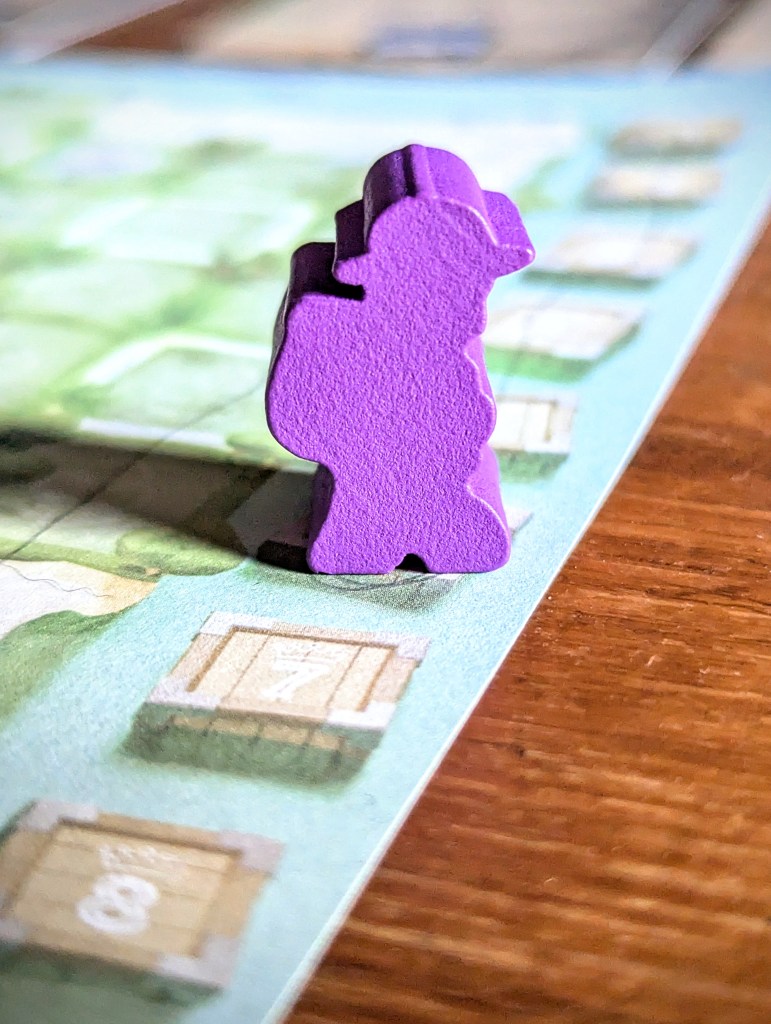
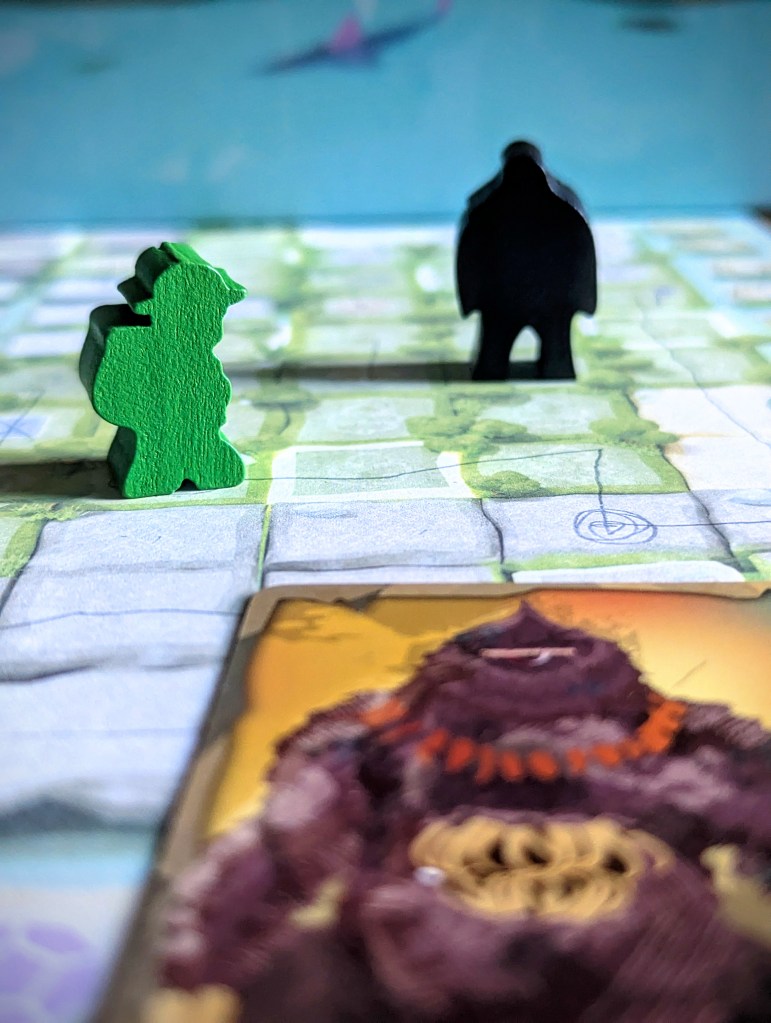
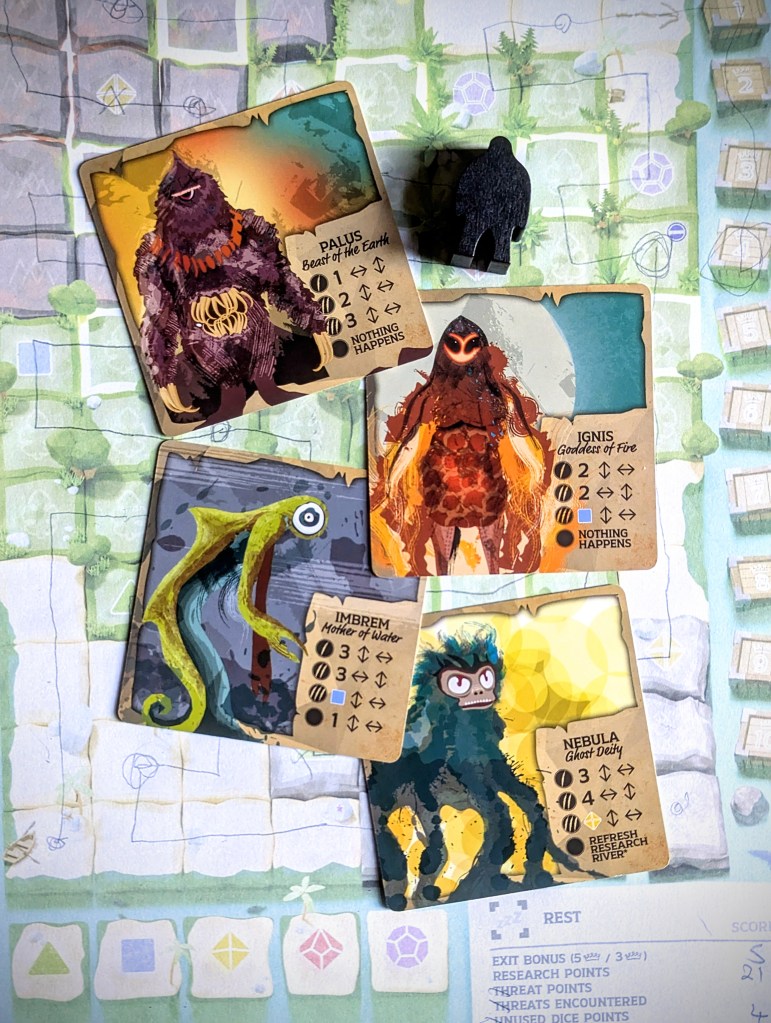
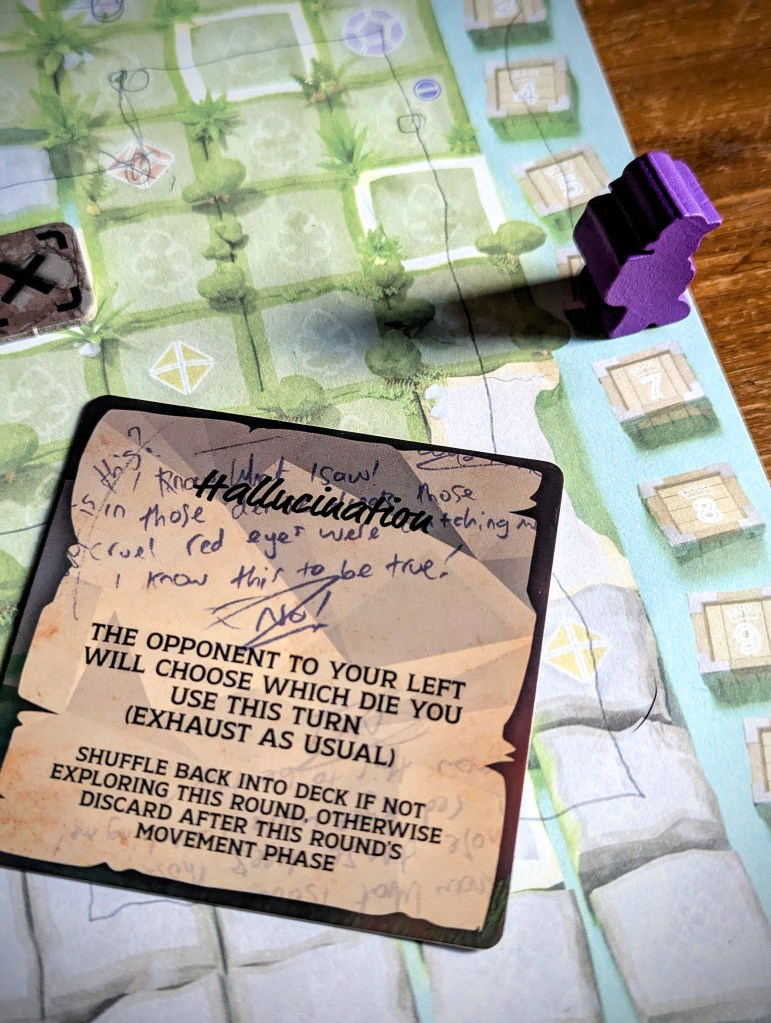
The solo mode introduces the Keepers: mysterious creatures that live on the island and are NOT happy to see you. For a solo game, you select a Keeper based on the difficulty you want to play, and put the Keeper meeple on the map.
Gameplay and action choices are similar to a multiplayer game, except you don’t draw threat cards if you roll 1s. Once you’ve completed your action for the round, the Keeper gets a turn. Draw a Threat card and perform the action on the Keeper card based on the number of claw marks in the bottom right of the threat card (this ranges from 0 to 3). This usually makes the Keeper meeple move closer to your position on the map, but can have other negative effects.
The game ends when you exit the island, get stuck, OR if the Keeper catches you!
Our thoughts
Isla has an intriguing premise and we really enjoyed the storybuilding sections throughout the rule book. It would have been nice to see this carried through into the gameplay itself. The dice-exhaustion mechanic for movement was my favourite aspect of the game because of the decisions it presented – do you take the 6 on a D12 now because it’s the highest roll of the bunch, or do you save your D12 choice for later in hopes it gives you a bigger number?
But overall, the gameplay fell a bit flat for us. After the first game, where we didn’t check the scoring criteria and both suffered great penalties for unvisited spaces, our subsequent games felt very samey. Because leaving empty spaces could be quite punishing, and there wasn’t enough of a benefit to race to finish, we would just systematically travel around the board to cover all the spaces, slightly steered by which tiles we wanted to collect first. And even though I enjoyed the dice exhaustion aspect, I expected it to add more tension and limit choices during the game. But I was always able to refresh enough of them on my journey so it rarely had much of an impact. The threat deck did add a bit of interest, and I liked it from a thematic standpoint, but nothing came up that majorly impacted the player. Maybe we just had good luck, but it didn’t feel challenging enough for me.
I enjoyed the solo mode more than multiplayer because of the added Keeper aspect (and again liked this a lot from a lore standpoint) but overall my experience with it was similar. Admittedly I did only try the easiest keeper; the harder ones may add a bit more tension but based on the cards I don’t think would have changed my experience that much.
We’ve played a few verb & writes, and Isla came highly recommended by friends. So maybe our expectations going into it were higher than they should have been, and maybe that’s why we didn’t vibe with it in the end. The designers do plan to release (free) additional content for the game in future and it will be interesting to see if that adds further complexity to the game.
What we like:
- A cool exploration theme with storybuilding details throughout the rules.
- Interesting dice-exhaustion movement mechanic (although I didn’t find it overly limited my decisions).
- Easy-to-grasp gameplay.
- There’s potential free additional content to come in future.
Considerations:
- Multiplayer felt like it was missing something for us, and a bit too simple to keep us going back for more. Solo may offer more of a challenge, but not with the easiest Keeper.
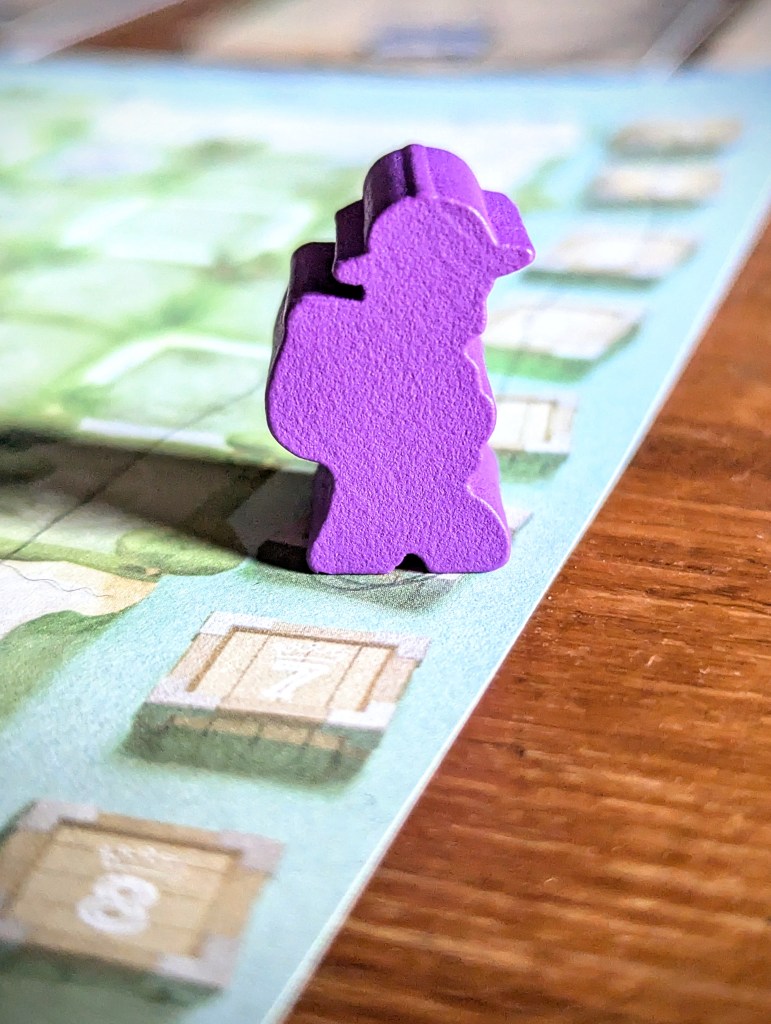
- The explorer meeple was cute but was redundant for the gameplay (we liked the Keeper meeple though).
Verdict
Isla is quick to set-up, learn and play, and we love the theme. But it was lighter than we expected it to be and was missing something to keep us invested to go back for more. But it could work for some younger players or as an introduction to roll & writes (particularly for people who don’t like a lot of strategy).

 Our Board Game Life