
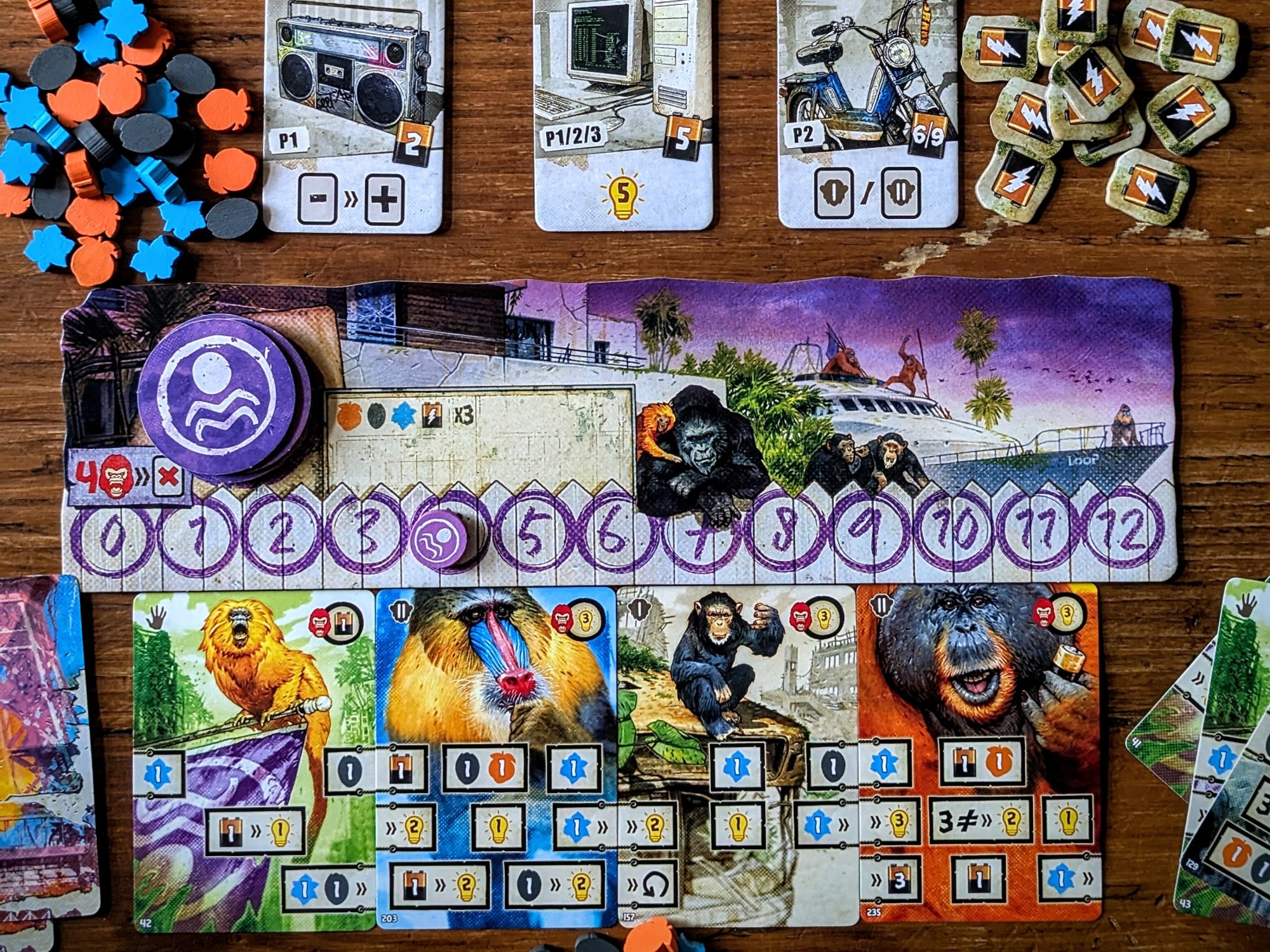
The year is 2083, the humans are long gone. Apes and monkeys have collectively risen up in a manner that is absolutely not the same situation from a well-known film franchise…it’s time to see what happens After Us.
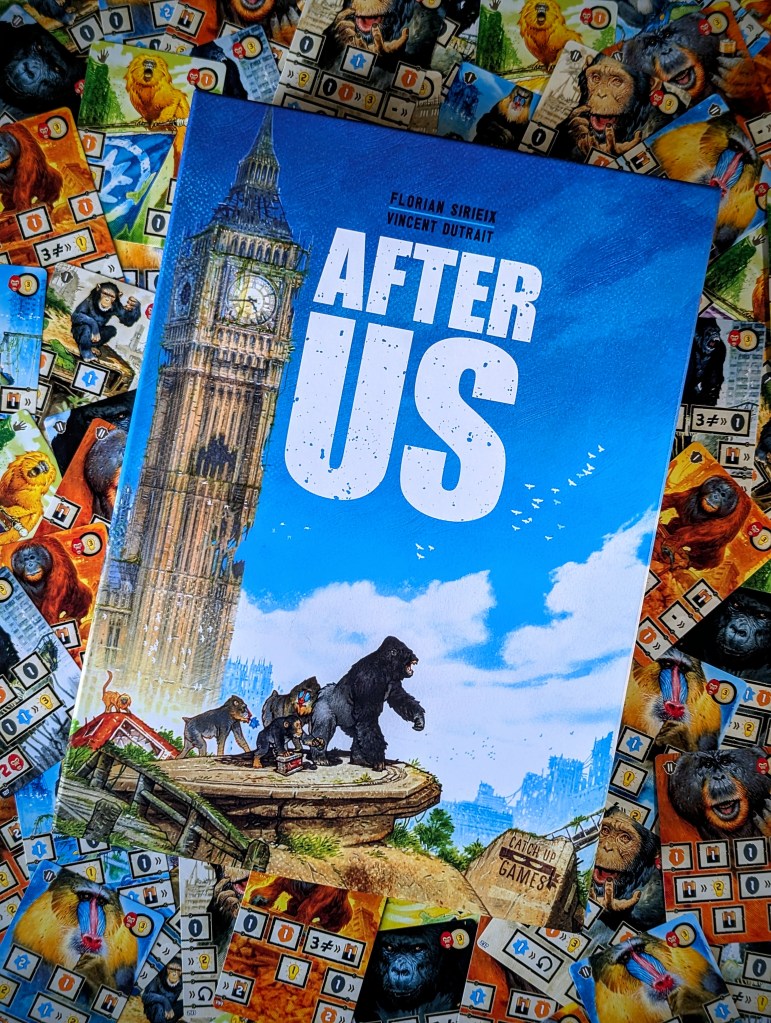
Key stats
1 to 6 players
40 to 60 minutes
12+ years
Publisher: Catch up Games (distributed by Hachette Board Games UK)
Designer: Florian Sirieix
Artist: Vincent Dutrait
Theme/Category: Card games, Animals, Science Fiction, Puzzles
Key mechanics: Deck building, Simultaneous action selection, Melding and splaying, Race to finish
Game overview
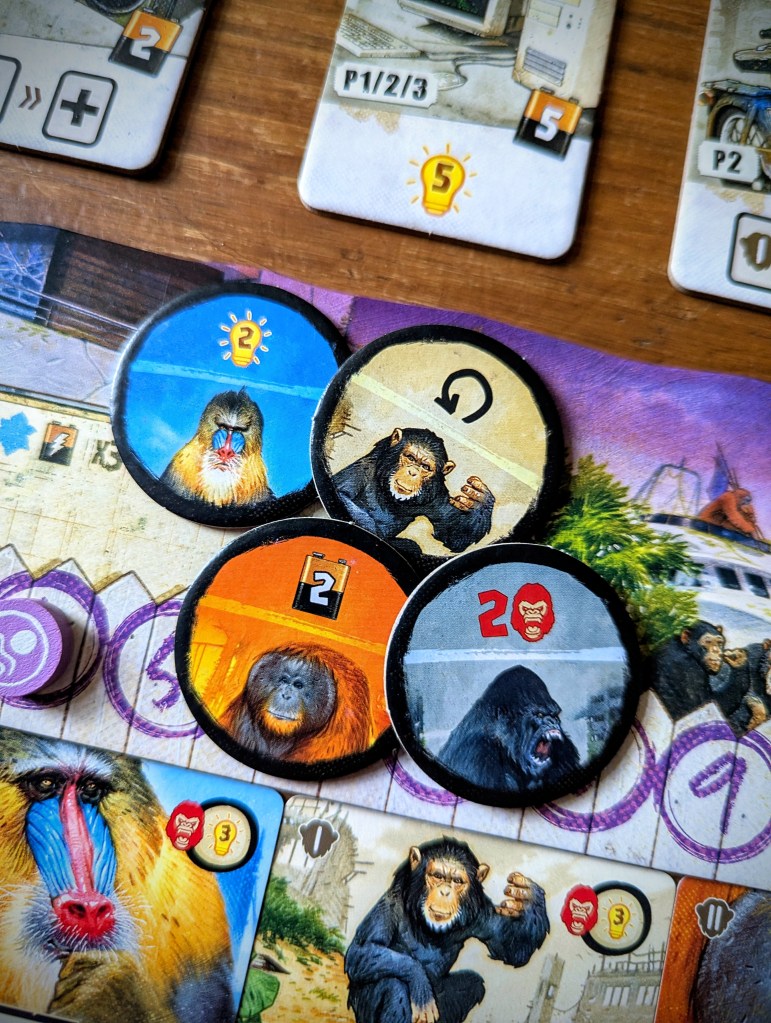
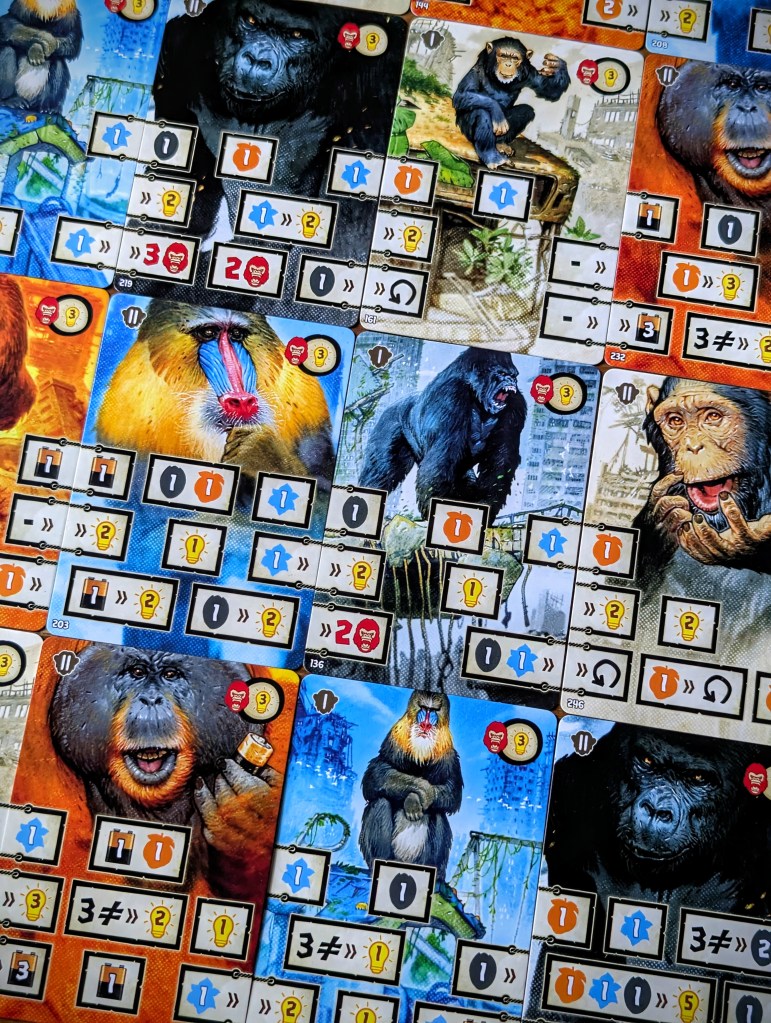
In After Us, players are leading primate tribes to victorious evolved intelligence. Each round you’ll draw 4 tribe members from your deck, then line them up in a puzzly fashion, connecting ‘frames’ to gain resources and victory points. Then you’ll select from 4 primate tokens to attract new tribe members, each with their own talents:
- Chimpanzees let you repeat frames (for more resources/points)
- Orangutans collect batteries (a special resource used for frames and in-game abilities)
- Gorillas give you rage (spent to exile members from your deck)
- Mandrills give you more victory points
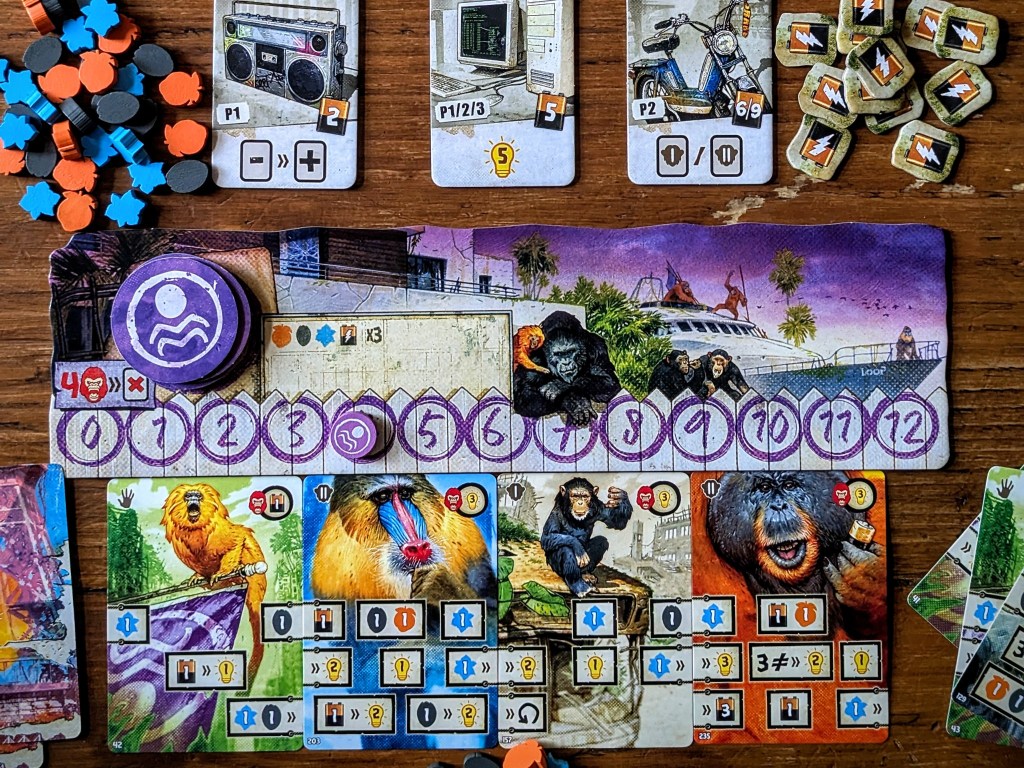
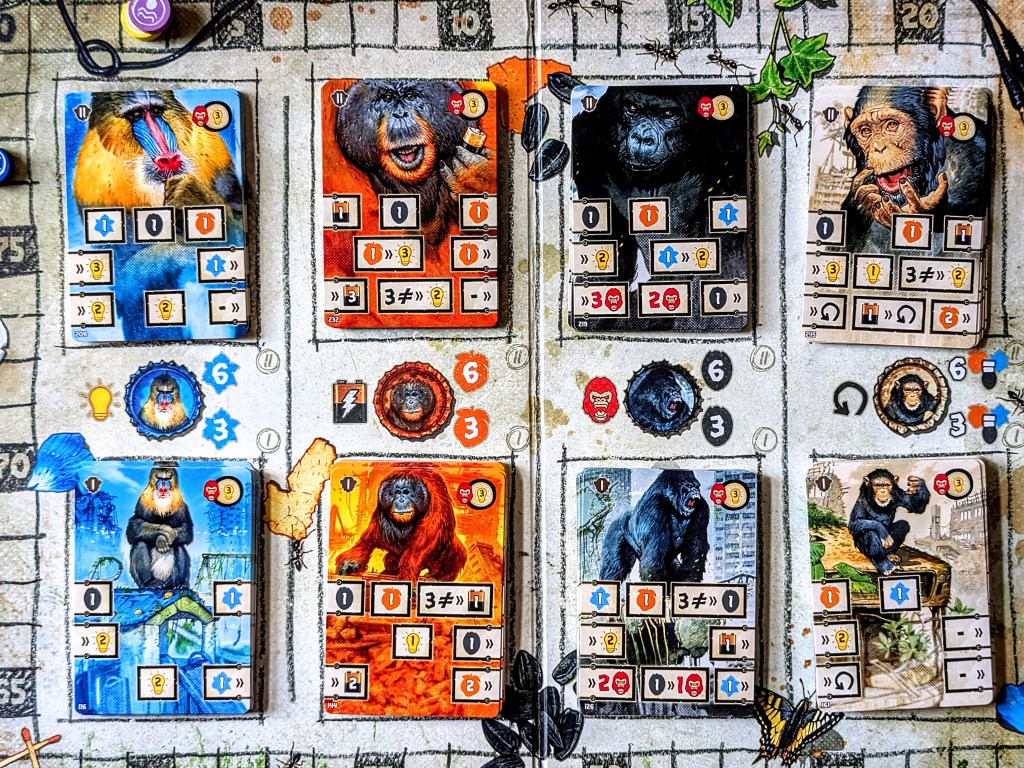
But these primates are fussy and will only join your tribe in exchange for the correct resource – except Chimps, who are happy with whatever they’re given! Spend 3 or 6 resources to attract a level 1 or 2 ape (level 2 apes have better bonuses on their cards!).
Each game there are 3 special ‘object’ tiles in play which are available for all players to use. These are relics from the human past which cost batteries to activate (because they come from technological relics) and can help in various ways, from attracting bonus apes to swapping resources.
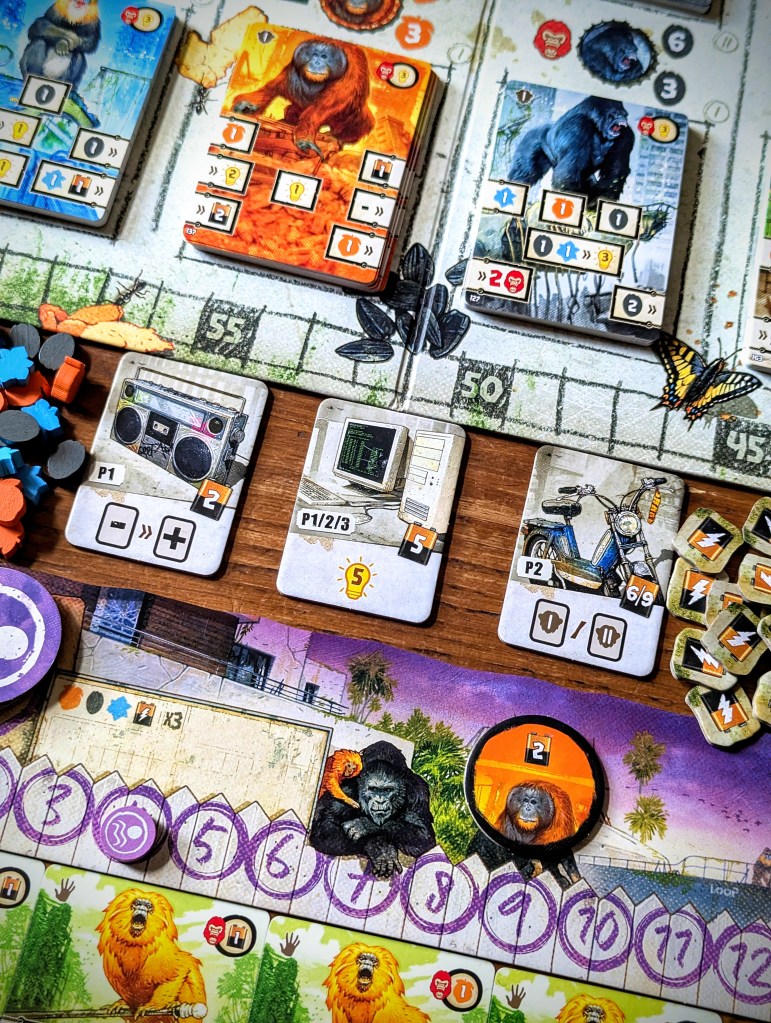
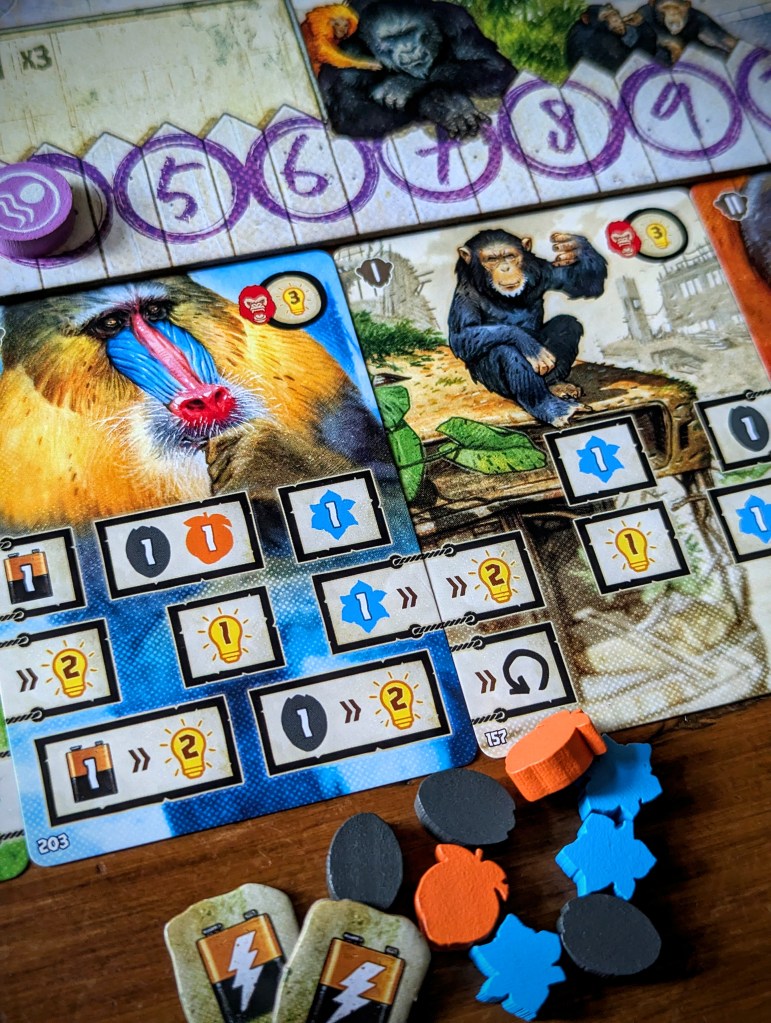
The game ends when a player passes 80 on the victory point track, and the player with the most points wins!
Our thoughts
Confession time: I saw After Us promoted at UKGE last year, but I didn’t go out of my way to check it out. And that was simply because the set-up sounded very Planets-of-the-Apes-like, and that sort of theme didn’t appeal to me. But when I later had the opportunity to review the game, and I realised my fave Vincent Dutrait was the artist, I decided to give it a shot. And I’m glad I did, because After Us isn’t like Planet of the Apes. Sure, there’s apes… but it’s not dystopian or post-apocalyptic; instead the focus is on how nature is reclaiming a world no longer burdened by humans. Matthieu Bonin (from Catch Up Games) has even talked about their intentional thought process to settle on a more peaceful theme that aligns with the non-combative gameplay, where violence is removed from the equation simply because humans have gone. The goal is to work on your tribe’s collective intelligence, not take down other tribes. And I personally think it works really well (although I still would have liked to know why humans disappeared, the rulebook doesn’t say!).
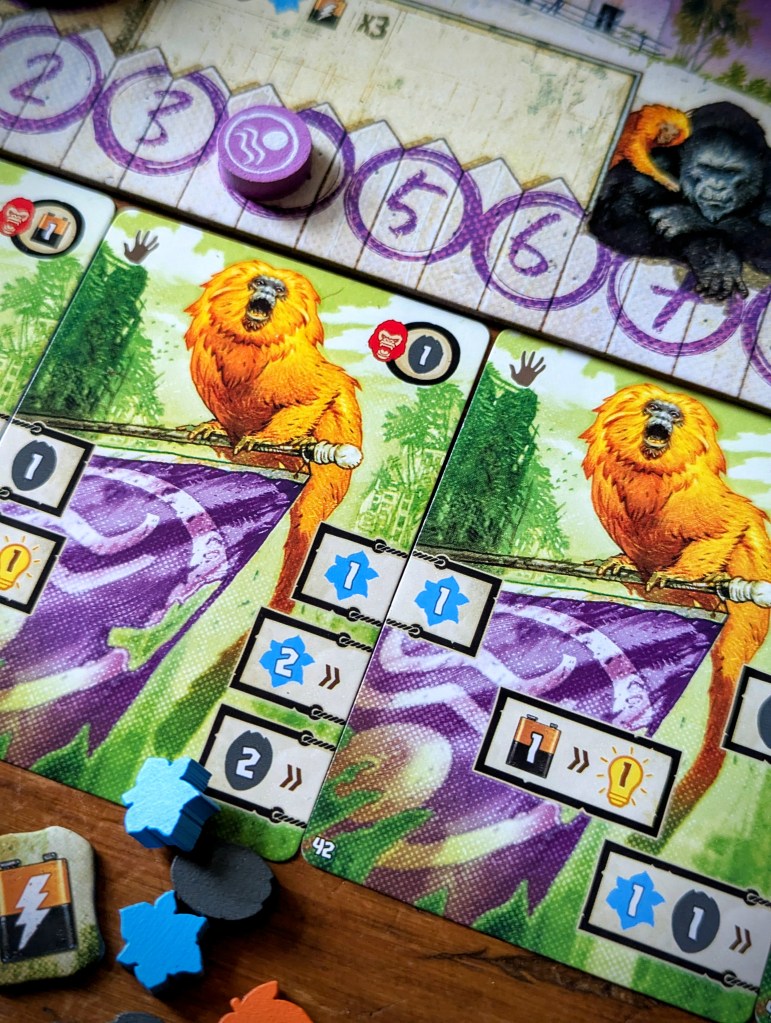
So as you might have gathered, this game has very little player interaction. You can activate other players’ token bonuses on a pay-to-use basis (can be useful but in my experience this wasn’t used a lot). At the full playcount there is a potential risk of some of the ape decks to run out, which can impact your strategy. But otherwise this is a multiplayer solitaire affair, which is enjoyed by some but I know it isn’t for everyone. The simultaneous play helps because it keeps the downtime to a minimum and means the game plays smoothly and quickly, regardless of player count.
I really enjoyed the puzzly aspect of the ‘tribe assembly’ phase, when you’re deciding the best order for your cards to get the resources you want (and ideally, some nice points too). It’s practically impossible to line up every frame perfectly, but I will do my darnedest to stare at them until I’m convinced they’re lined up in the optimal order. This phase is the only one at any real risk of downtime if you have players who take a bit longer to lock-in their lines, but the downtime was very short in my experience.
While this is a mostly peaceful game, the gorillas aren’t so friendly with their rage. Again, this isn’t directed at other players, but at your tribe deck as a useful mechanism to remove less useful apes as the game progresses. And when you use it, you get a little resource/point bonus (seen in the top right of the card you are exiling). Thematically, I can only assume this means you’re frisking your former ape friend before chucking them out on the street! Usually starter tamarins are the target, because cute as they are their frames are less desirable – but more powerful apes have more powerful bonuses. I’m glad the designers included a way to curate our decks, and if you time it right for that bonus it can tip the scales in your favour.
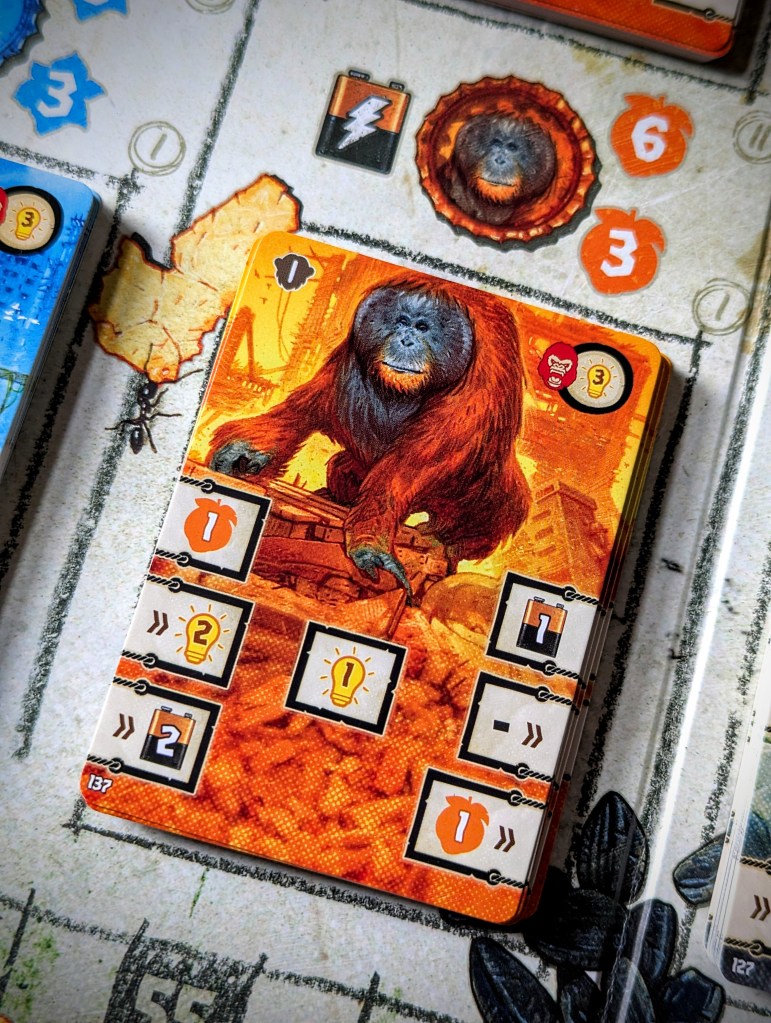
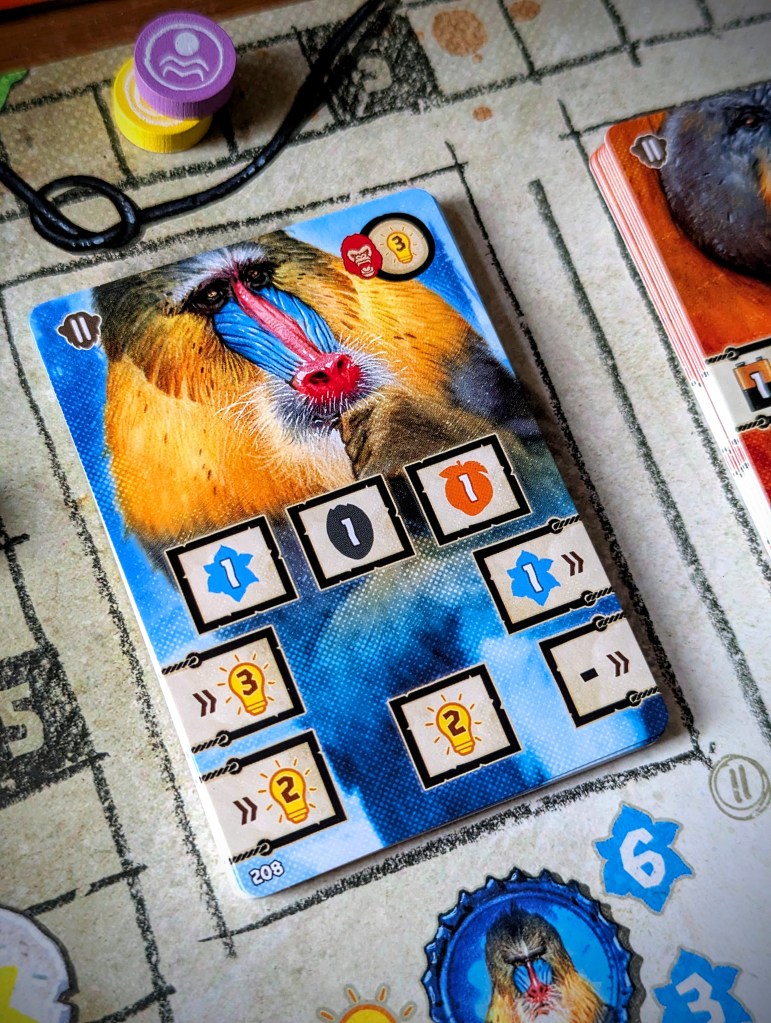
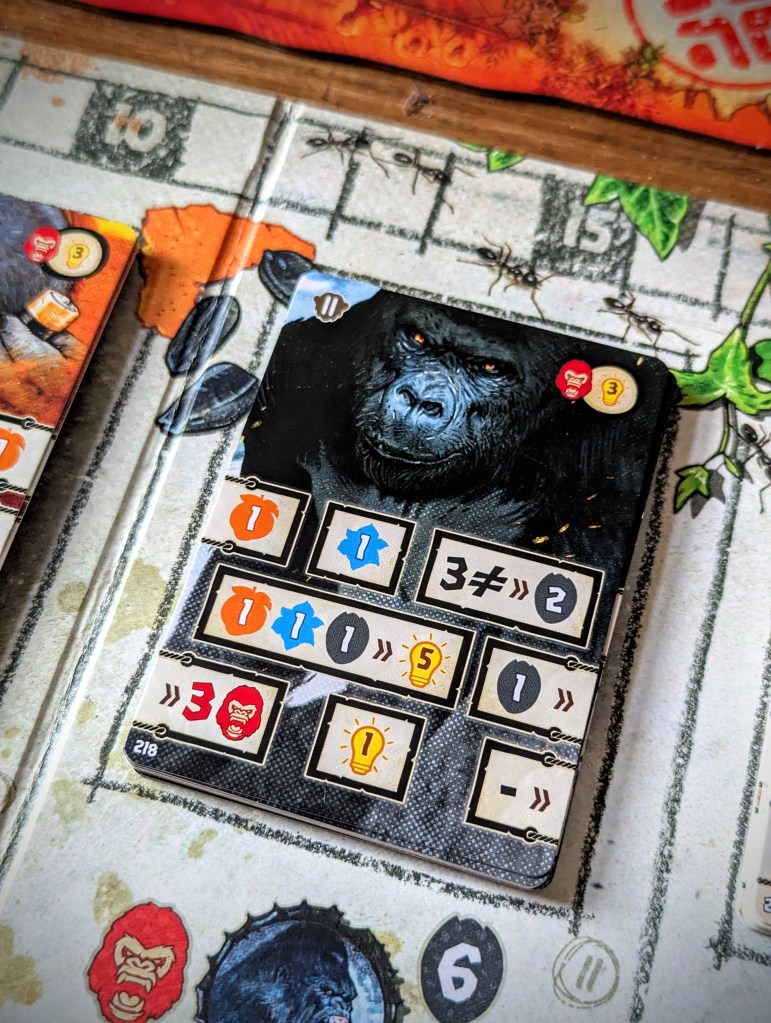
There’s 7 human object tiles in the box, so with only 3 selected each game, their in-game abilities are the main source of variation from game to game. Each does something different and the ones you have available can really influence your strategy. For example, if there’s a useful object that costs a lot of batteries to use, you might prioritise recruiting orangutans as much as possible (as they give more batteries than other apes). And releasing more of these object tiles as part of an expansion would be a no-brainer to add more variety in future.
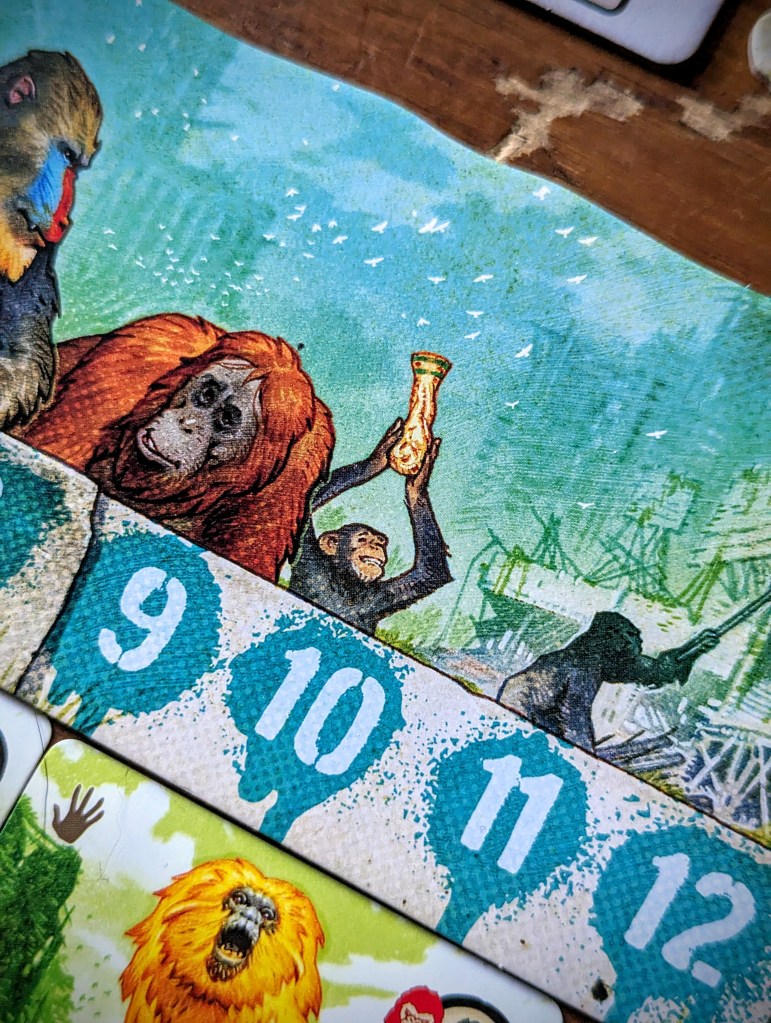
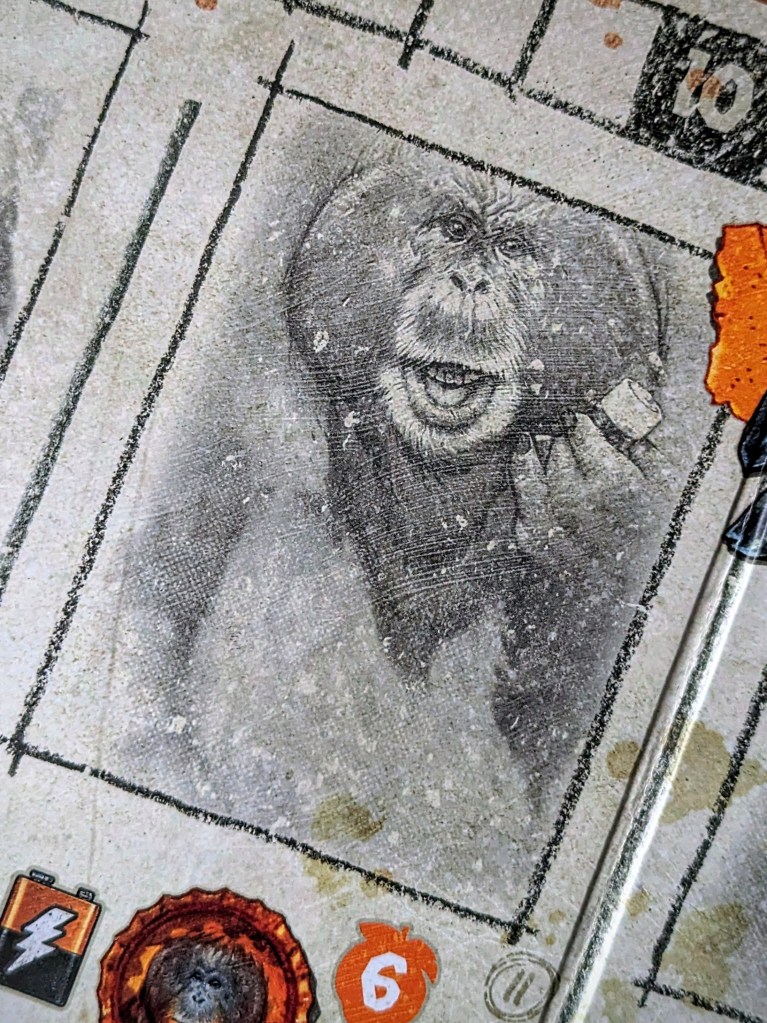
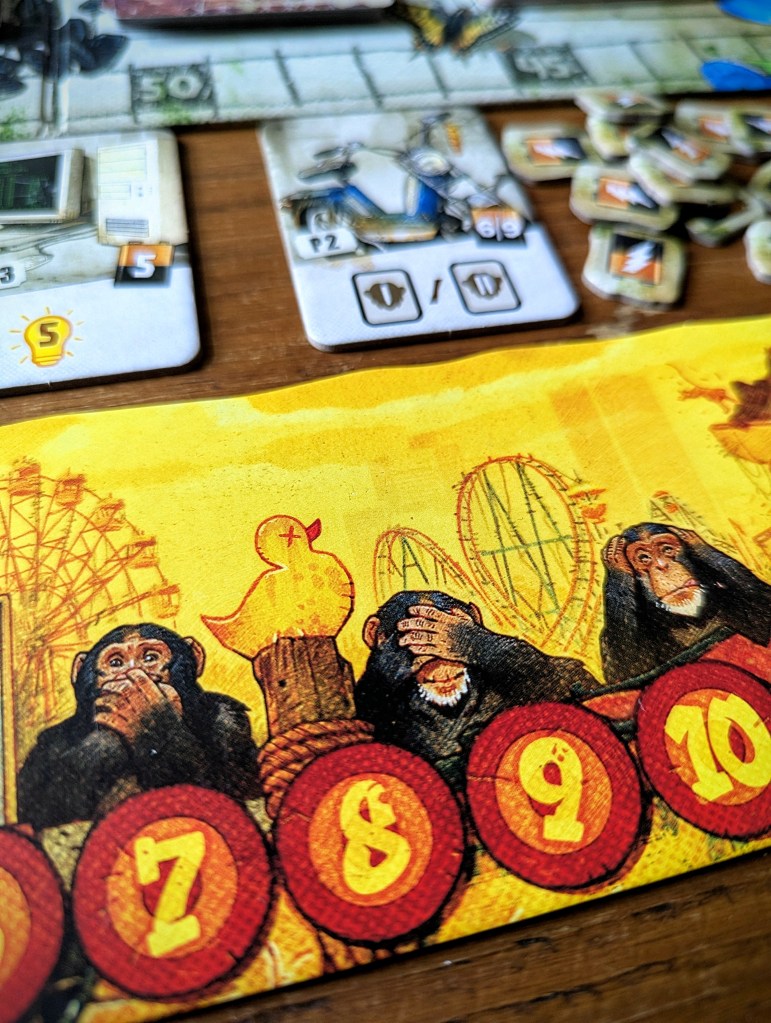
Finally, I want to acknowledge that of course Dutrait’s art is, as always, incredible. Each player board is a different colour and shows apes chilling out at different abandoned locations, from a football stadium to a yacht club. The colours in the red (supermarket) and yellow (theme park) boards make me feel a little uneasy, but I love the 3 chimpanzees at the theme park.
What we like:
- Utopian nature theme (it’s NOT creepy dystopian sci-fi monkeys).
- A smooth multiplayer-solitaire experience that everyone seems to enjoy.
- Puzzly frame fun as you try to arrange your cards.
- Simultaneous actions mean there’s little in-game downtime (although some people can take longer organising their line), and that it still plays quickly at larger player counts.
- Beautiful Vincent Dutrait artwork used throughout.
- The in-game abilities from the human objects add some variation to the game and can even make you switch up your strategy.
Considerations:
- If you don’t like games with no player interaction, this probably isn’t for you.
Final verdict:
Ape uprisings aren’t really my thing (not that it’s ever come up in popular culture before). But I’m so glad I gave After Us a chance, because it was an instant buy for us and now sits proudly in our collection. It’s an easy pleaser for a group that enjoys games with a bit of puzzle, and the smooth simultaneous play means it can slot in nicely to a games night for a wide player range without taking up the whole evening.

 Our Board Game Life