
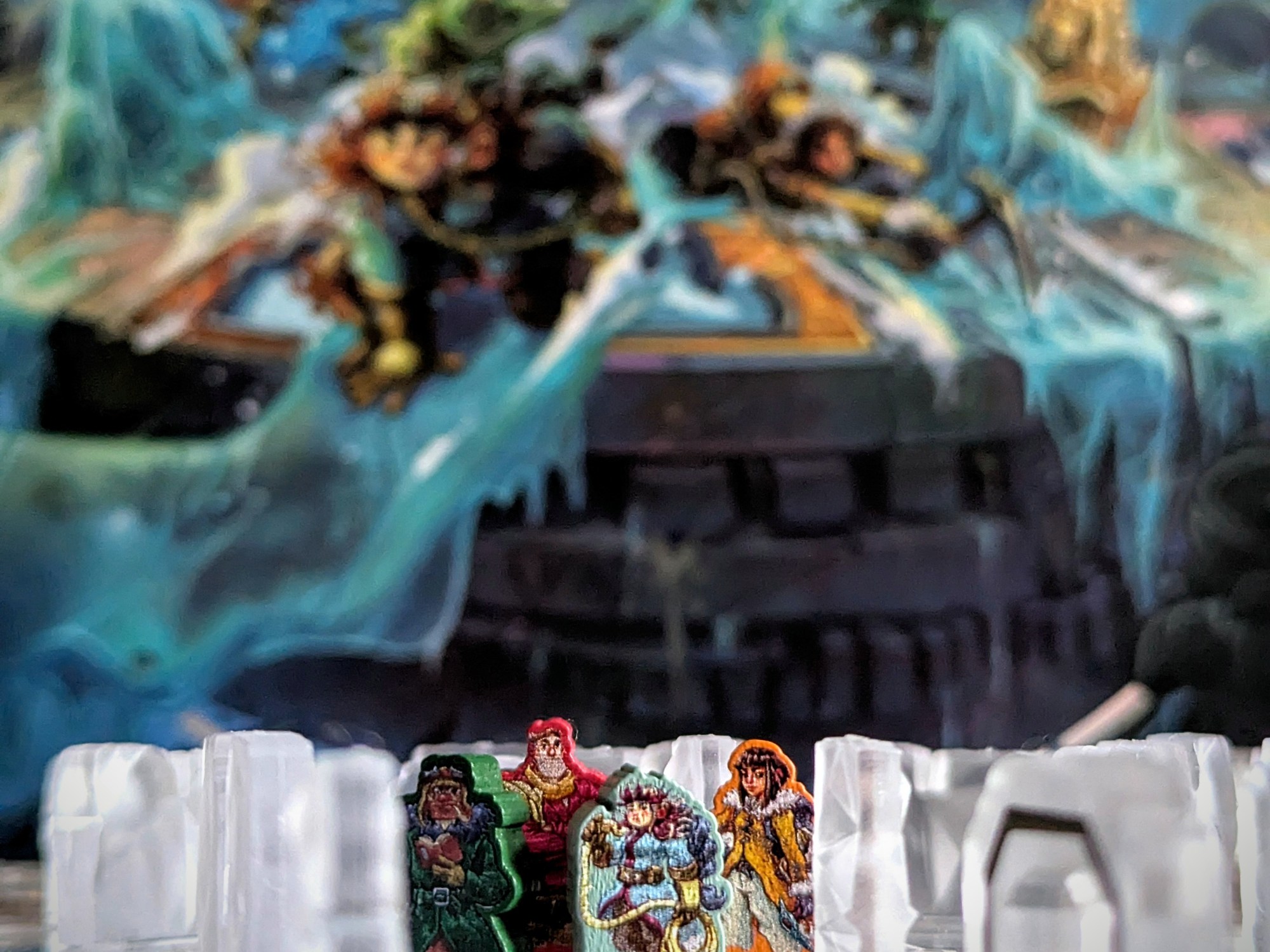
Advert: This game was kindly loaned by Inside Up Games through the UK Board Game Review Circle. All opinions are ours and our reviews are always honest.
Welcome to our first review of 2026, after a well-deserved festive break! And I fancy going on an icy expedition with Ice and Idols – care to join me?
The stats:
2 to 4 players
45 to 60 minutes
14+ years
Publisher: Inside Up Games
Designer: Mat Hanson
Art: Edu Valls
Themes: Adventure, Exploration, Arctic
Key mechanics: Pick-up and deliver, Set collection, Variable player powers, Action points
Game overview:
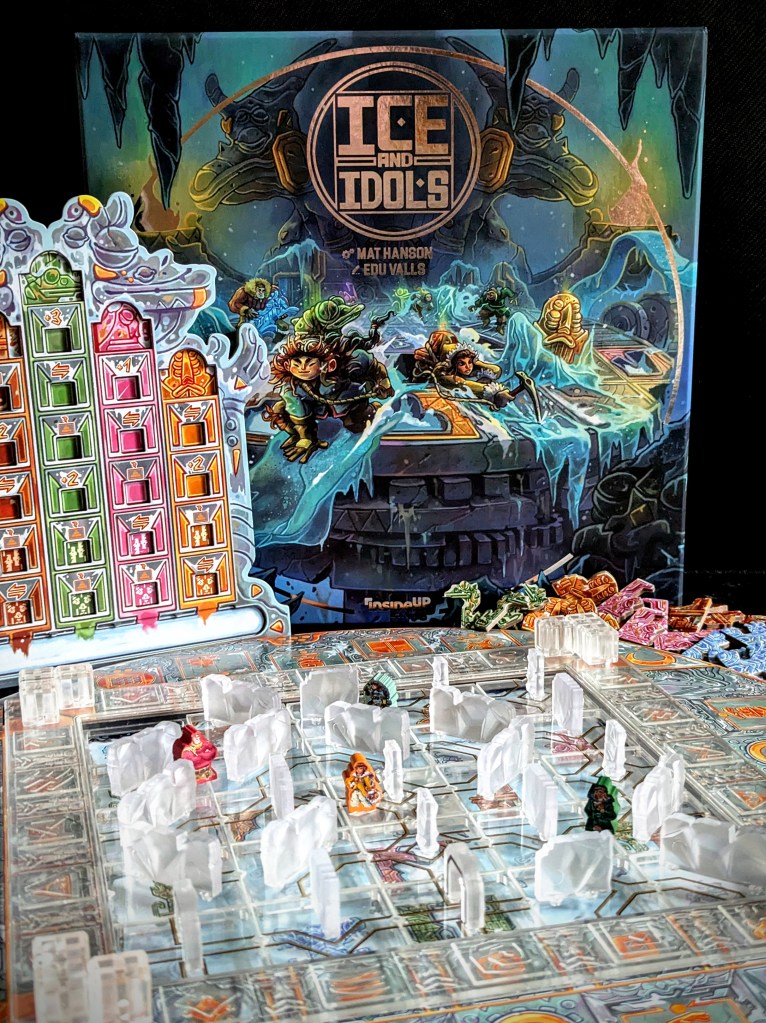
You are intrepid adventurers exploring the icy ruins of a long abandoned temple. Navigate frosty pathways to pick up forgotten magical idols and return them to their temple altars, where you can either unlock their nifty abilities for the rest of the game or research them to unlock end-game victory points. But the temple has a mind of its own: pathways change and the whole temple can rotate! Can you take advantage of this to outmanoeuvre your opponents?
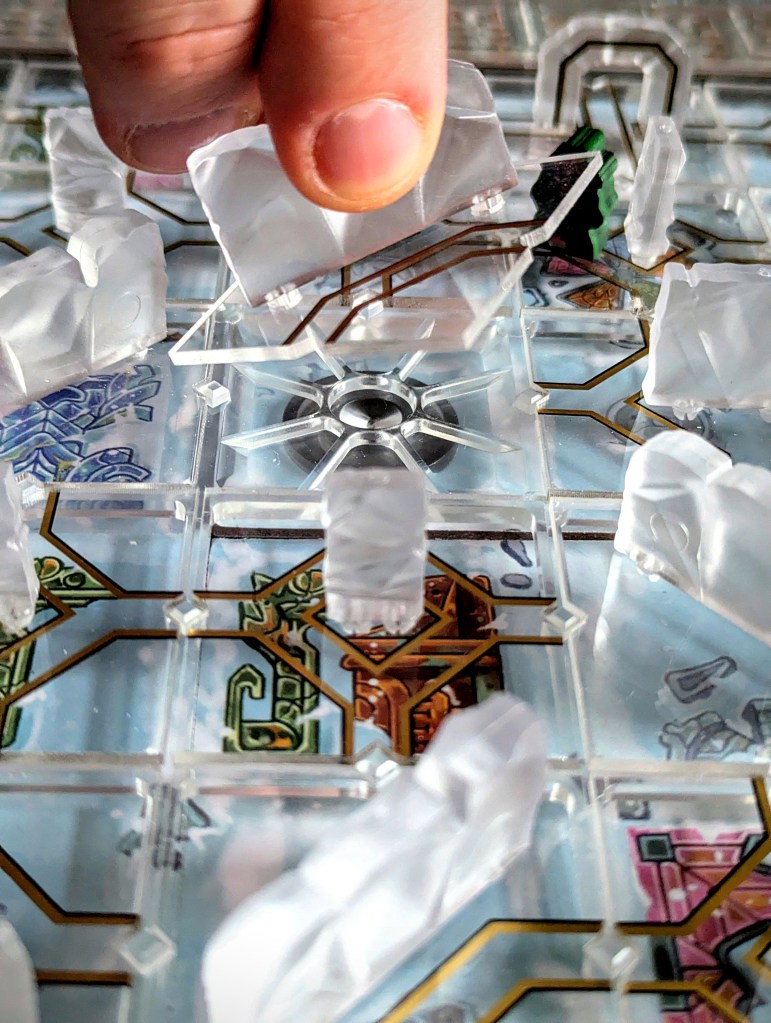
On your turn you have 5 action points that you can use to:
- move from tile to tile using connected pathways
- pick up an idol, if you’re on an idol space
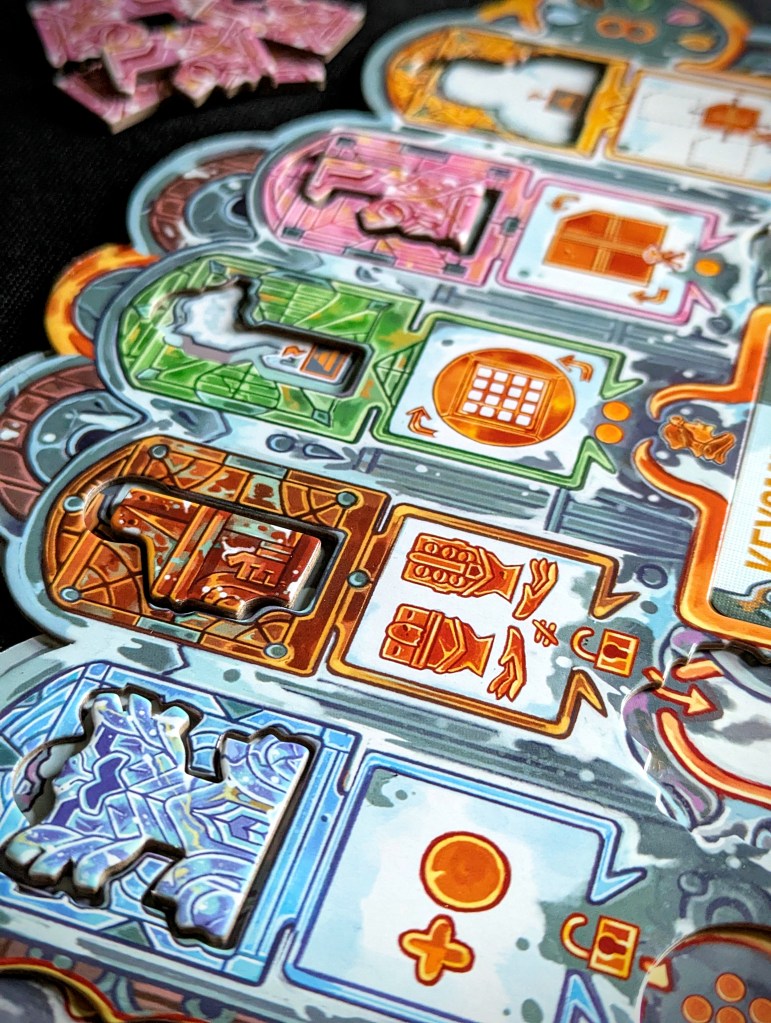
- on an altar space, place a matching idol you’re carrying either onto your player board to unlock its power, or discard it to research (more on this in a sec!)
- activate the power of an idol you’ve unlocked – these can be used to rotate/move the temple or tiles for your own benefit!
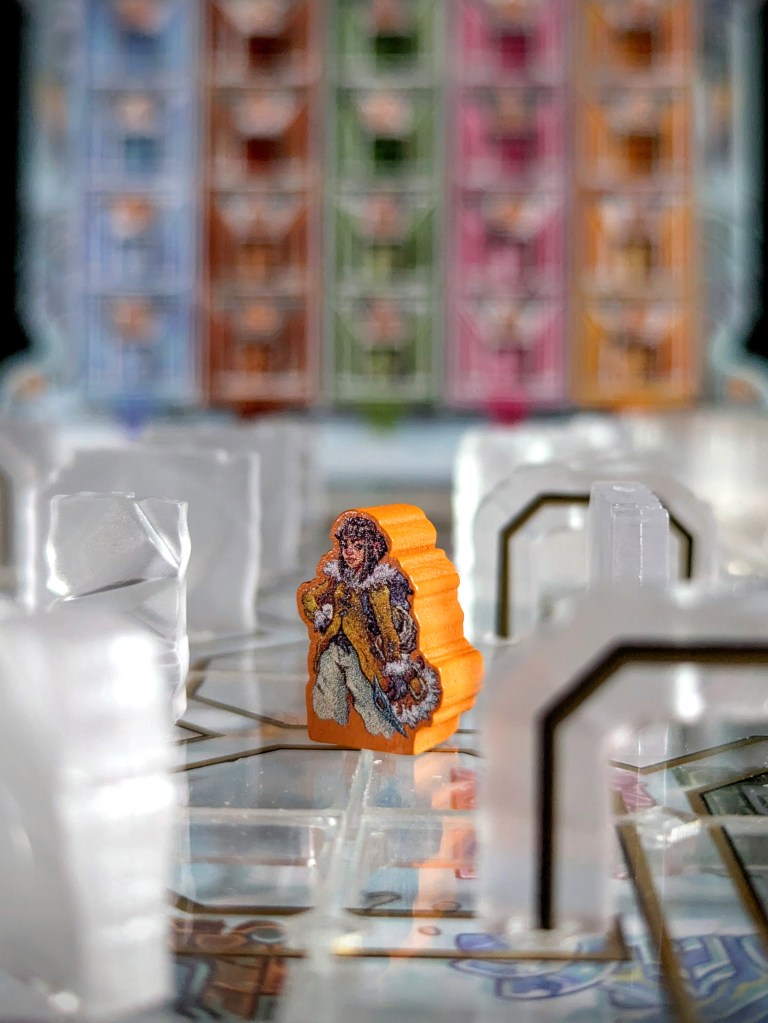
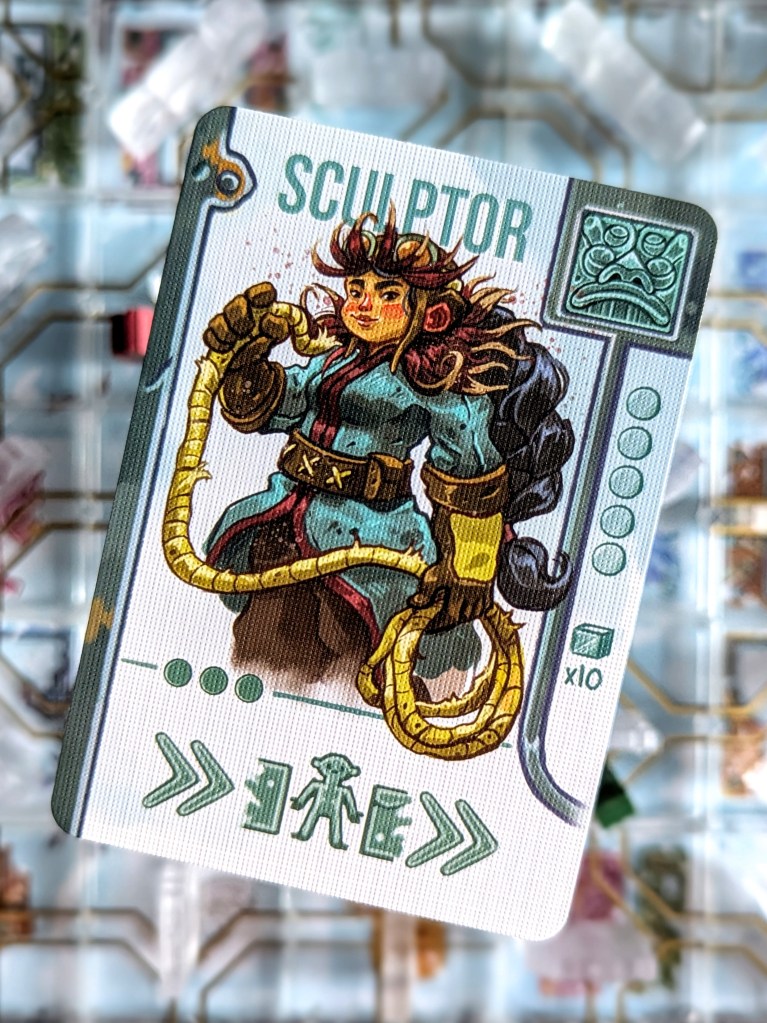
- use your character ability – each one is different, from swapping pathway tiles to skipping over spaces.
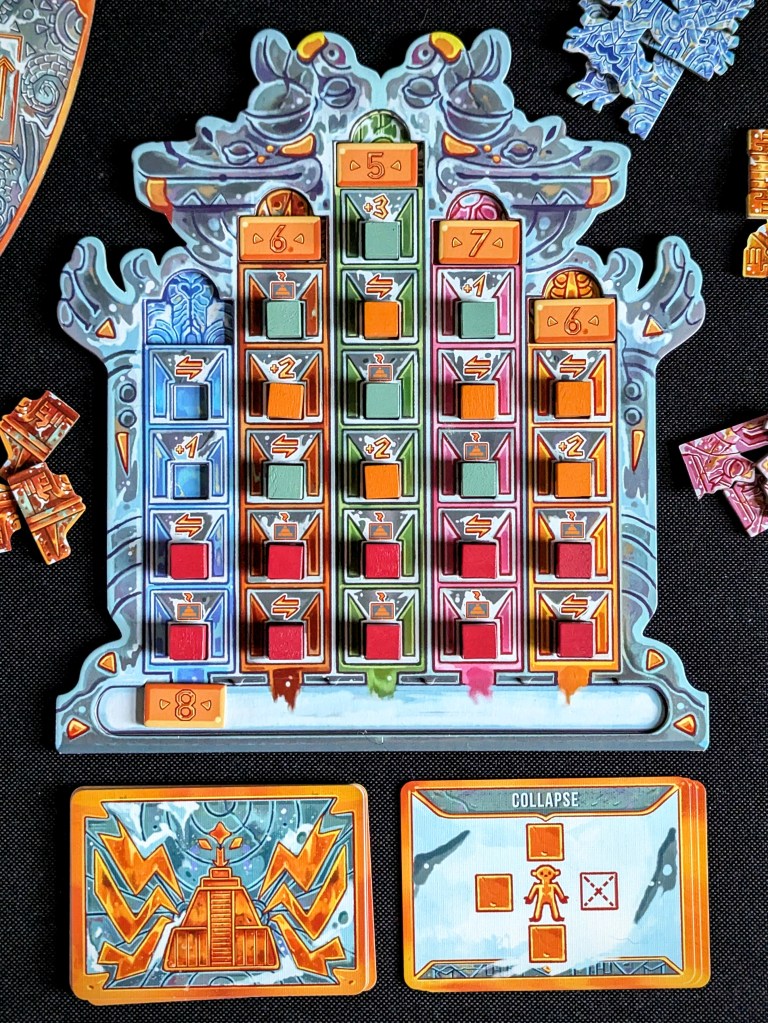
When you research an idol, you place a cube in your player colour on the research column for that respective idol. This always has a consequence (shown underneath the cube space), whether that’s something as nice as a few bonus victory points, or an event card that moves or removes parts of the temple.
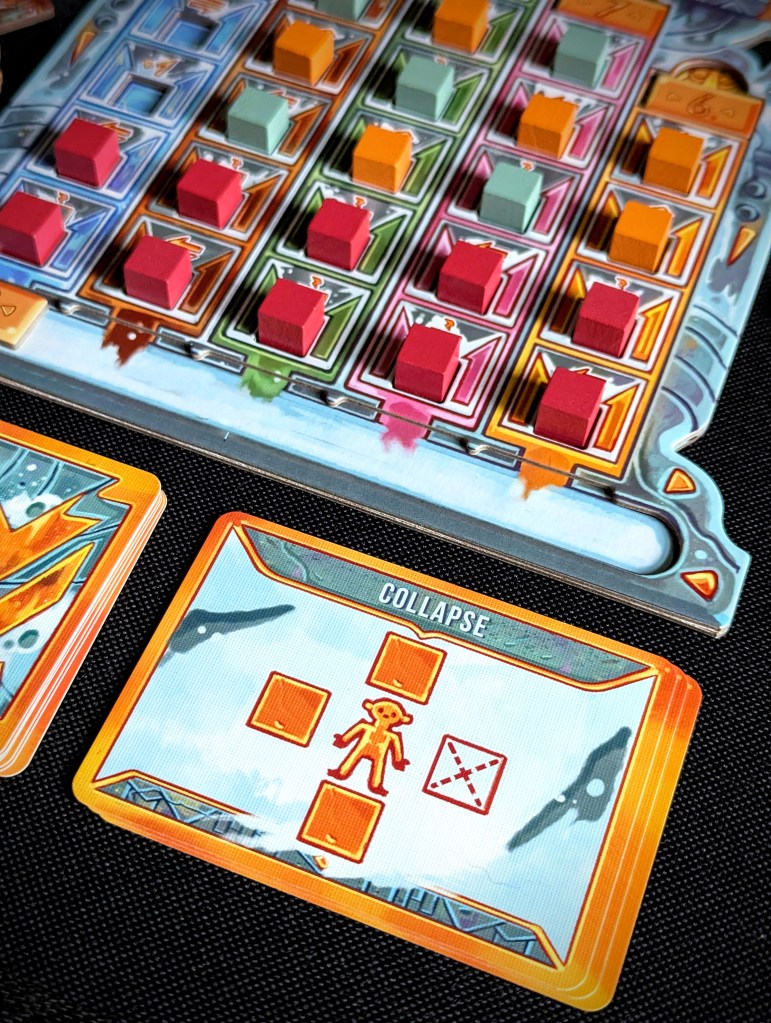
Underneath each research column is a victory point token (worth between 5 and 8 points): some spaces on the research columns can move these tokens around, but when the last space in a column is filled, the scoring token underneath at that moment is ‘locked in’ and can’t move for the rest of the game. At the end, each cube in a column is worth points equal to the connected victory token.
The game ends when 4 of the 5 research columns are filled, or a player places all 10 of their research cubes. The person with the most victory points wins, gained from:
- Your research cubes that are placed on the research track.
- Any of your spaces on the research track with bonus points.
- Having all 5 idols placed on your personal altar (i.e. you unlocked all 5 powers).
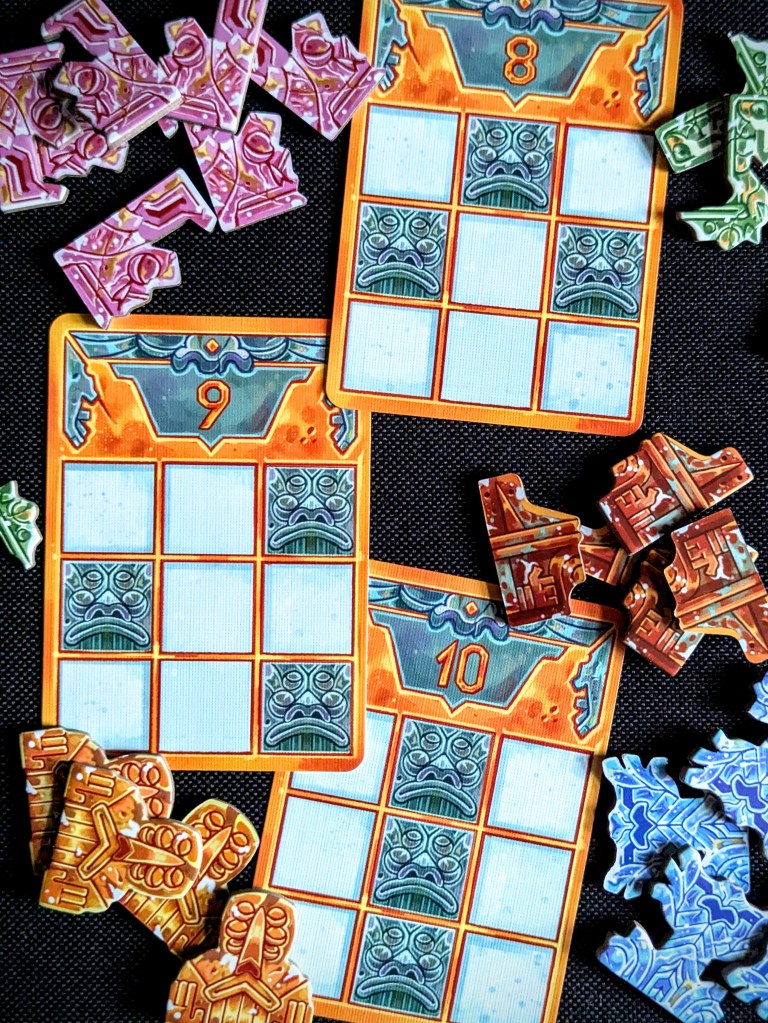
- Completing your secret objective card (‘Key card’), showing a pattern your cubes have to match on the research track.
Our thoughts:
This is another spectacular addition to Inside Up’s range of medium-weight 60-minute games, alongside Perch (one of my top games that we reviewed in 2025!) and the upcoming Kalypso (our thoughts on this one soon!). It’s perfect for us, because it has a bit of depth to scritch our brains, and we can fit in during the toddler’s naptime (or in weekday evening after toddler’s bedtime). The rules even included a superquick variant if needed (players start with all idol powers unlocked, so the only goal is to research).
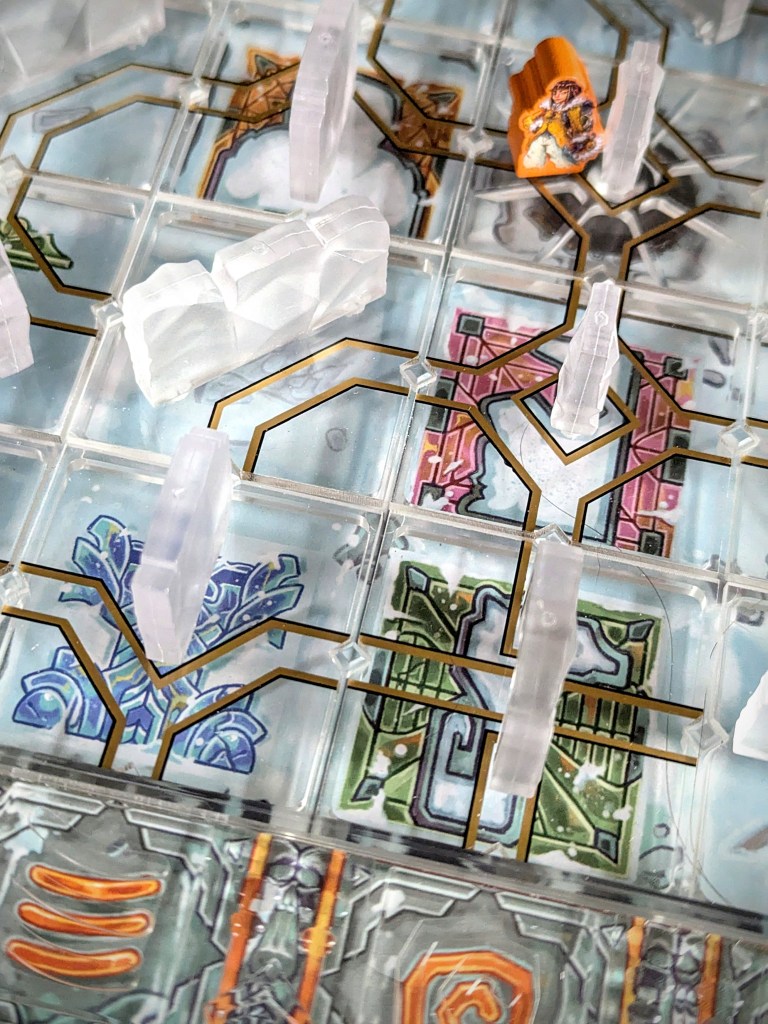
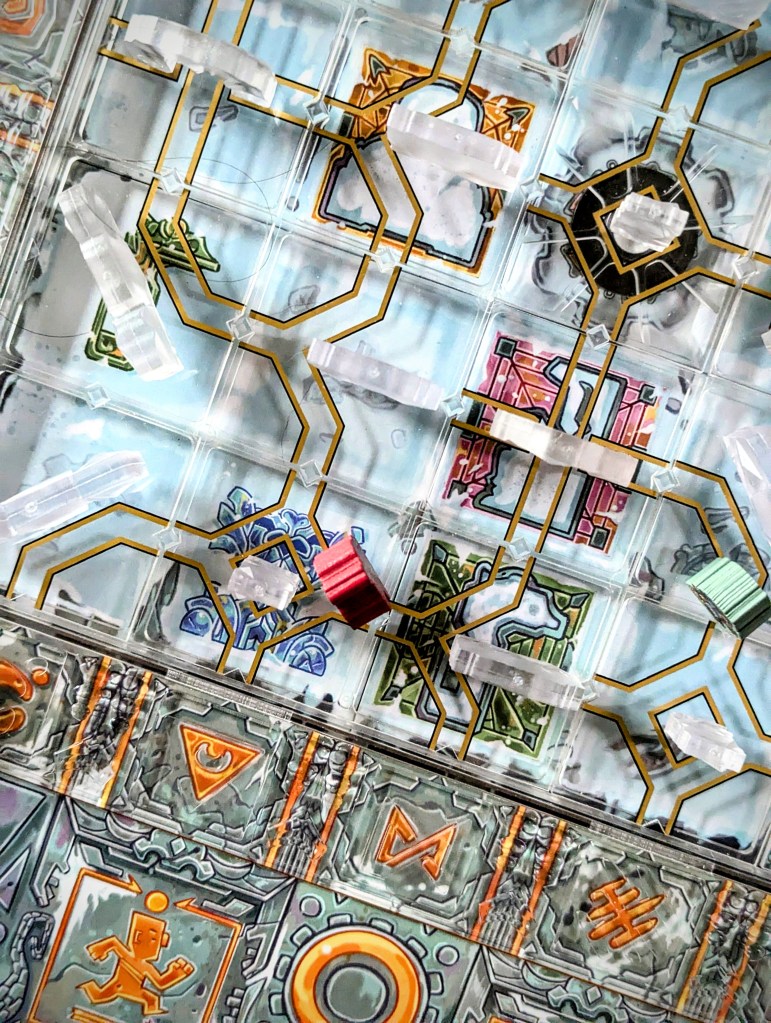
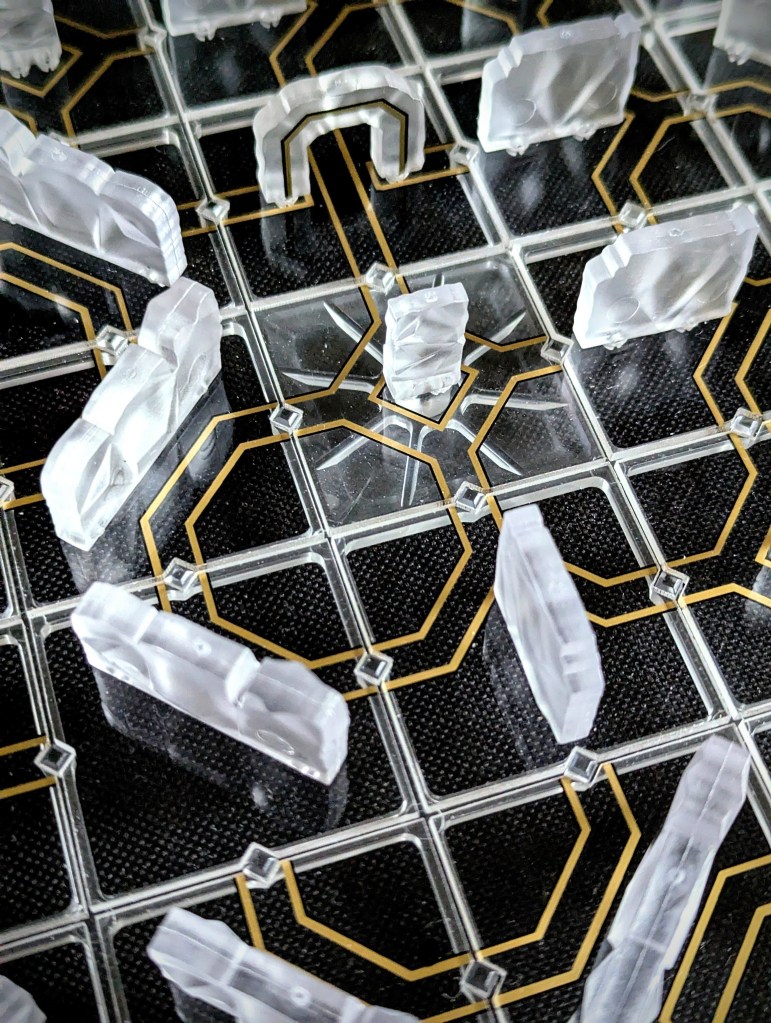
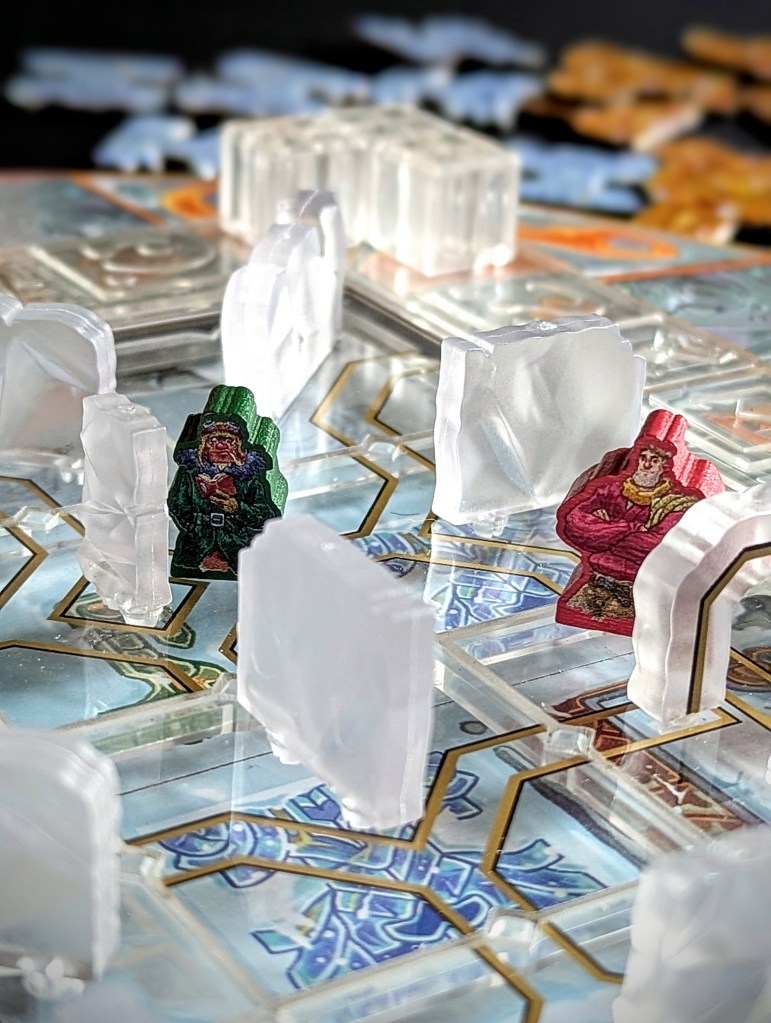
Once all set up, the rotating temple has a real wow factor! The artwork is ice cool, with awesome character designs and colour choices (extra kudos for using a pinky tone with a masculine character). The underlying map (where the idol and altar symbols are) stays in place, and so the rotating board combined with moving/rotating pathways creates an innovative spatial puzzle that switches up the game constantly. And it messes with my head! Spatial puzzling is one of Matt’s strengths, and I thought it was one of mine until I (more than once!) smugly rotated the temple only to realise I’d greatly miscalculated where I would end up… When you actually use the moving temple parts to your advantage (or to the disadvantage of others), it feels very satisfying.
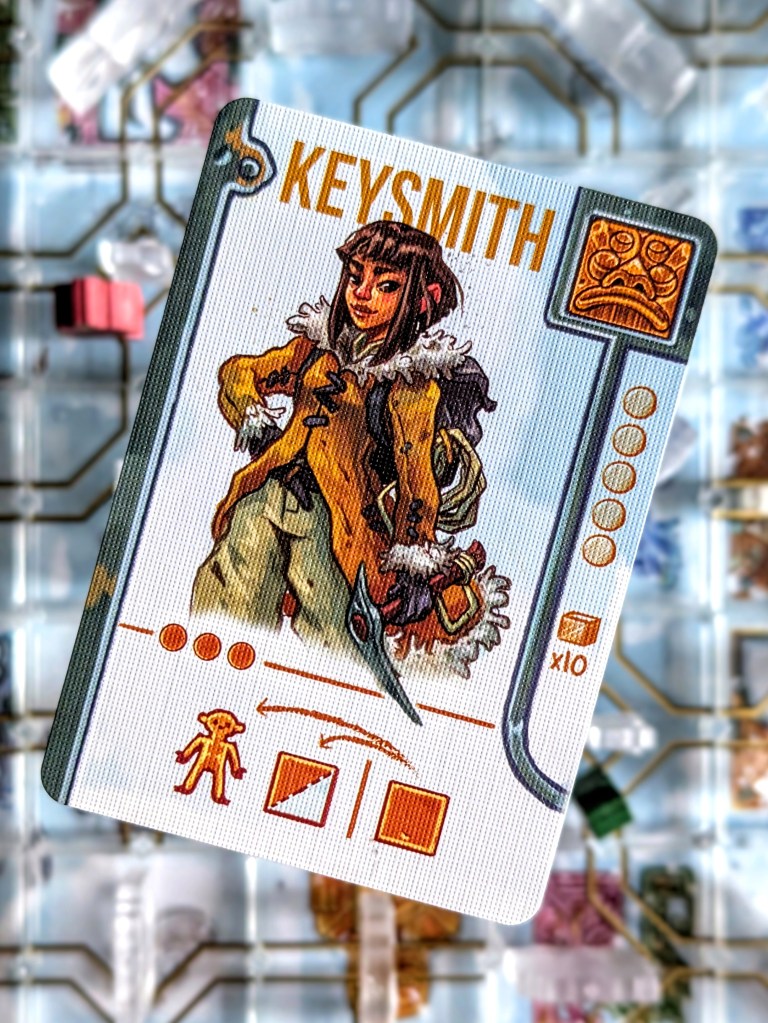
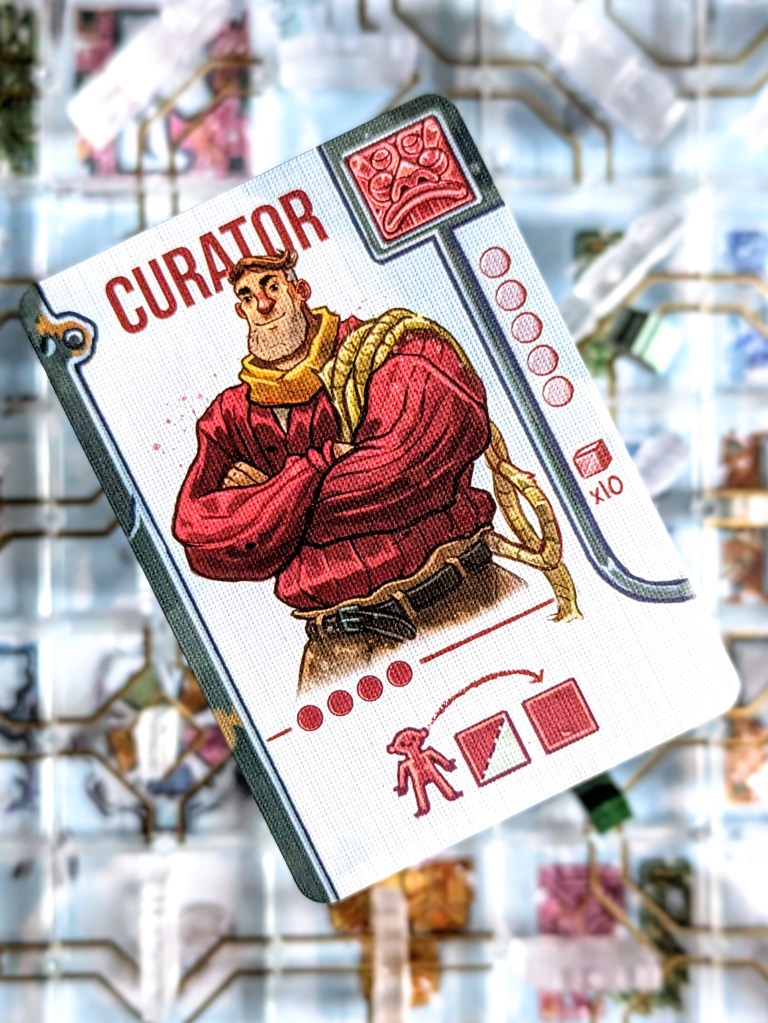
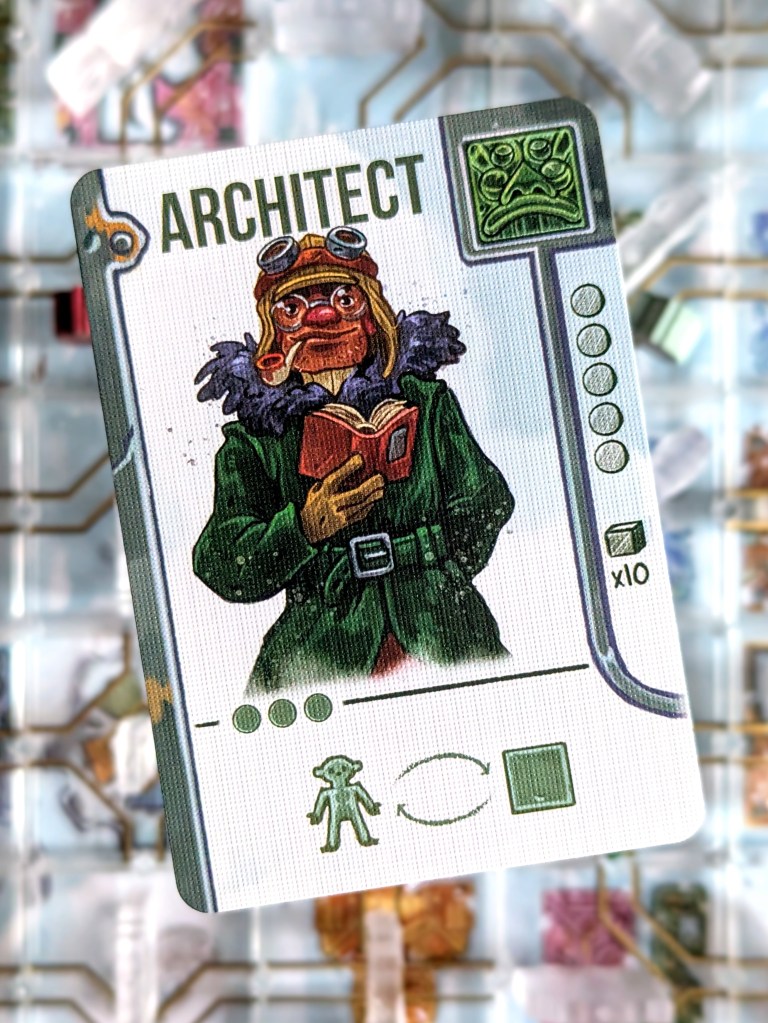
I loved puzzling out the best routes and optimal use of action points; because action points were limited you often have to make tight decisions, and you can rarely do everything you want to. The character abilities are powerful but cost a hefty 3 or even 4 action points, so using it takes up most of your turn. This stops someone from spamming a character’s power repeatedly, and we usually used them as either a hail mary action when we were really stuck, or as part of a wider satisfying combo of moves over multiple turns (assuming no one moves the temple to ruin it for you!). We also liked having different character abilities to choose from, although I found some more fun than others – my favourite character design and ability was the Keymaster (they could swap an adjacent tile with a discarded tile, very useful indeed!).
Using idol powers is cheaper but still effective, costing 1 or 2 action points to manipulate the temple in various ways. The one I had most fun with was the ability to rotate a single pathway tile anywhere in the temple, which is very handy to open up or block off routes – and I blocked Matt’s routes with glee! There are also two idols with permanent abilities, unlocking spaces on your player board to give you either an extra action or extra ‘hand’ to carry an idol (at the start of the game you can only pick up one at a time).
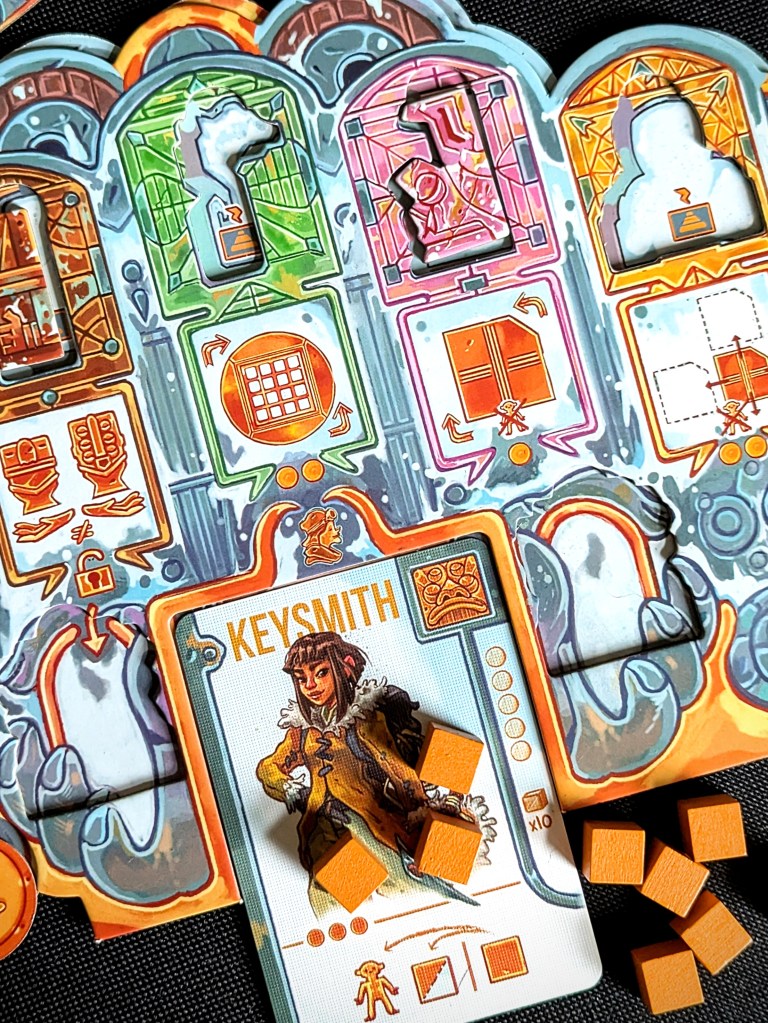
While unlocking the idols is important for those handy abilities, you have to balance that with researching, because placing those little cubes on that little research tracker is essential if you want to win. Good timing is also essential, as you’ll want to grab specific spots on the track before anyone else, to achieve your hidden objective or to trigger the best effects. One such effect is to slide the point tokens under the tracks (which Matt found a bit fiddly). I quite liked the challenge of manipulating the score tokens, ideally getting the highest scoring token to a column where you had most cubes, then locking it in before someone tries to move it again.
We’re always impressed with the innovative production quality from Inside Up, but this is also where we had a couple of little niggles (but please bear in mind this is based on the prototype!). The main issue was how the components fit into the box. There is a custom insert and there is a visual guide on the side of the box that explains how you’re supposed to store everything, which is great. But in practice, the box wouldn’t shut properly and the tiles (stored in place in the temple grid and on top of everything) pushed into the boards underneath. On a shelf at home this probably won’t cause an issue, but if you were taking it somewhere (a game meet-up, posting to someone), the tiles can shuffle loose, indent boards and even break (there was a broken piece in the review copy we received).
What we like:
- The production is incredible and the temple has great table presence (with the tactile pathway tiles).
- The character designs are cool and the choice of player colours is unique.
- The pick up and deliver system feels puzzly, working on the best routes, best actions and timing your research right.
- There’s (usually) satisfying spatial shenanigans as you move the temple and tiles to help you and hinder others (less satisfying when someone hinders you!).
Considerations:
- We couldn’t get everything neatly into the box (even with a custom insert and guide on the side of the box).
- There’s a lot of player interaction that can really screw your plans (how much will vary based on player count and personalities) – don’t play it with people who don’t like being messed with!
Final verdict:
With a fun pick-up-and-deliver theme, cool art, tactile mechanics and an impressive table presence, Ice and Idols is sure to be a winner at game nights.
With a fun pick-up-and-deliver theme, cool art, tactile mechanics and an impressive table presence, Ice and Idols is sure to be a winner at game nights. Particularly for fans of player interaction – we played at 2 and I can only imagine how chaotic it can get with more players and more temple shenanigans! I just wish the tiles in the game box were stored more securely.

 Our Board Game Life