

Advert: This game was given for review from Mason Williams PR on behalf of Asmodee. All opinions are our own.
“The Wheel of Time turns, and Ages come and pass, leaving memories that become legend. Legend fades to myth, and even myth is long forgotten when the Age that gave it birth comes again” – Robert Jordan, Wheel of Time
👥 2 to 4 players
⌛ 30 minutes
🧠 10+ years
Key mechanics: cooperative, deduction, limited communication
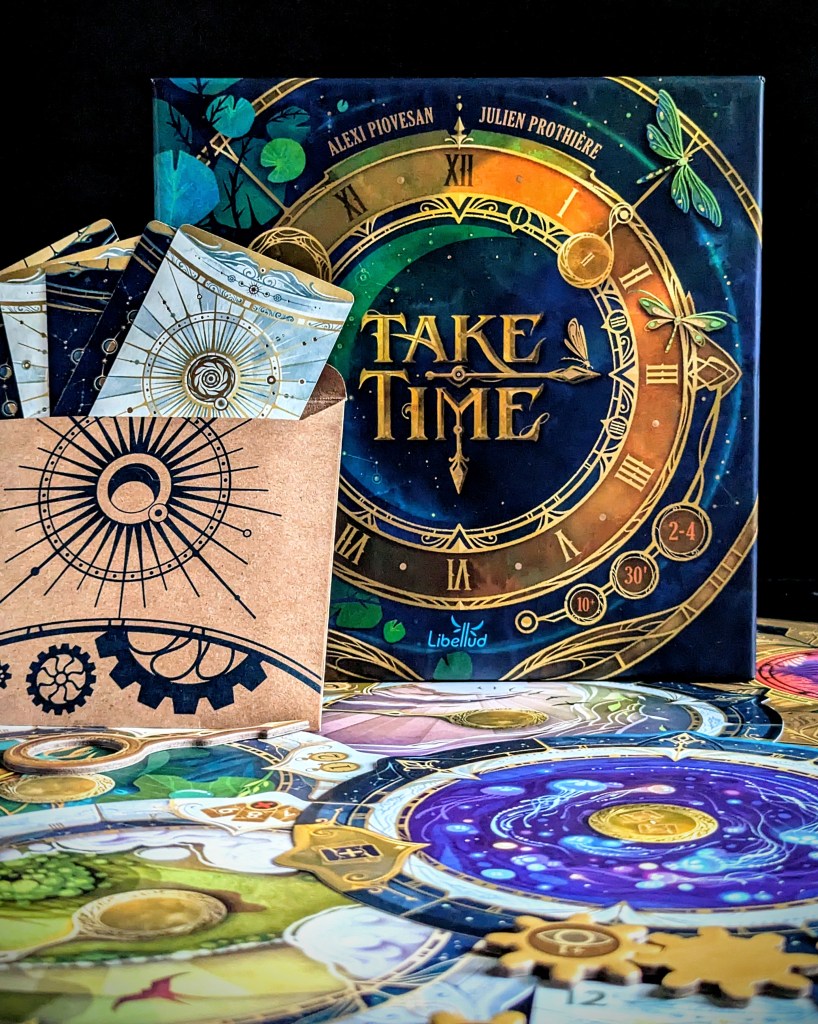
Game overview:
In Take Time players journey together through 10 different chapters, each containing 4 clocks, and work together to complete one. There are 3 phases:
- Discussion phase: Without looking at their hand of cards, players look at the current clock and its specific rules, and work together on a strategy.
- Placement phase: the time for talking is over! Without further discussion, players take it in turns to place cards from their hand into any of the clock segments, face down. Anyone can start, but after that play proceeds clockwise (get it?!).
- Resolution phase: After everyone has placed all their cards, the cards in each segment are revealed and players see if they have passed the clock’s test.
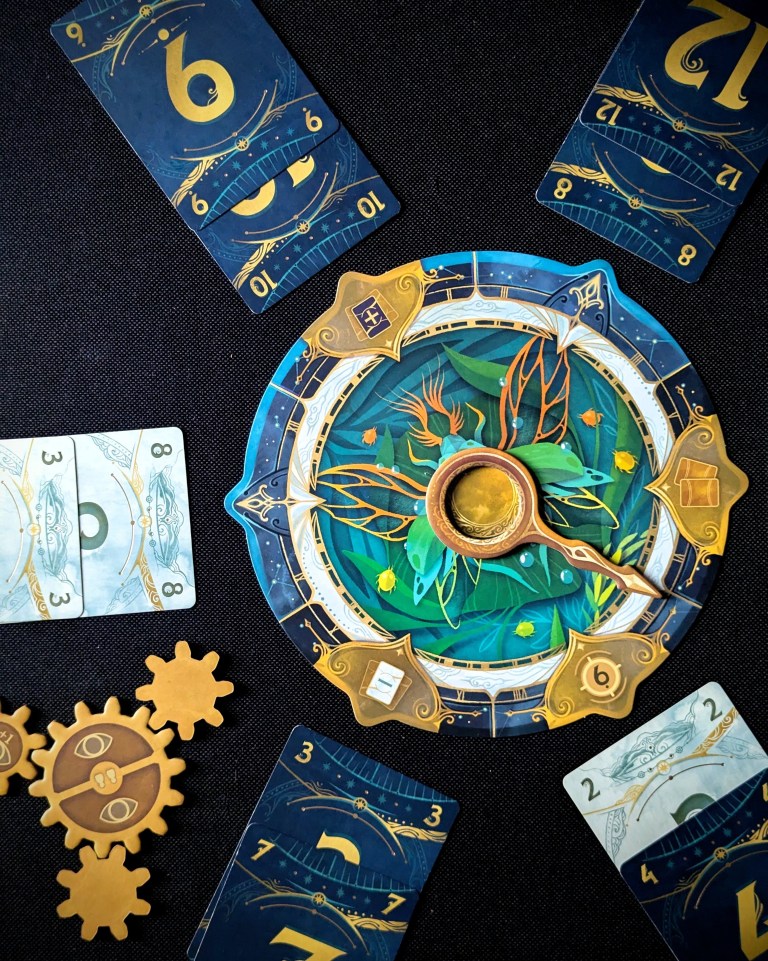
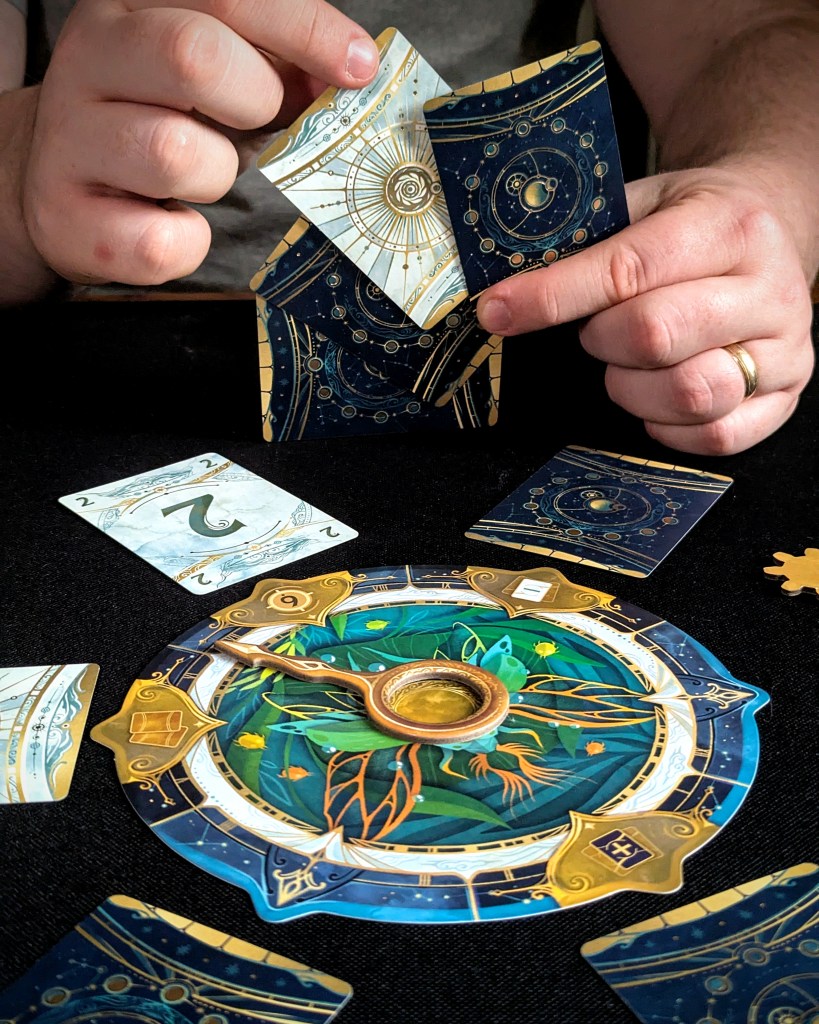
The universal clock rules are that the total value of each segment must be greater than (or equal to) the last, and that no segment must total more than 24. But each clock has its own special rules that you also need to satisfy. For example, some segments do not allow certain cards to be placed, or need to be nearest to a specific value.
If you pass the clock’s test, you get to move on to the next one. If you fail, you have to try again!

Our first impressions:
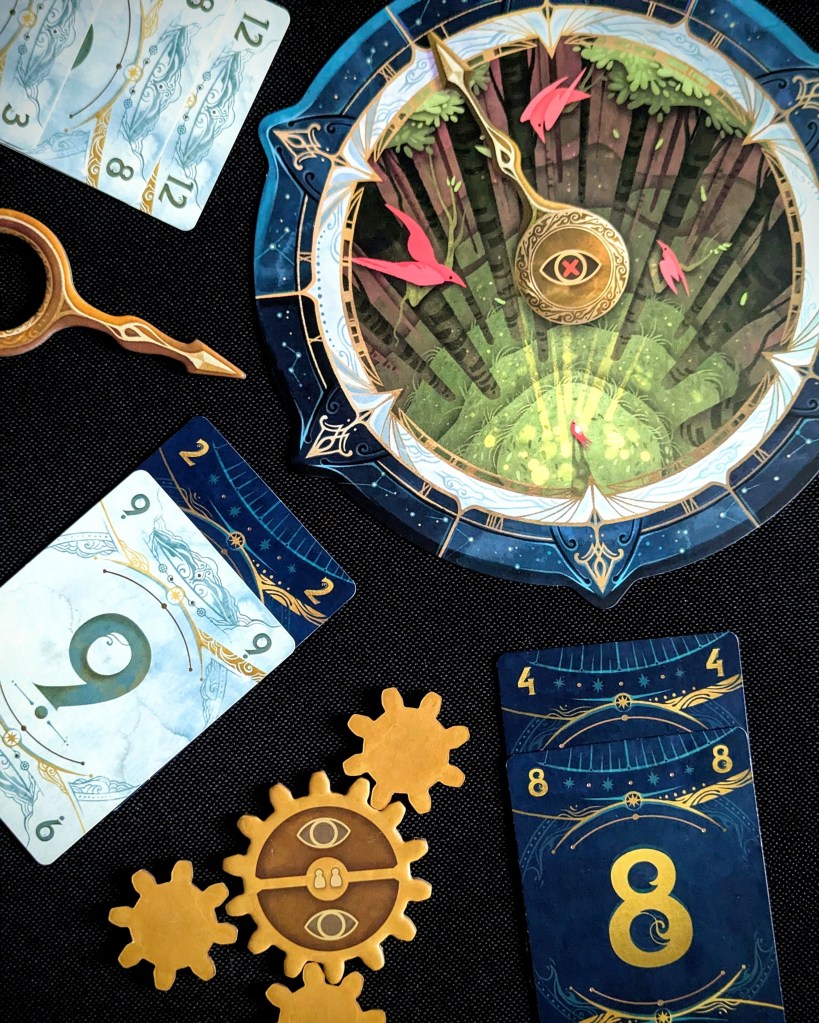
- We’ve enjoyed many games with limited communication (aka the marriage therapy mechanic for board gamer couples!). So as soon as Take Time was announced, I knew it would be our vibe. And 5 Chapters in, we’re absolutely LOVING it. You might look at how the game plays and think ‘that sounds impossible’, but it’s honestly not. It is challenging – so far we’ve taken 2-4 attempts to complete each clock – but oh so satisfying when you click together and crack the puzzle. Making plans in the discussion phase, and learning from each failure, is vital! Each clock within a chapter also feels more challenging than the last, with what feels like a Big Boss Clock at the end. I particularly like that the special rules variations introduced within each Chapter tie-in to that Chapter’s ‘title’.
- You can replay the game as is, and play at different player counts which brings new challenges. But Libellud have also included a ‘Rebirth’ envelope, with additional tokens that add more variability and challenge!
- There are 2 card decks, Solar and Lunar, with 12 cards numbered 1 to 12 in each. These are shuffled together and SOME are randomly dealt out to each player before the discussion phase, but you can’t look at them until you’re ready to start placing. This adds some challenge to the strategising, because you don’t actually know which numbers are in play until you can’t talk about it! BUT I do like that you can see if cards are solar or lunar based on the card backs, which can give some information (e.g. if a lot of the cards dealt out are lunar, you can assume they’ll include a spread of numbers).
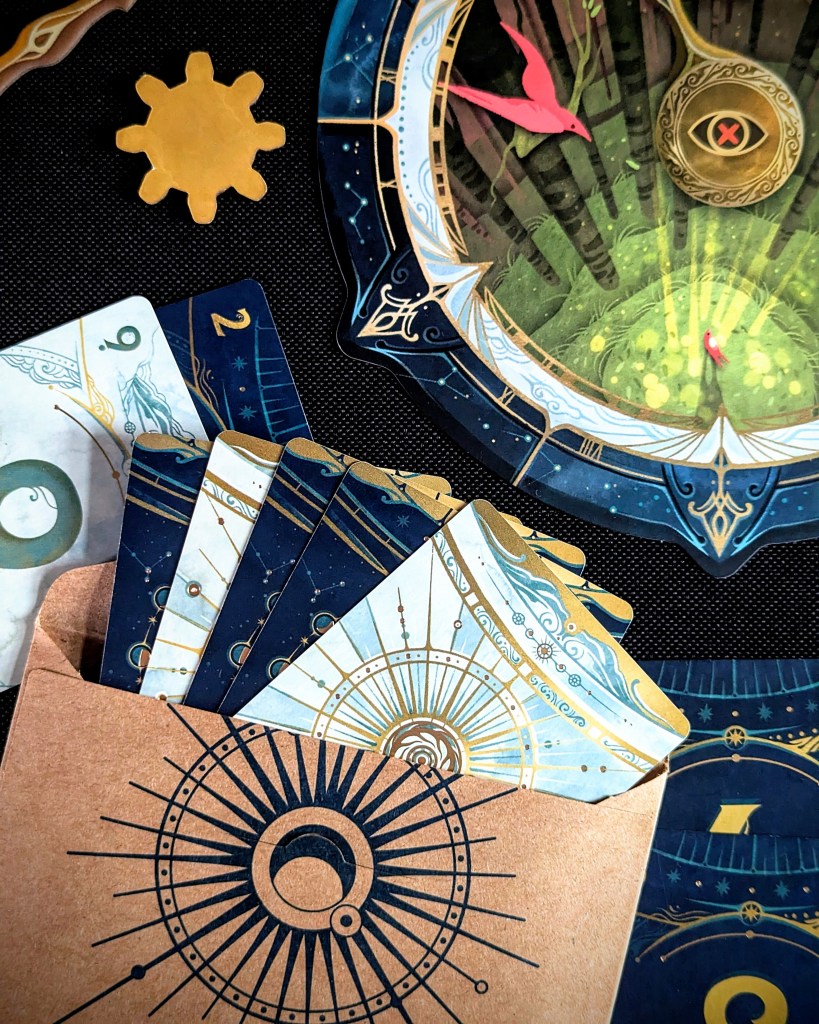
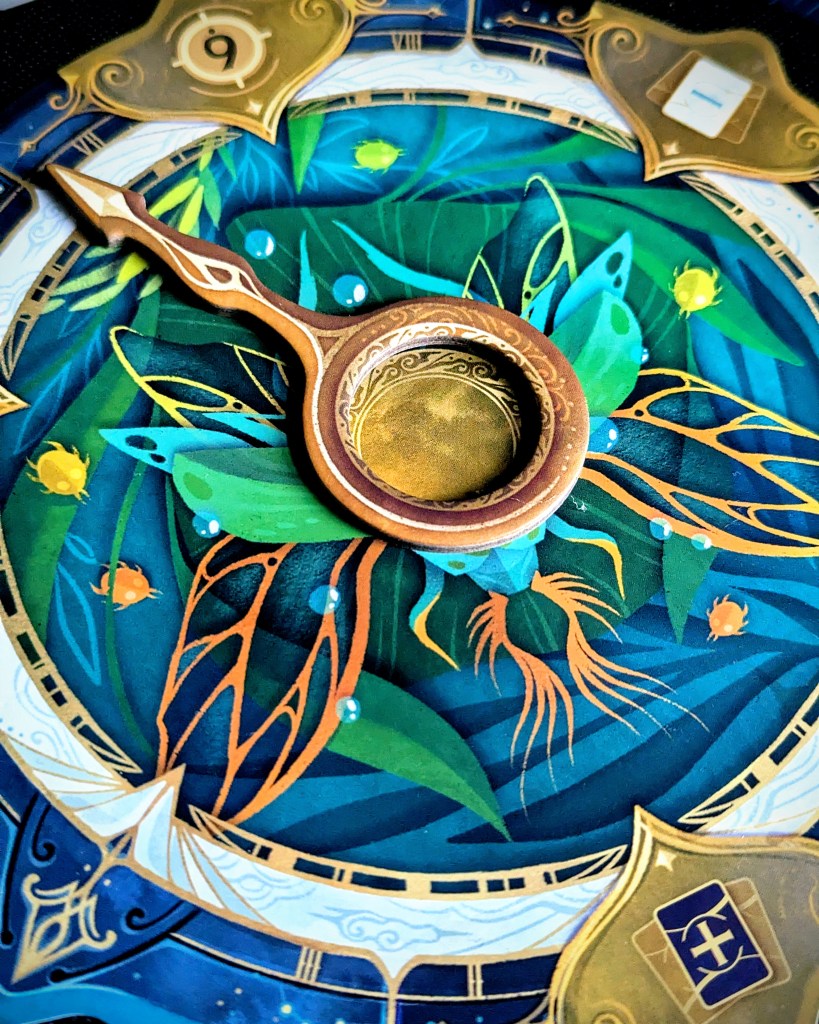
- While the default is to play cards facedown, there are a specified number of cards players can collectively play face up each game – how many is determined by the reminder token (based on player count) and bones tokens (each time you fail that clock, you get a bonus token – these reset when you move to the next clock). When and where is best to make use of the face up ‘lives’ is the tricky part: while you can try to plan them during Discussion, that can always go out the window during placement depending on what cards you get!
- While I wouldn’t quite describe it as a campaign, there’s obviously a lot of game for you to while away the hours playing over multiple sessions. We’ve been trying to complete a Chapter or two in one sitting, but it’s super easy to pause on any clock and pick back up at any point. There’s even a ‘sleeve of regrets’ to store clocks you get stuck on and want to come back to later, but we haven’t used it yet.
- We’ve only played 2-player so far, which has a slight variation: you’re dealt 6 cards but can only look at 4 of them when you start placing cards, picking up the other 2 when you’ve placed a couple of cards around the clock. This adds an extra tricksiness, because you have to start placing without fully knowing what cards you have to work with!
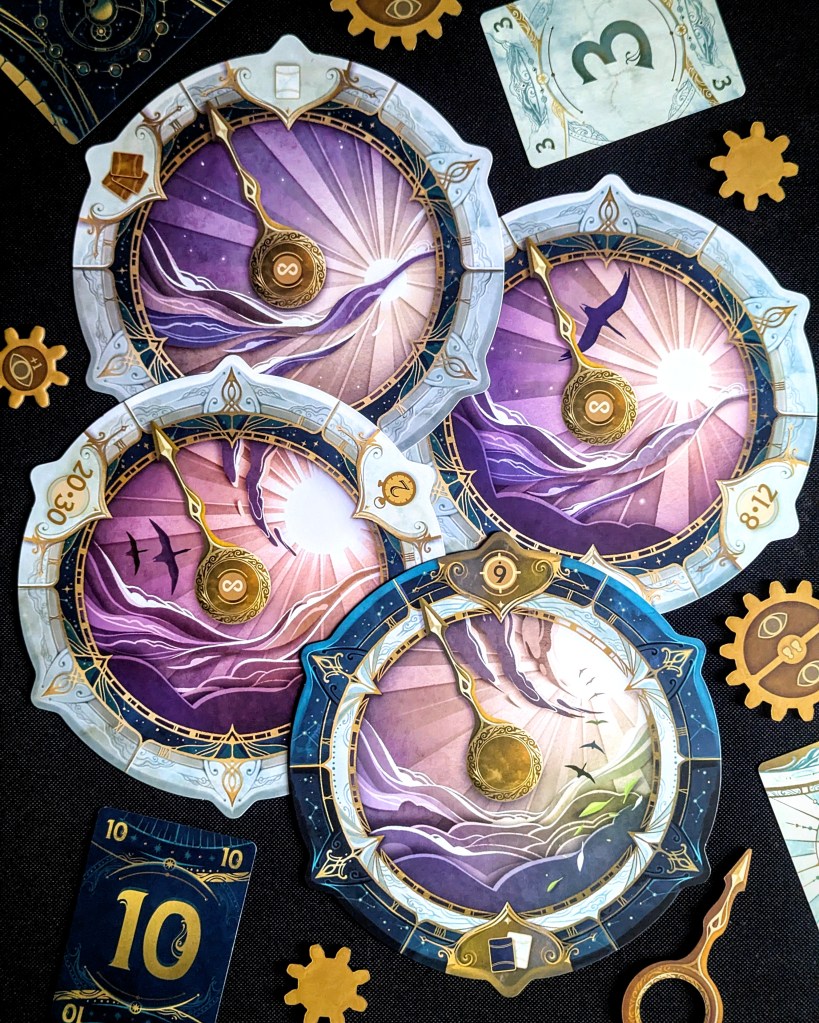
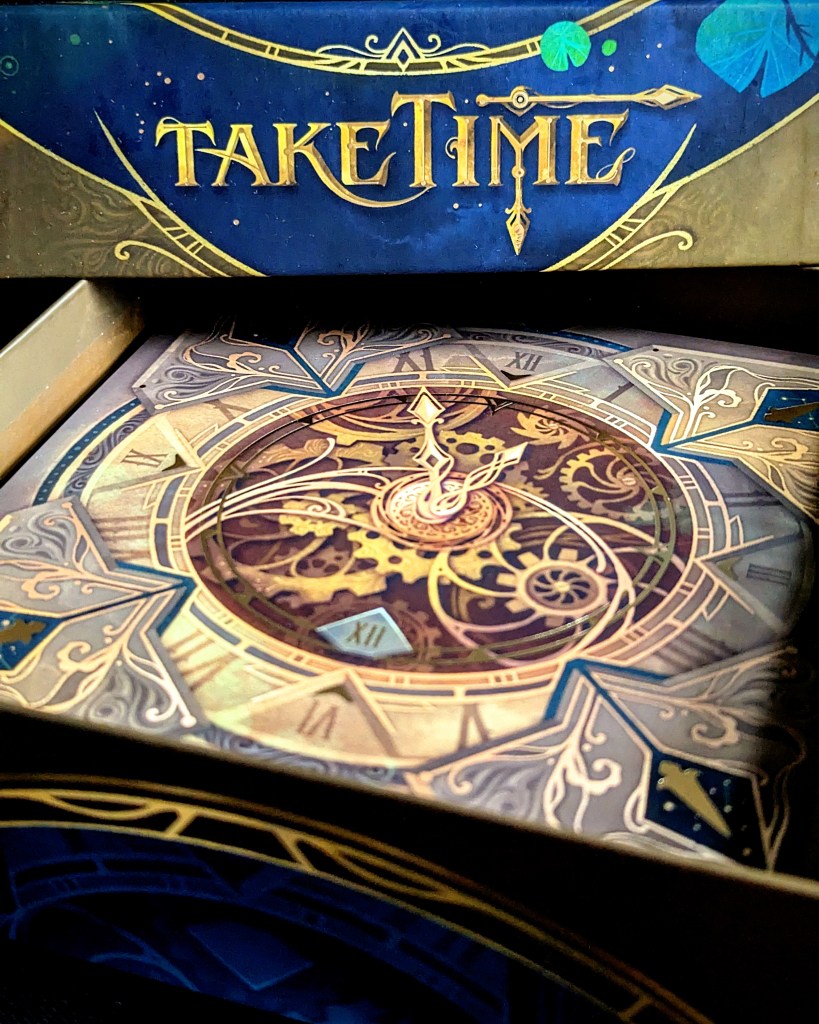
- The production on this game is impressive for the price point – the beautiful gold detailing and gorgeous Chapter envelopes make it feel more deluxe than £23.99 (Asmodee price at time of writing). Maud Chamel’s gorgeous artwork shows the passing of time across each clock within a Chapter.
Final thoughts:
It came as no surprise that Take Time is our new favourite go-to for an evening game. It’s so easy to open up for a quickie, but satisfyingly tricky. And we’re looking forward to trying it at other player counts to see how the change in dynamics brings new challenges.
If you like limited communication co-ops like The Mind and Tranquility, then you should definitely make time for Take Time!

 Our Board Game Life
2 thoughts on “Take Time – First Impressions”