

Advert: This prototype was gifted from Ludivore Games. Components and rules are subject to change. All opinions are ours and our reviews are always honest.
We are approaching the last days of summer, and if your house is anything like ours that means someone (Lauren) is gleeful with thoughts of cool crisp days, crunchy leaves, orange hues, and of course pumpkin spice lattes. So today we’re looking at Aspens, a game that brings autumn vibes to your game table.
👥 2 players
⌛ 20 to 40 minutes
🧠 10+ years
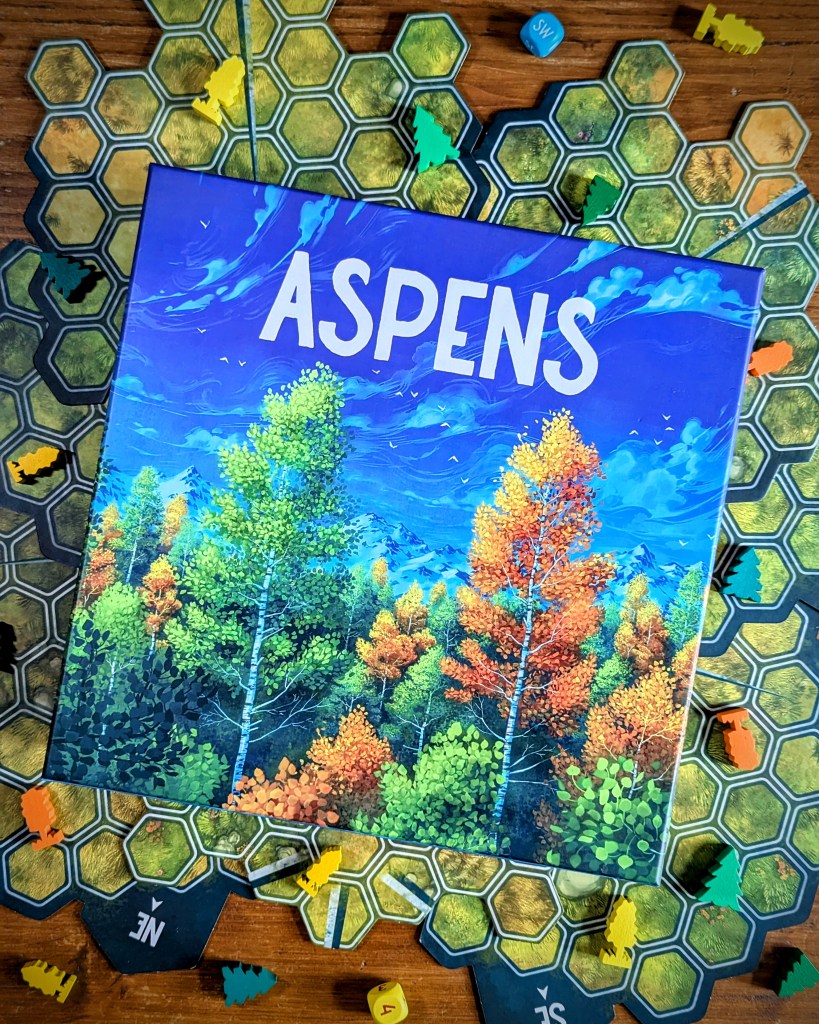
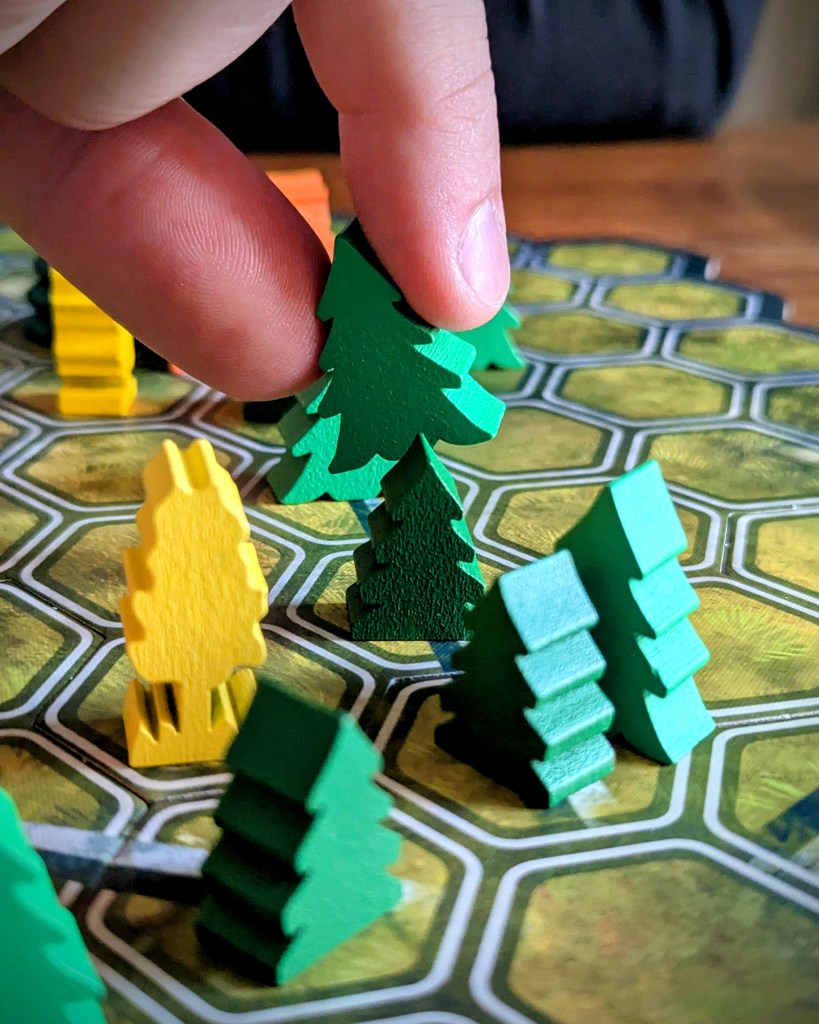
Gameplay overview:
Don’t worry, learning Aspens isn’t like mastering dendrology! It’s actually pretty simple. Starting with a scattering of saplings at each water tile, 2 players compete to occupy the largest share of the forest by capturing spaces across the gameboard.
Each turn the active player rolls the Sun and Wind dice. The Sun die tells both players which of their occupied forest spaces generate new trees. For example, if the active player rolls a 2 on the Sun die they get 1 tree for each of their spaces that already have 2 or more trees, as well as a bonus tree. The non-active player also gains trees and keeps them by the board to place on their next turn. The active player then places their new trees either: 1) on one of their already occupied spaces (increasing the number of trees in that space) or, 2) in an empty space adjacent to one of their occupied spaces following the direction set by the Wind die, or either neighbouring direction. For example, if the active player rolls West (W ) on the Wind die, they can spread trees in the West, South-West (SW) and north-west (NW) directions. The game ends when all the forest spaces are occupied.
The winner is the player whose forest covers the most spaces on the game board.
Our thoughts:
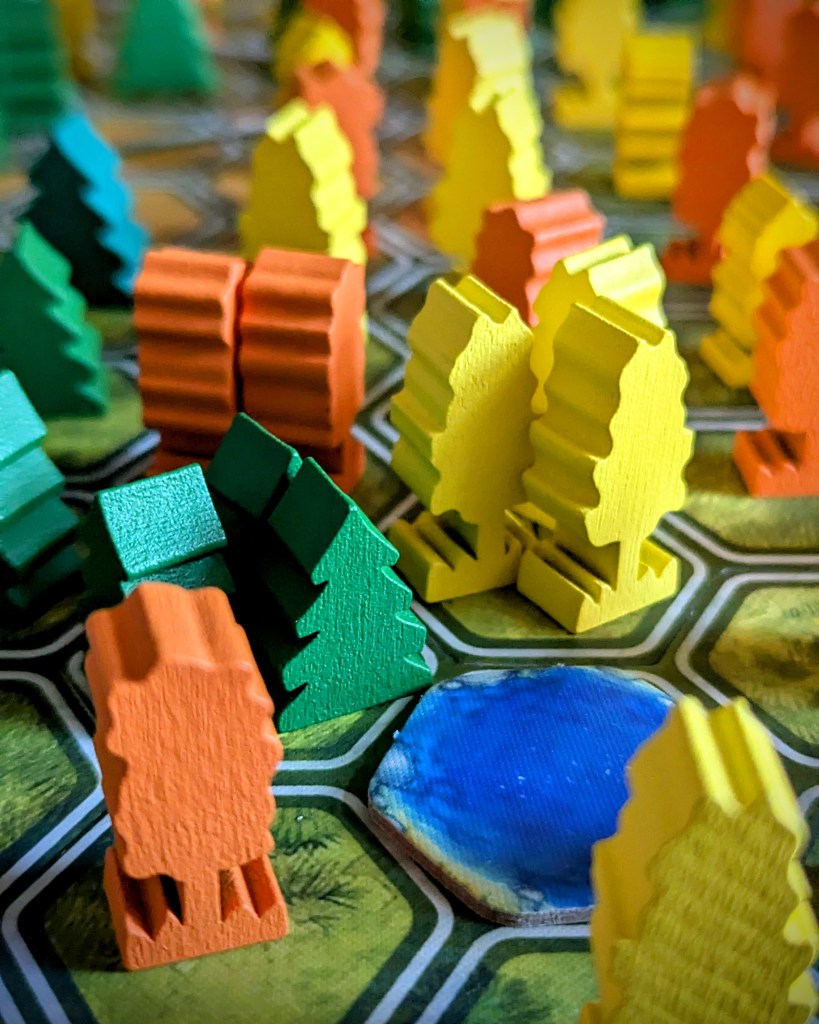
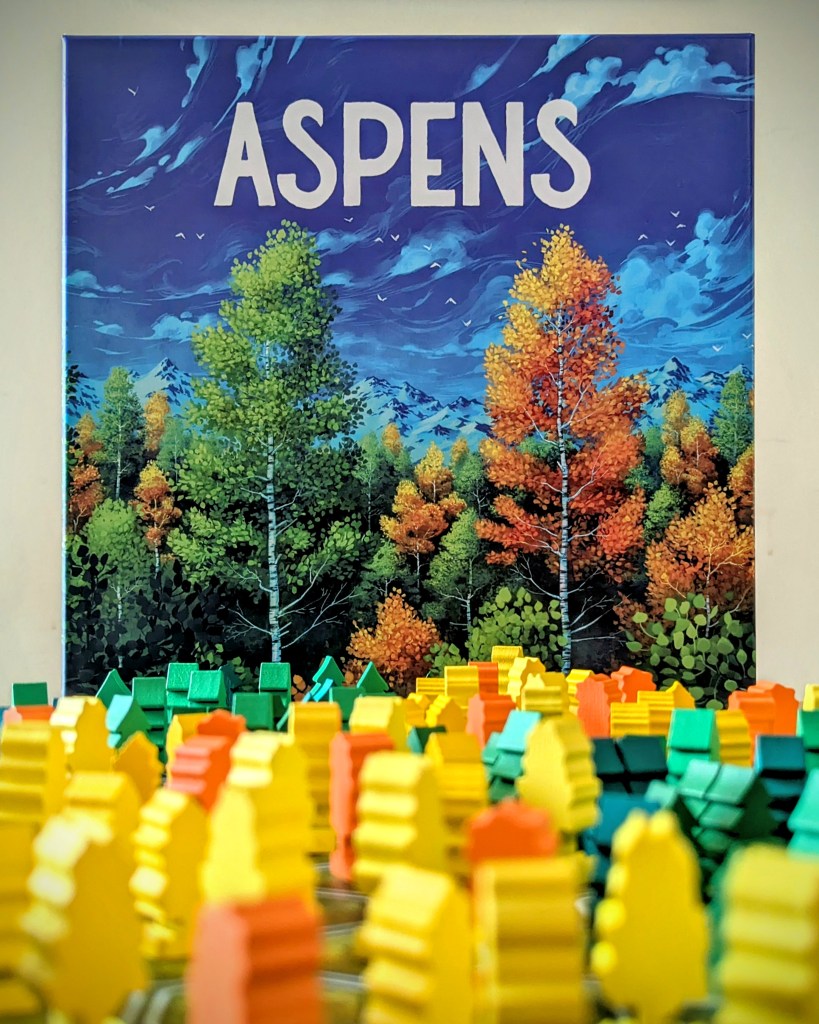
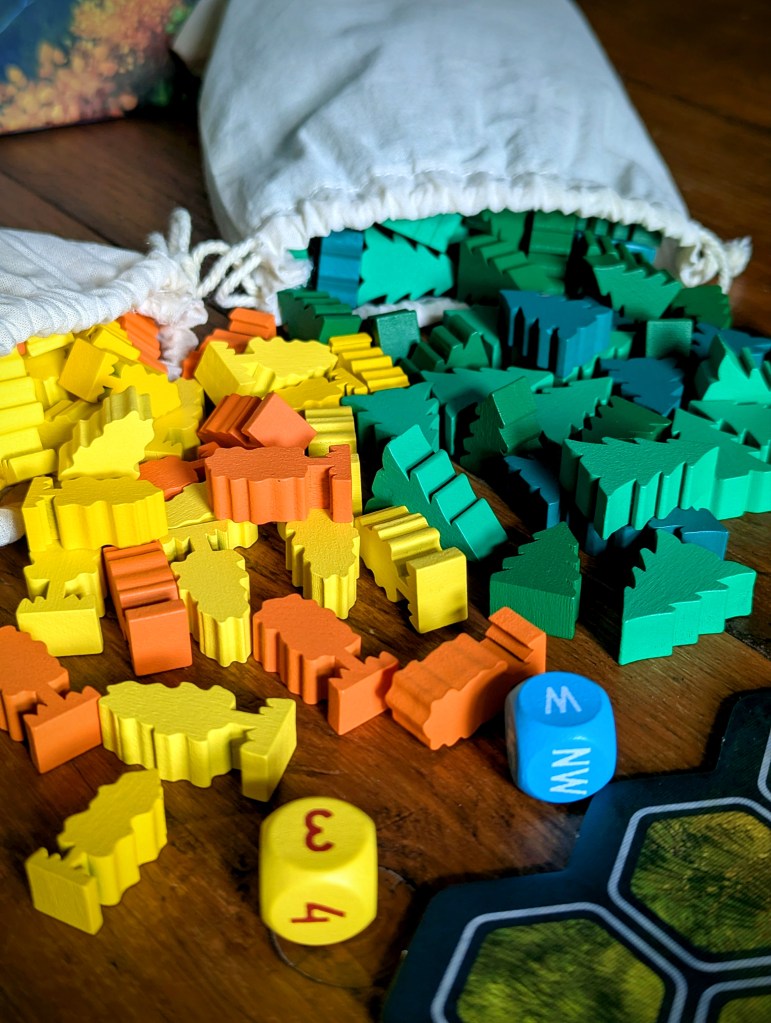
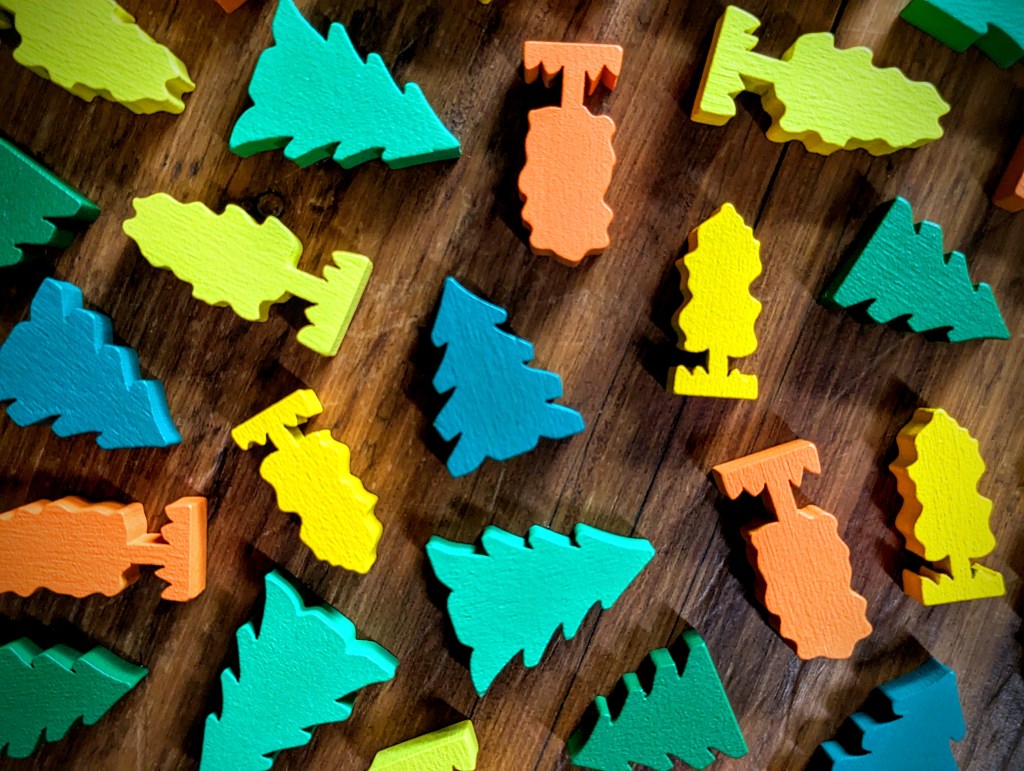
Aspens is bursting with autumnal vibes, and it’s great watching your forest build up turn after turn. Not only that but Aspens has awesome little tree tokens (I like to call them treeples!). Each player’s treeples has 3 designs and shades of colour so your forest looks like a diverse, vibrant natural forest. It can be tricky to place multiple treeples/tree tokens on 1 space (it’s supposed to hold up to 7) because they’re slightly too big, but I understand this is going to be addressed. in the final release of the game.
Aspens is bursting with autumnal vibes, and it’s great watching your forest build up turn after turn.
In addition to being a game ultimately about nature, Ludivore Games have made an environmental commitment to avoid plastic with Aspens, opting for wooden tokens and dice, cloth component bags, and wrapping paper instead of plastic tokens, bags, and shrink wrap.
The gameplay is mechanically simple and easy to learn, which is great for those new to the hobby, whilst still managing to provide a satisfying level of meaningful decisions for more established gamers. There is some short term strategy responding to the whims of the dice rolls and changes to the board. which makes it abstract light. There’s an enjoyable push and pull in deciding whether to spread your trees to new spaces or build up your existing spaces to increase chances of tree generation in future.
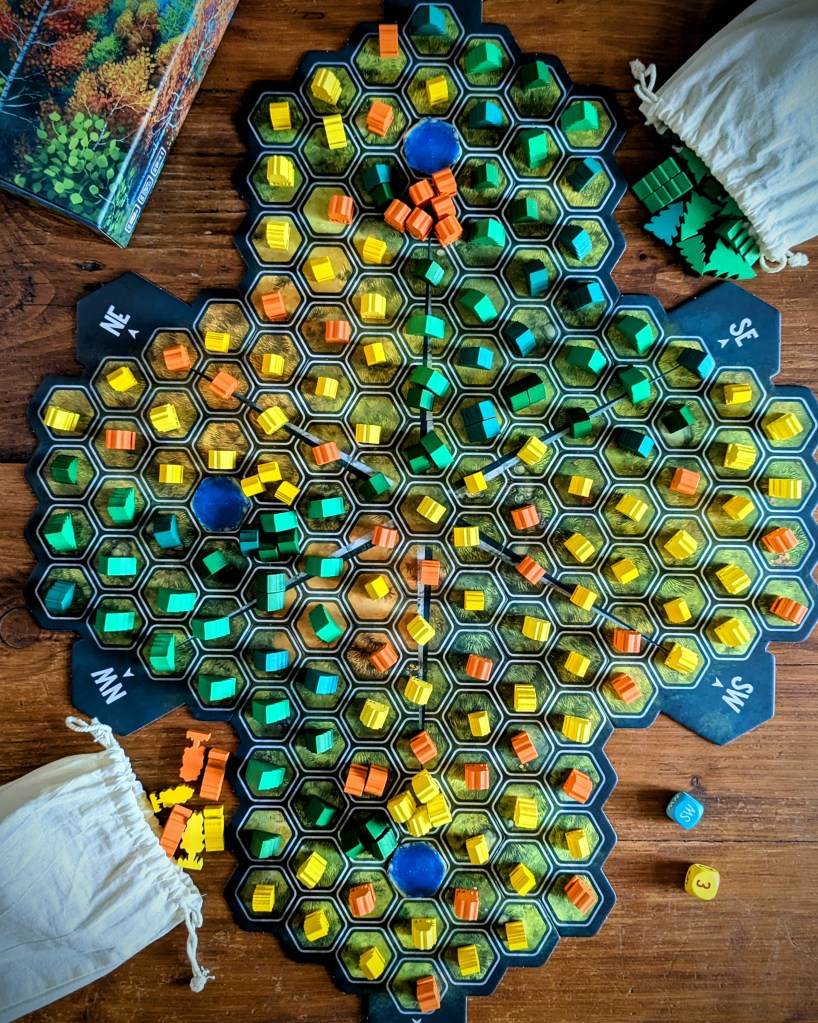
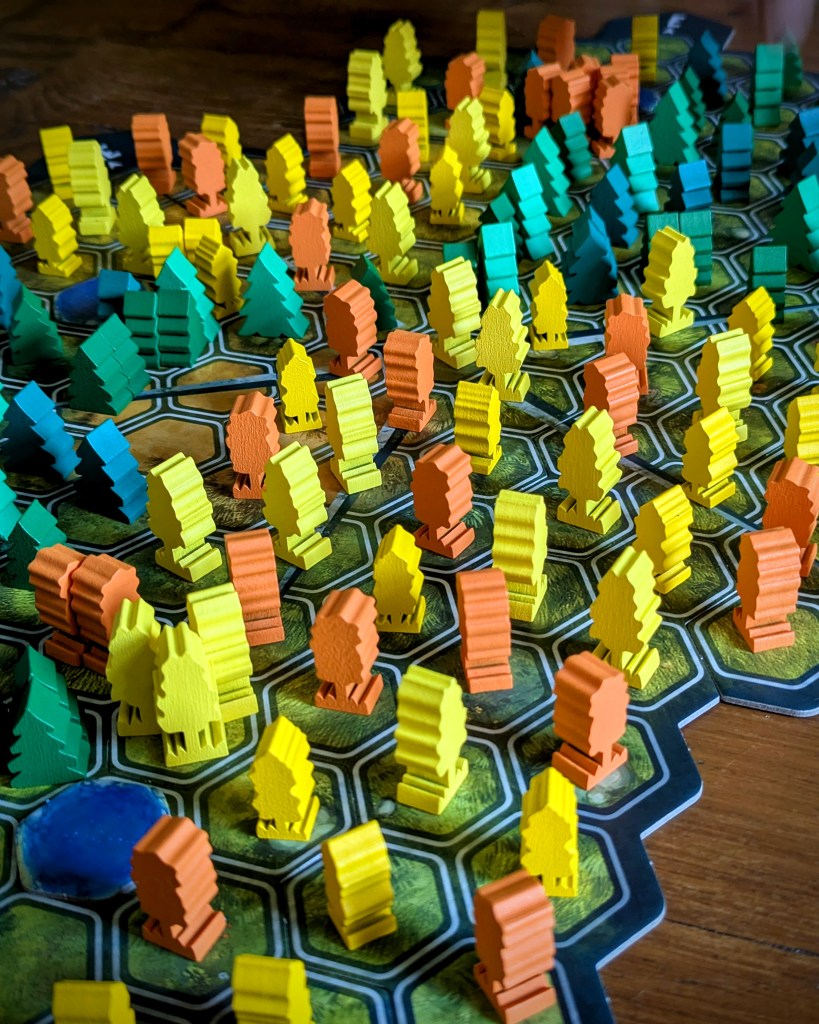
Both players being able to gain trees regardless of whether they are the active player or not is a brilliant mechanic. It keeps both players invested in each other’s turns as well as giving players some mitigation against bad rolls.
If a player manages to close off a section of the board, they’re rewarded with filling in that whole section with their trees. For us this led to some funny banter around the table as there were times in our games where Lauren cut off large areas of the forest and then said “Help me with filling in these trees, this will take me aaaages!” 🤣
I think that the randomness introduced by the dice might frustrate players looking for a truly abstract experience. As with any dice based games there are times where your rolls can influence how successful your turns are. Although, the chance to collect trees on your opponent’s turn, as well as a guaranteed bonus tree on your own turn, and means you always have something to do.
There’s an enjoyable push and pull in deciding whether to spread your trees to new spaces or build up your existing spaces to increase chances of tree generation in future.
What we like:
- Aspens has table presence, is eye-catching and looks even better as you build up the forest turn after turn.
- Simple, easy-to-learn gameplay that still provides rewarding decision space for players of all levels. Particularly with balancing when to spread your forest further and when to increase trees on already captured spaces.
- Gaining trees on your opponent’s turns keeps both players invested even when it isn’t their turn.
- It’s very satisfying when you capture large zones for ‘free’ by cutting them off from the other player.
- Ludivore chose to avoid plastic within Aspens and replace them with environmentally conscious materials.
Considerations:
- Identifying tree groups during the game (i.e. how many in 1 space) and counting spaces at end-game scoring was initially challenging but we were able to simplify this as we got more comfortable with the game. (This was partly due to the size of the tree tokens, but these will different in the final version).
- If you’re an abstract purist, Aspens might not be for you as there is an element of luck introduced by the sun and wind die.
Final verdict:
At its roots, Aspens is a simple, light-weight, abstract strategy game with great table presence. We really enjoyed our time playing and look forward to exploring the modular expansions (and how they affect the game). If you’re a lover of hardcore abstract games then you might find Aspens a bit too light. But our opinion is that Aspens does what it does extremely well and would make for a great introduction to abstract games.
Although the Kickstarter campaign for Aspens has ended, it is still available for pre-order on the Ludivore Games website.

 Our Board Game Life