
Advert: This game was gifted by Mason Williams PR (on behalf of Asmodee). All opinions are ours and our reviews are always honest.
Yeehaaaaaaw!! Saddle up and mount your horses we’ve got cattle to sell. Time to head out on the trail to El Paso, the newest addition to the Great Western Trail series.
👥 1 to 4 players
⌛ 60 to 90 minutes
🧠 12+ years
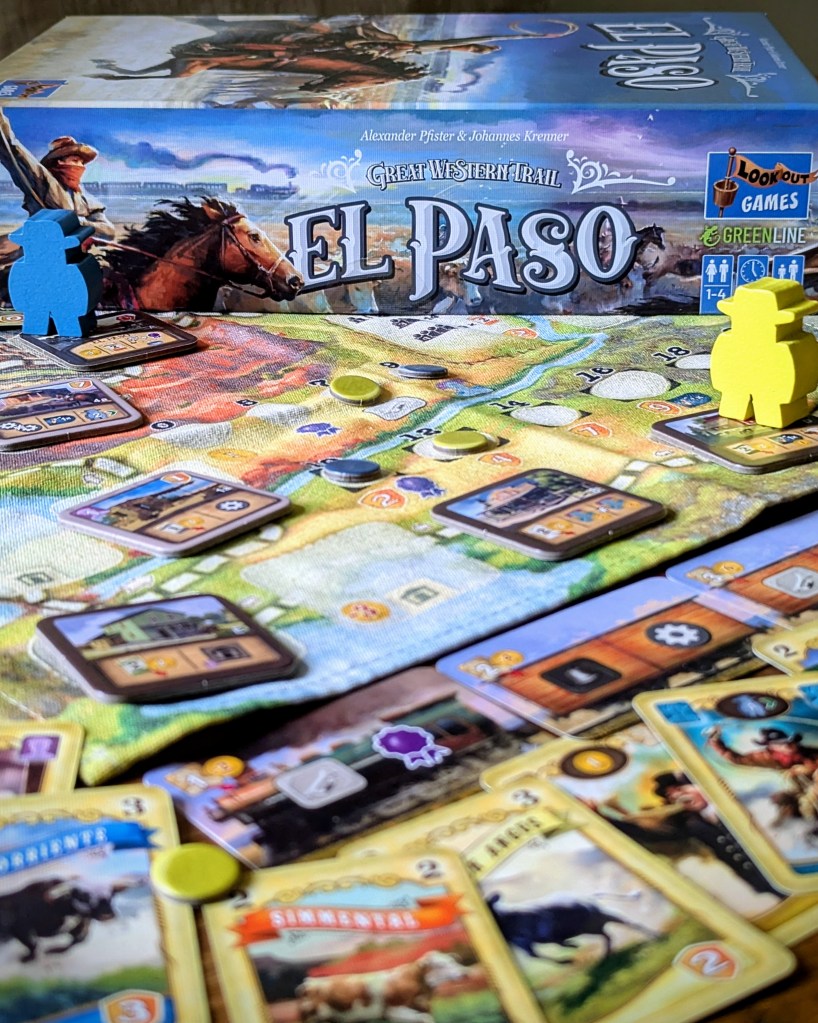
Gameplay overview:
In El Paso, players take on the role of ranchers at the end of the 19th century, trying to collect the best cattle and take them to El Paso in exchange for sweet, sweet victory points. The better the breeding value of each unique cattle card in your hand, the more points you can earn.
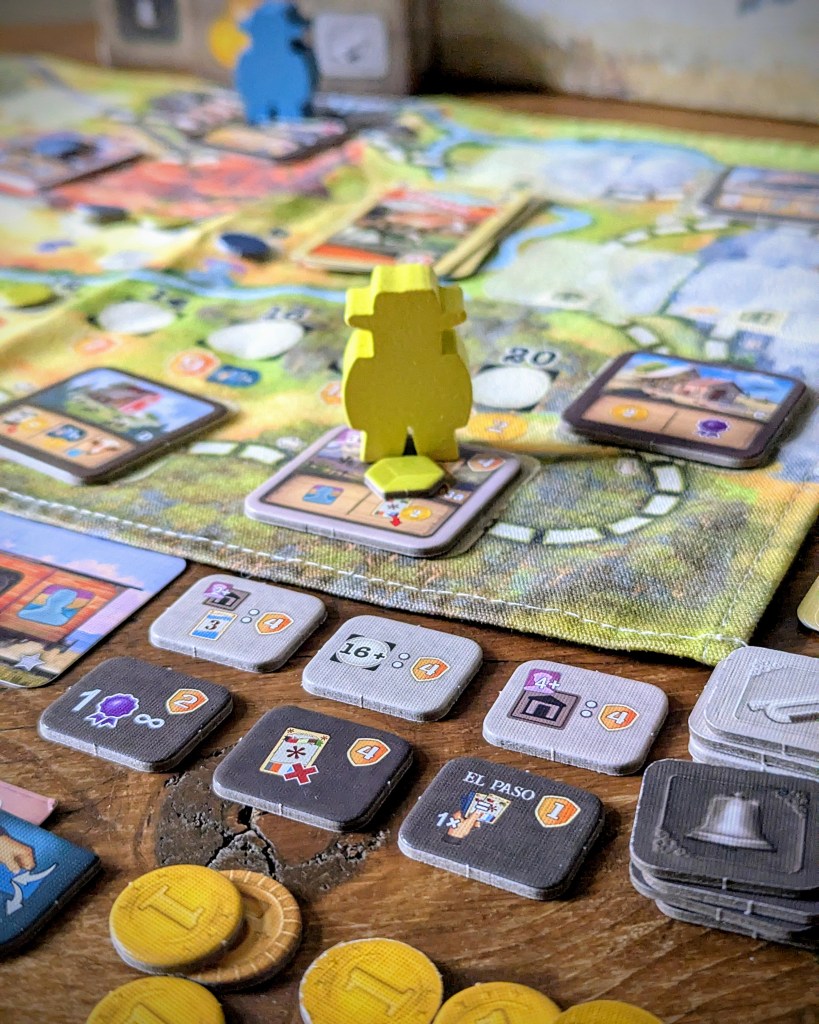
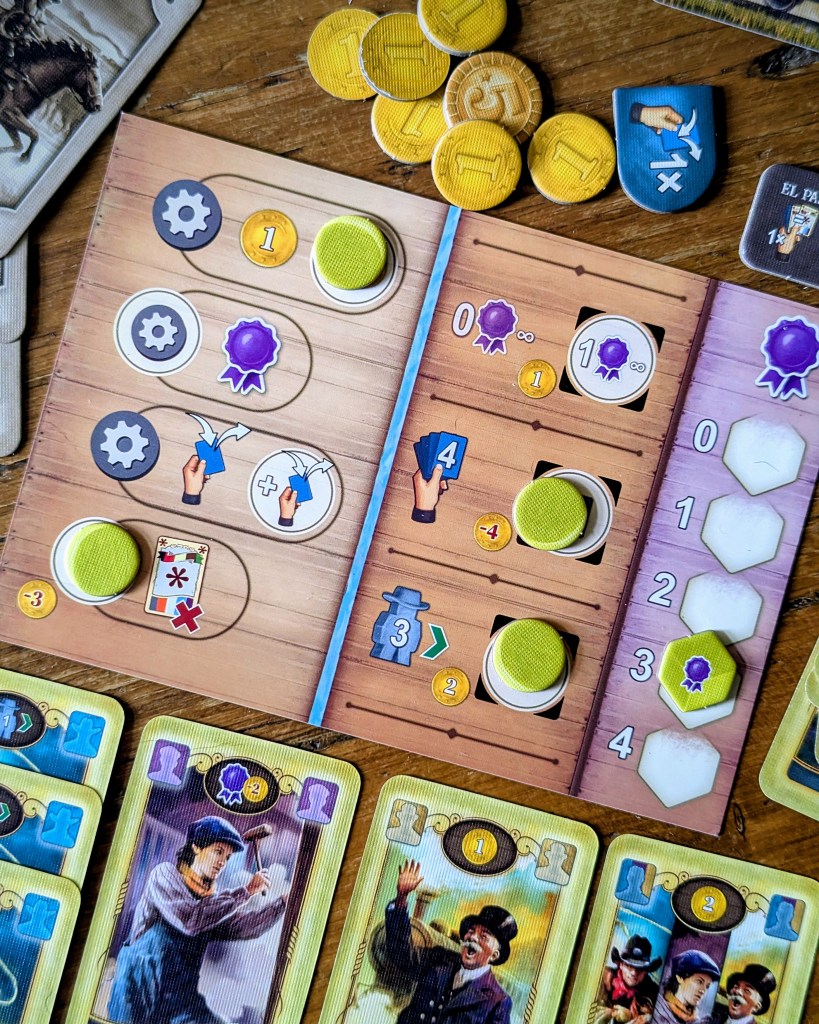
On your turn, you move your herder meeple around the circular route to visit a location, take the actions related to that location and draw up to a full hand of cards. The location actions can include recruiting workers, selling cows from your hand, buying new cows, developing our own personal buildings (with cooler actions!) and claiming bonus or victory tiles. Or there’s ‘auxiliary’ actions, which are listed on your player board – but some of these are blocked by counters that can only be removed when you deliver cows to El Paso.
When you buy a new cow, it gets added to your personal discard pile, which means you need your work through your deck and shuffle back around to get them in your hand. And because you only count breed values at El Paso for unique breeds (duplicate cow cards don’t count!), you’ll want to take actions that help you discard and redraw until you get a hand of coos you’re happy with.
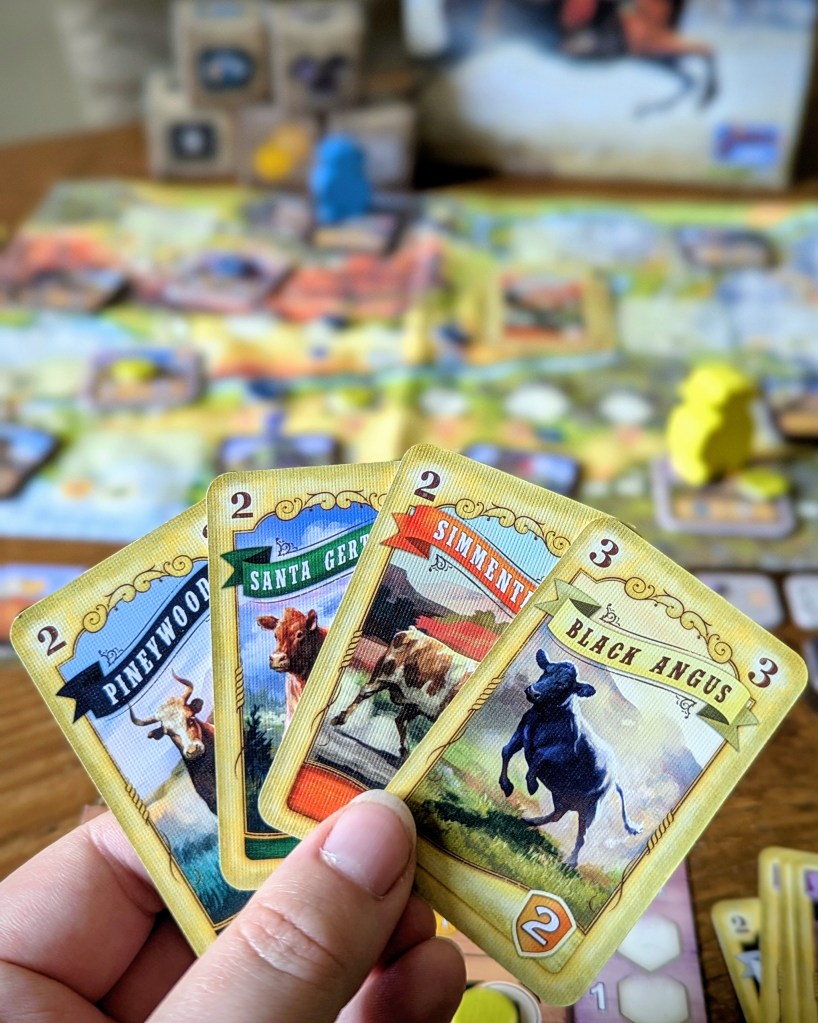
When you get to El Paso, reveal your hand of coos and tot up the breeding value for the unique cows. Then take a counter from your player board and place it on a trading post on the central board that is equal or less than the total breeding value. The removed counter unlocks or upgrades an auxiliary action or permanent effect on your player board (like increased hand size). And don’t worry, you don’t lose your cows – they go into your discard pile for future use!
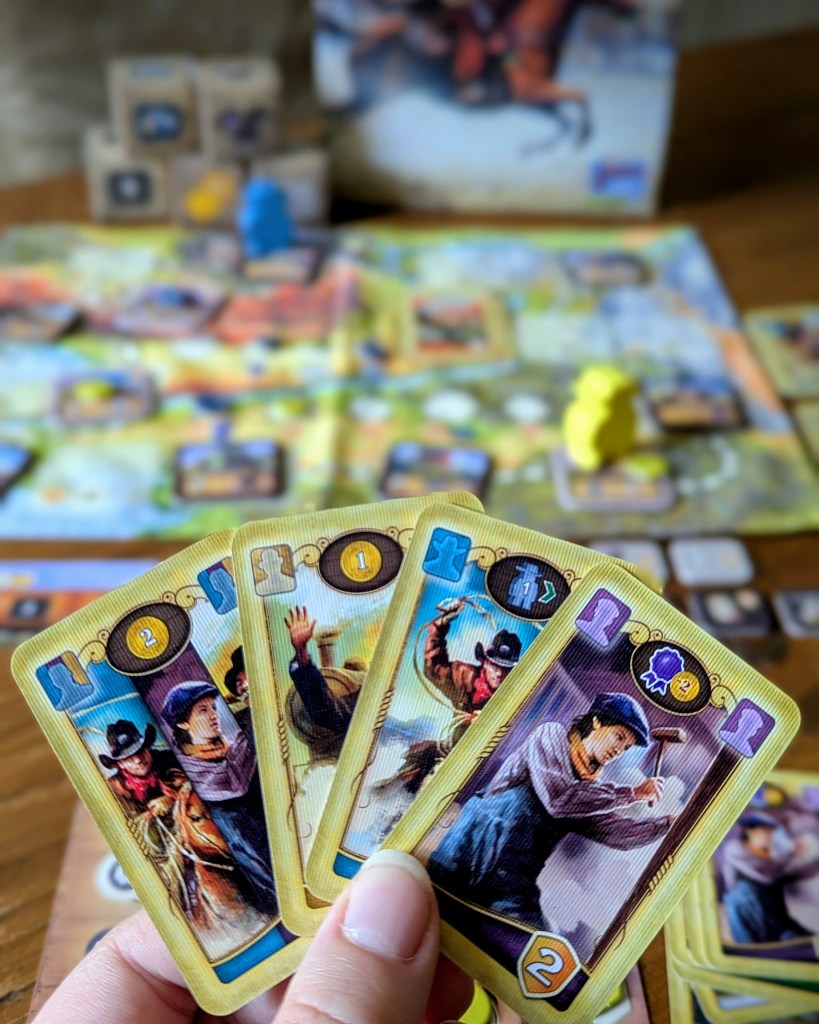
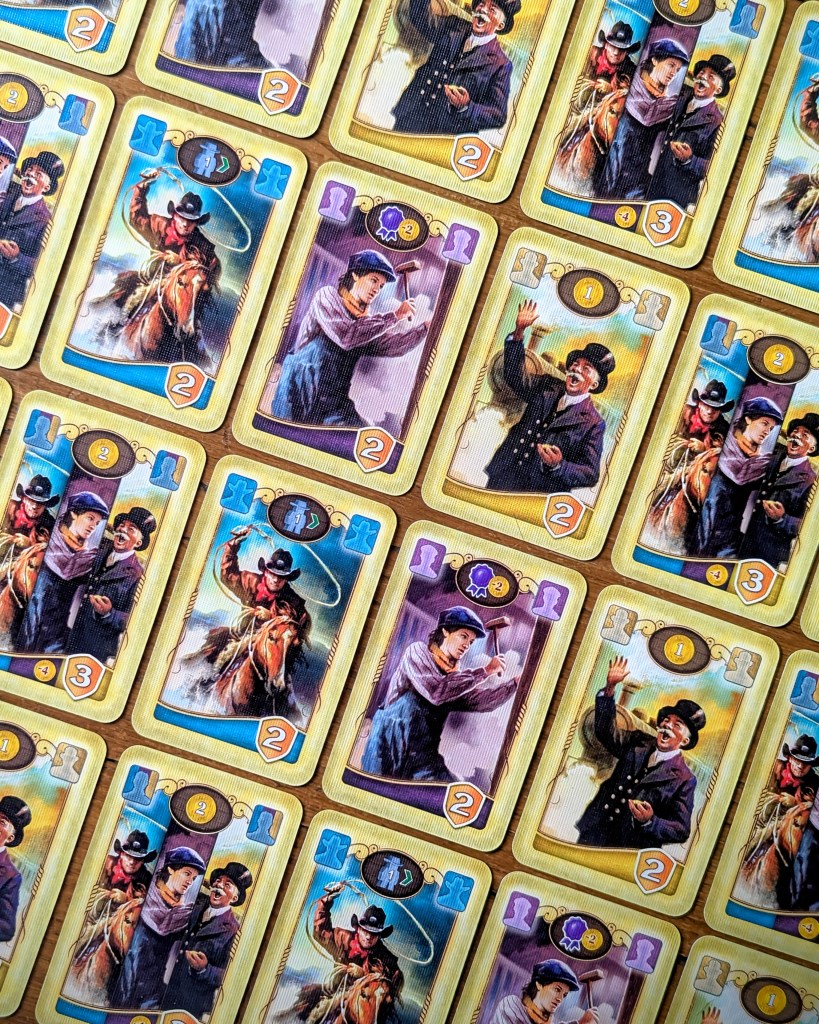
There are 4 types of worker cards in El Paso: Builders help with buildings, Cowboys help with cows, Engineers help with trains, and Wild workers can do any of the three. When you use a worker for their relevant job, they’re discarded into your personal discard pile – which means when you shuffle back around and redraw them, they go back into your worker area and can be used for more jobs! This also means if you recruit more workers as the game progresses, you’ll accumulate more to unlock the better cows/buildings/train actions (as long as you have enough money as well!).
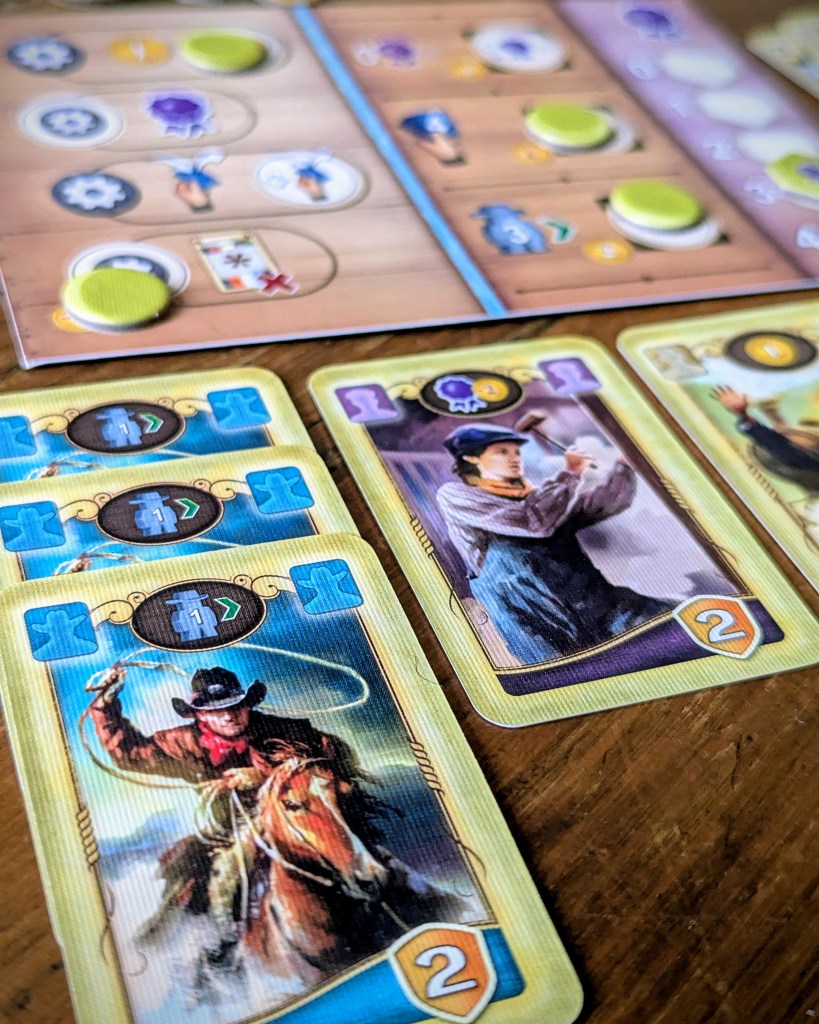
Each time a player gets to El Paso, they take a Simmental cattle card from a central stack and add it to their discard. When the Simmental stack runs out, the next person to reach El Paso triggers the final round of the game. Then, players add up their victory points from:
- Trading posts
- Personal buildings
- Cows
- Workers
- Bonus tiles
- Objective tiles (if they met the objective)
- Any spare coins left (1 point per 5 coins)
Our thoughts:
I’ve never played the original Great Western Trail, nor its newer variations. And it’s not because I wasn’t interested, but it’s the type of game where the stars would need to align for me to have the time, the brainpower and the stamina to play it. With El Paso, I’ve been able to experience the essence of Great Western Trail in a more streamlined package.
Our first playthrough was a long one as we got to grips with the rules and iconography – and there’s a fair few icons to get your head around! The rulebook was well laid out and clear, which helped. A lot of the iconography is described in an additional digital appendix linked in the rulebook. Unfortunately the QR code takes you to the German version, so it’s a bit of a faff to get to the right one (changing the language on the page resets you back to the homepage). But we found after our first game we were familiar enough with the icons and gameplay that we didn’t really need to refer to the rules or appendix again.
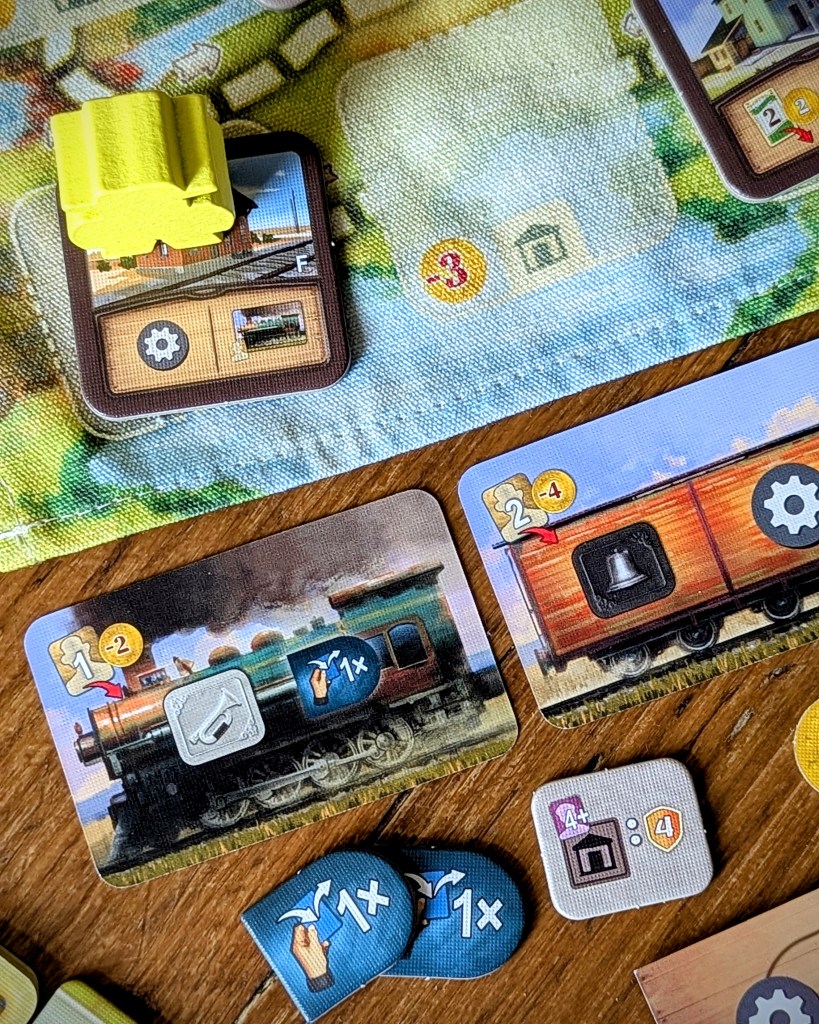

We really enjoyed the El Paso gameplay. I particularly enjoyed the deck and hand management aspect: how you’re optimising your hand to have not just the ‘best’ cows, but also different breeds. I also liked that you manage your workers through your deck (when used) allowing you to use them, but regain and accumulate more workers to take stronger action choices later on. There’s also an interesting balance in where you stop (or how often you stop) as you complete each loop of the board. Do you try to do as much as possible, or forge ahead to progress to the endgame?
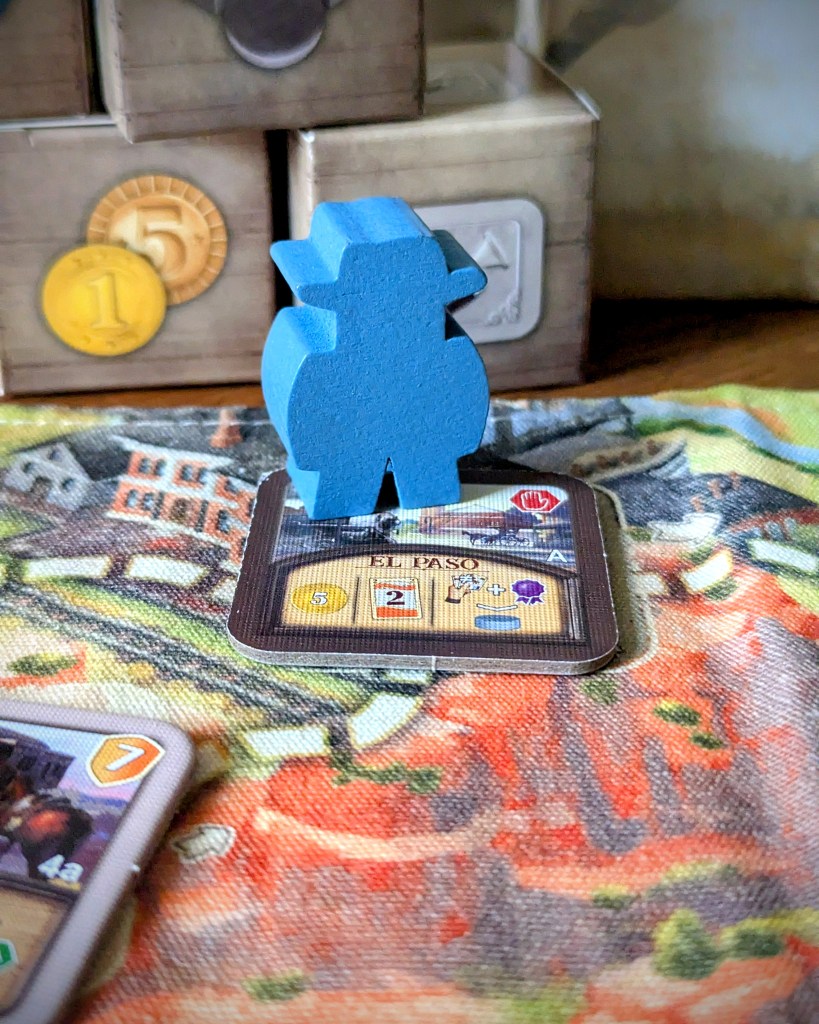
There’s a fair amount of variability from the location tiles to keep future games interesting. You can mix up the positions/order of the neutral locations at set up. And all the location tiles are different on each side, giving more options and variability to choose from. There were some actions that we didn’t use much in our 2-player games, but I think they’ll become more important in 3+ player games, e.g. taking extra movements (with more players there’ll be more locations that you’ll need to travel through). So I’m looking forward to exploring how my game plan changes when we play with our friends.
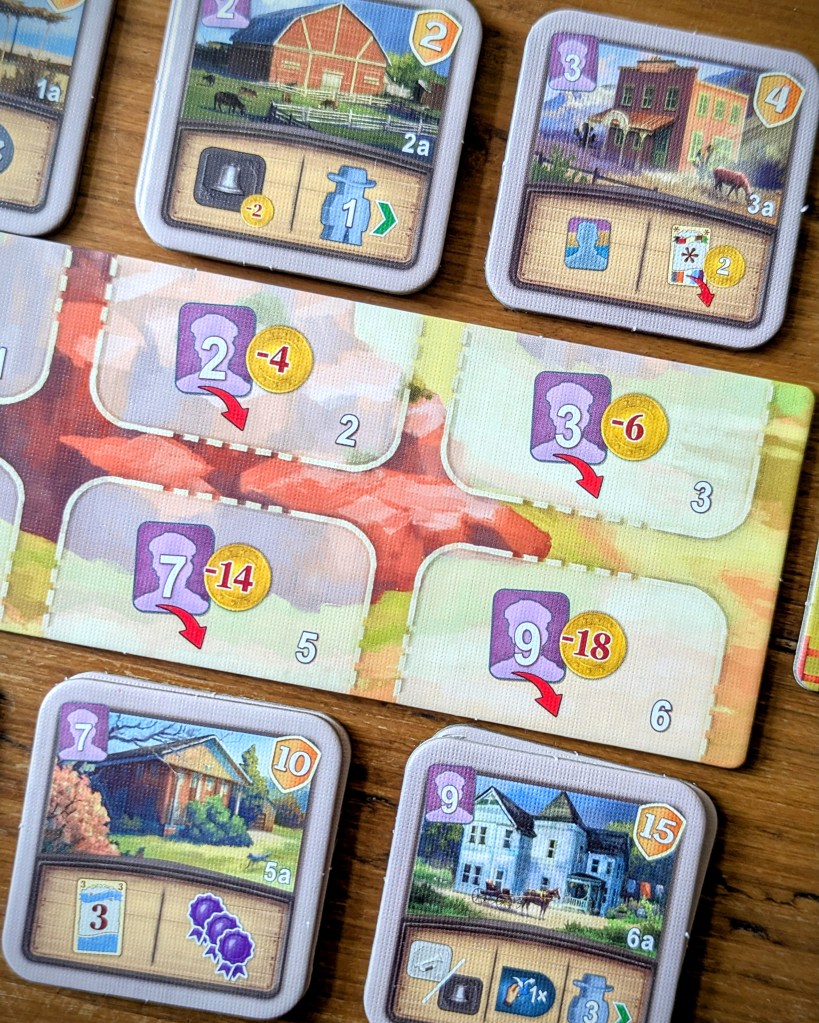
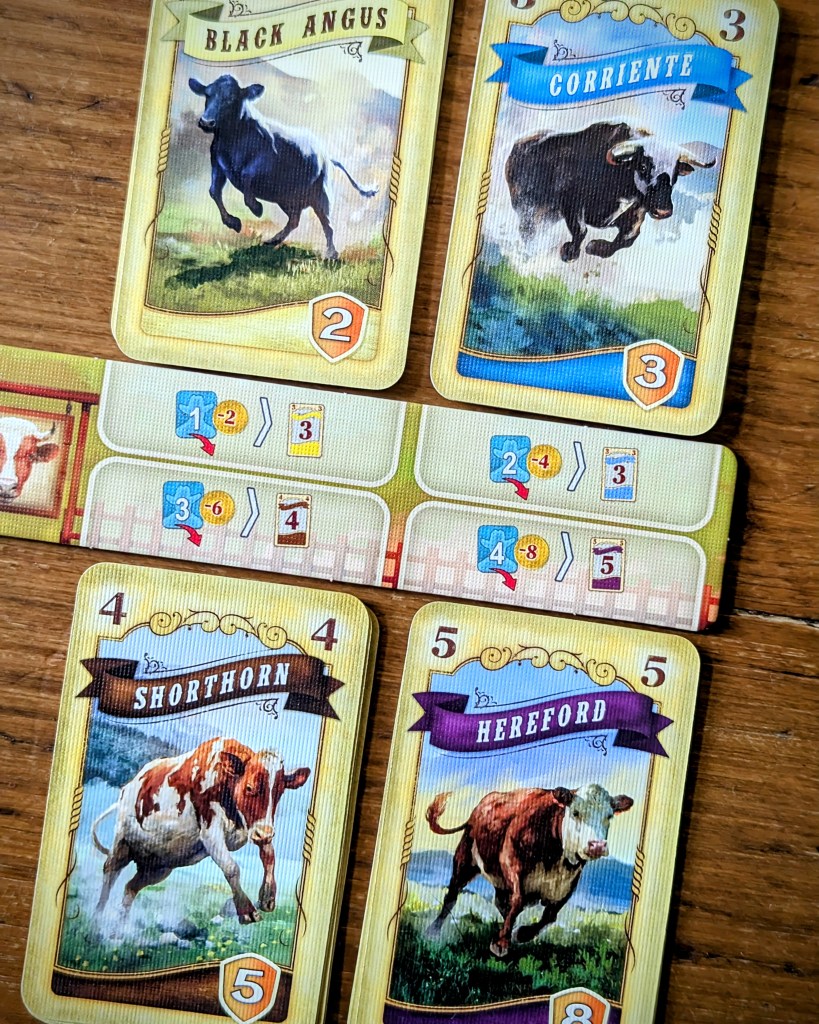
There are three main paths to develop your victory points: constructing buildings, buying cattle, taking cattle to El Paso to grab trading posts, and securing bonus/objective tiles from the train. I find the train actions less appealing, because you can’t use the same item to complete more than one objective (e.g. you can’t use the same Corriente cow to complete two objectives, you’d need a Corriente cow for each one). So completing objectives feels like a lot of effort for few points. I preferred to concentrate on buildings and coooos, which felt more rewarding.
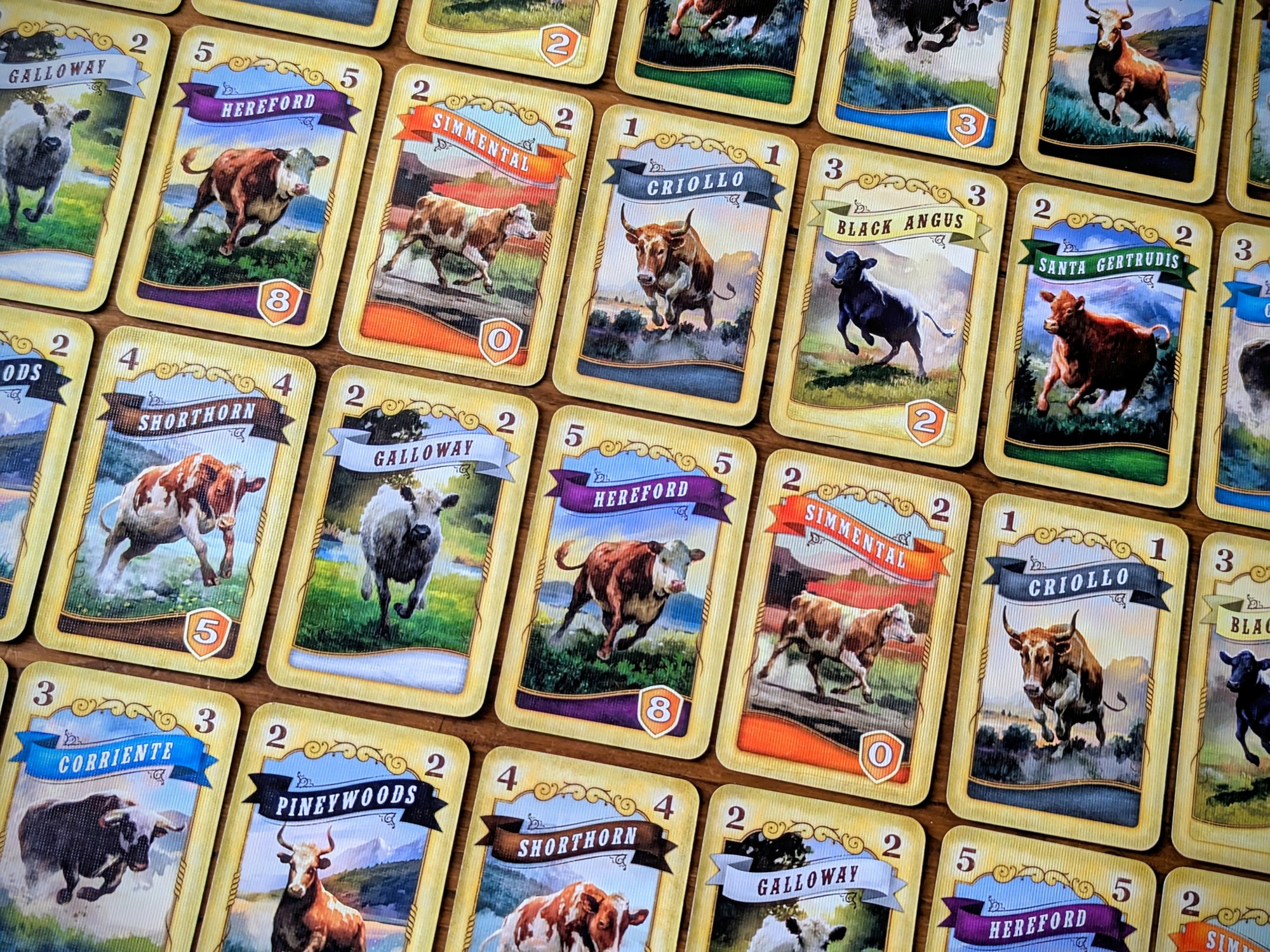
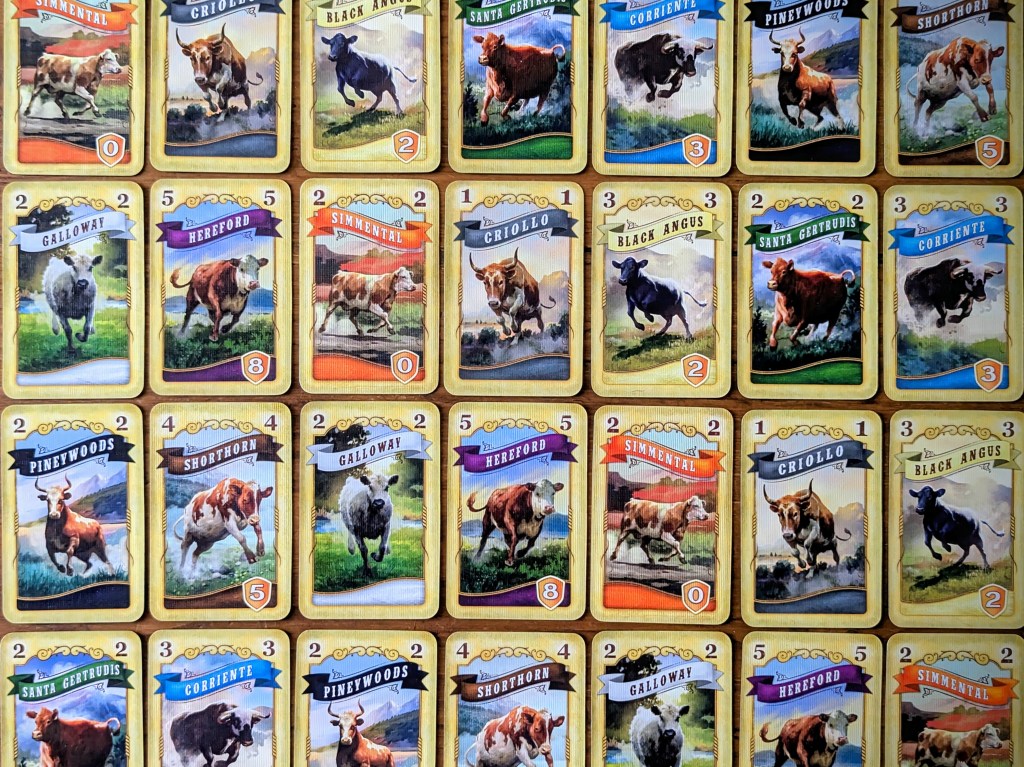
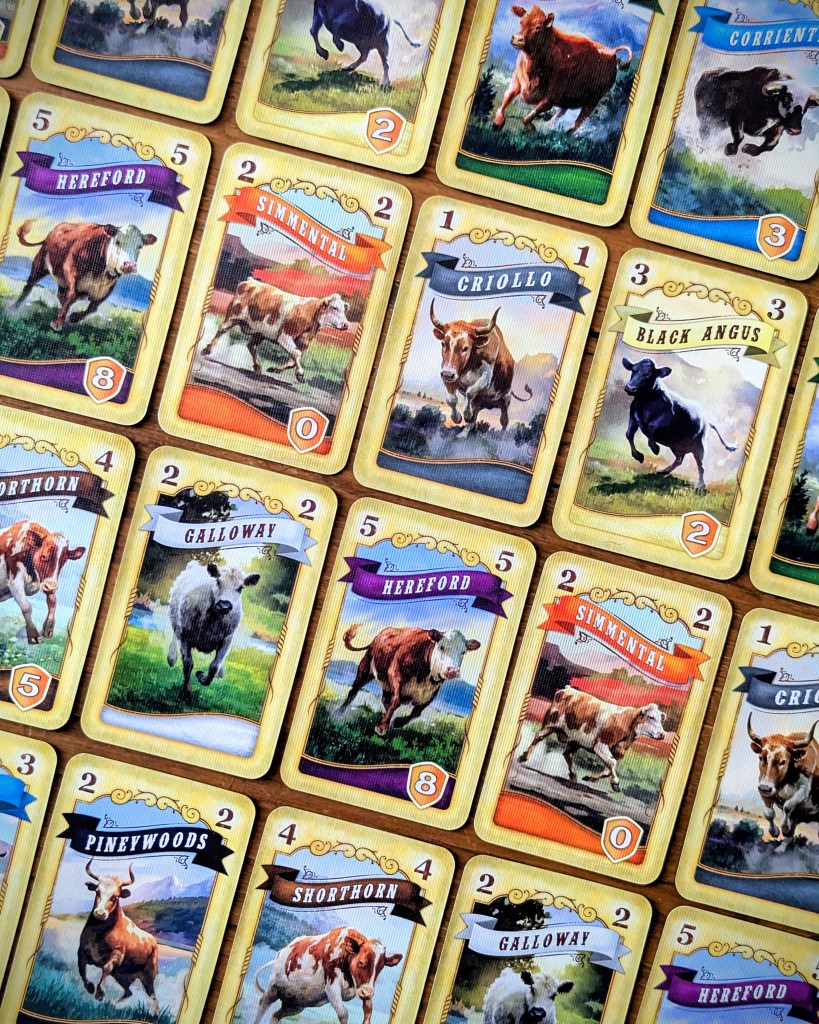
Speaking of coos, look at the coooooooos! I thought they were cute, but I’ve always had a soft spot for cows.
El Paso is part of Lookout Games’ Greenline series, board games that aim to be more ecofriendly. We applaud Lookout Games for exploring greener initiatives (more publishers should do the same!), but I’m undecided on some of the component choices. The board is made of cloth (I believe cotton) – and I don’t mind the choice to use material but it does have creases from storage. I actively avoid ironing my clothes, I’m not about to pick up the habit for board games! I would also prefer proper (wooden) player cubes and discs than flat cardboard tokens designed to look like cubes and discs, but maybe there is an environmental reason for sticking with cardboard.
Our main gripe with components though is with the cardboard tuck boxes for token storage. We like that Lookout Games provide storage, but the icons are printed in random orientations on the box. Also, by putting icons on the boxes they have predetermined what you should use the boxes for – and it isn’t always the way we think board gamers would want. For example, there’s a box to store all the player tokens together, whereas we prefer to keep each player’s components separate for a quicker setup. If the boxes weren’t labelled it would give more flexibility.
What we like:
- Adorable coos!
- A great introduction to the Great Western Trail series and an accessible entry point. Some Great Western Trail lovers may not enjoy the simplification; others might like that it helps them scratch the GWT itch when they can’t get a ‘big box’ game in.
- The gameplay is engaging and we really enjoyed the deck and hand management aspect. Also the decisions of what actions you stop for versus progressing around the board and timing your El Paso stop.
- The game variability, mainly with additional set-up options for building tiles. There’s also different bonus tiles that come out in a game.
- There’s a lot of iconography to get your head around but the rules and digital appendix helped and we quickly picked the gameplay and icons up in the first game. We would have preferred to have the digital appendix in the box as standard though.
- Lookout Games tried some new eco ideas with game materials as part of their Greenline initiative – would love to see more publishers do this!
Considerations:
- Some of the component implementations could be better (although some of them may be down to making ecofriendly choices).
Final verdict:
El Paso is a more accessible entry point into the Great Western Trail series and a great introduction to what the series has to offer.
El Paso is, for people like me, a more accessible entry point into the Great Western Trail series – in cost, time and complexity – and a great introduction to what the series has to offer. Yes, it’s a simpler iteration, but it’s been a great way to dip our toes into the gameplay and now I definitely want to check out the bigger versions! And whilst it might feel simple to a seasoned Great Western Trail fan, it’s a great option for when they’re short on time but want to scratch the ranching itch (or introduce newer players to the mechanics!).

 Our Board Game Life