
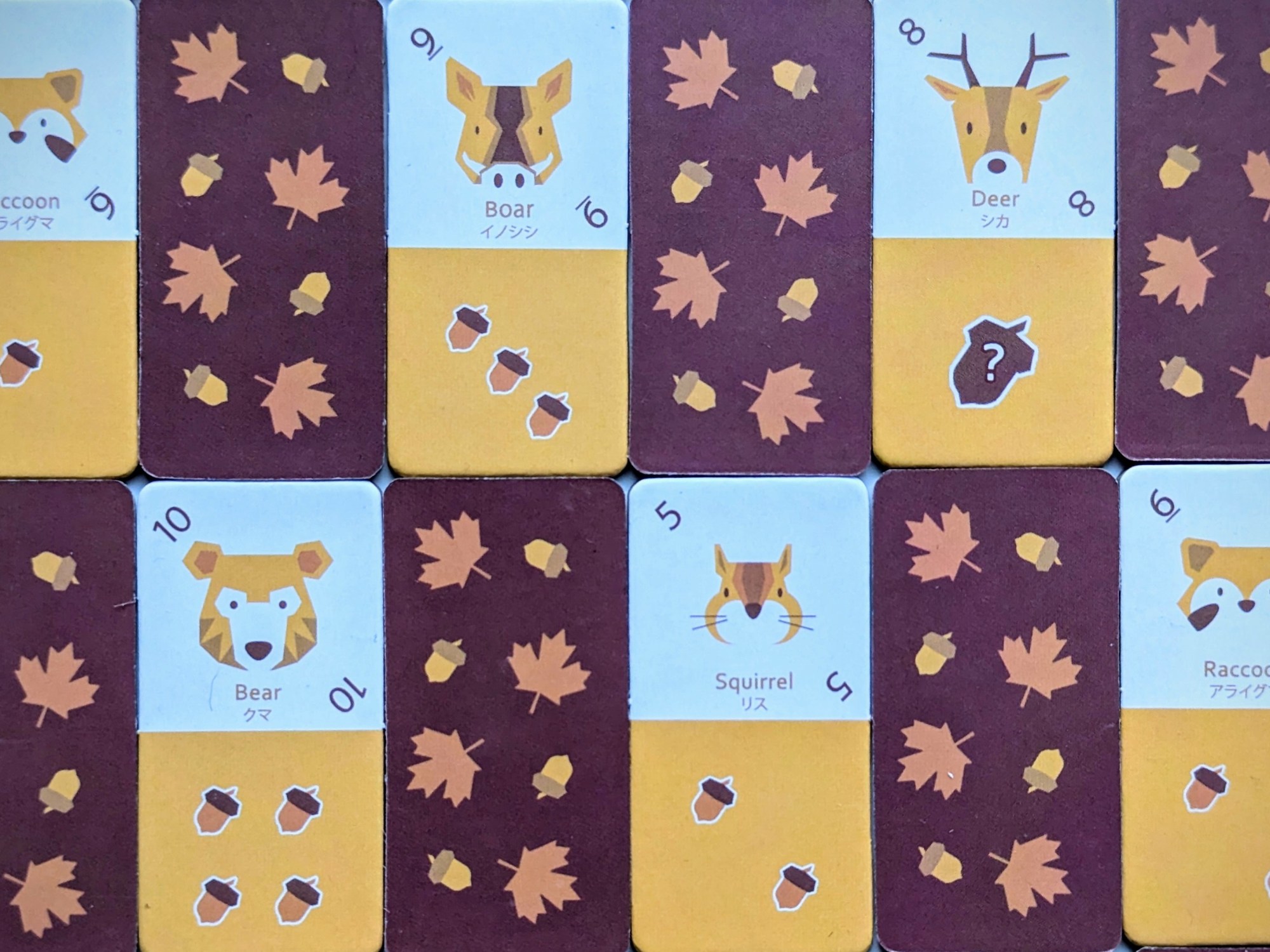
Advert: This game was loaned by Phantomlab via the UK Board Game Review Circle. All opinions are ours and our reviews are always honest.
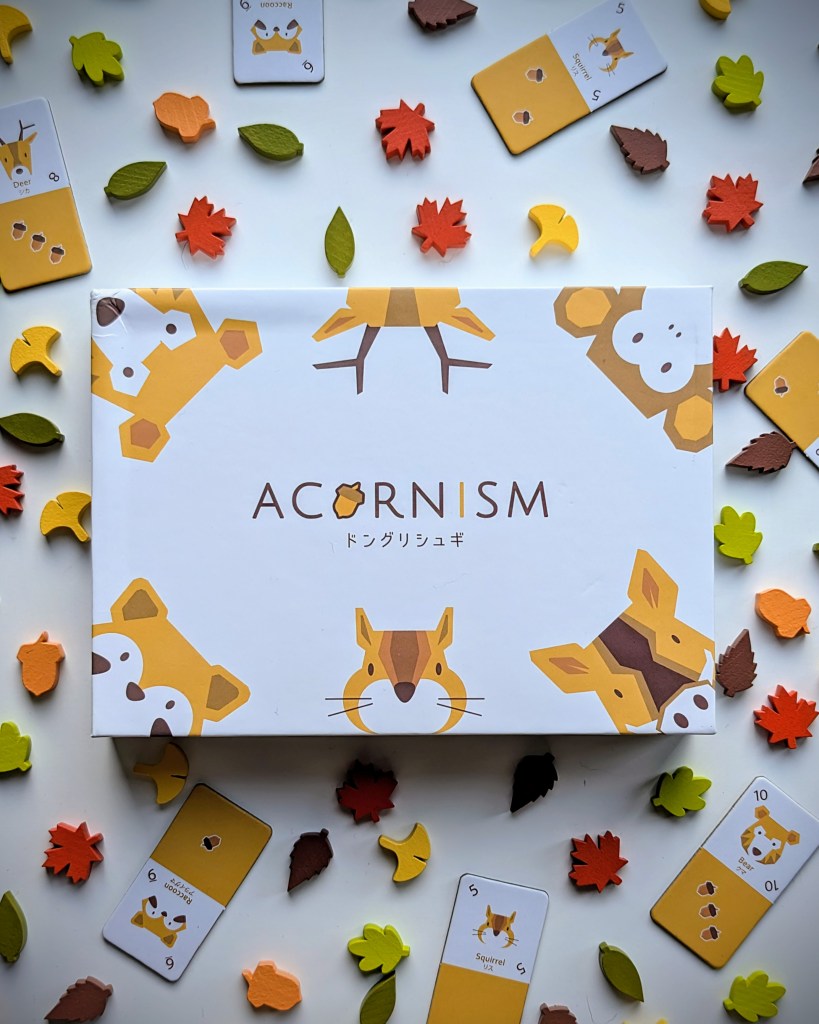
It’s feeding time in the forest! All you have is acorns, but luckily that’s what every animal in Acornism forest is craving.
👥 2 to 4 players
⌛ 15 to 20 minutes
🧠 5 years+
Gameplay overview:
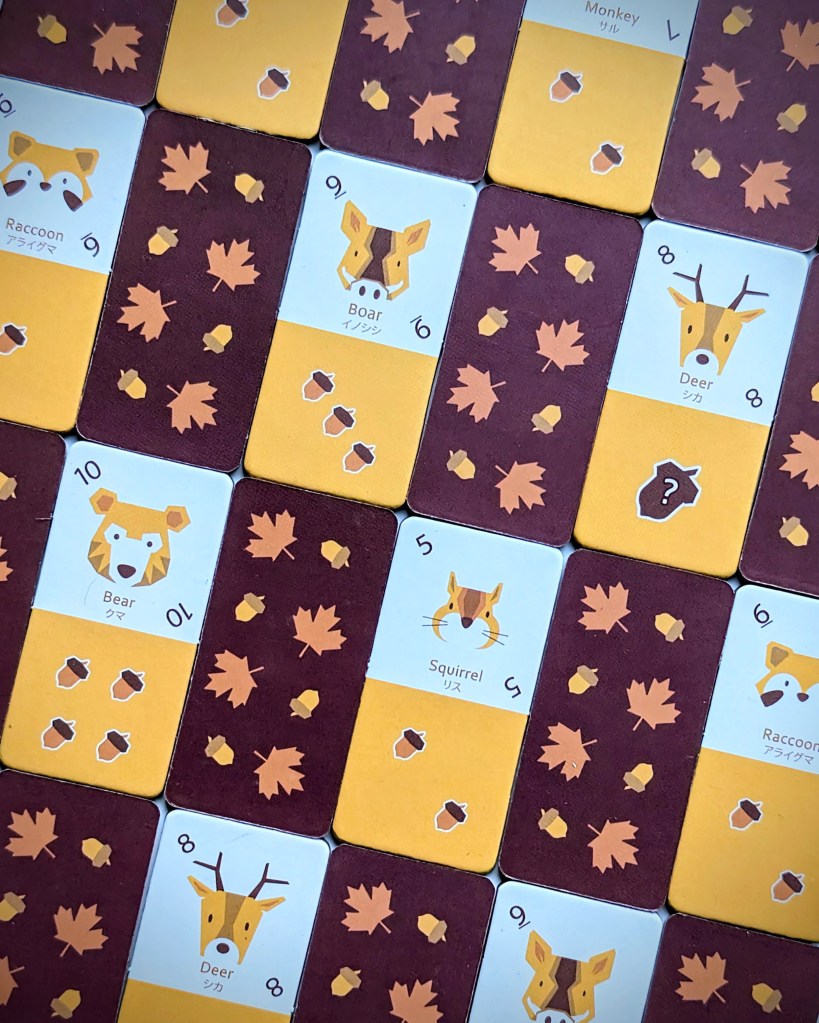
In Acornism, players take it in turn to play small domino-style tiles in a grid: one side has a cute but hungry forest critter, and the other has up to 5 acorns. You can only place acorns adjacent to critters, and vice versa. If a critter gets surrounded on all 4 sides with the EXACT total number of acorns they ask for, the player who covers the 4th (final) side gets to claim that animal and score those delicious points.
Be wary – you can’t place tiles that would overfeed the animal (i.e. the sum of the acorns can’t be more than the animal’s number), and you can’t place a 4th tile that would leave the animal underfed. It’s also possible to fully satiate an animal before all sides are covered, e.g. the total acorns on two sides matches the critters number, so any further tiles are impossible to place and that animal can’t be claimed!
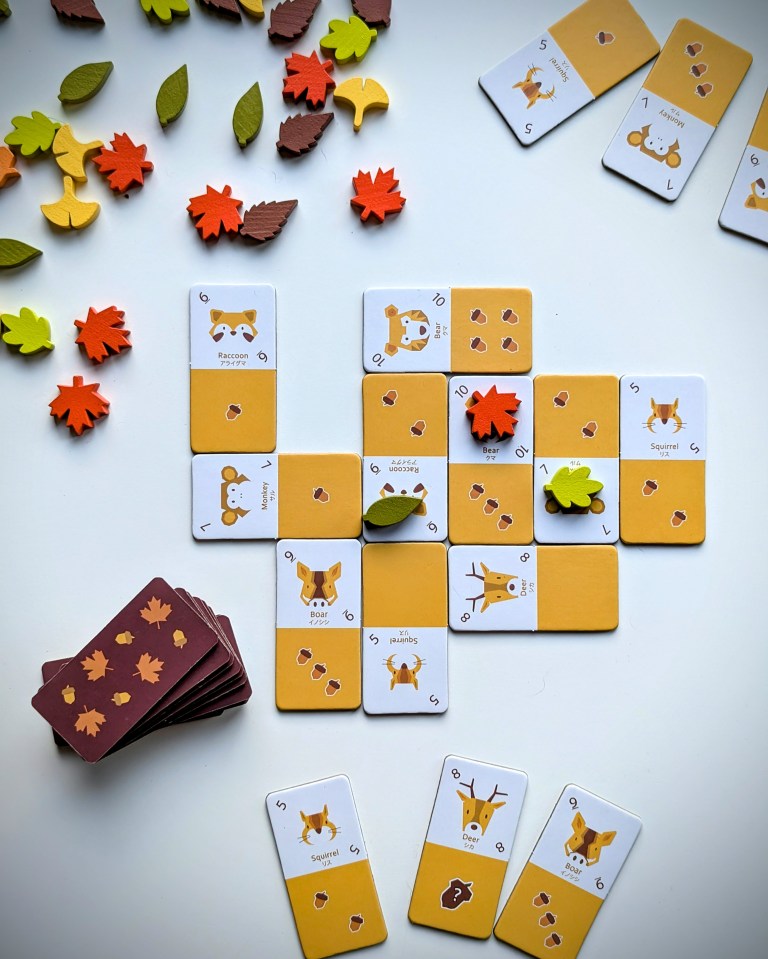
Players draw their 4 tiles from communal stacks and have them face up for everyone to see. When you place a tile, you draw back up from the stack. One tile in the game has a magic acorn which can be played to represent any number (but once placed and declared this is set for the rest of the game).
When no one can place any more tiles, the game ends and the person with the most points wins!
Our thoughts:
- There’s more strategy to this game than we expected as you try to set up animals without giving them away to your opponents. We liked being able to see each other’s current tiles to help plan our future moves and predict what our opponents were trying to do. And keeping within a 8×8 grid keeps the game tight and forces you to compete for critters.
- Although it was fun to a degree, the ongoing acorn counting was a bit too mathy for us to fully enjoy.
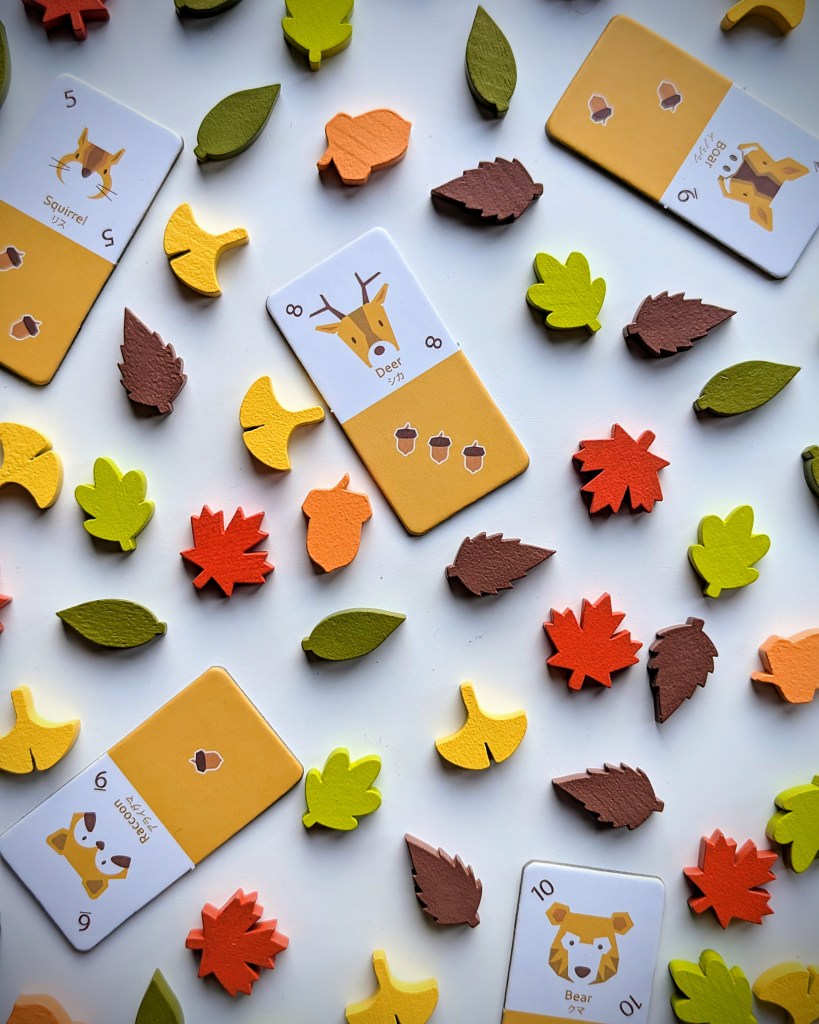
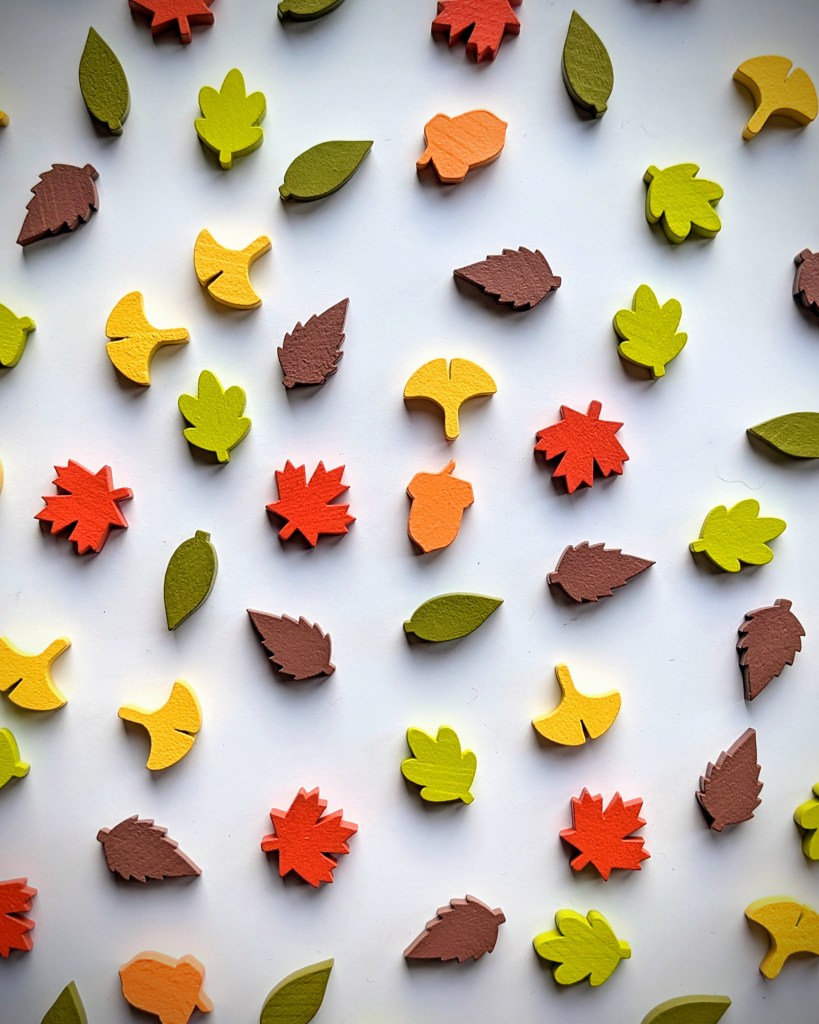
- The player tokens are different leaves and we thought these were really cute (I especially liked the yellow ones – I think they might be gingko leaves?). We didn’t really understand why you were supposed to use two sets of leaf tokens each in a 2-player game – we were always fine just using 1 type and didn’t run out.
- Having just one magic acorn felt a little tokenistic and didn’t really add much to the games we played. We think it would have worked better if there were a few more in the stacks or if every player started the game with one.
- Some of the domino sides don’t line up, which made them feel a bit low quality.
Final thoughts:
Acornism feels suited for a family with younger kids – especially if you want them to practice basic addition in a fun way.
We enjoyed playing Acornism and liked the cute aesthetic. Unfortunately we weren’t wowed by it – while there is some strategy to placing tiles, the acorn maths felt a bit like being in school (albeit a very easy school!). So in our opinion Acornism feels suited for a family with younger kids – especially if you want them to practice basic addition in a fun way. We would play it again if someone else wanted to, but we wouldn’t choose to play it together over other games.

 Our Board Game Life