

Can you hear that? It’s the gnomes gathering in a nearby magical meadow to share their enchanting melodic medleys…Let’s join in and sing with the PalinGnomes!
👥 2 to 4 players
⌛ 15 minutes
🧠 6 years+

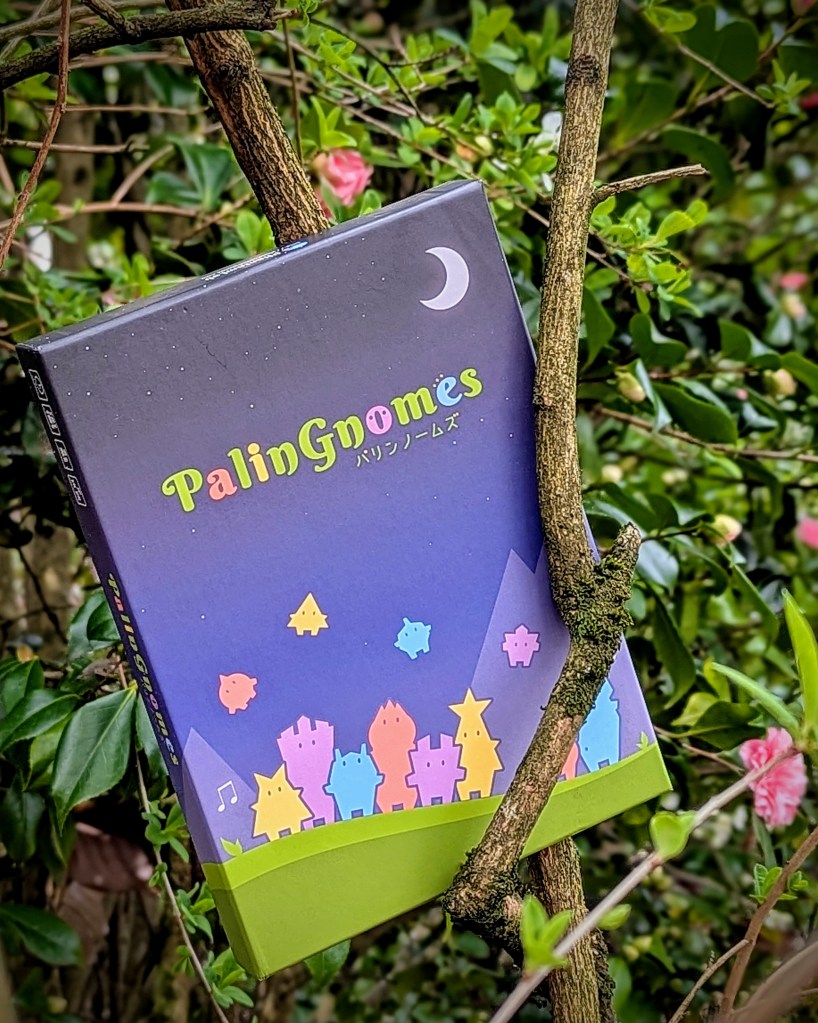
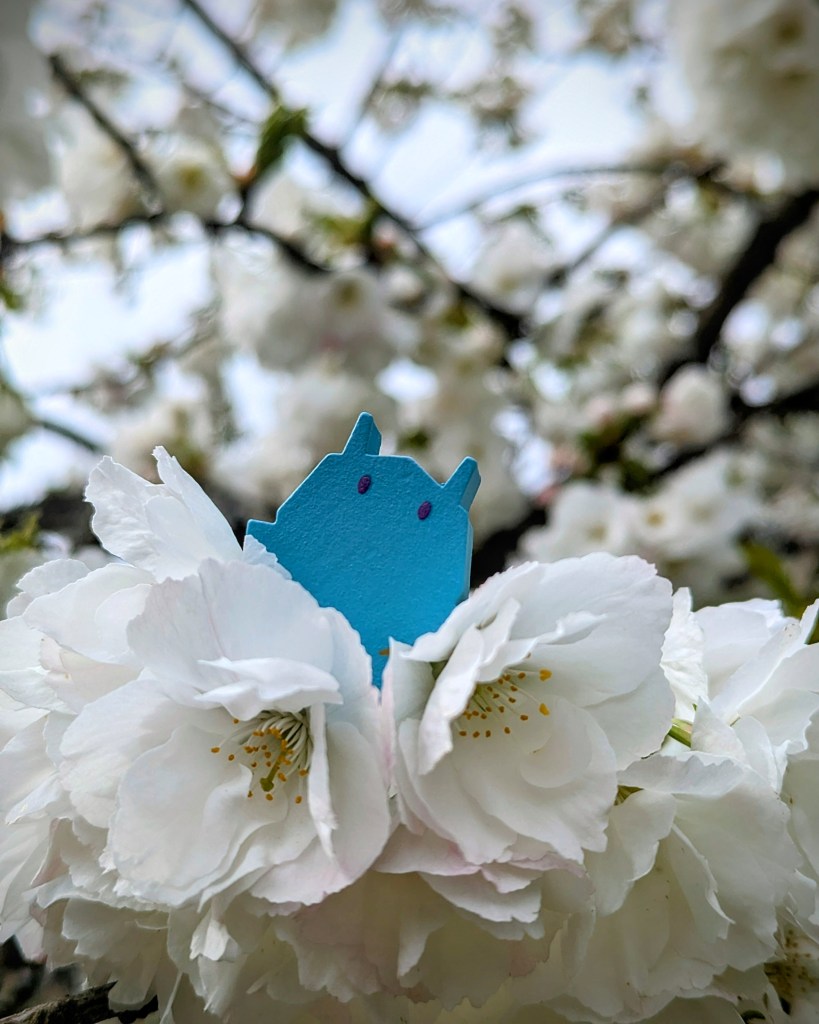
Gameplay overview:
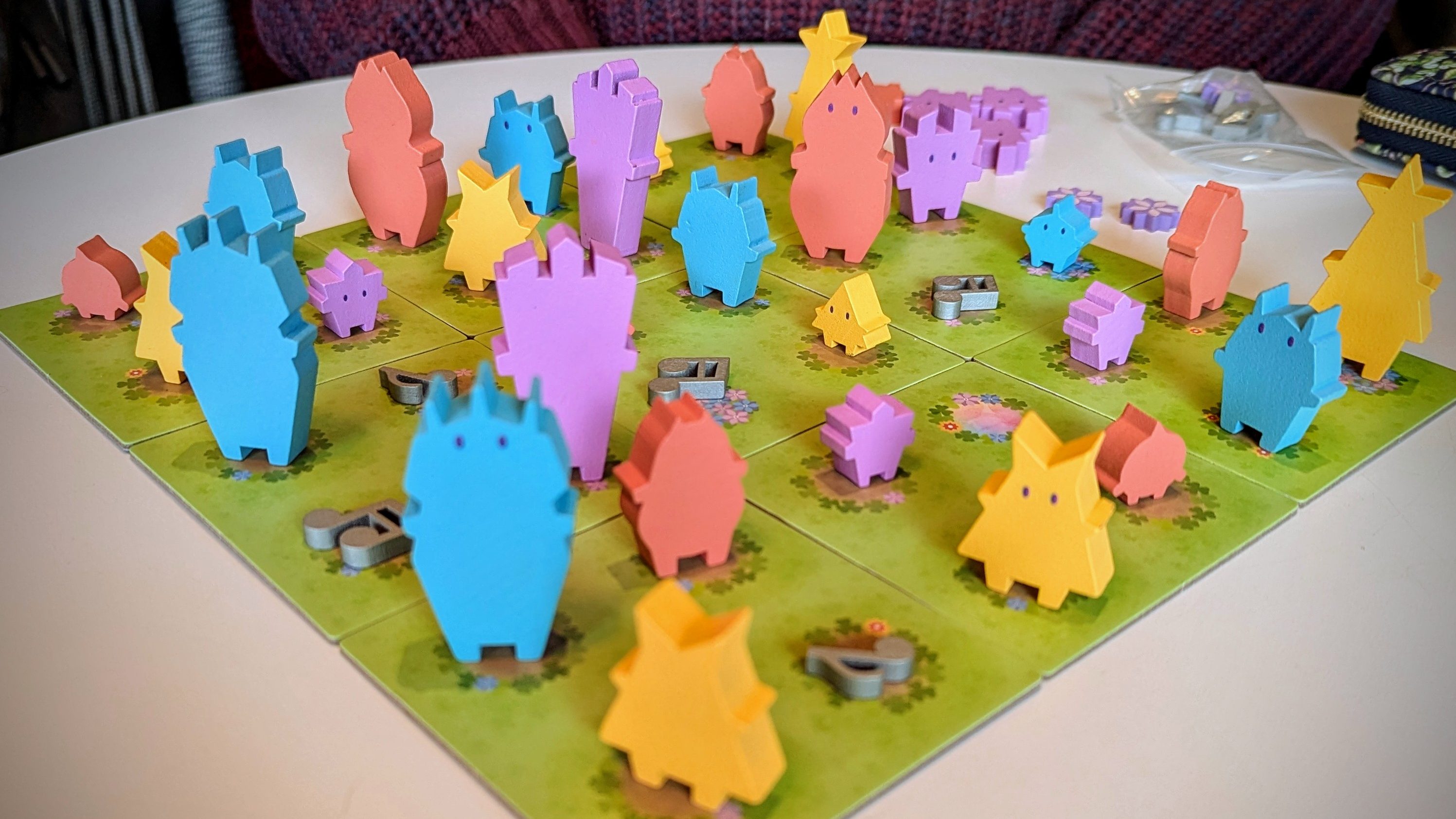
Each player represents a different gnomic tribe coming to the meadow for a group singsong. Players take turns placing their gnomes on spaces in the meadow. But the gnomes are very particular: you can’t place gnomes from the same tribe next to each other, and gnomes in rows and columns have to be placed in a particular size order. And you want to make sure your gnomes grab the best spots to nail those harmonies!
You can only place a new gnome next to either the Magical Spring or other gnomes. And gnomes can only be placed next to gnomes in sequential ascending or descending lines, e.g. small-medium-big-medium-small or big-medium-small-medium-big. You can’t have lines that include small-medium-small or big-medium-big, and small and big gnomes can’t go next to each other. Simples!
There are also some super special spaces on the meadow tiles:
- The Magical Spring space – essentially where the game starts, only little gnomes can be placed next to it and no gnomes can be placed on the spring itself.
- Yellow Flower Spaces – large gnomes can’t be placed here.
- Fields of Flowers spaces – if you place a gnome here you get a cute little flower token, but that’s NOT GOOD! Flowers are -1 point each at the end of the game
- Poisonous Mushroom space – yuck! No gnome wants to stand here. The acoustics are way off.
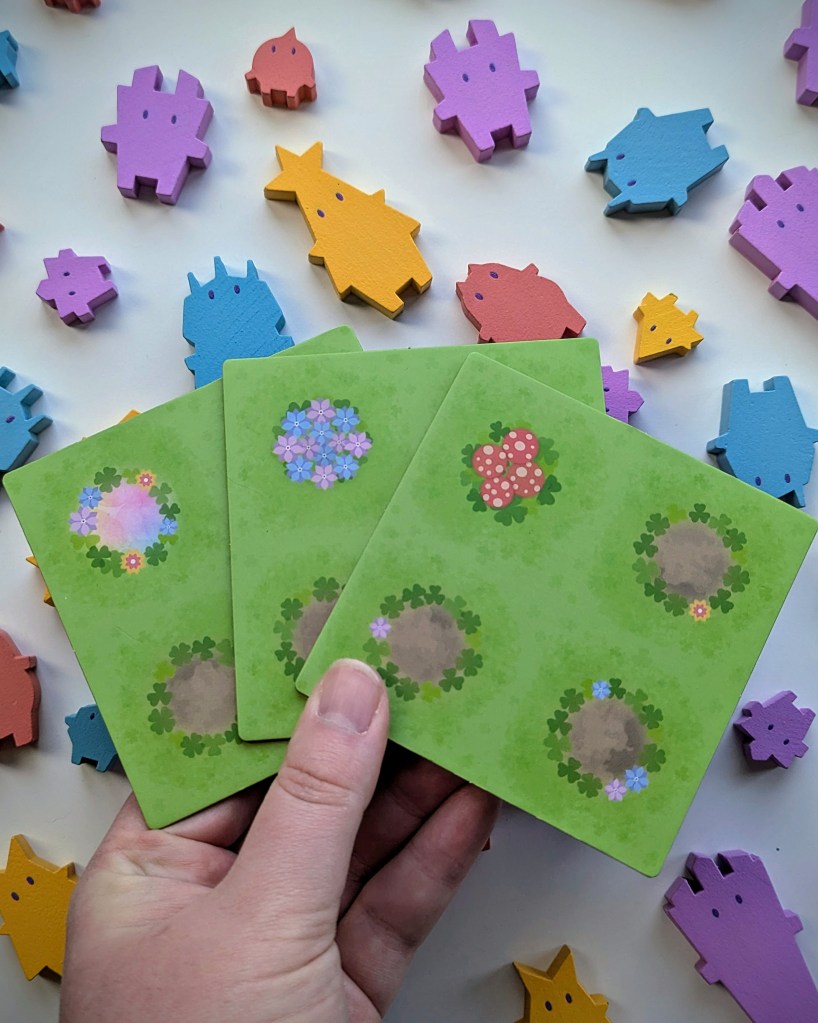
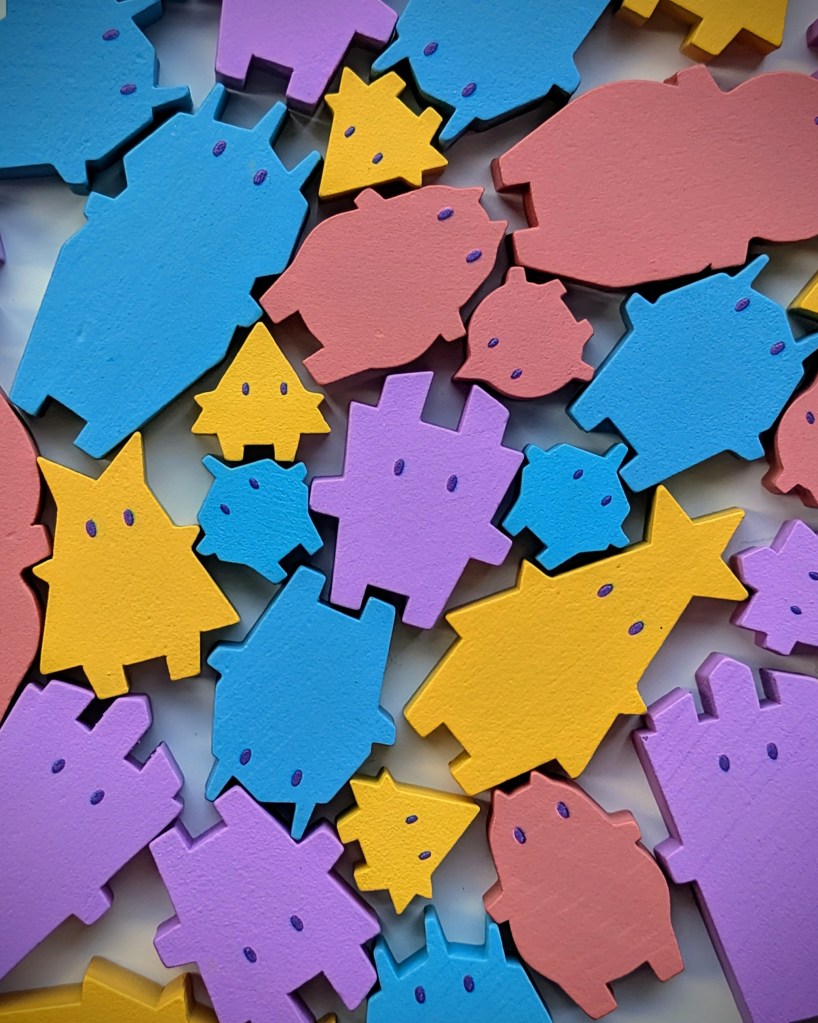
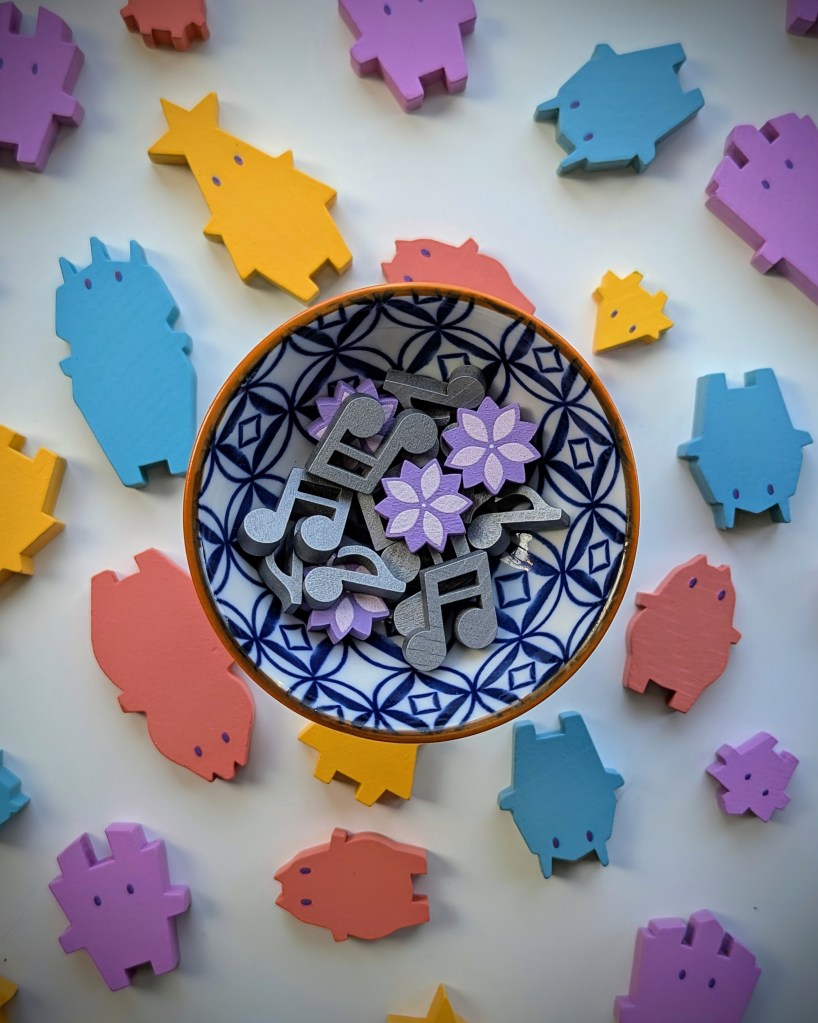
Each meadow tile has space for 4 gnomes. If you take the final 4th space with your gnome, you complete the beautiful harmonies and get to bestow a flower onto another player (if you have one). There are also musical note tokens that can be used to denote (hehe) spaces where gnomes can no longer be placed – usually this is because of a conflict between the vertical and horizontal lines, or if there is a clan member of every colour in adjacent spots.
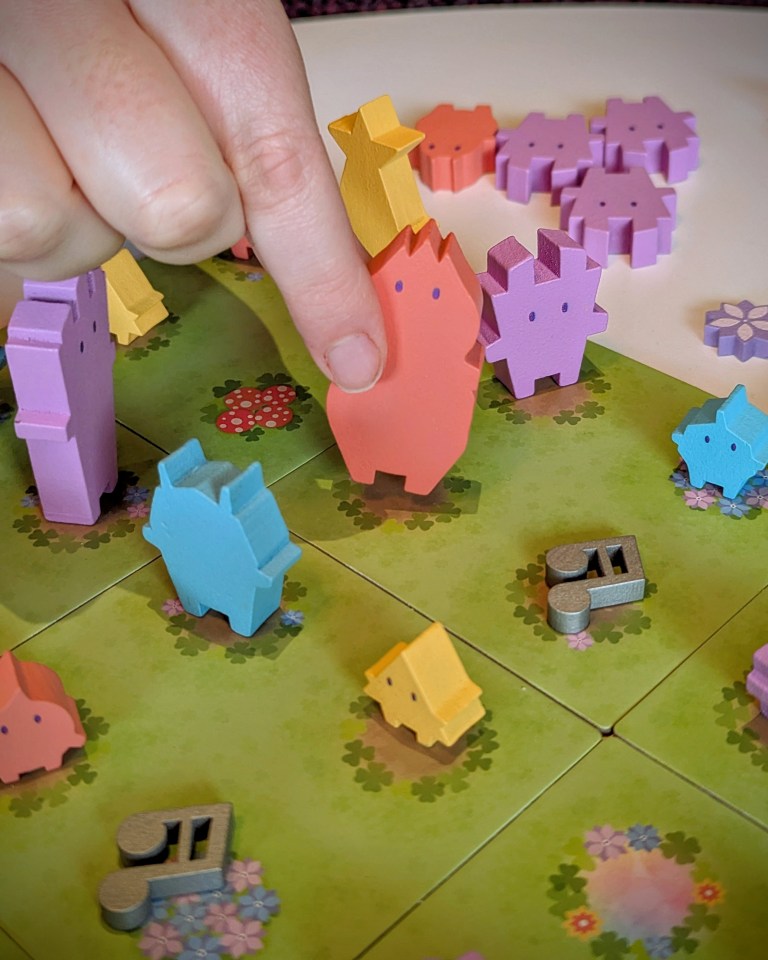
The round is over when no one can place any more gnomes. Players score points for gnomes in the meadow – big gnomes are 3 points, medium gnomes are 2 points and small gnomes are 1 point – minus 1 point for each flower they collected. The game ends after there’s been rounds equal to the number of players – highest score wins!
There are some slight variations depending on the player number:
- In a 2 or 4 player game, all the meadow tiles and clans are used, and if it’s a 2-player game each person uses two clans. Gnomes of the same clan can’t be placed orthogonally or diagonally next to each other.
- In a 3 player game you use less tiles, and you have one clan each. Gnomes of the same clan can’t be placed orthogonally but CAN be placed diagonally.
Our thoughts:
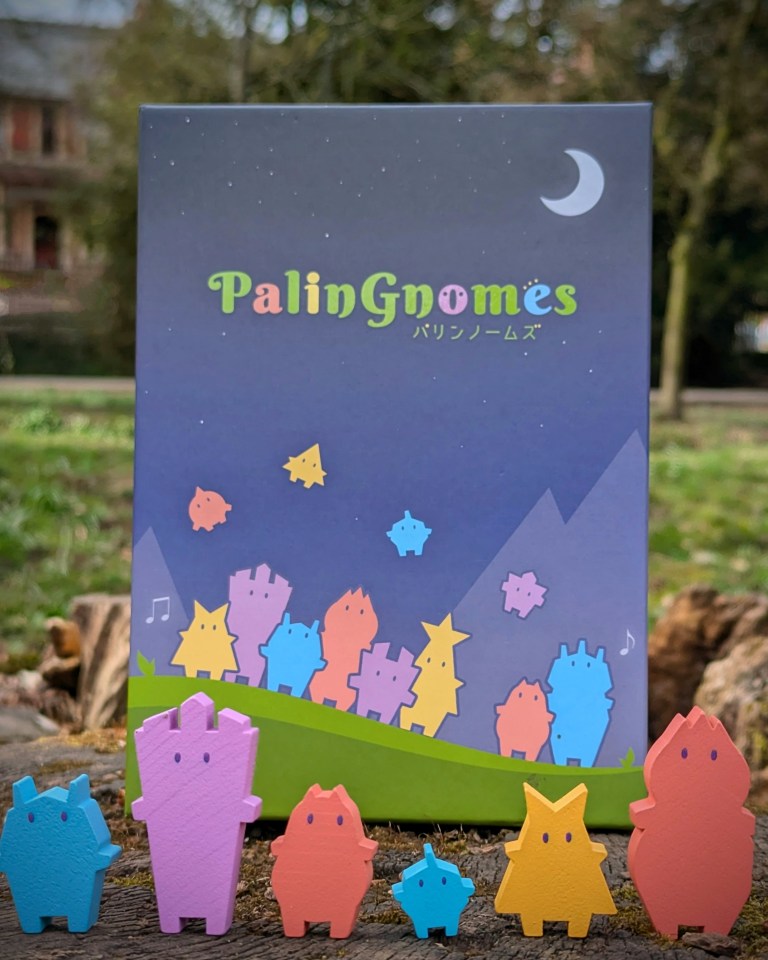
These are the cutest gnome sprites I’ve ever laid eyes on! I love this game: it’s cute but still thinky, and the whole concept of singing gnomes in a meadow is genuinely lovely. The gnome pieces are a nice size and feel quite tactile to boot. And I love how the gnome design is abstract but somehow still adorable – their heads subtly representing how many points they’re worth is a really nice touch. The flower and music tokens are cute too.
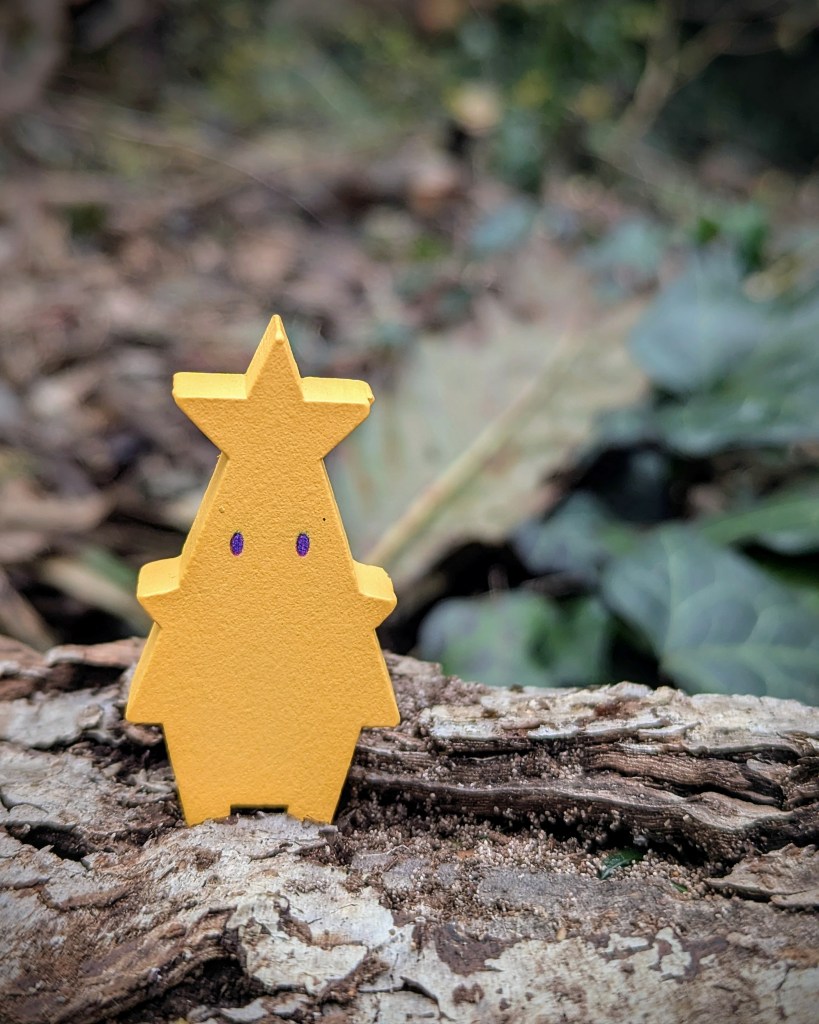
The fun challenge with PalinGnomes is to optimise your gnome placements to get out your best scoring gnomes, to block opponents from placing theirs, or to force them into specific places. The special spaces, like the magical spring and flower fields, add an extra layer of trickiness and I liked that the tile layout is randomised each time to give variability to the placement strategies. The only space that didn’t work for me was having 1 poison mushroom spot, because it felt a bit pointless. Some spaces get blocked as the game progresses anyway (because gnomes can no longer be placed there legally), so having 1 space blocked by a mushroom feels a bit redundant.
The fun challenge with PalinGnomes is to optimise your gnome placements to get out your best scoring gnomes, to block opponents from placing theirs, or to force them into specific places.
The flowers add a fun bit of mischief without being too mean; -1 point isn’t overly punishing but can be the difference between winning and losing! Sometimes placing a gnome on the field of flowers is worth the sacrifice because if you place a large one, you’re still up 2 points. And if you grab the last space on a meadow tile, you can give the flower to someone else anyway! Scoring always felt pretty close between players in our games; you can’t tell who will win and you don’t get one person running away with a big lead, which we appreciated.
When it came to learning the game, we were initially confused by the placement rules for different gnome sizes because we didn’t realise the rule only applies to the straight horizontal and vertical lines of gnomes (i.e. straight rows/columns across the tiles) and not ALL gnome placements. To be fair to PhantomLab, the rules do say this, but it could be explained more clearly.
Once we’d bottomed out that placement issue, learning and playing PalinGnomes was super straightforward for us. But I will say, based on my experience teaching it to my family, it can take time for people to fully absorb the different placement rules even if they understand them. It depends on the person though – it clicked with my sister pretty much straight away and she seemed to enjoy it as much as me.
The flowers add a fun bit of mischief without being too mean; -1 point isn’t overly punishing but can be the difference between winning and losing!
Interestingly, PalinGnomes didn’t click with Matt as much as me. He feels he didn’t always have ‘real’ choices and was often forced to play certain spots. But I personally feel that part of the game is manipulating other players’ placements to your benefit (or minimising what spaces you open up for others). The jury’s out on whether it was truly too predetermined, or maybe Matt’s gnomes kept getting in tricky situations (probably because the game didn’t click with him). He much preferred PhantomLabs’ OrthoGnomes, but I much prefer PalinGnomes!
The suggested age on the box is 6 years and up, which I’m not sure is realistic because of the placement rules and strategy involved. The 15 minute playtime on the box also feels a bit unlikely with 4 players (5 minutes per round?).
Also while we’re on the box – and this is a minor niggle, but – the thin shape didn’t appeal to me at all. I guess I just prefer my game boxes thick and chunky.
What we like:
- Everything about the design, aesthetic and concept – singing gnomes in a meadow is so sweet!
- It’s cute, fun AND strategic. You have to plan gnome placements to benefit you but limit the benefit to your opponents.
- The twist of NOT wanting a flower (gained when placing on a Fields of Flower space) because they are negative points! Giving flowers is also a fun (but not too mean) way to mess with other players.
Considerations:
- The gnome placement rules can be a bit tricky to get your head around, particularly the size rules. The rule book could explain this better.
- Having one poison mushroom space (where gnomes can’t be placed) feels a bit pointless, when some spaces get blocked during the game anyway.
- I didn’t care for the skinny game box – I like them chunky!
Final verdict:
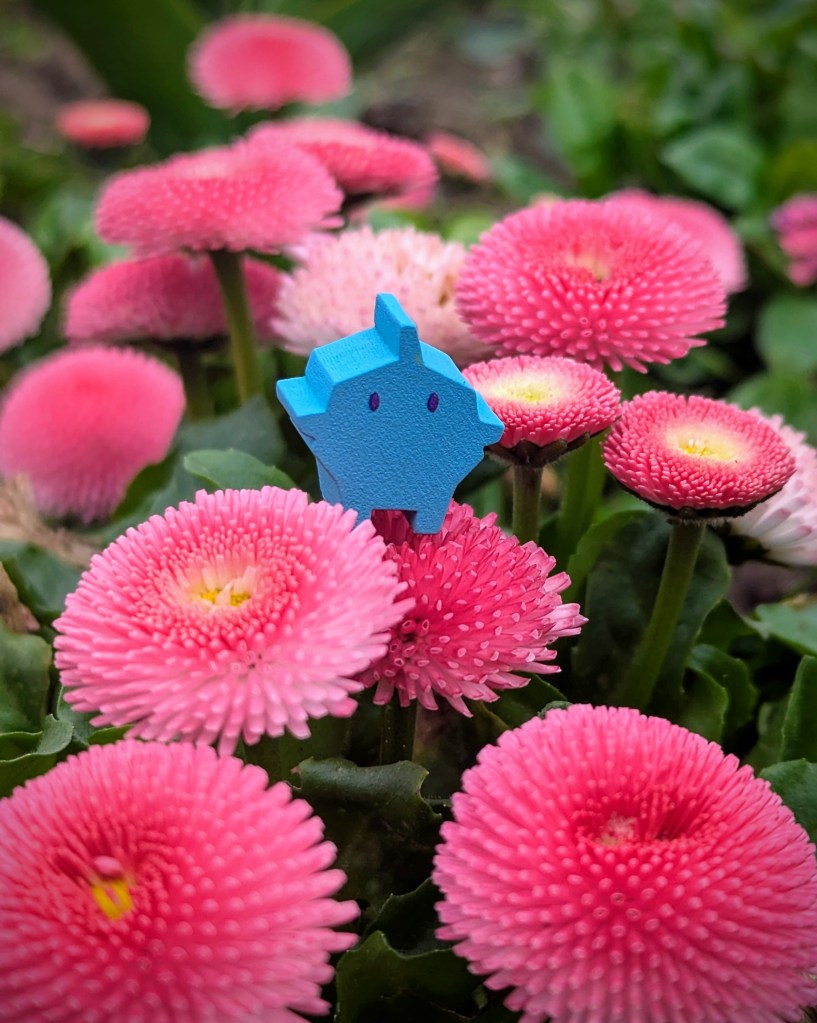

PalinGnomes is cute and cozy, with more strategy than you’d expect for a game of whimsical singing gnomes!
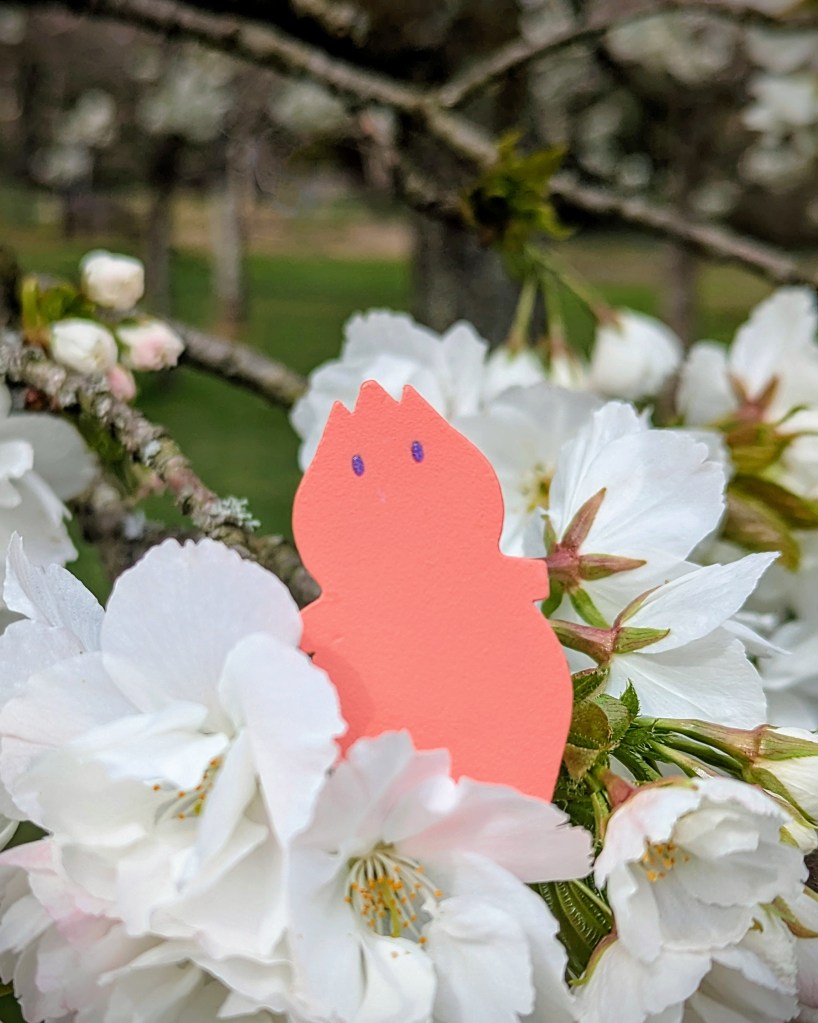
PalinGnomes is cute and cozy, with more strategy than you’d expect for a game of whimsical singing gnomes! I loved it at all player counts. I particularly enjoyed trying to optimise my gnome placement to try and get my bigger gnomes out or block other people – it’s a tricky balance trying to place your best gnomes without giving your opponents too many scoring opportunities. For me, PalinGnomes is a lovely game to play in Spring!
This game was kindly loaned by PhantomLab Games via the UK Board Game Review Circle. All opinions are ours and our reviews are always honest.

 Our Board Game Life
One thought on “PalinGnomes – Review”