

Last year we shared our thoughts on Birdwood Games’ Forever Home, and now it’s time to talk about their flagship game! Is Dog Park worth sinking your teeth into, or does it have more bark than its bite?
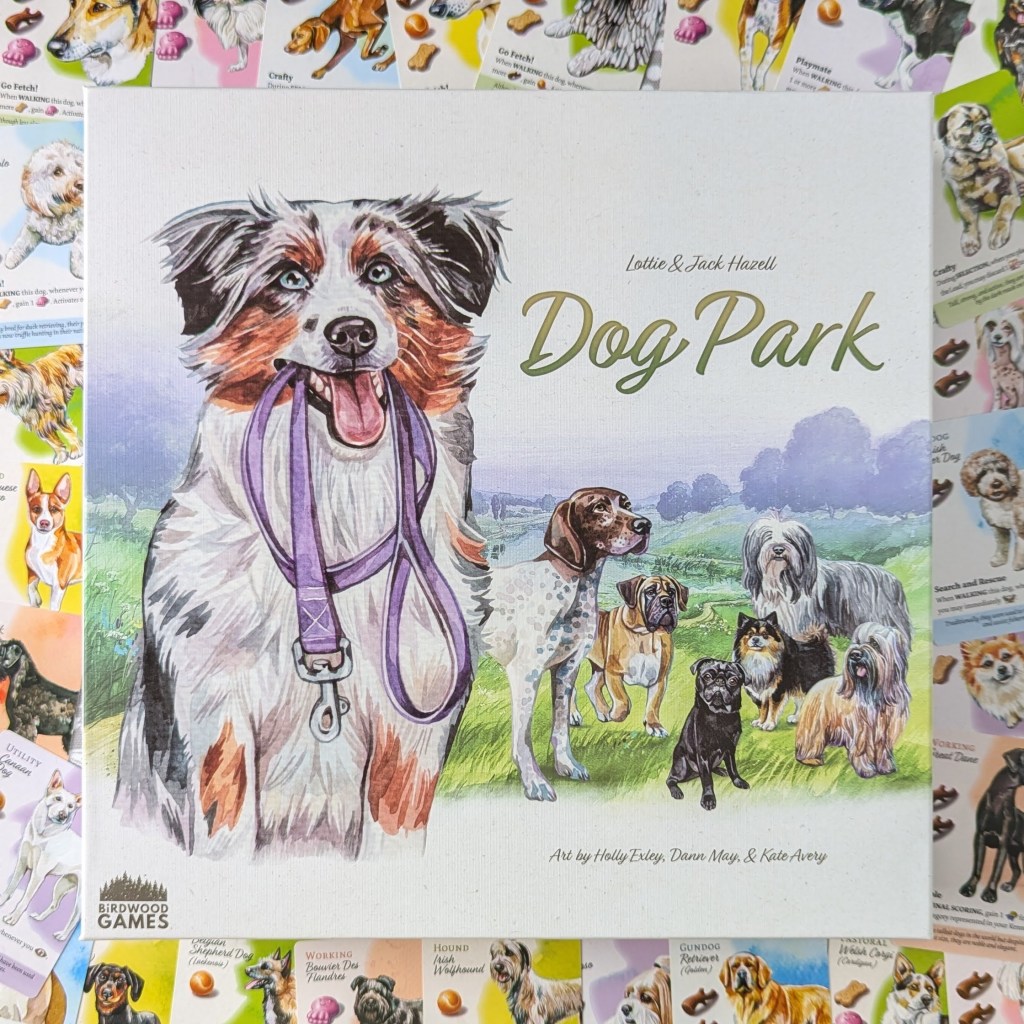
Gameplay overview:
👥 1 to 4 players
⌛ 40 to 80 minutes
🧠 10 years and up
In Dog Park, players are competing to be the best dog walker in town with the best reputation. Each round, players recruit dogs into their kennels, select dogs to take for a walk, and then walk their dogs alongside other players in the titular park. And that’s the bare bones of the game!
But if you want the meaty details…
Each round has 4 phases: Recruitment, Selection, Walking, and Hometime. But make sure to check the forecast before you start! Each round has a new forecast card, which is essentially an objective that gives you a nice bonus (extra resources/reputation) or nasty penalties (lose reputation).
First it’s time to recruit new doggy clients! Players secretly bid their ‘reputation’ (between 1 and 5 points) to try and win the dog they want from the Field (a central pool of cards). There are different dog breeds and abilities (card powers), and some may be more attractive than others depending on game objectives and how they’ll work with dogs you’ve recruited in previous rounds. This often means that more than one player bids for the same dog; when that happens, the player who bid the highest amount of reputation wins. Recruited dogs are added to your player area (‘kennel’).
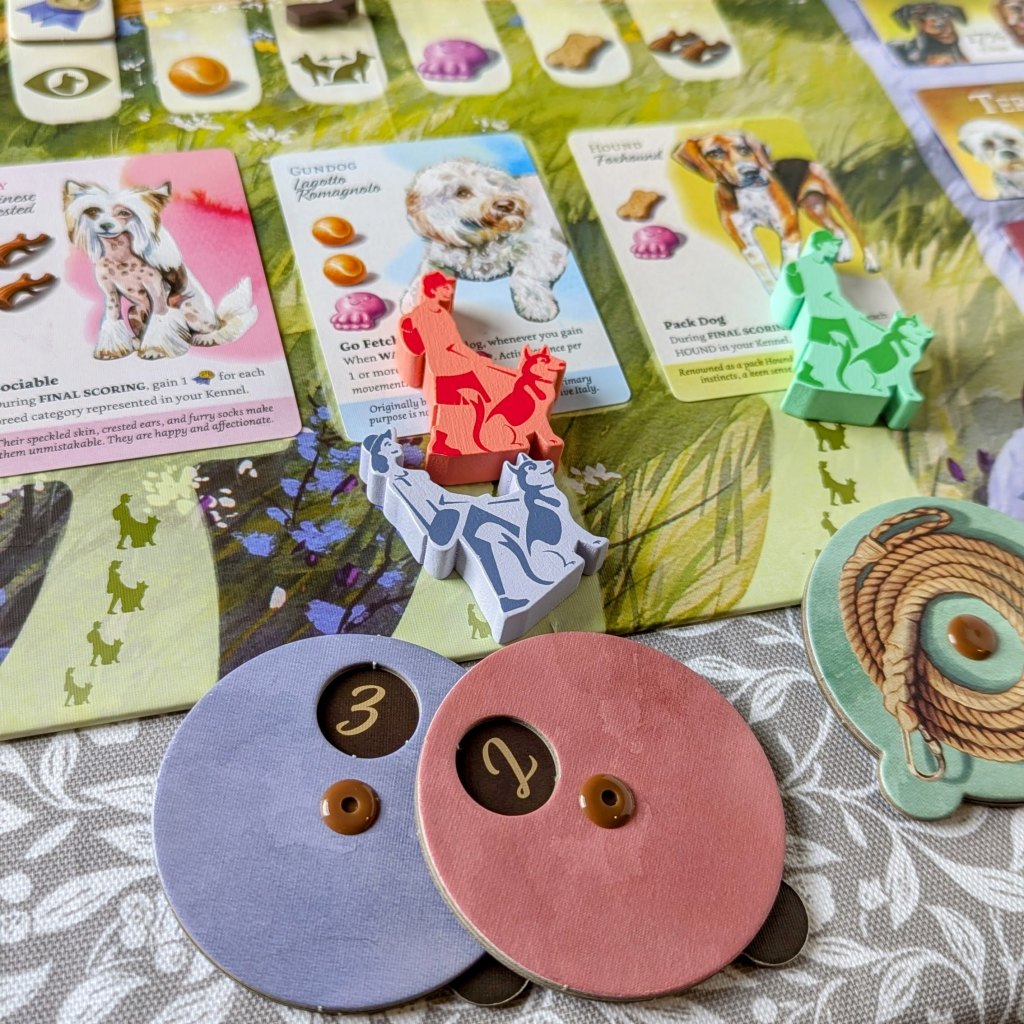
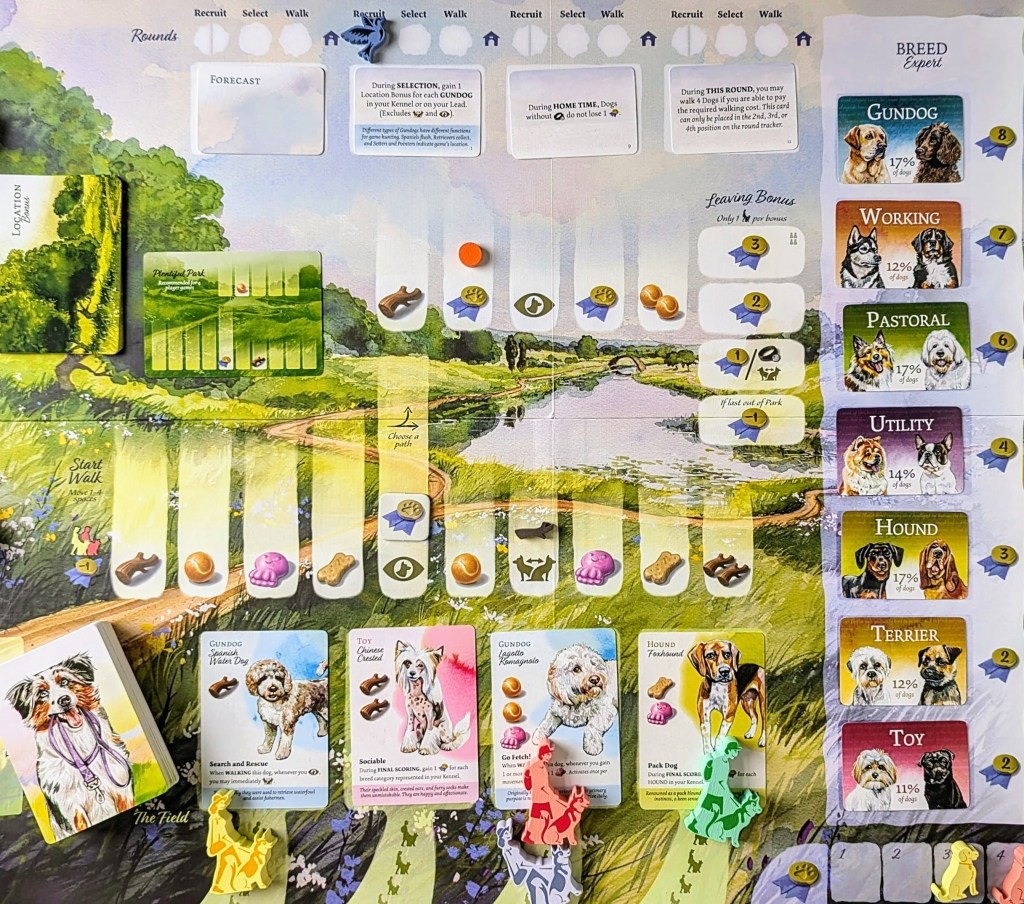
To take dogs on a walk, players select up to 3 dogs from their kennel, put them on their lead board, and add a lead token to the dog. HOWEVER, players can only walk dogs if they pay the resource cost on the dog’s card. There are four different types of resources: twigs, balls, toys and treats. More resources can be earned on a walk or from certain dog abilities, but some resources are harder to collect than others!
Time for WALKIES! Starting with the first player, players move their Walker token up to 4 spaces in the park and get the bonus listed on the space they end movement on – that could be resources, reputation points or actions like swapping a dog from your kennel with a dog in the field. You can share a space with other players, but you have to pay reputation for the privilege (unless you have a social butterfly dog on your lead!). And whilst you might choose to take your time on your walk and collect more resources, if you’re last to leave you get booted out the park and lose reputation for being such a slowpoke.
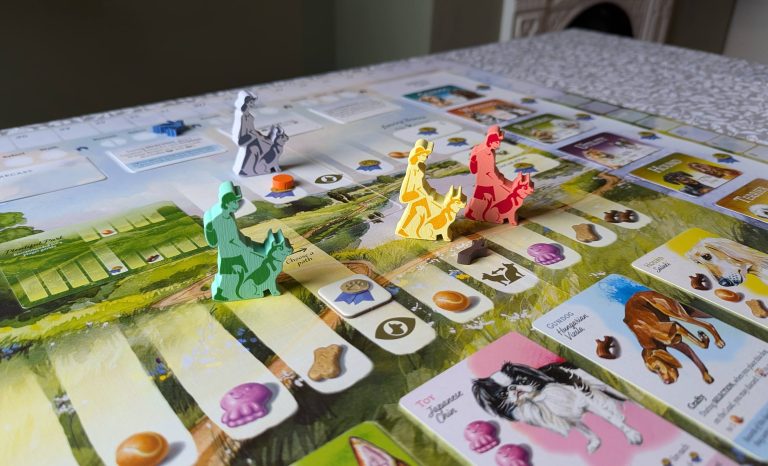
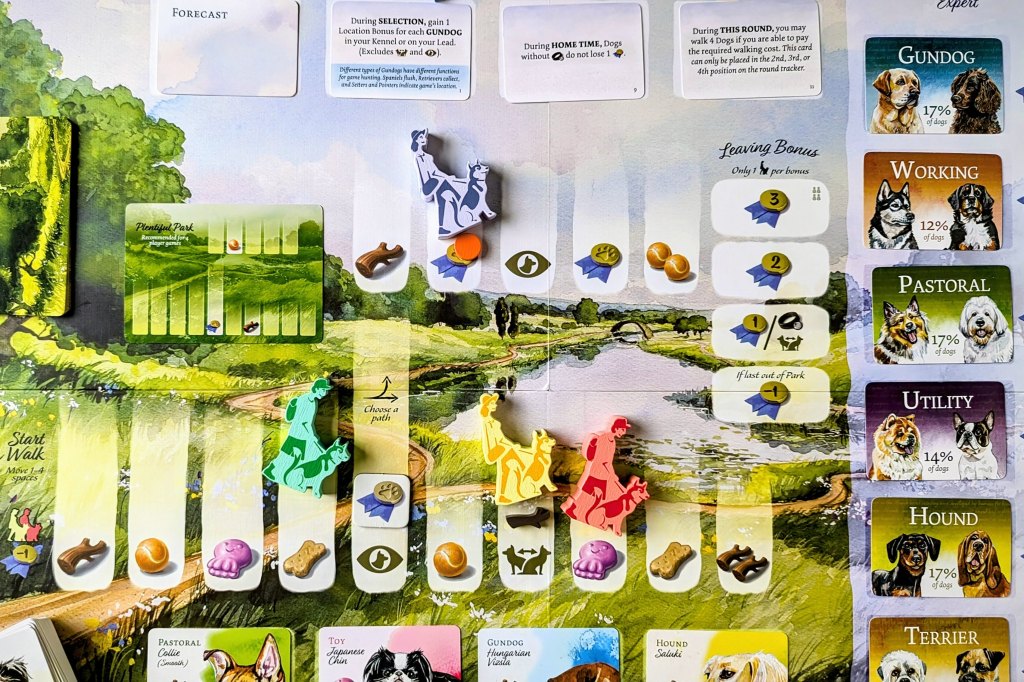
After each walk, it’s hometime. Players get points for each dog they walked that round, but they also lose reputation for any unwalked dogs in their kennels (i.e. any without a lead token who’ve never been walked).
After 4 rounds, the game ends. Additional reputation points are scored through winning breed expert awards (i.e. being the player with the most of certain breeds), dogs with FINAL SCORING abilities, private objectives (1 per player), and leftover resources. The player with the most reputation wins!
What we think:
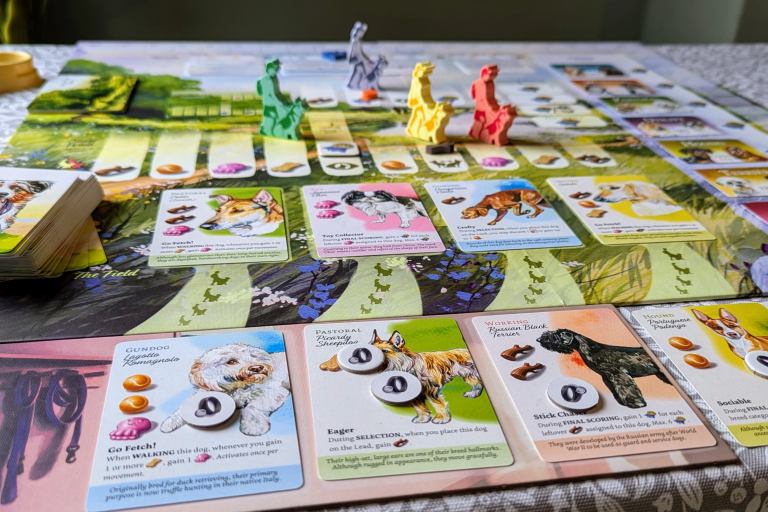
It’s obvious that Birdwood Games put a lot of effort into their board games: the production quality is excellent, the artwork is lovely and the game has heart. Special shout out to the wonderfully clear and laid out rule book! Not only that, but Birdwood has an incredible initiative, “Our Board Games Give Back”, and for every year Dog Park is in print they will be donating to the Guide Dogs charity.
It’s obvious that Birdwood Games put a lot of effort into their board games: the production quality is excellent, the artwork is lovely and the game has heart.
My only issue with the aesthetics was the application of the player colours. The colours are inconsistent across the player components – for example, the blue(ish) player’s Lead board looks purple, the yellow player’s Lead board looks brown and their Offer dial (which is used for bidding) looks lime green. It caused a confusing who’s who more than once, we kept having to double check we were moving the right tokens, and it was a bit annoying. It doesn’t feel very accessible.

The overall vibe of Dog Park is very easy going, which will appeal to some more than others. Like in our recent review of Delivery Witches, we’d categorise Dog Park as an ideal choice for families, cozy gamers, and new gamers – but I would say Dog Park offers more to think about strategy-wise. You have to plan carefully which dogs you recruit, balancing objectives and breed awards, as well as considering what resources you need or how you can combine dog abilities. It’s a great option to introduce some common board game mechanics – like bidding, set collection, managing end-game points as a resource in-game, and even some light engine building – without being too aggressive or punishing. The trickiest part of the game is making sure you have enough dog toys and treats to walk the dogs.
I’m not normally a fan of bidding in games, I think because I’m not very good at bluffing/bargaining and that’s often a requirement. But I found myself enjoying how it was implemented in Dog Park because it felt light and not too punishing (you still end up with a dog, just not necessarily the one you wanted). Maybe it would feel more competitive with more aggressive players in the mix!
Our default player count is 2, and in Dog Park a 2 player game requires an automaton player. This isn’t something we’re usually keen on, as it usually means the game isn’t truly designed to be enjoyed at 2 player – it’s 3 player, but one of you is a robot. To our surprise, we found that the automaton didn’t negatively impact our enjoyment of the game, but it did change the game slightly. I’d still prefer to play a game without Mr Robot in the mix.
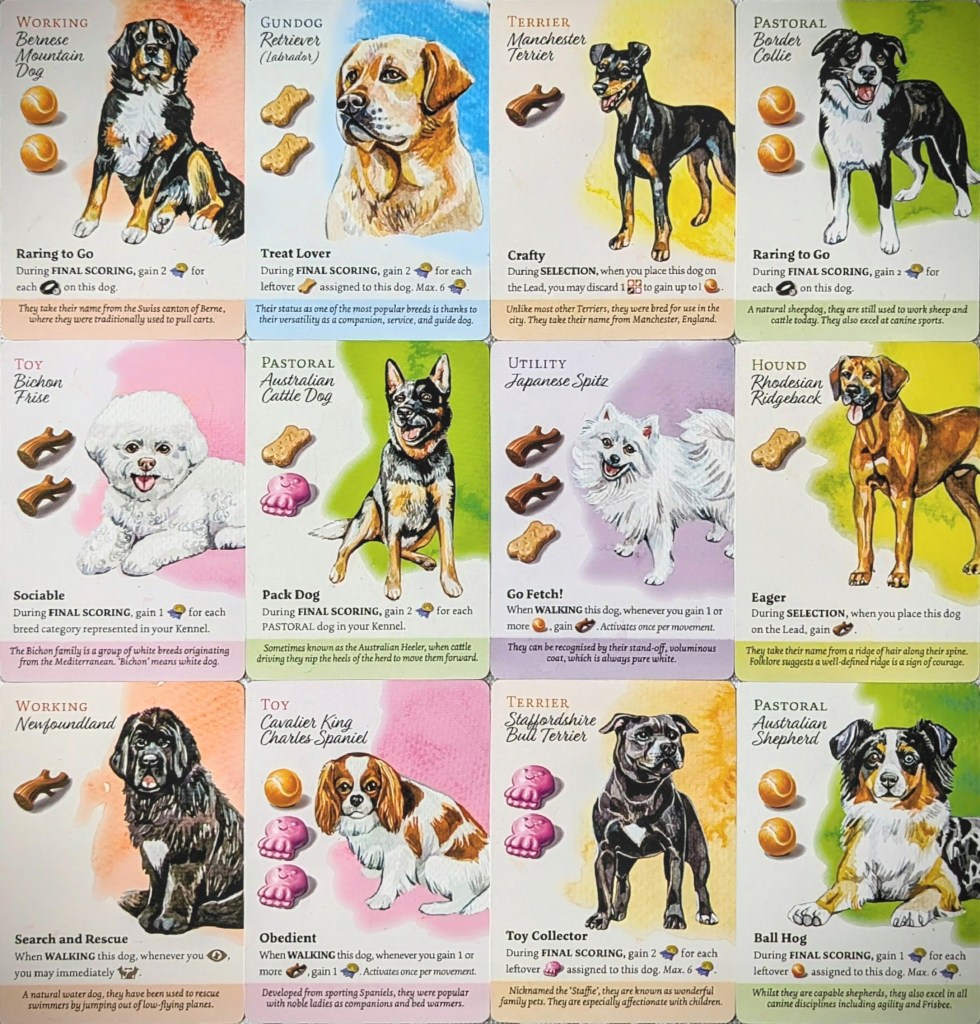
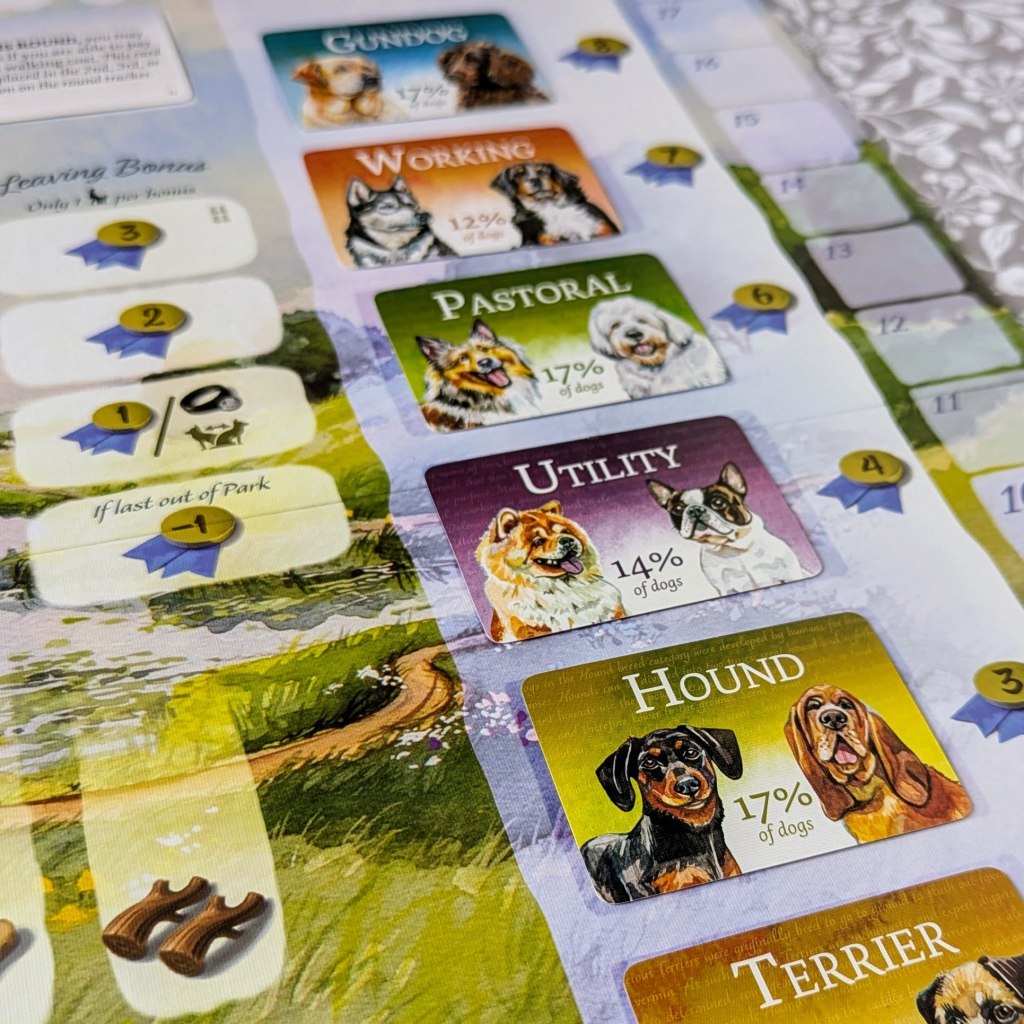
There is a little bit of variety in the gameplay: different forecast cards, park cards, dog powers. The order for the breed awards are randomly set at the start of each game. But we aren’t convinced that there’s enough variety or depth to the game to keep seasoned, heavy-leaning board gamers interested after the first couple of games. In the few games we had, the walks did start to feel a bit ‘samey’ – the different park cards give the setup for different bonuses you can pick up on the walk, but the route itself doesn’t change. I suppose this is realistic to what a dog walker would do! But it would have been nice to see changes that feel more impactful, like changing routes or terrains that can mess with players’ progress.
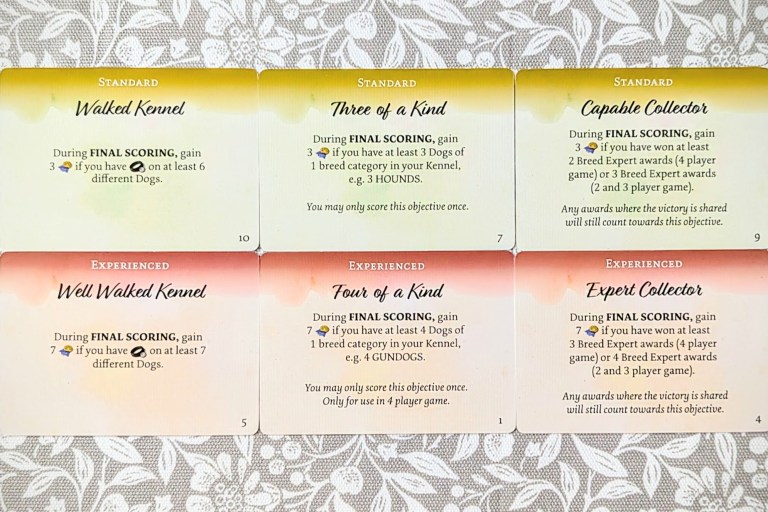
The private objective cards feel like they add very little to the game. During set-up each player chooses between 2 objectives, one easier and one harder. Even the ‘hard’ objectives are pretty easy to achieve, so unless you’re playing with younger children, the easier ones will never get picked. Our players completed their private objectives in every game. As they’re all worth the same points, they just cancel each other out. They’re completely redundant; you could remove them from the game and it would make no difference.
What works well:
- Gorgeous production and design. We loved all the different dog facts on the cards! And the rulebook is great – I like that they include some tips for strategy/tactics (‘Walker Wisdom’).
- It’s a great introduction to various board game mechanics/design elements for new and younger players. The strategy is light but there’s still a lot of different things to consider and choices to make. Like the bidding aspect – it adds a bit of fun without too much pressure to be a good bluffer.
What doesn’t work well:
- The colours applied to the player boards/components are inconsistent, disruptive and potentially lacking accessibility.
- While the game offers variety in set-up we’re not sure it feels like it adds much interest in practice.
- The private objectives are too easy to complete and feel redundant.
Final Verdict:
With beautiful aesthetics and easygoing gameplay, Dog Park is the perfect comfort game – you’re playing for a good time, not a hard time.
With beautiful aesthetics and easygoing gameplay, Dog Park is the perfect comfort game – you’re playing for a good time, not a hard time. Our gaming friends were big fans, so I won’t be surprised if they bring it back to the table. And while we would happily play it again with others who were keen (or with people we’d think would be a good fit), we’re unlikely to seek it out as it is a little light for our tastes. This may change with the addition of the New Tricks expansion, which we’ve heard adds more complexity to the game – hopefully we’ll get to try it and report back!
Having the opportunity to review Birdwood’s games has been such a pleasure and we cannot wait to see what they bring out next! Will it be cats? Guinea pigs? QUOKKAS?!
This game was kindly loaned by Birdwood Games via the UK Board Game Review Circle. All opinions are ours and our reviews are always honest.

 Our Board Game Life